
Karnataka’s decision to prioritise competitive examination scores in its revised teacher recruitment rules has sparked widespread debate across the education sector, with critics warning that the move could inadvertently strengthen the influence of private coaching centres while sidelining classroom aptitude and long-term teaching experience. The new rules, notified recently, aim to bring uniformity and objectivity to teacher selection, but they have also raised concerns about equity, pedagogy, and the future direction of public education in the State.
Under the revised framework, greater weightage will be accorded to performance in centralised competitive examinations for appointing teachers in government schools. Officials argue that this approach ensures merit-based selection and transparency, reducing the scope for arbitrary appointments. However, educators and unions contend that such an emphasis risks narrowing the definition of merit to test-taking ability, potentially disadvantaging candidates from rural backgrounds and those trained in experiential teaching methods.
Several education administrators have suggested that the impact of the new recruitment rules will become clearer only over time, particularly once the first batch of teachers selected under the revised framework enters classrooms. They argue that monitoring mechanisms must be strengthened to assess not just recruitment efficiency but classroom effectiveness and student outcomes. Without such feedback loops, they caution, policy decisions risk being evaluated solely on procedural success rather than educational impact, leaving deeper systemic issues unaddressed.
As debates continue, the revised rules have underscored a fundamental question facing public education in Karnataka: whether excellence should be defined by competitive performance or by the ability to inspire and educate diverse learners. The answer, many believe, lies in resisting extremes and recognising teaching as both a skill and a calling. How the State reconciles this tension will shape not only recruitment practices but the character of its classrooms for years to come.
The change comes at a time when Karnataka is already grappling with teacher shortages, uneven learning outcomes, and disparities between urban and rural schools. While the government maintains that the new rules are designed to raise academic standards, critics fear that the policy may prioritise exam-centric knowledge over practical teaching skills, creativity, and emotional intelligence in classrooms.
Teacher associations have expressed apprehension that the revised rules could trigger a surge in dependence on coaching centres that specialise in competitive exams. They argue that such centres are often concentrated in urban areas and cater primarily to candidates who can afford intensive preparation, thereby reinforcing existing socio-economic inequalities. The concern, they say, is not merely about access but about the values the education system chooses to reward.
Officials from the Department of School Education have defended the move, stating that competitive examinations provide a standardised benchmark to assess subject knowledge. They insist that teaching aptitude and training qualifications will continue to be considered, though critics note that the relative weightage has shifted decisively in favour of exam scores. This recalibration, they argue, reflects a broader trend towards quantifiable metrics at the expense of qualitative evaluation.
The revised rules apply to new recruitments and do not affect existing teachers. However, the implications for aspiring educators are significant. Many candidates now feel compelled to invest time and money in coaching programmes, even as they complete formal teacher education degrees. This dual burden, aspirants say, adds pressure to an already competitive and uncertain career path.
Educationists have also pointed out that competitive exams often test content knowledge rather than pedagogical competence. They warn that effective teaching requires skills that cannot be easily measured through written tests, such as classroom management, empathy, adaptability, and the ability to engage diverse learners. By privileging exam scores, they argue, the system risks producing teachers who excel on paper but struggle in practice.
The government, however, views the change as part of a broader reform agenda aimed at improving accountability and learning outcomes. Officials cite poor performance in national assessments as evidence that stronger subject mastery among teachers is essential. From this perspective, competitive exams are seen as a necessary filter to ensure quality at the point of entry.
Coaching Culture and the Question of Equity
One of the most persistent criticisms of the new recruitment rules is the fear that they will further entrench a coaching-centric culture within the education ecosystem. Coaching centres, critics argue, thrive on high-stakes examinations and often prioritise rote learning and exam strategies over deep understanding. By making competitive exam scores central to teacher recruitment, the State may unintentionally endorse this model.
Teachers’ unions have warned that aspiring educators from marginalised communities could be disproportionately affected. Many such candidates rely on government institutions for training and lack access to expensive coaching facilities. While competitive exams are theoretically open to all, the uneven distribution of preparatory resources, they argue, creates structural disadvantages that policy must account for.
Rural educators have voiced particular concern. They note that candidates from remote areas often juggle family responsibilities, limited internet access, and fewer study resources. Competing on equal footing with urban candidates who attend full-time coaching programmes, they say, is inherently challenging. The new rules, they fear, may widen the rural-urban divide in teacher recruitment.
Student teachers currently enrolled in diploma and degree programmes have expressed uncertainty about the value of their training. Some question whether years spent studying pedagogy, child psychology, and classroom methods will be overshadowed by a single exam score. This perception, they warn, could demoralise future educators and reduce interest in formal teacher education pathways.
Private coaching institutions, meanwhile, have seen a noticeable increase in enquiries following the announcement of the new rules. Industry observers say the policy has created a new market among teaching aspirants, similar to the ecosystem that exists around civil services and engineering entrance exams. While coaching centres argue that they merely respond to demand, critics say the State must anticipate and mitigate such consequences.
Educational researchers have also highlighted international experiences, noting that countries with strong public education systems often rely on holistic teacher selection processes. These typically combine academic assessment with interviews, teaching demonstrations, and probationary periods. Over-reliance on standardised tests, they caution, can lead to narrow selection criteria that fail to capture the complexity of teaching.
The government has responded to these concerns by stating that safeguards will be built into the recruitment process. Officials claim that teacher training qualifications and reservation policies will continue to play a role. However, critics argue that without clear guidelines on balancing exam scores with other competencies, the stated assurances remain vague.
Parents’ groups have joined the debate, expressing mixed reactions. Some welcome the emphasis on subject knowledge, hoping it will improve learning outcomes for students. Others worry that teachers selected primarily for exam performance may lack the patience and communication skills essential for nurturing young learners.
Balancing Merit, Pedagogy, and the Public Good
The controversy surrounding Karnataka’s revised teacher recruitment rules reflects a deeper tension in education policy between measurable outcomes and human-centred values. Teaching, many argue, is as much a vocation as a profession, requiring commitment and empathy that cannot be quantified easily. Policies that prioritise numerical scores risk overlooking these intangible but vital qualities.
Former educators have recalled earlier recruitment systems that placed greater emphasis on interviews and classroom demonstrations. While acknowledging that such methods had their own shortcomings, they argue that personal interaction allowed selectors to assess candidates’ motivation and suitability. The current shift towards exam-centric selection, they fear, could reduce teaching to a technical exercise.
Policy analysts suggest that the debate should not be framed as a binary choice between exams and experience. Instead, they advocate for a blended approach that combines objective assessment with qualitative evaluation. Such a model, they argue, could uphold transparency while recognising the multifaceted nature of teaching.
The State government has indicated openness to reviewing the rules based on feedback. Officials have said that implementation will be monitored closely and adjustments made if unintended consequences emerge. However, sceptics note that policy reversals are often slow and that initial cohorts recruited under the new system will shape classrooms for years to come.
The timing of the policy has also drawn attention, coming amid broader discussions on education reform at the national level. As curricula evolve and emphasis shifts towards critical thinking and creativity, critics question whether an exam-focused recruitment model aligns with these goals. They argue that teachers must be equipped not just with knowledge but with the ability to foster inquiry and inclusivity.
Teacher morale is another concern. Aspirants who feel compelled to chase exam scores may experience heightened stress and burnout even before entering the profession. Unions warn that such pressures could deter talented individuals from pursuing teaching careers, exacerbating existing shortages.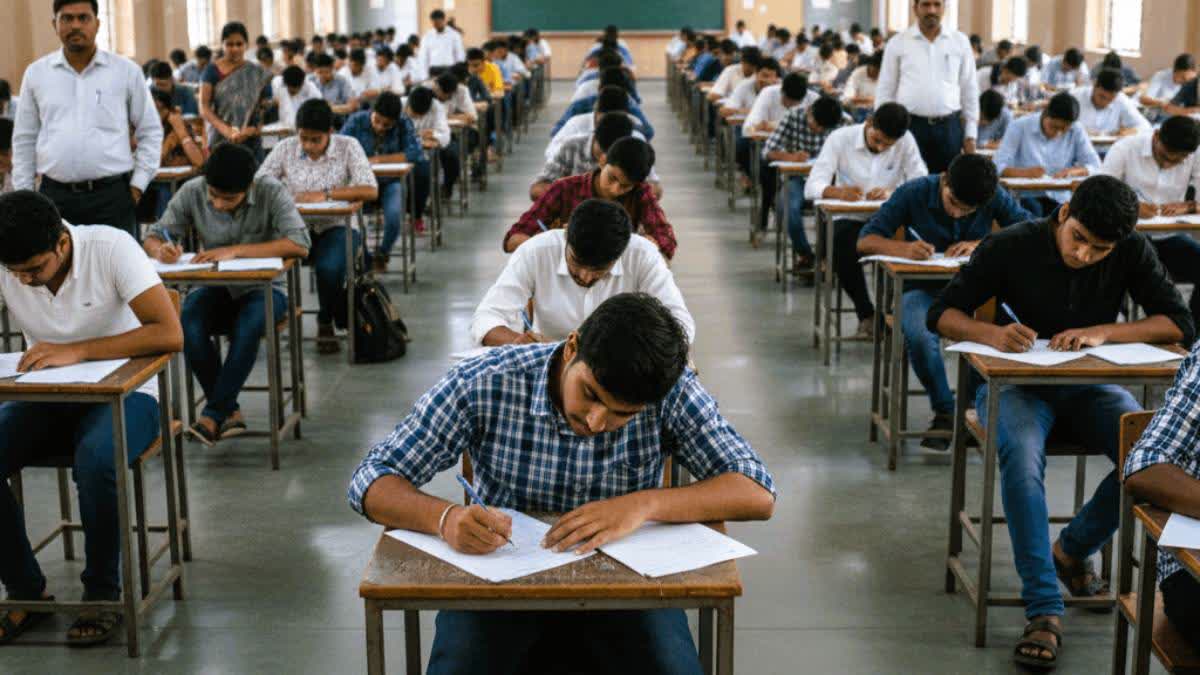
Supporters of the policy counter that competitive exams are a necessary corrective to past inefficiencies. They argue that ensuring a baseline of academic competence is essential and that pedagogical skills can be honed through in-service training. From this viewpoint, the revised rules represent a pragmatic step towards improving standards.
As Karnataka moves forward with the new recruitment framework, the challenge will be to balance efficiency with equity, and merit with meaning. The debate has underscored that teacher selection is not merely an administrative process but a reflection of societal priorities. Whether the policy strengthens public education or deepens existing divides will depend on how flexibly and thoughtfully it is implemented.
For now, the revised rules have opened a critical conversation about what the State values in its teachers. In choosing to elevate competitive exam scores, Karnataka has taken a decisive step that may reshape the teaching profession. Whether this step leads to stronger classrooms or a coaching-driven culture remains an open question, one that will be answered not in policy documents but in the lived realities of schools across the State.
Follow: Karnataka Government
Also read: Home | Channel 6 Network – Latest News, Breaking Updates: Politics, Business, Tech & More
