
The Bengaluru Metropolitan Transport Corporation has announced an ambitious plan to establish electric vehicle battery swapping stations at major bus terminals across the city, marking a decisive shift toward sustainable public transport. The initiative is aimed at strengthening the operational efficiency of electric buses while reinforcing Karnataka’s broader commitment to clean energy mobility. Officials stated that the project will reduce downtime for electric buses, improve route reliability, and accelerate the transition away from fossil fuels. With Bengaluru grappling with pollution and congestion, the move is being seen as both timely and transformative for commuters.
BMTC currently operates a growing fleet of electric buses under various central and State government schemes designed to modernize urban mobility. However, one of the primary operational challenges has been charging time, which can take several hours and limit fleet availability during peak demand. Battery swapping technology offers a practical solution by allowing depleted batteries to be replaced with fully charged ones within minutes. This system ensures buses can return to service quickly, minimizing disruption and maximizing daily trip schedules across high-density corridors.
In addition to terminal-based swapping hubs, BMTC is also examining the feasibility of mobile battery support units that can assist buses stranded due to unexpected technical issues. These mobile units would function as rapid-response teams, ensuring minimal service disruption during peak hours. Officials believe that such contingency planning is essential in the early stages of adopting new technology. By combining fixed infrastructure with on-road technical support, the corporation aims to build a robust ecosystem that prioritizes uninterrupted service and commuter convenience.
Transport experts have also highlighted the importance of integrating digital monitoring systems with battery swapping infrastructure. Real-time data on battery health, charge cycles, temperature levels, and performance efficiency can significantly enhance operational planning. BMTC is reportedly considering centralized control software that would track each battery unit across the fleet. Such digital oversight would enable predictive maintenance, preventing failures before they occur. Analysts argue that data-driven management will be crucial for maximizing efficiency and ensuring that public funds invested in the project deliver measurable long-term returns.
Public awareness campaigns are expected to accompany the rollout of the swapping stations. Authorities believe that educating commuters about the environmental and economic benefits of electric mobility will encourage greater public participation. Informational displays at bus terminals may highlight emission reductions and energy savings achieved through battery swapping. Officials also plan to collaborate with schools and colleges to promote sustainable transport habits among younger generations. By fostering environmental consciousness alongside infrastructure development, the initiative seeks to cultivate a culture of responsible urban mobility.
Industry observers note that standardization across manufacturers will be a key determinant of success. For battery swapping to operate seamlessly, compatibility between buses and battery units must be maintained. BMTC is likely to adopt standardized battery specifications to avoid fragmentation and ensure interoperability. This approach may also influence broader EV policy discussions at the State level. Experts suggest that Karnataka could emerge as a pioneer in establishing uniform battery protocols, potentially shaping national frameworks for electric mobility infrastructure.
Looking ahead, BMTC envisions scaling the battery swapping network to suburban and peri-urban routes as the electric fleet expands. Once operational stability is achieved in central terminals, additional stations may be introduced in satellite towns connected to Bengaluru’s metropolitan region. Officials emphasize that the long-term objective is to create a comprehensive electric transport grid capable of meeting rising commuter demand. If executed successfully, the initiative could redefine public transport standards in Karnataka, positioning Bengaluru as a leader in sustainable urban innovation and green infrastructure advancement.
According to transport department officials, the initial phase will focus on installing swapping stations at key terminals such as Kempegowda Bus Station, Shantinagar, Banashankari, and Yeshwantpur. These hubs were selected based on passenger volume, route connectivity, and available infrastructure. Engineers are conducting feasibility assessments to determine space requirements, power load capacity, and safety standards. The stations will be equipped with automated lifting mechanisms and monitoring systems to ensure seamless operations. Authorities believe that strategically placing the facilities at major nodes will create an efficient network supporting citywide electric bus deployment.
The project is expected to be implemented through a public-private partnership model, with energy companies and battery manufacturers invited to collaborate. BMTC officials indicated that discussions are underway with multiple firms specializing in lithium-ion battery technology and energy management systems. By involving private stakeholders, the corporation hopes to leverage technical expertise while reducing the financial burden on public resources. Contracts will likely include performance benchmarks to ensure reliability and safety. The partnership approach reflects a broader policy trend encouraging innovation and private participation in public infrastructure development.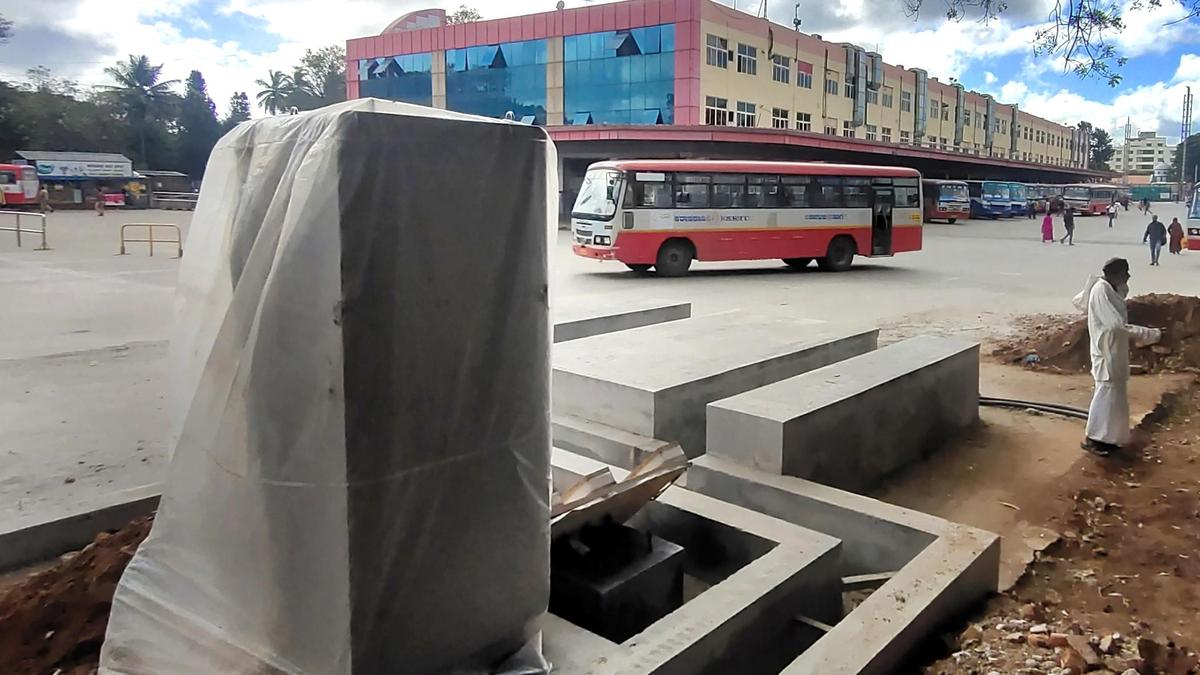
ACCELERATING SUSTAINABLE URBAN MOBILITY
Environmental experts have welcomed the decision, describing it as a critical step toward lowering vehicular emissions in one of India’s most congested cities. Bengaluru’s air quality has shown periodic deterioration due to traffic density and construction activity. Electric buses, powered by renewable energy sources, significantly reduce carbon emissions compared to diesel fleets. Battery swapping further enhances their practicality by making operations smoother and more flexible. Analysts note that if the initiative succeeds, it could serve as a model for other metropolitan transport corporations seeking to scale up electric mobility solutions efficiently.
From an economic perspective, battery swapping could also reduce long-term operational costs. While initial infrastructure investment is substantial, the ability to maintain higher fleet utilization rates may offset expenses over time. Reduced fuel dependency translates into predictable energy expenditures, shielding the corporation from fluctuations in diesel prices. Additionally, standardized battery units enable easier maintenance and upgrades as technology evolves. Transport economists argue that such forward-looking investments are essential for building resilient public transport systems capable of adapting to rapid technological change.
Commuters stand to benefit directly from the initiative through improved punctuality and reduced waiting times. Frequent breakdowns or delays caused by charging constraints have occasionally inconvenienced passengers on electric routes. With swapping stations in place, buses can adhere more closely to scheduled departures, enhancing public confidence in the system. Regular commuters, including office workers and students, have expressed optimism that reliable electric services will encourage more residents to choose buses over private vehicles. This modal shift is crucial for decongesting arterial roads and promoting equitable urban mobility.
The corporation has emphasized safety as a central component of the rollout. Battery swapping involves handling high-capacity energy storage systems, necessitating strict adherence to fire safety and operational guidelines. Dedicated training programmes will be conducted for technical staff and drivers to ensure proper procedures are followed. Terminals will be equipped with advanced monitoring devices capable of detecting overheating or electrical faults. Emergency response protocols are also being updated in coordination with city fire services. Officials maintain that comprehensive safeguards will underpin every stage of implementation.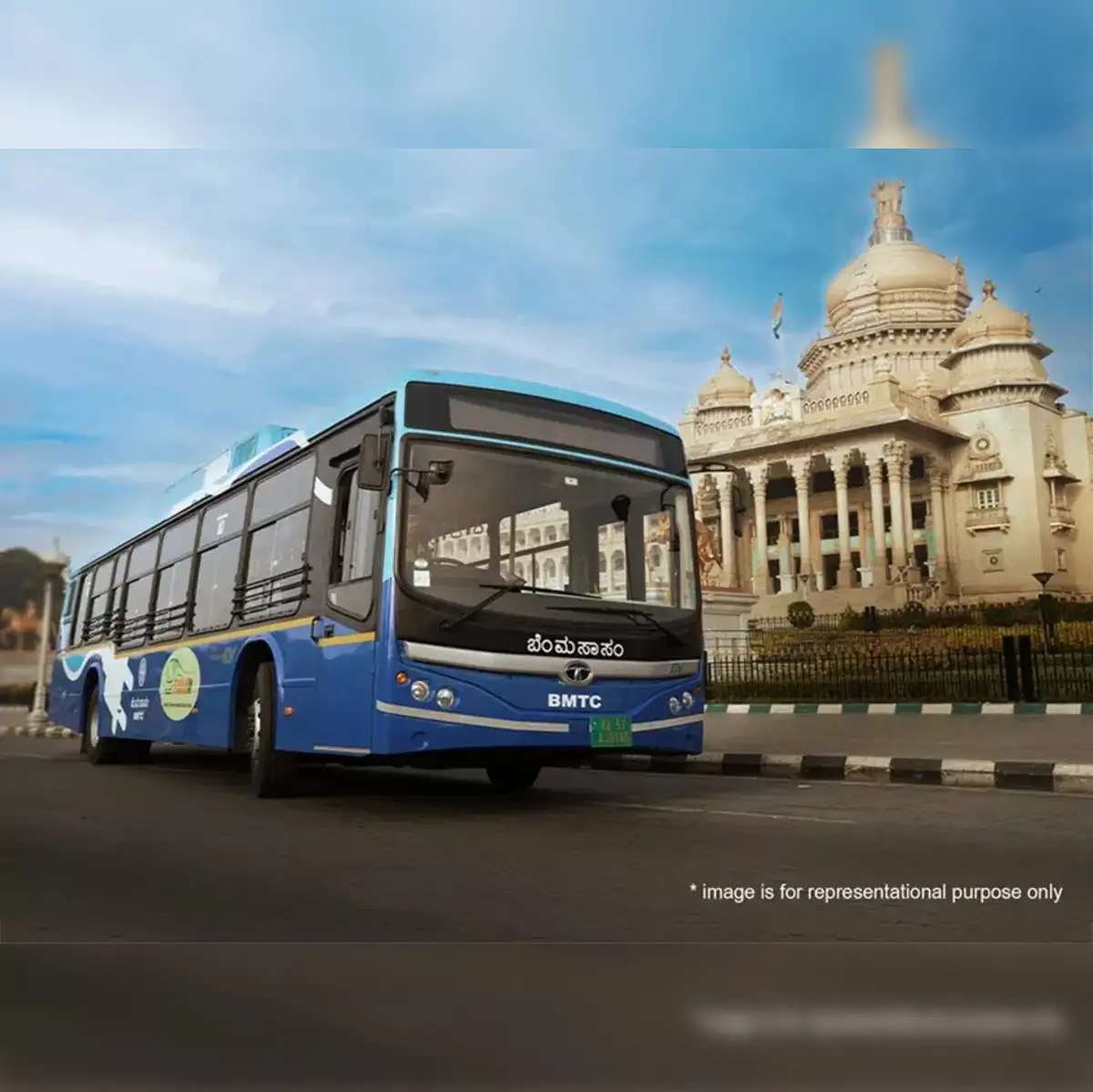
INFRASTRUCTURE, POLICY AND FUTURE EXPANSION
State government authorities have aligned the project with Karnataka’s electric vehicle policy, which encourages widespread adoption of clean transportation technologies. Incentives such as tax benefits, infrastructure grants, and research support have already positioned the State as a leader in EV innovation. By integrating battery swapping within public transport infrastructure, the government aims to demonstrate practical scalability. Policymakers believe that visible success in the public sector will inspire private fleet operators, delivery services, and even auto-rickshaw unions to explore similar energy-efficient models.
Urban planners point out that the initiative complements ongoing investments in metro rail expansion and suburban rail connectivity. A robust electric bus network can function as an effective feeder system, ensuring last-mile connectivity to transit hubs. Battery swapping stations at bus terminals may eventually support other municipal electric vehicles, including service vans and waste collection trucks. This integrated approach reinforces the concept of a unified green transport ecosystem. Experts argue that synergy between different modes of transport is essential for creating sustainable and accessible cities.
Financial analysts note that funding mechanisms will play a decisive role in determining the project’s pace. BMTC is exploring support from central government schemes dedicated to clean mobility and climate action. International development agencies may also be approached for technical assistance and concessional financing. Transparent procurement processes and phased investment strategies are expected to mitigate fiscal risks. By carefully balancing ambition with financial prudence, authorities hope to deliver infrastructure that is both technologically advanced and economically sustainable.
Citizens’ groups and environmental organizations have urged BMTC to maintain transparency during execution. They recommend periodic public updates on progress, expenditure, and environmental impact metrics. Data on emission reductions, energy consumption patterns, and passenger growth could provide measurable indicators of success. Civil society participation, they argue, enhances accountability and fosters public trust. The corporation has indicated that it will publish performance reports once operations begin, reinforcing its commitment to responsible governance and open communication.
Technological adaptability remains another critical consideration. Battery chemistry and energy storage technologies are evolving rapidly, raising questions about long-term compatibility. Officials have assured that modular infrastructure designs will allow upgrades without extensive reconstruction. Contracts with suppliers are expected to include provisions for technology refresh cycles, ensuring that systems remain current. This flexibility is vital in a sector characterized by swift innovation. By planning for adaptability from the outset, BMTC aims to future-proof its investment against obsolescence.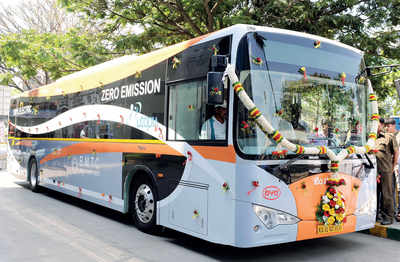
The broader societal impact of the initiative could extend beyond environmental benefits. Expanding electric mobility infrastructure may generate employment opportunities in engineering, maintenance, and energy management. Skill development programmes linked to the project could equip young professionals with expertise in emerging green technologies. Educational institutions in Bengaluru are already collaborating with industry partners on EV research initiatives. Observers suggest that the city’s reputation as a technology hub positions it uniquely to pioneer sustainable transport solutions with both economic and environmental dividends.
As the project moves from planning to execution, expectations remain high among policymakers and citizens alike. The establishment of EV battery swapping stations at bus terminals symbolizes more than a logistical upgrade; it represents a conscious commitment to redefining urban mobility. If implemented effectively, the initiative could reduce emissions, improve commuter experiences, and strengthen Bengaluru’s standing as a progressive metropolis. BMTC’s decisive step reflects a vision of cleaner air, quieter streets, and resilient infrastructure, offering a hopeful blueprint for the future of public transportation in Karnataka.
Follow: Karnataka Government
Also read: Home | Channel 6 Network – Latest News, Breaking Updates: Politics, Business, Tech & More
