
Baragur Ramachandrappa inaugurated the film festival held as part of Bahuroopi 2026, marking a significant cultural moment that brought together cinema, theatre, literature, and social thought under one platform. The inauguration ceremony reflected the festival’s core philosophy of celebrating artistic diversity while questioning dominant narratives through meaningful storytelling.
Ramachandrappa, known for his lifelong engagement with progressive art and culture, emphasized cinema’s responsibility beyond entertainment, stating that films must act as mirrors to society and voices for the unheard. His presence added ideological depth to the festival, reinforcing Bahuroopi’s commitment to socially conscious art. The event witnessed participation from filmmakers, writers, students, theatre practitioners, and cultural activists, creating an atmosphere of dialogue rather than spectacle. The opening evening set the tone for days of screenings, discussions, and reflections rooted in regional experiences and global concerns.
The additional sessions that followed the inauguration further deepened the festival’s intellectual engagement. Panel discussions examined the future of independent cinema in India, focusing on sustainability, audience outreach, and the role of state and community support. Filmmakers spoke candidly about the emotional and financial toll of creating socially relevant cinema in an environment that often prioritises spectacle over substance. These conversations revealed shared struggles across regions and generations, reinforcing the sense of solidarity within the artistic community. Audience members actively participated, sharing their own interpretations and concerns, turning each session into a collective exploration rather than a one-sided discourse.
Another significant aspect of the festival was its emphasis on regional narratives and languages. Several speakers highlighted that cinema rooted in local culture carries an authenticity that cannot be replicated through formula-driven storytelling. Films screened under this segment showcased dialects, traditions, and landscapes rarely represented on mainstream platforms. This focus resonated strongly with viewers, many of whom expressed a renewed appreciation for stories drawn from everyday life. Organisers noted that such representation not only preserves cultural memory but also challenges the dominance of homogenised narratives, allowing diverse identities to find space and recognition within cinematic expression.
The presence of young volunteers and students added an energetic dimension to the festival. Many of them played active roles in organising screenings, moderating discussions, and managing logistics, gaining hands-on experience in cultural event management. For these participants, Bahuroopi 2026 became a learning space that extended beyond academic curricula. Interacting with senior artists and filmmakers offered mentorship opportunities and inspiration. Several students remarked that witnessing the intersection of art and social responsibility firsthand strengthened their resolve to pursue creative paths with purpose rather than purely commercial ambitions.
Cultural observers attending the festival noted that Bahuroopi’s film segment stood out for its consistency in vision. Unlike many festivals that attempt to balance mainstream appeal with alternative content, Bahuroopi remained firmly committed to its ideological core. This clarity, they said, helped audiences approach the films with openness and seriousness. The absence of celebrity-driven distractions allowed the focus to remain on stories and ideas. Such an environment encouraged deeper emotional engagement, making the viewing experience both intimate and transformative for many attendees.
As the festival days unfolded, it became evident that the impact of the film screenings extended beyond the venue. Conversations sparked by the films continued in informal gatherings, classrooms, and social spaces. Participants reflected on how cinema can shape empathy, influence public opinion, and inspire action. The inauguration by Baragur Ramachandrappa thus emerged not merely as a ceremonial beginning but as a guiding moment that anchored the festival’s purpose. Bahuroopi 2026, through its film festival, reaffirmed that meaningful art does not end with applause but begins with reflection.
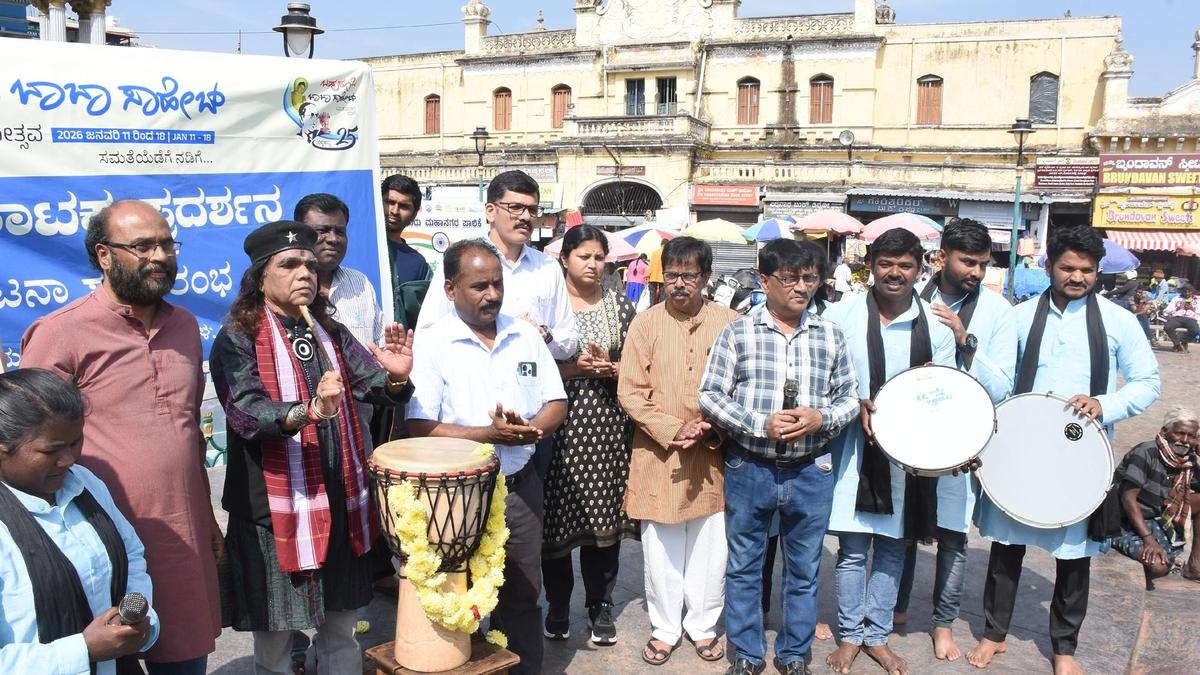
The film festival, curated carefully as part of the larger Bahuroopi cultural gathering, aimed to foreground alternative cinema that often struggles for mainstream visibility. Organisers highlighted that the selection focused on films dealing with themes such as marginalisation, identity, memory, resistance, and human relationships. Rather than prioritising commercial success or star power, the festival celebrated craft, sincerity, and ideological courage. Speakers at the inauguration stressed that such platforms are increasingly necessary in times when art faces pressures to conform or dilute its intent. The audience, largely composed of young students and cultural enthusiasts, responded with keen interest, reflecting a growing appetite for cinema that provokes thought and discussion rather than passive consumption.
Baragur Ramachandrappa, in his inaugural address, reflected on the historical relationship between cinema and social movements in Karnataka and India at large. He noted that films have played a crucial role in documenting struggles, shaping public consciousness, and challenging oppressive structures. Drawing from his own experience as a playwright, lyricist, and thinker, he urged filmmakers to remain rooted in lived realities and resist the temptation to romanticise suffering. He argued that authentic storytelling demands ethical responsibility, where representation must be honest and respectful. His speech resonated strongly with the festival’s objectives, positioning cinema as a form of cultural resistance and collective memory rather than mere visual spectacle.
The inauguration ceremony also paid tribute to filmmakers and artists who have contributed to parallel cinema and grassroots cultural movements. Brief introductions to selected films highlighted their social contexts and creative processes, allowing audiences to engage more deeply with the screenings that followed. Organisers reiterated that Bahuroopi was conceived as more than an arts festival; it is envisioned as a cultural space where disciplines intersect and conversations flourish. The film festival, therefore, was not treated as a standalone event but as an integral part of a larger dialogue involving theatre performances, book discussions, music, and visual art installations.
Cinema as Resistance and Reflection
The film festival under Bahuroopi 2026 showcased a carefully curated lineup that reflected diverse voices and narratives often absent from mainstream screens. Films from different regions and languages explored stories of rural life, labour struggles, gender dynamics, caste realities, and personal quests for dignity. Many of the works were rooted in local cultures yet spoke to universal human experiences, reinforcing the idea that regional cinema can possess global relevance. Post-screening discussions became a vital component of the festival, where filmmakers engaged directly with audiences, addressing questions about intent, challenges, and the ethics of representation. These interactions transformed the viewing experience into an active exchange of ideas.
Participants noted that the festival’s strength lay in its refusal to categorise cinema purely by genre or market value. Instead, films were contextualised within social and political frameworks, encouraging viewers to reflect on their own positions within society. Baragur Ramachandrappa’s emphasis on critical engagement found echo in these sessions, as speakers discussed how cinema can either reinforce dominant narratives or dismantle them. Several young filmmakers shared that platforms like Bahuroopi provide rare opportunities to screen their work without compromising content or vision. This freedom, they said, is essential for sustaining meaningful cinema in an increasingly commercialised cultural landscape.
The festival also highlighted the evolving role of audiences in shaping cinematic discourse. Viewers were not treated as passive recipients but as active participants whose interpretations and questions enriched the dialogue. Students from film schools and universities expressed that such festivals offer learning beyond textbooks, exposing them to alternative storytelling techniques and ideological frameworks. The atmosphere fostered curiosity rather than judgement, allowing for disagreements and multiple perspectives to coexist. Organisers observed that this participatory culture aligns with Bahuroopi’s broader mission of nurturing critical thinking and cultural literacy.
In addition to feature films, the festival included documentaries and short films that captured everyday realities with sensitivity and urgency. These works addressed issues such as environmental degradation, displacement, folk traditions, and personal memories, demonstrating cinema’s capacity to document both struggle and resilience. Filmmakers discussed the challenges of funding, distribution, and censorship, underscoring the need for independent platforms. The presence of senior cultural figures like Ramachandrappa lent moral support to these conversations, reminding participants that artistic perseverance has always been integral to social progress.
Bahuroopi’s Vision for Cultural Dialogue
Bahuroopi 2026 reaffirmed its position as a significant cultural movement rather than a conventional festival. By integrating the film festival within its broader programme, Bahuroopi underscored the interconnectedness of artistic forms and social thought. Theatre performances, literary sessions, and musical presentations running parallel to the film screenings created a dynamic cultural ecosystem. Attendees moved fluidly between different events, drawing connections between narratives expressed through varied mediums. This interdisciplinary approach reinforced the idea that culture thrives when boundaries dissolve and conversations intersect.
Organisers stated that Bahuroopi was founded on the belief that art must remain accessible, inclusive, and socially engaged. The choice of venues, affordable entry, and emphasis on regional languages reflected this commitment. The film festival’s inauguration by Baragur Ramachandrappa symbolised continuity with Karnataka’s progressive cultural traditions, where art has historically aligned with movements for social justice. His participation also served as an intergenerational bridge, connecting veteran thinkers with emerging artists. This exchange of experiences and ideas was evident throughout the festival, as informal discussions often extended beyond scheduled sessions.
The festival also addressed concerns about the shrinking space for dissenting voices in contemporary cultural production. Speakers noted that platforms like Bahuroopi play a crucial role in preserving artistic freedom by offering alternatives to market-driven narratives. The film festival, in particular, was seen as a space where uncomfortable questions could be raised without fear. Audiences engaged with films that challenged stereotypes and questioned power structures, reflecting a collective willingness to confront complex realities. This engagement, organisers believe, is essential for sustaining a healthy democratic culture.
As Bahuroopi 2026 progressed, the film festival emerged as a focal point for reflection and debate. The inauguration by Baragur Ramachandrappa set a reflective tone that carried through subsequent days, influencing how audiences approached the screenings and discussions. Participants described the experience as intellectually stimulating and emotionally resonant, noting that the festival encouraged them to rethink their relationship with cinema and society. Rather than offering definitive answers, the films and conversations opened spaces for questioning, empathy, and critical awareness.
In conclusion, the inauguration of the film festival as part of Bahuroopi 2026 marked a powerful cultural moment that reaffirmed cinema’s role as a tool for reflection and resistance. Baragur Ramachandrappa’s presence and words reinforced the festival’s ideological foundation, reminding participants that art carries responsibility alongside freedom. By prioritising meaningful narratives, inclusive dialogue, and interdisciplinary exchange, the festival contributed to a larger cultural awakening. As audiences dispersed after screenings and discussions, the impact lingered in conversations and thoughts, suggesting that Bahuroopi’s true success lies not in spectacle but in the lasting questions it inspires.
Follow: Karnataka Government
Also read: Home | Channel 6 Network – Latest News, Breaking Updates: Politics, Business, Tech & More
