
The statue of former Union minister B. Shankaranand was unveiled in Belagavi on Sunday amid solemn ceremonies and an outpouring of emotion from political leaders, admirers and residents who remembered him as a towering public figure with deep roots in the region. The unveiling marked a significant moment for the city, which played a central role in Shankaranand’s long political and public life. Leaders cutting across party lines described the statue as a lasting symbol of his contribution to public service, cooperative movements and national politics, as well as a reminder of an era defined by ideological commitment and grassroots engagement.
The ceremony was attended by senior political leaders, elected representatives, members of Shankaranand’s family and citizens from various walks of life. Floral tributes were offered as speakers recalled his journey from local politics to the Union Cabinet. The mood at the venue was reflective, with many highlighting how Shankaranand remained closely connected to Belagavi despite holding high office in Delhi. For several attendees, the unveiling was not merely a ceremonial event but a moment to reconnect with a legacy that shaped the political and social fabric of the region for decades.
B. Shankaranand served as a Union minister during a period of significant national transformation, and his tenure was marked by a focus on cooperative institutions, rural development and economic inclusion. Speakers recalled his role in strengthening cooperative banking and empowering grassroots organisations. They noted that his political style was rooted in accessibility and dialogue, qualities that earned him respect even among ideological opponents. The statue, they said, stands as a testament to values of integrity and service that continue to inspire public life.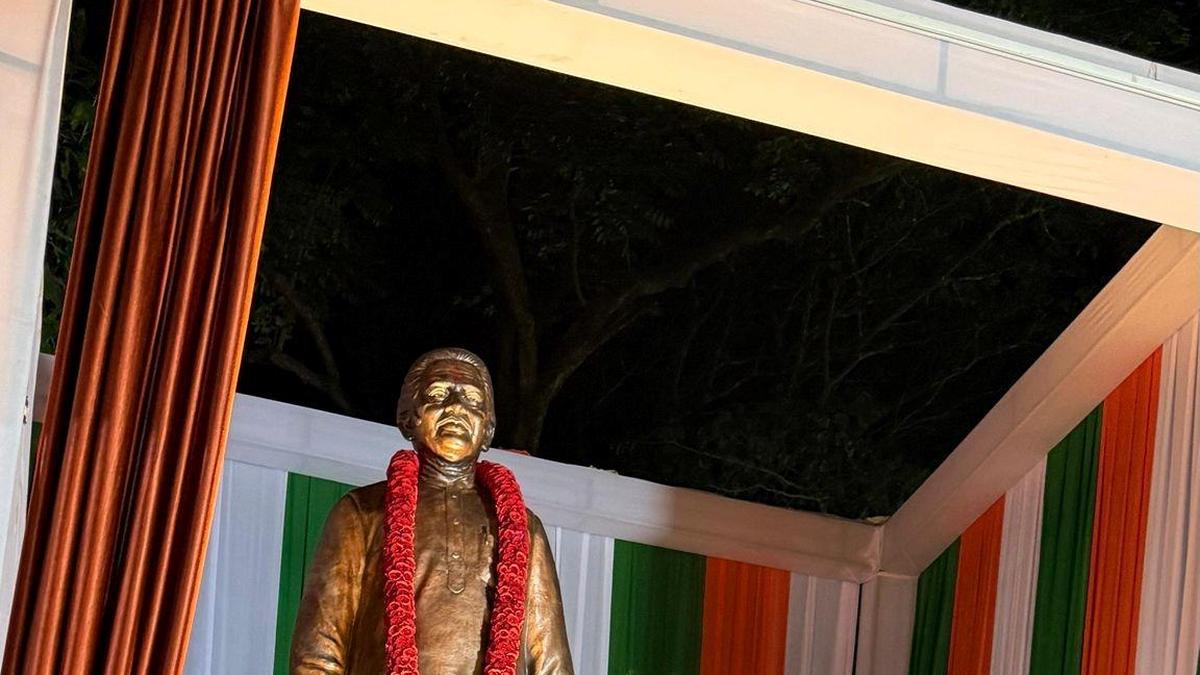
Belagavi has long regarded Shankaranand as one of its most influential leaders. Residents who gathered for the event spoke of his efforts to bring development projects to the region and his consistent advocacy for local interests at the national level. Many older residents shared personal anecdotes, recalling how he would visit villages, listen patiently to grievances and follow up on issues long after public meetings ended. Such memories underscored why the statue unveiling carried deep sentimental significance for the community.
The organisers of the event said the decision to install the statue was driven by a desire to preserve historical memory for future generations. In an era where political discourse often moves rapidly from one issue to another, they argued that physical memorials serve as anchors to the past. The statue of Shankaranand, placed prominently in Belagavi, is intended to encourage young people to learn about leaders who combined political ambition with social responsibility. Educational institutions in the area have expressed interest in using the site as a point of discussion on regional political history.
Family members of the late leader expressed gratitude for the gesture, describing it as a reaffirmation of Shankaranand’s bond with the people. They said he had always believed that public office was a means to serve rather than a symbol of power. According to them, seeing citizens gather voluntarily to honour his memory would have been deeply meaningful to him. Their words added a personal dimension to the event, reminding attendees that behind public achievements stood a man guided by personal values and commitments.
A Life Rooted in Public Service and Cooperative Values
Speakers at the event traced B. Shankaranand’s political journey, highlighting his early involvement in public life and his steady rise through the ranks. He was known for his strong organisational skills and ability to build consensus, traits that served him well both in state and national politics. Colleagues recalled that he often prioritised institution-building over short-term political gains, a quality that set him apart in a competitive political environment. His work in strengthening cooperative structures was repeatedly cited as one of his most enduring contributions.
As a Union minister, Shankaranand was associated with portfolios that required close engagement with grassroots realities. Those who worked with him said he believed policy should be informed by lived experience rather than abstract theory. He frequently drew on feedback from farmers, workers and cooperative members while shaping decisions. This approach, they argued, helped bridge the gap between policy formulation and implementation. The statue unveiling served as an opportunity to reflect on this hands-on style of governance, which many felt is increasingly rare.
Several speakers emphasised Shankaranand’s role in promoting cooperative movements as tools for economic empowerment. At a time when access to credit and institutional support was limited for many rural communities, he championed cooperative banks and societies as inclusive alternatives. Leaders from the cooperative sector present at the event acknowledged his efforts in providing policy support and institutional backing. They noted that many cooperatives that thrive today owe their stability to frameworks strengthened during his tenure.
The unveiling ceremony also highlighted Shankaranand’s commitment to democratic values. Speakers noted that he remained accessible to constituents even after attaining national prominence. He was known to maintain regular contact with local leaders and party workers, ensuring that decision-making remained grounded. This approach fostered loyalty and trust, contributing to his long and influential career. The statue, they said, symbolises not just individual achievement but a style of politics rooted in dialogue and accountability.
Younger political leaders attending the event spoke about the relevance of Shankaranand’s legacy in contemporary times. They argued that his emphasis on cooperation, inclusivity and ethical leadership offers valuable lessons in an era of polarisation. By commemorating his contributions through a public monument, they said, society acknowledges the importance of continuity in political values. The statue thus becomes a bridge between generations, linking past experiences with present challenges.
The location chosen for the statue was also significant. Situated in a prominent public space, it ensures visibility and accessibility. Organisers said the intent was to integrate the memorial into the daily life of the city rather than confining it to a secluded corner. Passersby stopping to observe the statue during the ceremony reflected the organisers’ aim of making the tribute a living part of Belagavi’s urban landscape. This visibility reinforces the idea that public service is a shared civic ideal.
Belagavi Remembers and Redefines Its Political Heritage
The unveiling sparked broader conversations about Belagavi’s political heritage and its contribution to state and national leadership. Speakers noted that the region has produced several influential figures who shaped policy beyond local boundaries. Shankaranand’s statue, they argued, adds to this narrative by highlighting the city’s role in nurturing leaders with national impact. The event thus served as both a tribute to an individual and a celebration of the region’s political legacy.
Residents expressed hope that the statue would encourage civic pride and historical awareness. Teachers attending the ceremony suggested that local history often receives limited attention in formal education. Public memorials like this, they said, can spark curiosity and dialogue among students. By learning about Shankaranand’s life, young people may gain insights into the evolution of democratic institutions and the importance of public engagement. Such educational value was cited as a key reason for supporting the installation.
Political observers present at the event remarked on the rare display of cross-party respect. Leaders from different political backgrounds acknowledged Shankaranand’s contributions, setting aside ideological differences. This atmosphere of mutual respect was seen as reflective of the leader’s own approach to politics. Many felt that such moments are important in reinforcing democratic culture, reminding society that public service can transcend party lines. The statue unveiling thus became a symbolic reaffirmation of shared values.
The event also provided an occasion to discuss the challenges facing cooperative institutions today. Speakers drew parallels between Shankaranand’s efforts and current debates on economic inclusion and financial stability. They argued that revisiting his policies could offer guidance in addressing contemporary issues. By linking past achievements to present concerns, the ceremony avoided being purely retrospective. Instead, it positioned Shankaranand’s legacy as a source of ongoing relevance and inspiration.
Members of civil society organisations attending the event highlighted Shankaranand’s engagement beyond formal politics. They recalled his involvement in social initiatives and his support for community-based organisations. Such efforts, they said, demonstrated a holistic understanding of development that went beyond legislative achievements. The statue stands as recognition of this broader contribution, encompassing both political leadership and social commitment.
As the ceremony concluded, citizens lingered at the site, taking photographs and engaging in conversations about the leader’s life. The atmosphere suggested that the unveiling had succeeded in rekindling collective memory. For many, it was an opportunity to reconnect with a period when political leadership was closely tied to personal relationships and community engagement. This emotional resonance underscored why the event was described by organisers as both historic and heartfelt.
The unveiling of B. Shankaranand’s statue in Belagavi ultimately represented more than the installation of a monument. It was an affirmation of values that shaped a generation of leadership and a reminder of the responsibilities that come with public office. By commemorating his life in a public space, the city has chosen to keep alive a conversation about service, integrity and cooperation. As Belagavi moves forward, the statue stands quietly yet powerfully, inviting reflection on the past while inspiring commitment to the future.
Follow: Karnataka Government
Also read: Home | Channel 6 Network – Latest News, Breaking Updates: Politics, Business, Tech & More
