
The Karnataka government has announced that a high-level committee will be constituted to examine the recruitment process at Karnataka State Law University and submit its report within two months. The decision follows sustained concerns raised by faculty members, aspirants and legal academics regarding alleged irregularities, procedural lapses and lack of transparency in recent appointments. Officials said the committee will review existing recruitment norms, examine specific complaints and recommend corrective measures to ensure fairness, accountability and institutional integrity. The move is being viewed as a significant intervention aimed at restoring confidence in the functioning of one of the State’s premier legal education institutions.
The announcement comes at a time when the university has been under scrutiny for delays in appointments and allegations that established procedures were not uniformly followed. Several teaching and non-teaching posts have remained vacant, affecting academic schedules and administrative efficiency. Aspirants have complained that recruitment notifications lacked clarity and that selection processes were inconsistent. The government’s decision to set up a committee is expected to provide an independent assessment of these issues and chart a way forward for systematic reform.
Senior officials indicated that the committee will comprise legal experts, senior academicians and representatives familiar with university governance. Its mandate will include examining past recruitment exercises, identifying gaps in policy implementation and suggesting changes to align university practices with broader higher education norms. The two-month deadline, officials said, reflects the urgency of resolving the issue without prolonged uncertainty. The report is expected to form the basis for further administrative or policy decisions by the State.
Faculty members at the university have welcomed the move, saying it could help address long-standing grievances. Some have pointed out that prolonged vacancies have placed additional workload on existing staff, affecting both teaching quality and research output. Others have stressed that uncertainty around recruitment discourages talented candidates from applying. They expressed hope that a transparent review process would lead to clear guidelines and predictable timelines for future appointments.
Students, too, have expressed concern over the impact of recruitment delays. Law students preparing for competitive careers rely heavily on stable faculty support, mentoring and consistent coursework. Student representatives said that disruptions caused by staff shortages have affected classroom engagement and academic continuity. They said the committee’s review should prioritise the academic interests of students alongside administrative considerations.
The government has maintained that the decision to appoint a committee is not intended to cast aspersions on individuals but to strengthen institutional processes. Officials emphasised that universities play a crucial role in shaping future professionals, and any perception of unfairness in recruitment can undermine their credibility. By initiating a structured review, the State aims to ensure that Karnataka State Law University adheres to the highest standards of governance and merit-based selection.
Concerns Over Recruitment Practices and Institutional Impact
Concerns surrounding recruitment at Karnataka State Law University have been building over the past few years, with stakeholders pointing to procedural inconsistencies and lack of timely communication. Aspirants have alleged that selection criteria were not clearly outlined in notifications, leading to confusion and mistrust. Some candidates claimed that interview processes lacked uniformity, while others questioned delays in publishing final selection lists. These concerns gradually escalated, prompting demands for an independent inquiry.
Legal academics observing the situation noted that recruitment controversies can have long-term consequences for academic institutions. They argued that when appointment processes are questioned, it affects not only those directly involved but also the institution’s reputation in the larger academic community. For a specialised university like KSLU, which oversees legal education across the State, credibility is particularly important. Any erosion of trust can impact collaborations, research initiatives and student enrolment.
The committee is expected to examine whether recruitment rules were followed as prescribed and whether deviations, if any, were justified. This includes reviewing the composition of selection panels, adherence to reservation policies and compliance with regulatory frameworks governing higher education. Experts say such a comprehensive review is essential to identify systemic issues rather than addressing complaints in isolation. A structured assessment can help distinguish between procedural errors and intentional lapses.
Another issue likely to be examined is the impact of recruitment delays on affiliated law colleges. Karnataka State Law University plays a coordinating role for numerous law colleges across the State, including curriculum design, examinations and faculty development. Shortages in key academic positions at the university can affect these functions, leading to ripple effects across the legal education ecosystem. College administrators have expressed hope that the committee’s recommendations will strengthen the university’s capacity to fulfil its responsibilities effectively.
Faculty associations have also highlighted the need for clear promotion and career advancement pathways. They argue that recruitment and promotion policies are interconnected and that ambiguity in one area can affect morale across the institution. The committee’s mandate, they hope, will include examining whether existing policies provide adequate clarity and fairness for both new recruits and existing staff. Such a holistic approach, they believe, is necessary for sustainable reform.
From an administrative perspective, officials have acknowledged that recruitment in public universities often involves navigating multiple regulations and approvals. Delays can occur due to procedural complexities, but critics argue that these should not excuse lack of transparency. The committee’s findings may help streamline processes, reducing administrative bottlenecks while ensuring compliance with rules. Observers say this could serve as a model for other universities facing similar challenges.
Road Ahead and Expectations from the Review Panel
As the committee prepares to begin its work, expectations among stakeholders are high. Many hope that the review will not only address past issues but also lay down a robust framework for future recruitment. Transparent timelines, clear eligibility criteria and standardised selection procedures are among the key demands voiced by faculty and aspirants alike. They believe such measures are essential to restore faith in the institution’s governance.
The two-month deadline set for the committee’s report has been described as both ambitious and necessary. Prolonged inquiries, critics argue, often lead to further uncertainty and delay corrective action. By setting a clear timeline, the government has signalled its intent to resolve the matter promptly. However, experts caution that the quality of the review should not be compromised for speed. A balanced approach, they say, is essential to ensure that recommendations are thorough and actionable.
Once the report is submitted, the government will need to decide on the next steps. This could include revising recruitment rules, reconstituting selection committees or, if necessary, revisiting specific appointments. Officials have indicated that any action taken will be guided by the committee’s findings and applicable legal provisions. Transparency in communicating these decisions will be crucial to rebuilding trust among stakeholders.
Students and aspirants are particularly keen on seeing tangible outcomes. Many have invested years preparing for academic careers in law and view university recruitment as a gateway to contributing to legal education and research. They hope the review will lead to a system that rewards merit and provides equal opportunity. Clear communication about future recruitment cycles, they say, would go a long way in reducing anxiety and speculation.
Legal education experts have emphasised that strong universities are foundational to a robust justice system. Faculty quality, academic autonomy and institutional integrity directly influence the calibre of legal professionals produced. In this context, the review of recruitment practices at Karnataka State Law University assumes wider significance. It is not merely an administrative exercise but a step towards strengthening the ecosystem of legal education in the State.
The committee’s work is also expected to examine alignment with national standards and best practices. As legal education evolves, universities must adapt to new pedagogical methods, interdisciplinary approaches and research priorities. Recruitment policies need to reflect these changes, attracting candidates with diverse expertise and innovative perspectives. Stakeholders hope the review will consider these broader trends while framing its recommendations.
There is also anticipation that the committee will recommend mechanisms for grievance redressal related to recruitment. Clear channels for raising concerns, along with time-bound resolution processes, could prevent future disputes from escalating. Such mechanisms would demonstrate the university’s commitment to accountability and responsiveness, qualities essential for any academic institution.
As Karnataka State Law University awaits the committee’s findings, the broader academic community will be watching closely. The outcome of this review could influence how recruitment reforms are approached across other State-run universities. For now, the decision to set up a committee with a defined timeline has been received as a positive and necessary step. Whether it leads to meaningful change will depend on the clarity, courage and commitment with which its recommendations are implemented.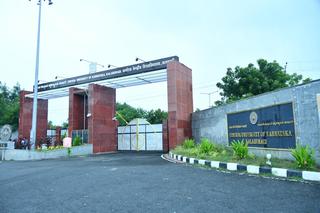
Ultimately, the announcement signals an acknowledgment that recruitment practices are central to the health of academic institutions. By initiating an independent review, the government has opened the door to course correction and renewal. For faculty, students and aspirants connected to Karnataka State Law University, the coming two months carry the promise of clarity and reform. The committee’s report, when it arrives, will be a critical moment in shaping the future of the university and reaffirming its role as a cornerstone of legal education in Karnataka.
Follow: Karnataka Government
Also read: Home | Channel 6 Network – Latest News, Breaking Updates: Politics, Business, Tech & More
