
In a significant relief for victims of cyber fraud, authorities in Kalaburagi have succeeded in restoring ₹2.73 crore to the bank accounts of individuals who were cheated through various online scams. The recovery, achieved through coordinated efforts of the cyber crime police, banks and digital payment platforms, has been hailed as a major breakthrough in tackling cyber fraud and rebuilding public confidence in the system. For many victims, the restoration of money represents more than financial recovery; it offers emotional closure after months of anxiety, helplessness and uncertainty.
Officials said the recovered amount pertains to multiple cases reported over recent months, involving phishing scams, fake investment schemes, online job frauds and impersonation crimes. Once complaints were registered, cyber crime teams acted swiftly to trace transaction trails and freeze suspect accounts before the money could be fully siphoned off. The success, they said, underscores the importance of timely reporting and inter-agency coordination in combating digital financial crimes, which have grown in scale and sophistication.
Several victims described the ordeal of discovering that their hard-earned savings had vanished in a matter of minutes. Many had initially assumed recovery was impossible, given the speed at which cyber criminals operate. The restoration of funds has therefore come as a profound relief. Victims recounted sleepless nights, strained family relationships and fear of financial ruin. For them, the police action has not only recovered money but also restored faith in institutional support systems.
Cyber crime officials in Kalaburagi said the recoveries were made possible by immediate action taken after complaints were lodged through official channels. In several cases, funds were frozen within hours, preventing complete withdrawal. Authorities emphasised that early reporting plays a critical role in recovery, as delays allow fraudsters to move money across multiple accounts or convert it into other assets. The success rate in these cases, officials noted, reflects growing expertise within cyber crime units.
The recovered amount also highlights the increasing prevalence of cyber fraud across urban and semi-urban regions. Kalaburagi, like many other districts, has witnessed a rise in online transactions due to digital banking, mobile wallets and e-commerce platforms. While these technologies offer convenience, they also expose users to new risks. Officials said criminals exploit lack of awareness, urgency and trust to deceive victims, often posing as bank officials, government representatives or investment advisors.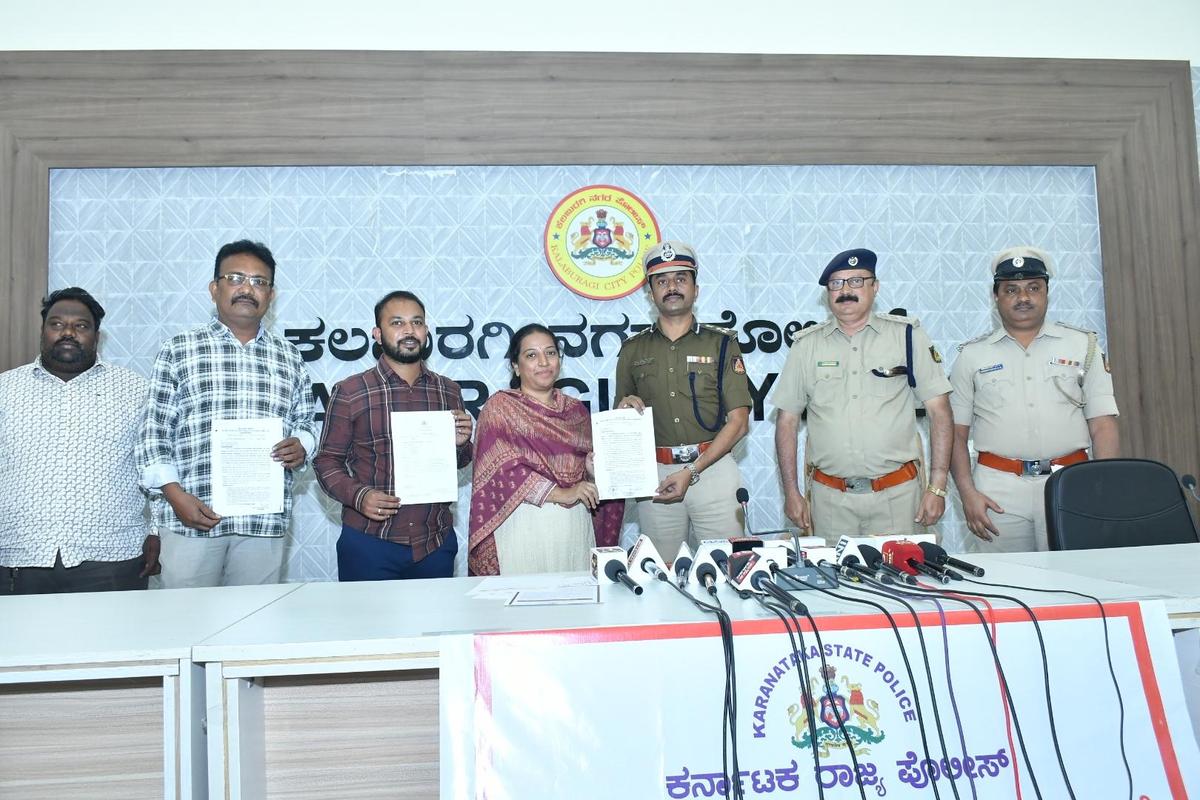
District authorities lauded the cyber crime police for their persistence and technical skill. They noted that digital crime investigation requires not only legal knowledge but also advanced understanding of financial systems and technology. The restoration of ₹2.73 crore, they said, sends a strong message that cyber crime is traceable and punishable, countering the perception that online fraudsters are beyond the reach of law enforcement.
Swift Action and Coordination Behind the Recovery
The recovery process began with the registration of complaints from victims who noticed unauthorised transactions or realised they had been deceived. Cyber crime police teams immediately analysed transaction details, identifying beneficiary accounts and transaction routes. Using this information, they issued freeze requests to banks and payment gateways, preventing further movement of funds. Officials said this rapid response is crucial, as cyber fraud typically involves splitting money across multiple accounts to evade detection.
Banks played a key role in facilitating the recovery by promptly acting on freeze and reversal requests. Officials from the banking sector said improved coordination with law enforcement has significantly enhanced their ability to respond to fraud alerts. Dedicated fraud monitoring cells within banks now track suspicious activity and cooperate closely with cyber crime units. This collaboration, they said, has reduced response times and improved recovery outcomes.
Digital payment platforms also assisted by sharing transaction logs and user data required for investigation. Authorities noted that compliance from intermediaries has improved in recent years, aided by clearer regulatory frameworks. This cooperation enabled investigators to reconstruct transaction chains and identify points where money could be intercepted. In several cases, partial withdrawals had already occurred, but remaining balances were successfully secured and returned to victims.
Cyber crime officials explained that the types of fraud involved varied widely. Some victims were lured into fake investment schemes promising high returns, while others fell prey to phishing links that captured banking credentials. Job seekers were targeted with offers requiring upfront payments, and senior citizens were tricked by callers impersonating officials. Despite the diversity of methods, investigators said the underlying pattern of fund movement was similar, allowing them to apply standard tracing techniques.
The recovery process also involved legal procedures, including obtaining necessary permissions and ensuring proper documentation. Officials said care was taken to verify claims and ensure that restored funds reached the rightful owners. This process, while time-consuming, is essential to maintain transparency and prevent misuse. Victims were required to provide identity proofs, transaction records and complaint acknowledgements before funds were credited back.
Senior police officers said the success reflects investments made in training and infrastructure for cyber crime units. Over the past few years, personnel have received specialised training in digital forensics, financial analysis and cyber laws. Dedicated cyber crime police stations and helplines have been established to handle complaints efficiently. These measures, officials said, are beginning to yield tangible results.
The recovery has also boosted morale within the police force. Investigators noted that cyber crime cases can be challenging, with criminals often operating across jurisdictions. Successful recoveries reaffirm the value of perseverance and technical expertise. Officers involved in the cases said the gratitude expressed by victims provided strong motivation to continue improving enforcement efforts.
Awareness, Prevention and the Road Ahead
While celebrating the recovery, authorities have stressed that prevention remains the most effective defence against cyber fraud. Officials pointed out that many victims were unaware of basic digital safety practices, such as not sharing one-time passwords, verifying callers’ identities and avoiding unsolicited links. They emphasised the need for sustained public awareness campaigns to educate citizens about evolving fraud tactics.
Police officials said they plan to conduct outreach programmes in schools, colleges, offices and residential communities. These sessions will focus on common fraud methods, reporting mechanisms and steps to take in case of suspected fraud. Special emphasis will be placed on reaching senior citizens and first-time digital users, who are often targeted by criminals. Authorities believe that informed users are less likely to fall victim to scams.
Victims who received their money back have echoed this sentiment, urging others to remain vigilant. Some admitted that in hindsight, warning signs were visible but ignored due to urgency or trust. Their experiences highlight the psychological manipulation employed by fraudsters, who create panic or excitement to override rational decision-making. Sharing such stories, officials say, can be a powerful tool in raising awareness.
The district administration has also called for stronger safeguards within financial institutions. While acknowledging improvements, officials said continuous monitoring and technology upgrades are necessary to stay ahead of criminals. Artificial intelligence-based fraud detection, real-time alerts and transaction limits are among the measures being explored. Authorities stressed that combating cyber crime requires constant adaptation, as criminals quickly modify their techniques.
Legal experts noted that recovery of funds also depends on the legal framework governing digital transactions. Swift action under existing laws enables authorities to freeze accounts and reverse transactions. However, they cautioned that delays in reporting or jurisdictional complexities can still hamper recovery. Strengthening legal processes and ensuring uniform implementation across regions will be crucial as digital crime grows.
The restoration of ₹2.73 crore has also sparked discussions about victim support beyond financial recovery. Counsellors pointed out that cyber fraud often causes emotional distress, shame and loss of confidence. Victims may hesitate to report incidents due to fear of stigma. Authorities have encouraged victims to come forward without hesitation, assuring confidentiality and support. Building a non-judgmental reporting environment, they said, is essential for effective enforcement.
District officials have described the recovery as a milestone but not an endpoint. They acknowledged that many cases still result in partial or no recovery, especially when reporting is delayed. Nonetheless, each successful case strengthens institutional learning and improves future response. Officials said data from these cases will be used to refine investigation strategies and training programmes.
The broader impact of the recovery extends to public trust in digital systems. As India continues its push towards digital payments and online services, confidence in security mechanisms is vital. Visible successes like this reassure citizens that the system can respond effectively when things go wrong. Authorities believe such confidence is essential for sustaining digital adoption and economic growth.
In the coming months, the cyber crime unit plans to intensify surveillance of emerging fraud patterns. Officials said criminals are increasingly using social media, messaging apps and sophisticated impersonation techniques. Staying ahead will require continuous skill development and collaboration with technology providers. The experience gained from these recoveries will inform future strategies.
For the victims in Kalaburagi, the restoration of ₹2.73 crore marks the end of a painful chapter. Many expressed gratitude towards the police and banking officials who worked tirelessly on their cases. Their relief reflects the human dimension of cyber crime enforcement, where timely action can transform despair into hope. The success stands as a reminder that while cyber fraud poses serious challenges, determined and coordinated efforts can deliver justice.
As digital transactions become an integral part of daily life, the lesson from Kalaburagi is clear. Vigilance, swift reporting and institutional coordination are key to protecting citizens from cyber crime. The recovery of ₹2.73 crore is not just a financial statistic but a powerful affirmation that systems, when used effectively, can safeguard trust in the digital age.
Follow: Karnataka Government
Also read: Home | Channel 6 Network – Latest News, Breaking Updates: Politics, Business, Tech & More
