
High Command Calculations Versus Grassroots Resistance
As Karnataka prepares for the long-delayed civic body elections, the Bharatiya Janata Party finds itself navigating a familiar but politically sensitive crossroads. The BJP high command is increasingly inclined towards forging an alliance with the Janata Dal (Secular) for local body polls, even as strong resistance continues within the State unit. The move, if enforced, could reshape electoral arithmetic across urban local bodies, zilla panchayats, and taluk panchayats, but it also risks unsettling the party’s grassroots cadre, many of whom see the JD (S) as a long-term rival rather than a strategic partner.
Senior party sources indicate that the central leadership views a coalition as a pragmatic necessity in the current political climate. With the Congress firmly in power in Karnataka and organisationally strong at the local level, a divided opposition could significantly weaken the BJP’s prospects. The JD (S), despite its shrinking footprint, still retains influence in specific regions, particularly in parts of Old Mysuru and select rural belts. For the high command, an alliance is less about ideological convergence and more about electoral consolidation.
The tension between the central leadership’s strategic calculations and the State unit’s ground realities is also reflected in the party’s communication channels. While the high command has begun circulating narratives about the benefits of a coalition to select leaders, district-level cadres report mixed reactions, with many fearing loss of influence and marginalisation. Meetings held in urban centres have seen heated discussions over seat-sharing formulas, candidate prioritisation, and potential rebel movements. Observers note that managing these internal dynamics requires careful messaging and reassurance from the top, lest dissatisfaction translates into poor campaign performance or active resistance from party workers who feel their efforts are undervalued.
Political analysts say the situation underscores the growing role of centralisation in party politics, particularly in national parties like the BJP. While historically Karnataka’s unit enjoyed significant autonomy in local election strategy, recent patterns show the high command asserting influence on key alliances and candidate selections. This has benefits in terms of uniform strategy and coordination, but also risks alienating experienced State leaders who understand local demographics, caste dynamics, and personal networks. In civic elections, where votes are often swayed by community ties and candidate familiarity rather than ideology, misalignment between strategy and local knowledge could prove costly.
Another significant challenge is reconciling the ambitions of individual leaders at both the BJP and JD(S) ends. Seat-sharing negotiations, especially in contested urban wards, have generated friction, with leaders from both parties demanding priority candidacies. These demands risk triggering intra-alliance rivalries, which could undermine cohesion and voter confidence. Party strategists emphasise that balancing these aspirations while maintaining a united front requires careful compromise, disciplined enforcement of alliance agreements, and transparent communication. Failure to manage personalities, they argue, could reduce the strategic advantage of the coalition into mere symbolic collaboration without operational effectiveness.
The alliance debate has also prompted discussion about electoral messaging. The BJP’s narrative has traditionally focused on governance performance and a strong leadership image, whereas JD(S) campaigns emphasise local issues and personal touch with voters. Combining these messaging strategies without diluting clarity is a delicate task. Campaign materials, rallies, and public outreach efforts must be coordinated to avoid sending contradictory signals to voters. Political commentators note that civic elections are sensitive to perception, and any visible disagreement or incoherence between alliance partners could be exploited by the Congress, reinforcing the importance of disciplined alignment before the first public campaign.
Financial considerations also play a crucial role in shaping the alliance strategy. Pooling resources between BJP and JD(S) allows the alliance to contest more seats effectively, fund voter outreach campaigns, and enhance visibility in urban and semi-urban areas. Smaller parties or independent candidates often struggle with these logistical costs, making coalition support critical for maximum reach. However, central leadership must also account for the long-term impact on cadre morale and ensure that shared resources are distributed fairly. Mismanagement in resource allocation could exacerbate resentment among party workers who have invested years in local organisational building.
Finally, the impending alliance decision could have ripple effects beyond civic polls. A successful BJP-JD(S) coalition would signal to other regional and national actors that strategic flexibility can overcome historical rivalries, potentially influencing Assembly and parliamentary strategies. Conversely, forcing a coalition without local buy-in could undermine the BJP’s internal cohesion, weaken candidate loyalty, and embolden opposition narratives about party instability. As Karnataka approaches polling season, the high command faces a complex calculation: prioritising immediate electoral gains while managing long-term organisational health, balancing pragmatism with political sentiment, and ensuring that the alliance, if formed, translates into tangible success at the ballot box.
However, resistance from the State unit has been vocal and persistent. Many BJP leaders argue that local body elections are fundamentally different from Assembly or parliamentary polls. Civic elections are heavily influenced by personal equations, local rivalries, and cadre-level mobilisation. BJP workers who have spent years opposing JD (S) leaders at the grassroots level fear that a sudden alliance could demoralise workers, confuse voters, and benefit JD (S) disproportionately. Several district leaders have privately conveyed that seat-sharing at the local level could erode the BJP’s organisational strength rather than enhance it.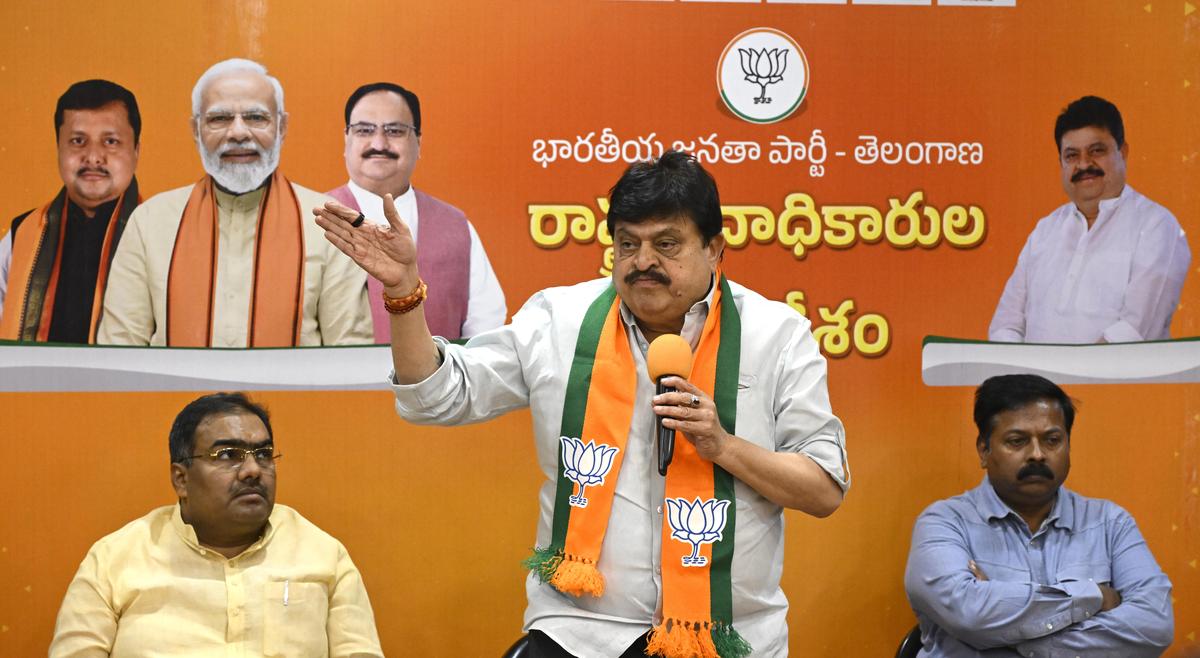
The unease is particularly sharp in districts where BJP and JD (S) cadres have a history of intense competition, including physical confrontations and bitter electoral battles. Local leaders argue that alliances decided at the top often fail to account for ground realities, where cooperation between rival cadres is neither automatic nor guaranteed. They fear that forced alliances could result in sabotage, lacklustre campaigning, or even rebel candidates, undermining the very objective of coalition politics.
Despite these concerns, the central leadership appears determined to assert its authority. Party strategists believe that opposition unity, even if uneasy, is essential to counter the Congress’ welfare-driven political narrative. They argue that municipal governance failures, rising urban issues, and allegations of mismanagement can be better capitalised upon through a united front. From this perspective, internal discomfort is seen as a manageable cost compared to the strategic disadvantage of contesting alone.
JD (S) leaders, meanwhile, have signalled cautious openness to an alliance, aware that their party’s survival and relevance increasingly depend on strategic partnerships. For the JD (S), civic polls offer an opportunity to regain lost ground and remain politically visible between larger electoral battles. However, they too face internal challenges, with sections of their cadre wary of playing a secondary role in a BJP-led alliance.
Political observers note that the BJP’s dilemma reflects a broader tension between centralised decision-making and regional autonomy within national parties. While the high command prioritises numbers and optics, State units are more attuned to local dynamics. In Karnataka, this tension is amplified by the State BJP’s ongoing efforts to rebuild after electoral setbacks and leadership transitions. Many leaders fear that an externally imposed alliance could derail internal consolidation efforts.
The timing of the decision adds another layer of complexity. Civic polls are expected to be announced soon, leaving little room for prolonged negotiation or cadre reconciliation. If the high command moves swiftly to formalise an alliance, State leaders may have limited scope to influence terms or prepare the ground. Conversely, delaying the decision risks sending mixed signals to voters and potential allies.
Electoral Arithmetic, Risks, and the Larger Political Message
From a purely numerical standpoint, the BJP-JD (S) alliance presents both opportunities and risks. In urban centres like Bengaluru, the BJP traditionally enjoys a stronger presence, while the JD (S) influence is limited. In such areas, BJP leaders question the value of accommodating a weaker partner at the cost of internal dissatisfaction. In contrast, in semi-urban and rural pockets, JD (S) vote banks could prove decisive in close contests, potentially preventing vote-splitting that benefits the Congress.
Analysts point out that local body elections are often less about party ideology and more about service delivery, civic infrastructure, and candidate credibility. An alliance could help pool resources and avoid three-cornered contests, but it could also blur accountability. Voters may struggle to attribute responsibility for governance outcomes, weakening the opposition’s ability to present a clear alternative to the ruling party.
There is also the question of messaging. The BJP has consistently projected itself as a strong, independent force capable of winning elections on its own. Repeated alliances with regional parties risk diluting this narrative, particularly among urban and youth voters who value clarity and decisiveness. State leaders worry that aligning with the JD (S), a party they have often criticised for opportunistic politics, could expose them to charges of inconsistency and political expediency.
At the same time, the Congress is closely watching the developments, ready to exploit any visible discord within the opposition. A fractured BJP-JD (S) arrangement could provide the ruling party with ammunition to portray the opposition as divided and power-hungry. Congress leaders are expected to emphasise stability and continuity in civic governance, contrasting it with what they may describe as an unstable opposition alliance.
Within the BJP, the debate has also triggered introspection about long-term strategy in Karnataka. Some leaders argue that alliances should be tactical and limited, while the party focuses on expanding its base organically. Others contend that in a fragmented political landscape, rigid adherence to solo contests could be counterproductive. The high command appears to lean towards the latter view, prioritising immediate electoral outcomes over long-term cadre sentiment.
The final decision, when it comes, is likely to set a precedent for future elections in the State. If the high command overrules the State unit successfully and delivers electoral gains, it could strengthen central authority within the party. Conversely, if the alliance backfires, it may reinforce calls for greater autonomy for State units in electoral decision-making.
For voters, the alliance debate underscores the fluid nature of political alignments in civic elections. While parties argue over strategy, local issues such as water supply, waste management, roads, and urban planning remain at the forefront of public concern. How effectively any alliance translates into improved governance will ultimately shape voter response.
As Karnataka heads towards civic polls, the BJP’s alliance dilemma highlights the complex interplay between strategy, sentiment, and structure within political parties. Whether the high command’s calculated approach prevails over grassroots resistance remains to be seen. What is certain, however, is that the decision will have implications far beyond the immediate election, influencing party cohesion, opposition politics, and the broader narrative of governance in the State.
Follow: Karnataka Government
Also read: Home | Channel 6 Network – Latest News, Breaking Updates: Politics, Business, Tech & More
