
New Delhi – Union Home Minister Amit Shah made significant remarks on Friday regarding demographic changes in India, with the Amit Shah Muslim population statement becoming the centerpiece of his address at a Delhi event. The Home Minister attributed the increase in Muslim population to infiltration from neighboring countries rather than natural population growth.
Speaking at the event, Shah emphasized that voting rights in the country should exclusively be available to citizens, linking this principle to broader concerns about electoral integrity and national security. The Amit Shah Muslim population comments sparked immediate attention for their directness on a politically sensitive demographic topic.
Statistical Claims on Population Trends
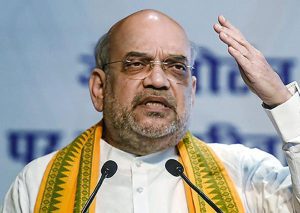
The Amit Shah Muslim population statement included specific statistical claims about demographic shifts in India. According to Shah, the Muslim population has increased by 24.6 percent, while the Hindu population has decreased by 4.5 percent over a comparable period.
Shah explicitly rejected fertility rate explanations for these demographic changes, attributing them instead to infiltration from Pakistan and Bangladesh. “I am telling you this because it hasn’t happened because of the fertility rate. It has happened because of infiltration,” the Home Minister stated, making the Amit Shah Muslim population remarks central to his argument about border security and immigration control.
Partition and Infiltration Connection
The Amit Shah Muslim population discussion extended to historical context, with the Home Minister emphasizing that India’s partition occurred due to religious considerations. Shah noted that Pakistan was created on both sides of India, and infiltration from those borders resulted in demographic changes within the country.
This historical framing of the Amit Shah Muslim population argument connected contemporary immigration concerns with the partition’s legacy, suggesting that current demographic trends represent ongoing consequences of that historical division.
Refugee Versus Infiltrator Distinction
Shah made a careful distinction between refugees and infiltrators when explaining the Amit Shah Muslim population trends. He argued that the Hindu population that decreased in Pakistan and Bangladesh saw many individuals take refuge in India legitimately as refugees fleeing persecution.
Conversely, the Amit Shah Muslim population increase was attributed to infiltration rather than legitimate refugee movements. “The Muslim population that increased in India wasn’t due to fertility, it was because many Muslims infiltrated into the country,” Shah stated, drawing a sharp contrast between these two categories of cross-border movement.
Constitutional Spirit and Voting Rights
The Amit Shah Muslim population remarks connected demographic concerns with electoral integrity issues. Shah asserted that the inclusion of infiltrators in voters’ lists pollutes the spirit of the Constitution, emphasizing that voting rights should be exclusively reserved for Indian citizens.
Also Read: Secretariat Complex Delhi PWD Shortlists 6 Prime Sites — Big Development Move
This constitutional framing of the Amit Shah Muslim population discussion attempted to position the Home Minister’s concerns within a legal and democratic framework rather than purely demographic or religious terms. Shah emphasized that free and fair elections cannot occur unless the voter list accurately reflects eligible Indian citizens.
Special Intensive Revision Emphasis
Shah declared that infiltration and the Election Commission’s Special Intensive Revision (SIR) of electoral rolls should not be viewed through a political lens. The Amit Shah Muslim population comments were accompanied by arguments that these represent national issues transcending partisan politics.
The Home Minister emphasized that the SIR exercise, designed to clean up electoral rolls, serves the constitutional responsibility of ensuring only eligible citizens participate in elections. The Amit Shah Muslim population discussion thus connected to broader electoral reform initiatives.
Congress Criticism on SIR
Shah accused the Congress party of entering “denial mode” on the SIR issue, noting that similar exercises occurred during Congress governments. The Amit Shah Muslim population remarks were positioned alongside criticism of opposition parties opposing the electoral roll revision process.
“The opposition is opposing this exercise because their vote banks are getting cut,” Shah claimed, suggesting political motivations behind resistance to electoral roll cleaning. This framing of the Amit Shah Muslim population issue as connected to vote bank politics added a partisan dimension to the discussion.
Constitutional Responsibility Defense
The Amit Shah Muslim population comments were defended as falling within the Election Commission’s constitutional mandate. Shah stated that the EC has a constitutional responsibility to maintain accurate voter lists and invited those with concerns to approach the courts.
“You can go to court if you have any issues,” Shah said, positioning the Amit Shah Muslim population discussion within legal and constitutional frameworks rather than merely political rhetoric.
Future Political Implications
Shah suggested that eventually even opposition parties would face consequences from inaccurate voter lists, implying that the Amit Shah Muslim population concerns and electoral roll revision serve broader democratic interests rather than narrow political advantage.
The Home Minister predicted that a time would come when opposition parties would also experience challenges from compromised voter lists, framing the Amit Shah Muslim population issue as universally important for democratic integrity.
Electoral Integrity Emphasis
Shah concluded by emphasizing that free and fair elections require voter lists matching the legal definition of voters as Indian citizens who have attained eligible age. This principle, connected to the Amit Shah Muslim population discussion, represented his core argument for strict electoral roll verification and removal of alleged infiltrators from voting lists.
