
One year after assurances were made, thousands of Accredited Social Health Activist (ASHA) workers across Karnataka say they are still waiting for the promised honorarium revision, forcing them back to the streets with a renewed strike planned for February 12. The prolonged delay has deepened frustration among the frontline health workers, many of whom played a critical role during the pandemic and continue to shoulder essential responsibilities in maternal care, immunisation, disease surveillance, and community health outreach. For them, the unfulfilled promise has become a symbol of systemic neglect rather than administrative delay.
ASHA workers, who form the backbone of rural and urban public health delivery, argue that their current honorarium does not reflect the volume, complexity, or importance of the work they perform. Despite repeated representations, protests, and negotiations over the past year, they say tangible outcomes have failed to materialise. The renewed strike call reflects not just economic distress, but also emotional exhaustion stemming from what workers describe as a lack of respect and recognition from the system they serve.
Last year, after a sustained agitation, the State government had announced that it would consider revising the honorarium and improving working conditions. That announcement raised hopes among ASHA workers, many of whom temporarily suspended protests in anticipation of concrete action. However, with no official notification or implementation even after a year, patience has worn thin. Worker unions say repeated follow-ups have yielded assurances but no timelines, prompting the decision to resume collective action.
ASHA workers point out that their role has expanded significantly over the years. Beyond basic health awareness, they are now tasked with tracking non-communicable diseases, ensuring institutional deliveries, monitoring nutrition, and supporting national health programmes. Despite this expanded workload, their remuneration remains low and largely incentive-based, making income unpredictable. Many workers say they struggle to make ends meet, balancing long hours of public service with domestic responsibilities.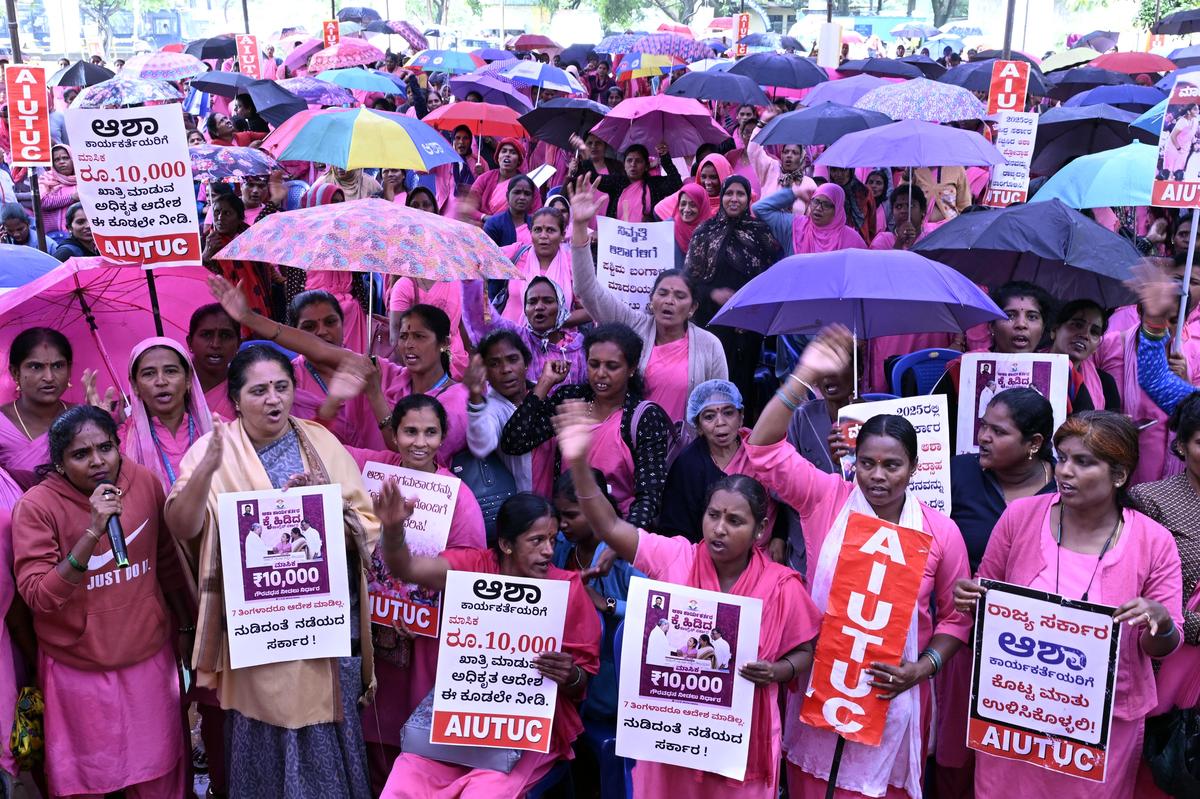
The planned strike on February 12 is expected to see participation from ASHA workers across districts, potentially affecting routine health services at the grassroots level. While emergency services are expected to continue, unions warn that immunisation drives, surveys, and outreach programmes may be disrupted. The strike announcement has already triggered concern among health officials, who fear that prolonged unrest could impact public health outcomes, particularly in vulnerable communities.
Government officials maintain that discussions are ongoing and cite financial constraints and procedural requirements as reasons for the delay. They argue that honorarium revisions require coordination with the Centre and budgetary approvals. ASHA workers, however, reject this explanation, pointing out that delays disproportionately burden those at the lowest rungs of the health system. They argue that if funds can be mobilised for other priorities, fair compensation for frontline workers should not be treated as optional.
For many ASHA workers, the issue extends beyond money. They speak of dignity, job security, and formal recognition as workers rather than volunteers. The continued ambiguity around their status, they say, allows the system to extract labour without providing adequate safeguards. As the strike date approaches, emotions are running high, with workers expressing a mix of anger, disappointment, and determination.
Frontline Without Security: The Cost of Delay on Women Workers
The ASHA workforce in Karnataka is overwhelmingly female, and the honorarium delay has exposed deeper gendered dimensions of public sector labour. Many ASHA workers come from economically weaker backgrounds and rely heavily on their monthly payments to support families. With rising living costs, stagnant honorariums have intensified financial stress, pushing some into debt. Worker leaders argue that delays reflect a broader tendency to undervalue care work performed by women.
Health policy experts note that ASHA workers occupy a paradoxical position within the healthcare system. They are essential for last-mile delivery, yet remain outside formal employment structures. This liminal status leaves them without benefits such as pensions, paid leave, or social security, even as expectations from them continue to grow. The year-long delay in implementing promised revisions has reinforced fears that policy commitments to ASHA workers are not backed by institutional urgency.
The proposed strike has also reignited debate on the sustainability of India’s community health model. ASHA workers are often the first point of contact between the State and citizens, especially in rural and marginalised areas. When they feel demoralised or unheard, the impact reverberates through the healthcare system. Public health specialists warn that repeated confrontations with frontline workers risk weakening trust at the community level.
Political responses to the issue have been mixed. While some leaders have expressed solidarity and urged the government to act swiftly, others have downplayed the strike, framing it as a recurring administrative issue. ASHA unions counter that such responses trivialise genuine hardship. They argue that if promises are made publicly, accountability must follow, regardless of political cycles or fiscal pressures.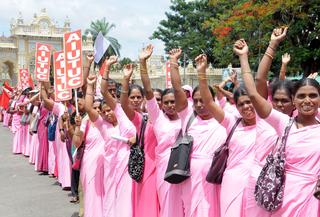
The State health department has appealed to ASHA workers to reconsider the strike, emphasising dialogue over disruption. However, union leaders say dialogue without deadlines has become meaningless. They insist that only a clear written commitment with a defined timeline will restore trust. Until then, they argue, collective action remains their only leverage.
The situation has also drawn attention to disparities across States. ASHA workers in some regions receive higher honorariums and additional benefits, fuelling resentment among Karnataka workers who feel left behind. Comparisons with neighbouring States have strengthened demands for parity, with unions questioning why frontline workers are treated differently based on geography.
A Test of Commitment and the Road Ahead
As February 12 nears, the standoff between ASHA workers and the government has become a test of political will and administrative responsiveness. The outcome will signal how seriously frontline labour concerns are taken beyond moments of crisis. For ASHA workers, the strike is not undertaken lightly; many worry about the impact on communities they serve. Yet they argue that continued silence leaves them with no alternative.
Civil society groups and public health advocates have urged the government to view the issue as an investment rather than an expense. Fair compensation, they argue, improves motivation, retention, and service quality. Ignoring ASHA workers’ demands risks higher long-term costs through workforce attrition and weakened health outcomes. The year-long delay has already strained morale; further inaction could deepen the damage.
There is also a growing call to formally integrate ASHA workers into the public health workforce with defined rights and benefits. Experts say honorarium revisions alone may not address structural issues, but they are a necessary first step. A transparent policy framework, they argue, would reduce recurring unrest and provide clarity to both workers and administrators.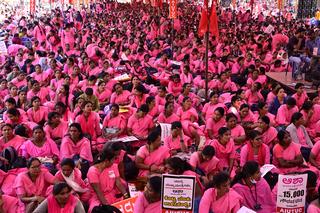
For the workers themselves, the struggle has become deeply personal. Many recount stories of working through pandemics, floods, and heatwaves with minimal support. The contrast between public praise during crises and neglect afterward has left lasting scars. The February 12 strike, they say, is about reclaiming visibility and voice in a system that often treats them as invisible.
As negotiations continue behind the scenes, the coming days will determine whether confrontation or compromise prevails. A timely announcement could avert disruption and restore fragile trust. Failure to act, however, may entrench resentment and prolong unrest. For Karnataka’s ASHA workers, one year of waiting has already passed. What happens next will define not only their future, but the State’s commitment to those who stand at the frontline of public health every day.
Administrators within the health system privately acknowledge that prolonged uncertainty has weakened morale among ASHA workers, affecting efficiency at the grassroots. While most workers continue to perform duties out of commitment to their communities, officials admit that motivation cannot be sustained indefinitely without institutional support. Routine tasks such as data collection, follow-ups with expectant mothers, and disease surveillance require trust and cooperation, which are increasingly strained as workers feel their own welfare is being sidelined.
The financial strain faced by ASHA workers has also had ripple effects on their families. Many workers report being forced to seek supplementary income through informal labour, often after completing long hours of health-related work. This dual burden has led to physical exhaustion and emotional burnout. Unions warn that unless compensation improves, the system risks losing experienced workers who are deeply embedded in local communities and possess invaluable institutional knowledge.
Women’s rights groups have stepped into the debate, framing the issue as one of labour justice rather than welfare. They argue that describing ASHA workers as volunteers obscures the reality of their work, which involves accountability, targets, and performance assessments. The delay in honouring financial commitments, activists say, reflects a broader pattern of undervaluing feminised labour, particularly when it operates outside formal employment categories.
The strike announcement has also prompted discussions within policy circles about decentralised decision-making. Some experts suggest empowering States with greater fiscal flexibility to address frontline worker demands without prolonged Centre–State coordination. Others counter that a uniform national framework is necessary to prevent disparities. The Karnataka standoff has thus become part of a wider conversation on how community health programmes should be funded and governed in the long term.
Political analysts believe the February 12 strike could have symbolic consequences beyond the health sector. ASHA workers are a visible presence in villages and urban settlements, and their discontent resonates with broader concerns about rising costs of living and stagnant incomes. If unresolved, the issue could feed into larger narratives of governance fatigue and unkept promises, particularly among women voters and lower-income households.
As the deadline approaches, ASHA workers say they remain open to dialogue but no longer willing to rely on verbal assurances. Their demand, they insist, is simple: dignity backed by delivery. Whether the government responds with urgency or allows the impasse to deepen will shape not only the immediate outcome of the strike, but also the credibility of future engagements with frontline workers whose labour quietly sustains the public health system every day.
Follow: Karnataka Government
Also read: Home | Channel 6 Network – Latest News, Breaking Updates: Politics, Business, Tech & More
