
The Belagavi District Central Cooperative Bank (DCCB) has issued a strong warning of legal action against former Member of Parliament Ramesh Katti and others, accusing them of making false and misleading claims that have allegedly tarnished the institution’s credibility. The move has triggered fresh political and institutional tension in north Karnataka, placing the cooperative banking sector at the centre of an escalating public dispute. Bank officials say the allegations are not only factually incorrect but have caused reputational damage to a key financial institution that serves thousands of farmers, self-help groups, and rural depositors across the district.
According to senior DCCB officials, recent public statements made by Ramesh Katti and certain associates questioned the bank’s financial health, governance standards, and lending practices. These remarks, delivered at public forums and echoed in sections of the media, suggested irregularities and mismanagement within the cooperative bank. The DCCB has categorically denied these claims, calling them “baseless, irresponsible, and politically motivated.” Officials argue that such statements risk creating unnecessary panic among depositors and undermine confidence in cooperative institutions that rely heavily on public trust.
The bank’s management stated that it had exercised restraint initially, hoping that facts would prevail over rhetoric. However, repeated assertions, despite clarifications, forced the institution to consider legal remedies. A formal notice warning of civil and criminal action is being prepared, officials said, asserting that freedom of speech cannot extend to spreading misinformation that damages an institution’s standing. The decision reflects a growing assertiveness among cooperative bodies that have traditionally avoided direct confrontation with political figures.
Former MP Ramesh Katti, a prominent political figure in the region, has not withdrawn his statements so far. His supporters argue that he merely raised concerns in the public interest, citing his long association with cooperative movements and farmer issues. They claim that questioning institutions is part of democratic accountability. The DCCB, however, maintains that accountability must be rooted in evidence, not speculation, and insists that all statutory audits and regulatory checks have been complied with.
The controversy has rapidly become a political flashpoint in Belagavi district, with parties trading accusations over motives and credibility. While opposition voices have sought to portray the DCCB’s warning as an attempt to silence criticism, ruling party leaders have defended the bank, saying institutions cannot be left defenceless against reckless allegations. As the standoff deepens, the episode highlights the fragile balance between political discourse and institutional integrity in cooperative governance.
Beyond immediate politics, the issue has also unsettled depositors and employees. Several customers reportedly approached branch offices seeking reassurance about their savings, while staff unions expressed concern over morale and public perception. DCCB officials have responded by reiterating the bank’s financial stability, pointing to regular audits, regulatory oversight, and consistent performance indicators. They insist that the cooperative remains strong, transparent, and committed to its rural mandate.
The warning of legal action marks a significant shift in how cooperative banks respond to political criticism. Traditionally operating in close proximity to political power, such institutions often absorb accusations quietly. This time, however, the DCCB appears determined to defend its name formally, signalling that public discourse around financial institutions may be entering a more confrontational and legally cautious phase.
Politics, Power, and Cooperative Credibility- Belagavi
The clash between the Belagavi DCCB and a senior political leader has reopened deeper questions about the politicisation of cooperative institutions in Karnataka. Cooperative banks occupy a unique space, functioning as financial lifelines for rural economies while remaining closely linked to political networks. Board members, directors, and stakeholders often have political affiliations, making these institutions both influential and vulnerable. Analysts note that this dual character frequently places cooperatives at the centre of political battles, especially during periods of factional rivalry.
In this context, allegations against a cooperative bank can carry far-reaching consequences. Even unproven claims can erode depositor confidence, disrupt credit flow, and destabilise local economies dependent on cooperative finance. Experts warn that repeated public questioning of such institutions, without substantiation, can weaken the cooperative movement itself. The DCCB’s firm response, they say, reflects an attempt to draw boundaries and protect the cooperative model from becoming collateral damage in political contests.
Legal experts say the bank’s proposed action would likely focus on defamation and dissemination of false information. While public figures enjoy wide latitude in expressing opinions, courts have increasingly emphasised responsibility when statements affect public institutions and financial stability. If the matter proceeds legally, it could set an important precedent on how far political criticism of cooperative bodies can go before crossing into actionable territory.
The political response has been sharply divided. Some leaders argue that the DCCB should address concerns transparently rather than threaten legal action. Others counter that transparency mechanisms already exist through audits and regulatory bodies, and that public allegations should be backed by evidence presented through proper channels. This divide reflects a broader tension in Indian democracy between populist rhetoric and institutional processes.
Within the cooperative sector, the episode has sparked quiet discussions about vulnerability and reform. Several cooperative leaders have expressed solidarity with the Belagavi DCCB, saying unchecked allegations harm not just individual banks but the credibility of the entire sector. There is growing talk of creating stronger communication strategies, rapid response mechanisms, and legal preparedness to counter misinformation before it spreads.
For farmers and rural borrowers, the controversy is both distant and deeply personal. Cooperative banks are often their primary source of affordable credit and savings security. Any doubt cast on these institutions directly affects their sense of economic stability. Farmer leaders in Belagavi have urged both sides to act responsibly, warning that political battles should not compromise institutions that serve the rural poor.
The role of the media has also come under scrutiny. Bank officials argue that unverified claims were amplified without adequate fact-checking, contributing to public anxiety. Media professionals, on the other hand, defend the right to report political statements while acknowledging the need for balanced coverage. The episode underscores the media’s delicate role in navigating politically charged financial disputes.
As matters stand, the Belagavi DCCB appears poised to escalate its response if the allegations continue. Whether legal notices are issued, withdrawn, or lead to court proceedings remains to be seen. What is clear, however, is that the dispute has moved beyond individual statements to become a test case for how cooperative institutions assert their autonomy and credibility in a highly politicised environment.
In the larger picture, the controversy serves as a reminder that trust is the cornerstone of cooperative banking. Once shaken, it is difficult to restore. As Karnataka’s cooperative sector grapples with evolving political dynamics, the Belagavi episode may well influence how institutions, politicians, and the public negotiate criticism, accountability, and responsibility in the years ahead.
Observers note that the timing of the controversy is politically significant, coming at a moment when cooperative institutions are under renewed scrutiny ahead of upcoming electoral and organisational realignments. Cooperative banks often play a subtle but influential role in local politics through credit access, employment, and grassroots networks. As a result, any attempt to question their functioning can be read both as an accountability exercise and as a strategic political move. In Belagavi, where factionalism has historically shaped cooperative leadership, the dispute has revived old alignments and rivalries beneath the surface.
Former MP Ramesh Katti’s long association with farmer movements and cooperative bodies adds another layer of complexity to the episode. Supporters argue that his statements should be seen in the context of whistleblowing rather than defamation. However, critics counter that raising concerns through institutional mechanisms, such as regulatory authorities or internal audits, would have been more responsible than public allegations. This divergence reflects a broader debate in public life on whether transparency is best served through confrontation or formal processes.
The State cooperative department is closely watching developments, as any escalation into legal proceedings could invite regulatory intervention. Officials say that while cooperative banks enjoy autonomy, they are also subject to statutory oversight. If conflicting claims persist, an independent inquiry or special audit could emerge as a middle path to restore confidence. Such an outcome, however, would depend on political will and the readiness of both parties to submit to external scrutiny.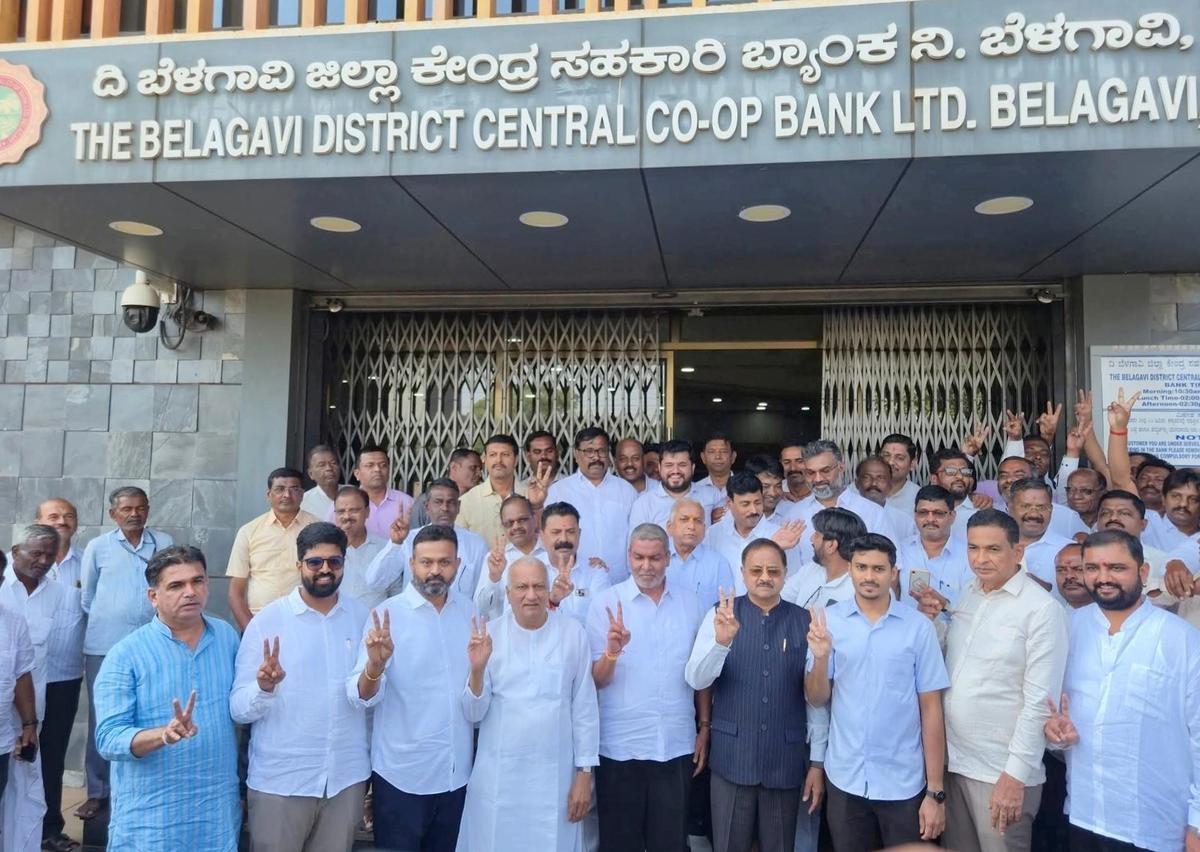
Within the banking sector, the episode has sparked discussions on reputation management in the digital age. False or exaggerated claims now travel faster and wider than ever before, often reaching depositors before clarifications do. Cooperative banks, which traditionally rely on personal relationships and local goodwill, are finding it increasingly difficult to counter narratives shaped on social media and political platforms. The Belagavi DCCB’s strong stance is being seen as an attempt to adapt to this new reality.
There is also concern that prolonged public disputes could distract management from core banking functions. Senior officials acknowledge that responding to allegations requires time, resources, and legal consultation, all of which divert attention from service delivery. Employees have privately expressed anxiety about the impact of continued controversy on career stability and institutional morale. For a sector already dealing with regulatory compliance and rural credit challenges, such distractions carry tangible costs.
As the standoff unfolds, voices within civil society are calling for restraint and dialogue. Cooperative institutions, they argue, thrive on consensus and collective ownership rather than adversarial politics. A mediated resolution, backed by transparent disclosure of facts, could prevent further erosion of trust. Whether such a path is pursued or the matter heads towards the courts will determine not only the future of this dispute but also the tone of engagement between politics and cooperative governance in Karnataka.
Follow: Karnataka Government
Also read: Home | Channel 6 Network – Latest News, Breaking Updates: Politics, Business, Tech & More
