
Belagavi witnessed a fresh flashpoint of communal tension after Hindutva leader Harshita Thakur and six others were booked for allegedly making a provocative gesture near a dargah, an incident that has once again brought the fragile balance of communal harmony in the region into sharp focus. The case, registered by local police following widespread public outrage, has triggered political reactions, legal scrutiny, and anxious conversations among residents who fear a repeat of past disturbances. Authorities have moved quickly to contain the situation, emphasising that no individual or group will be allowed to disrupt peace through symbolic or deliberate acts of provocation.
The incident has also prompted renewed discussion around preventive policing and early intervention strategies. Senior officers have indicated that intelligence units are being asked to monitor potential flashpoints more closely, especially around religious sites and during sensitive periods. The aim, officials say, is not to curb legitimate expression, but to identify and defuse situations where symbolic acts could be used deliberately to provoke unrest. This approach reflects a growing emphasis on anticipation rather than reaction in maintaining public order.
Legal commentators observe that cases involving religious sentiments often move slowly through the justice system, testing public patience and confidence. Delays in investigation or trial can allow narratives to harden on both sides, increasing polarisation. In this context, there is pressure on the authorities to ensure that the probe is both swift and meticulous, leaving little room for allegations of bias or procedural lapses. Transparency in the process is being seen as crucial to sustaining public trust.
The episode has also reignited debate within Hindutva organisations themselves, with some voices privately expressing concern that provocative actions near religious sites undermine broader ideological goals. They argue that such acts invite legal consequences and public backlash, weakening the credibility of cultural assertions. Others, however, continue to defend confrontational symbolism as a form of assertion, highlighting internal tensions over strategy and public image.
Among Muslim residents in Belagavi, the incident has stirred feelings of anxiety and vulnerability, particularly given the historical memory of communal disturbances in parts of the district. Community representatives have stressed the importance of visible administrative reassurance, including police outreach and dialogue initiatives. Such measures, they argue, are essential not just to prevent violence, but to restore a sense of everyday security that symbolic provocations can easily erode.
Academics studying communal relations point out that repeated incidents of this nature contribute to a normalisation of tension, where society becomes accustomed to periodic provocations and reactive policing. This cycle, they warn, risks lowering the threshold for future conflicts. Breaking it requires consistent enforcement of the law, sustained inter-community engagement, and political leadership that resists the temptation to exploit polarising moments for short-term gains.
As Belagavi moves forward from this episode, the focus will increasingly shift from outrage to outcomes. The manner in which the case is pursued, adjudicated, and resolved will send signals far beyond the district. For many citizens, the hope is that the incident serves as a deterrent rather than a precedent, reinforcing the principle that coexistence is not negotiable. In a society marked by diversity, restraint and respect remain the strongest safeguards against division.
According to police sources, the incident occurred when the accused allegedly performed gestures deemed offensive and inflammatory in the vicinity of the dargah, a site of religious significance. Videos and images of the act circulated rapidly on social media, drawing sharp criticism and prompting demands for immediate action. Law enforcement officials stated that the act appeared intended to provoke a section of the community and disturb public order, leading to the registration of cases under relevant sections of law pertaining to promoting enmity and hurting religious sentiments.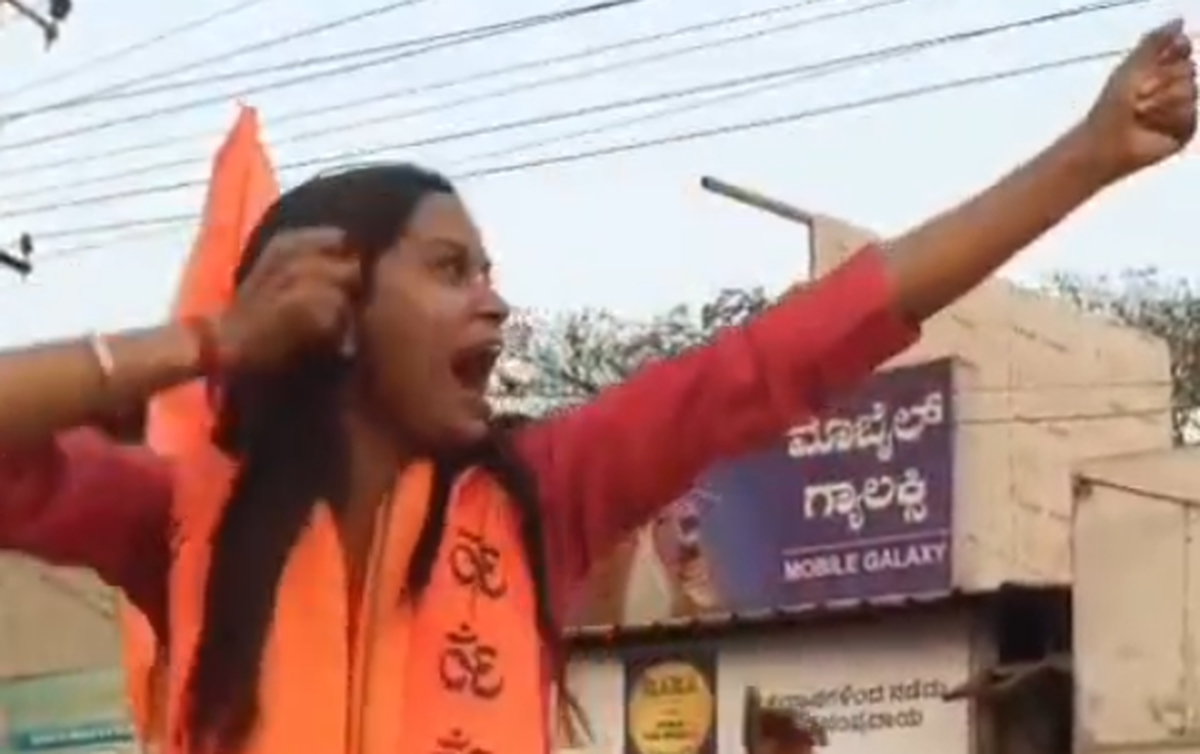
Harshita Thakur, known locally for her association with Hindutva groups and participation in ideological campaigns, has previously courted attention through public demonstrations and controversial statements. This latest incident, however, has elevated scrutiny of her activities to a new level. With six others named alongside her, the case has been framed not merely as an individual transgression but as a collective act with potential implications for communal relations in Belagavi, a district with a complex social fabric and history of sensitivities.
The police response was swift, with senior officials holding meetings to assess the ground situation and deploy additional personnel near sensitive locations. Authorities stressed that the booking of the accused was preventive as well as punitive, aimed at sending a clear message that religious spaces cannot be used as arenas for ideological assertion or symbolic confrontation. The administration has also appealed to citizens to refrain from spreading unverified content and to cooperate with efforts to maintain calm.
As news of the case spread, political reactions poured in from across the spectrum. While some leaders welcomed the police action as necessary and timely, others accused the administration of selective enforcement. Civil society groups, meanwhile, urged restraint from all sides, warning that symbolic provocations, even if non-violent, can have disproportionate consequences in a climate already charged with religious and political anxieties.
Provocation, Policing, and the Legal Lens
At the heart of the case lies the question of intent and impact. Legal experts point out that provocative gestures near places of worship are treated seriously under the law, especially when there is evidence suggesting an intention to inflame communal sentiments. The sections invoked in the case are designed to deter acts that may not immediately result in violence but have the potential to disrupt public tranquillity. In Belagavi’s context, where communal harmony has required sustained administrative vigilance, such provisions assume heightened significance.
Police officials have indicated that the case was registered based on preliminary evidence, including video footage and eyewitness accounts. Investigators are examining whether the act was spontaneous or premeditated, and whether it formed part of a broader pattern of provocative behaviour. Statements from the accused and witnesses are expected to play a crucial role in shaping the course of the investigation. Authorities have also hinted that additional charges could be added if further evidence emerges.
The incident has revived debates about freedom of expression versus responsible conduct. Supporters of the accused argue that symbolic gestures, however controversial, fall within the realm of expression. Critics counter that freedom carries corresponding responsibilities, particularly in a plural society where religious symbols and spaces hold deep emotional significance. Courts have repeatedly emphasised that expressions which deliberately insult or provoke religious groups cannot be shielded under the guise of free speech.
From a policing perspective, the case underscores the challenges of managing symbolic provocations in the digital age. Acts that might once have remained localised now gain rapid visibility through social media, amplifying their impact and complicating law enforcement responses. Police officials in Belagavi acknowledged that the swift spread of visuals heightened tensions and necessitated immediate action to prevent escalation.
The administration’s handling of the case is also being closely watched for consistency. In recent years, allegations of uneven enforcement in cases involving religious sentiments have fuelled mistrust. By acting promptly, officials appear keen to demonstrate neutrality and firmness. Whether this approach withstands political pressure and legal scrutiny will shape public perception of institutional credibility.
Communal Harmony, Political Messaging, and the Way Forward
Beyond the legal proceedings, the incident has sparked deeper reflection on the state of communal relations in Belagavi. Community leaders from both Hindu and Muslim groups have called for calm, emphasising that provocative acts by individuals should not be allowed to fracture long-standing coexistence. Several religious leaders issued statements urging followers to ignore attempts at provocation and to place faith in the rule of law.
Political analysts note that such incidents often acquire significance beyond their immediate context, especially in times of heightened ideological mobilisation. Symbolic gestures near religious sites can serve as rallying points, intentionally or otherwise, for broader narratives of identity and assertion. In this case, the involvement of a known Hindutva leader has intensified scrutiny of ideological motivations and political messaging.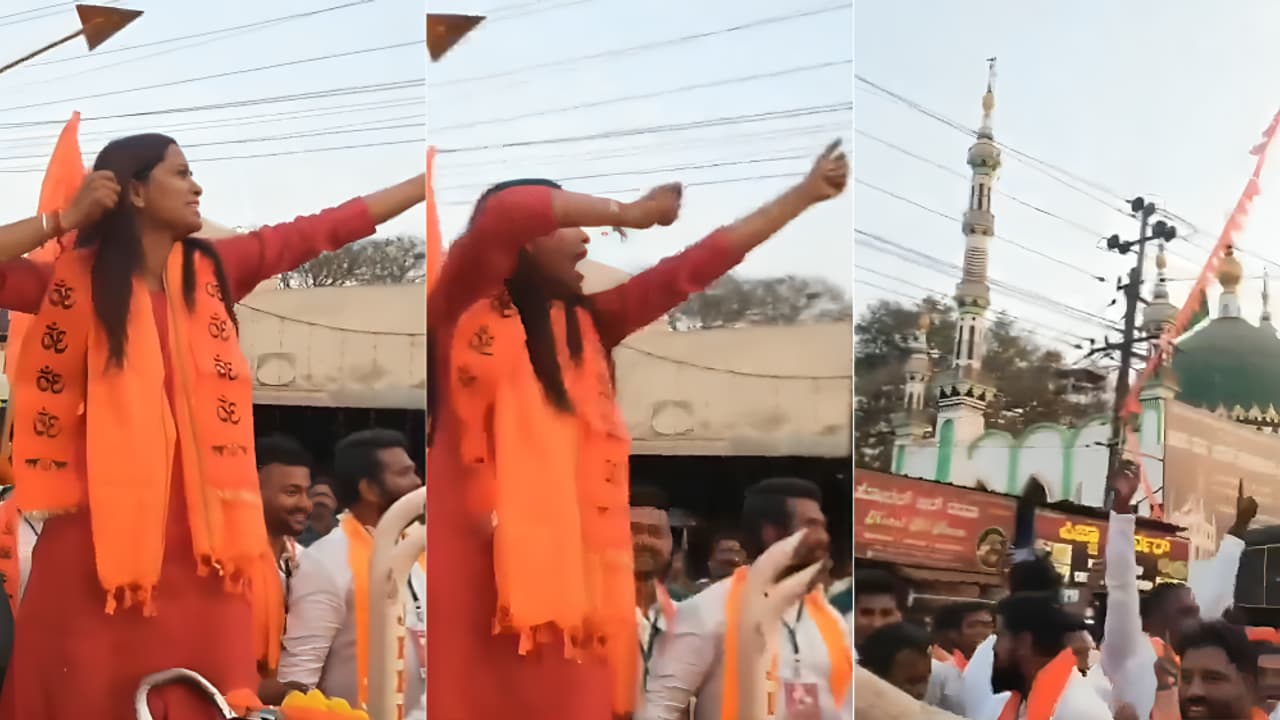
Women’s organisations have also weighed in, stressing that accountability must be applied uniformly, irrespective of gender or political affiliation. They cautioned against framing the issue in a manner that deflects attention from the alleged act itself. For them, the focus must remain on the principle that no one is above the law when it comes to maintaining communal harmony.
The role of social media has emerged as a critical factor in the unfolding situation. While platforms enabled rapid awareness and accountability, they also became conduits for misinformation and inflammatory commentary. Authorities have urged citizens to avoid sharing content that could inflame passions, reminding them that digital actions carry real-world consequences. Cyber monitoring units have reportedly been placed on alert to track and counter false narratives.
As the investigation progresses, the case is likely to move into the legal arena, where courts will assess evidence and intent. The outcome will not only determine the fate of the accused but also set a tone for how similar incidents are addressed in the future. Legal scholars argue that consistent and transparent adjudication is essential to deter provocations and reassure communities that justice is impartial.
For Belagavi, the incident is a reminder of the delicate equilibrium that underpins communal life. Peace is often maintained not by the absence of difference, but by mutual respect and restraint. When that restraint is breached, even symbolically, the repercussions can ripple far beyond the moment.
Ultimately, the booking of Harshita Thakur and six others represents both a legal action and a moral statement. It signals that religious spaces are not stages for provocation and that the administration remains vigilant against attempts to sow discord. Whether this message translates into lasting restraint and renewed trust will depend on sustained enforcement, responsible leadership, and collective commitment to harmony. In a diverse society, the true test lies not in asserting dominance, but in preserving coexistence.
Follow: Karnataka Government
Also read: Home | Channel 6 Network – Latest News, Breaking Updates: Politics, Business, Tech & More
