
The discovery of the carcass of a pregnant leopard on the outskirts of Bengaluru has sent shockwaves through conservation circles, forest officials, and nearby communities, raising troubling questions about wildlife safety amid rapid urban expansion. The deceased animal, found in a semi-forested patch bordering human settlements, underscores the fragile coexistence between expanding cities and shrinking natural habitats. The incident has triggered concern not only because a leopard died, but because an unborn life was lost alongside it, intensifying the emotional and ecological weight of the tragedy.
Forest department officials confirmed that the carcass was spotted by local residents early in the morning, who alerted authorities after noticing scavenger birds circling the area. Upon inspection, officials found that the leopard was female and pregnant, indicating that the loss extended beyond a single animal. Preliminary assessments suggested no visible external injuries, prompting officials to send the carcass for post-mortem examination to determine the exact cause of death. The area was immediately cordoned off to prevent public interference and ensure a proper investigation.
The location of the discovery lies close to expanding residential layouts, agricultural fields, and fragmented green corridors that once served as safe passageways for wildlife. Over the past few years, this region has witnessed increasing human activity, with roads, fencing, and construction gradually encroaching into forest edges. Conservationists argue that such changes disrupt animal movement patterns, forcing wildlife into dangerous proximity with humans, vehicles, and stray dogs.
Local residents expressed a mix of shock and sorrow at the sight. Many said that leopard sightings had increased in recent months, often during early morning or late-night hours. While fear has accompanied these sightings, some residents acknowledged that the animals were likely straying out due to loss of habitat and prey. The death of a pregnant leopard has deepened the sense of unease, transforming fear into grief and introspection about the cost of unchecked urban growth.
Forest officials have assured the public that there is no immediate threat to human safety and that patrols have been intensified in the surrounding areas. Camera traps are being reviewed to trace the leopard’s movement prior to death, and veterinarians have been tasked with conducting a detailed post-mortem. Authorities emphasised that conclusions would only be drawn after scientific analysis, urging people not to speculate or spread misinformation.
URBAN EXPANSION AND A SHRINKING WILDLIFE SPACE
The death of the leopard has reignited debates around Bengaluru’s rapid urbanisation and its impact on wildlife. Once surrounded by dense forests and interconnected green belts, the city’s periphery has transformed into a mosaic of gated communities, industrial zones, and highways. These developments often slice through natural habitats, leaving animals with limited options for movement and survival. Leopards, known for their adaptability, have increasingly been forced to navigate these altered landscapes.
Wildlife experts point out that leopards are territorial animals with established movement routes. When these routes are disrupted, animals may venture into unfamiliar and hazardous areas. In such environments, risks range from accidental poisoning and electrocution to road accidents and stress-induced health complications. The discovery of a pregnant leopard’s carcass highlights how vulnerable animals become during critical biological phases such as gestation.
Conservationists also stress that prey depletion plays a significant role in such incidents. As forests shrink, herbivore populations decline, pushing predators closer to human settlements in search of food. Stray dogs and livestock become easy targets, which in turn heightens human-leopard conflict. While there is no indication that this particular leopard was involved in conflict, its presence near human habitation reflects broader ecological imbalances.
The forest department has faced criticism in the past for reactive rather than preventive measures. Activists argue that while rescue operations and patrols are necessary, long-term solutions lie in protecting corridors, regulating construction near forest boundaries, and strengthening community awareness. The loss of a pregnant leopard, they say, is not merely an isolated incident but a symptom of systemic neglect.
Residents living near forest fringes are often caught between fear for their safety and empathy for wildlife. Some have called for better communication from authorities, including clear guidelines on how to respond to animal sightings. Others believe that relocating animals is not a sustainable solution, as it often leads to stress and territorial conflicts elsewhere. Instead, they advocate coexistence models that prioritise habitat protection and responsible urban planning.

The emotional response to the incident has been significant, with social organisations and wildlife enthusiasts expressing grief over the loss. Many view the death of a pregnant animal as particularly distressing, symbolising the loss of future generations and the narrowing window for biodiversity conservation. The incident has also sparked discussions in academic circles about the cumulative impact of small, everyday decisions on larger ecological outcomes.
INVESTIGATION, ACCOUNTABILITY, AND THE WAY FORWARD
As the investigation continues, forest officials have stated that multiple possibilities are being examined, including poisoning, disease, vehicular impact, and environmental stress. Tissue samples have been sent for laboratory analysis to rule out toxic substances, while veterinarians are studying internal organs for signs of illness. Officials have maintained that transparency will be ensured once the post-mortem report is finalised.
If foul play or human negligence is established, legal action may follow under wildlife protection laws. Authorities have reminded the public that harming protected species is a serious offence, carrying stringent penalties. At the same time, they have urged residents to report injured or dead wildlife immediately rather than attempting to intervene themselves. Early reporting, officials say, can sometimes make the difference between life and death for animals in distress.
Experts argue that accountability must go beyond identifying the immediate cause of death. They stress the need for institutional responsibility in safeguarding wildlife habitats. This includes enforcing buffer zones around forests, monitoring land-use changes, and integrating ecological considerations into urban development plans. Without such measures, they warn, similar incidents will continue to occur, each eroding the region’s biodiversity.
The death has also prompted calls for improved data collection and monitoring. Regular wildlife censuses, movement tracking, and health assessments can provide early warning signs of stress within animal populations. Conservationists believe that investing in such scientific approaches is essential for balancing development with ecological preservation. Bengaluru, as a rapidly growing metropolis, faces a unique challenge in this regard.
For many citizens, the incident has served as a wake-up call. Discussions about wildlife are no longer confined to forests far from the city but are now part of everyday urban reality. Schools, resident welfare associations, and local groups have begun conversations about coexistence, emphasising responsible waste management, reduced use of harmful chemicals, and respect for natural spaces.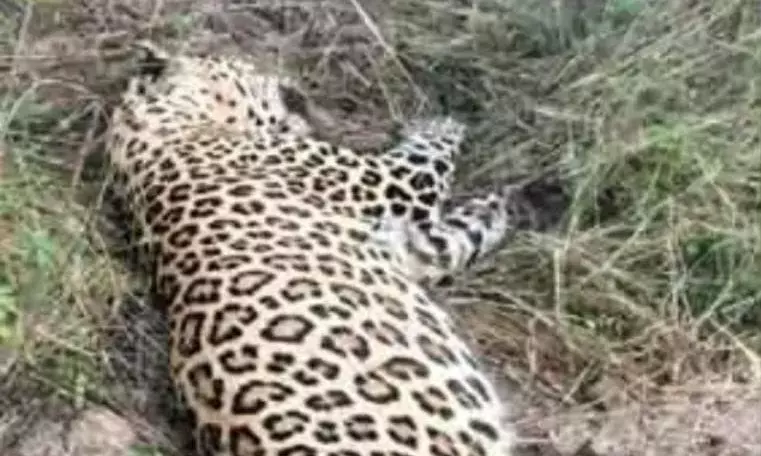
The forest department has indicated that awareness drives may be intensified in fringe areas, focusing on practical steps residents can take to minimise conflict. These include securing livestock, avoiding feeding stray animals near forest edges, and maintaining clear communication channels with authorities. Such measures, while seemingly small, can collectively reduce risks to both humans and wildlife.
As Bengaluru grapples with the implications of this loss, the image of the pregnant leopard remains a powerful symbol. It represents not only the vulnerability of wildlife but also the moral responsibility of a society that benefits from development. The unanswered questions surrounding the death demand reflection, empathy, and action.
Ultimately, the carcass found on the city’s outskirts tells a larger story of imbalance. It challenges policymakers, planners, and citizens to reconsider how progress is defined and at what cost it comes. Whether this incident leads to meaningful change or fades into memory will depend on the choices made now. For the unborn cubs that never saw the world, the hope is that their loss will not be in vain, but a turning point toward more compassionate coexistence.
The incident has also drawn attention to the psychological stress wildlife endures in rapidly changing landscapes. Veterinarians and animal behaviour experts note that chronic stress caused by noise, light pollution, and constant human movement can weaken an animal’s immune system. In pregnant animals, such stress can be particularly damaging, increasing the risk of complications or sudden death. While post-mortem results will clarify medical causes, experts caution that stress-related factors are often invisible yet deadly.
Environmentalists argue that Bengaluru’s outskirts have become silent battlegrounds where wildlife struggles to adapt to relentless development. Lakes are fenced off, tree cover is reduced, and traditional animal trails are blocked by walls and highways. Leopards, despite their adaptability, rely on continuity of space. When that continuity is broken, survival becomes a gamble. The death of a pregnant leopard is being cited as evidence that adaptation has limits, and that resilience should not be mistaken for invincibility.
The role of local governance has also come under scrutiny following the discovery. Activists question whether environmental impact assessments are being meaningfully enforced before approving new layouts near forested zones. They argue that permissions are often granted in isolation, without considering cumulative ecological damage. The leopard’s death, they say, is a consequence of fragmented decision-making that prioritises short-term growth over long-term sustainability.
For forest staff on the ground, the incident has highlighted the challenges of limited manpower and resources. Officers tasked with monitoring vast fringe areas often struggle to respond proactively to threats. While technology such as camera traps and tracking systems has improved surveillance, officials admit that it cannot substitute for protected, uninterrupted habitats. Strengthening frontline forest infrastructure, they argue, is as critical as policy reform.
As public discourse around the incident continues, many citizens are calling for empathy-driven conservation rather than reactionary responses. The image of a pregnant leopard lying lifeless at the city’s edge has resonated deeply, cutting across fear and indifference. For Bengaluru, a city that prides itself on progress and innovation, the tragedy poses a difficult question: can development move forward without leaving irreversible losses in its wake?
Follow: Karnataka Government
Also read: Home | Channel 6 Network – Latest News, Breaking Updates: Politics, Business, Tech & More
