
Bengaluru is witnessing a fresh political tussle as the BJP has alleged that the Karnataka government is allotting residential flats to illegal Bangladeshi immigrants, triggering a heated response from the ruling Congress party. The issue came to the forefront after BJP leaders claimed that numerous public housing units meant for local residents were allegedly being diverted to non-citizens, raising questions about the integrity of government housing schemes and the verification processes followed by authorities.
The BJP’s allegations have sparked intense political debate across the state, with party leaders urging the government to conduct thorough audits and disclose the identities of beneficiaries. According to the BJP, certain urban local bodies and housing authorities have been negligent in ensuring proper documentation, allowing illegal immigrants to obtain flats intended for underprivileged and eligible Indian citizens. The party has called for immediate action, suggesting that legal and administrative measures should be taken to investigate and reverse any wrongful allotments.
The Congress party, however, has strongly denied the allegations, calling them politically motivated and designed to polarize voters ahead of upcoming elections. Party leaders said that all housing allotments are carried out under strict regulatory frameworks, requiring documentation such as proof of citizenship, income certificates, and local residency verification. They stressed that housing authorities follow a multi-tier verification process, which makes it difficult for non-citizens to obtain flats illegally.
Political analysts note that the controversy reflects broader tensions around migration and housing policies in urban Karnataka. The issue touches upon sensitive topics, including the rights of migrants, urban housing shortages, and political accountability. While both parties have accused each other of misinformation, public discourse has intensified, with social media platforms and local news outlets amplifying claims and counterclaims.
BJP CLAIMS AND DOCUMENTATION ISSUES
BJP leaders claim that in several urban housing schemes, applicants have allegedly produced fraudulent documents, claiming local residency while having foreign origins. Party spokespersons highlighted specific districts where the issue was reportedly prevalent, citing anonymous whistleblower reports and complaints from local residents. They argue that the government’s lack of stringent verification mechanisms has created loopholes, enabling illegal immigrants to access subsidized housing.
The opposition party has urged the state government to involve independent investigative agencies such as the CBI or Special Investigation Teams to conduct a thorough probe. They also suggested cross-referencing beneficiaries’ details with national databases such as Aadhaar and voter lists to confirm citizenship. BJP leaders have said that ensuring public housing reaches eligible citizens is critical to maintaining public trust and transparency in government schemes.
Housing rights activists and legal experts have noted that allegations of wrongful allotment, if true, could have legal implications under both state housing regulations and national immigration laws. They emphasized that clear documentation, periodic audits, and community verification are essential components of fair and lawful housing distribution. Activists urged authorities to act swiftly while ensuring that the rights of genuine beneficiaries are not compromised during investigations.
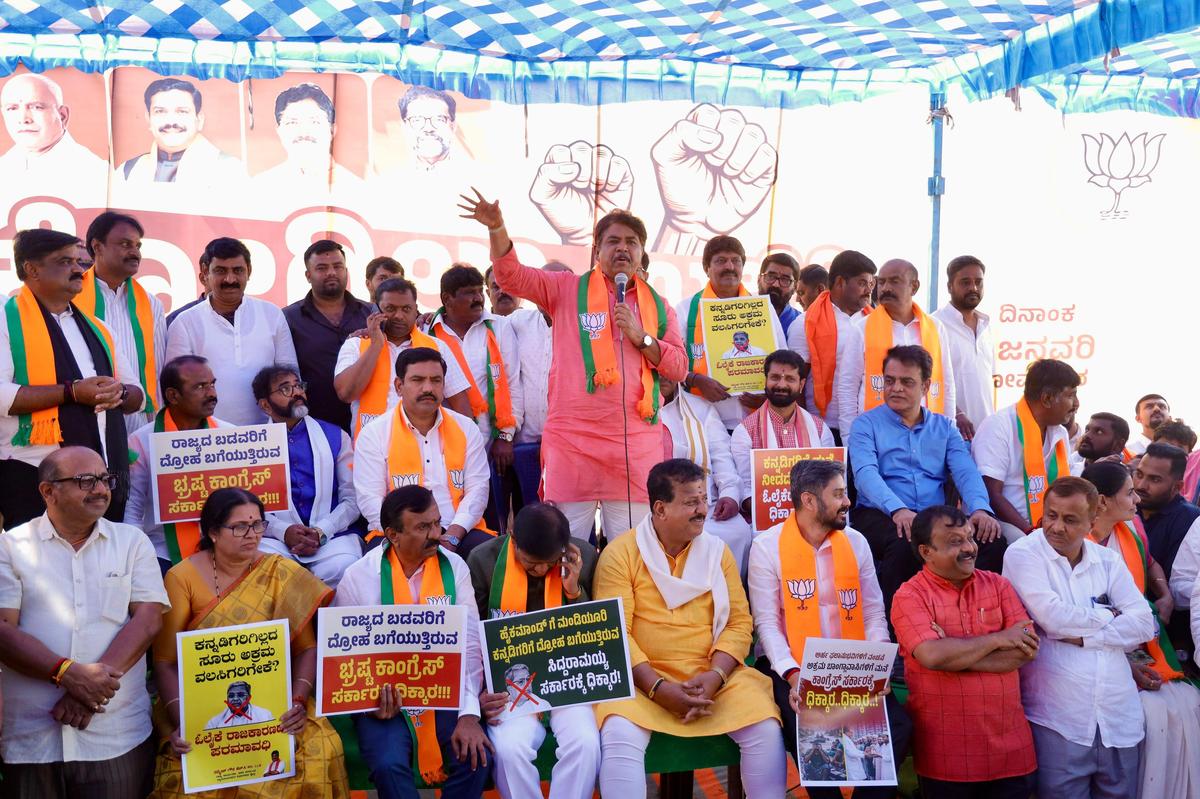
The BJP’s allegations have fueled protests in certain localities, with residents demanding accountability and clarity from the state government. Demonstrators argued that illegal allotments compromise access to affordable housing for deserving Indian citizens, particularly in urban and peri-urban areas where demand significantly exceeds supply. These protests have drawn attention from media and political observers alike, intensifying pressure on authorities to respond.
Government officials reiterated that strict verification protocols are in place for all public housing schemes. They said that identity checks, income verification, and local residency requirements are audited at multiple levels before final allotment. Authorities also highlighted that any application found to be fraudulent or non-compliant with documentation standards is immediately rejected, and legal action is initiated. Officials stressed that the digitization of application processes and integration with Aadhaar and voter ID databases have further strengthened transparency, making it increasingly difficult for non-citizens to gain access to government flats without proper verification.
The controversy has triggered discussions in the state assembly, with BJP legislators demanding detailed reports of all housing allocations in the last five years. They alleged that patterns of irregular allotment were visible in certain urban localities and sought a public audit. Congress leaders countered by presenting figures showing that the majority of flats were allotted to eligible local citizens and claimed that the opposition’s allegations lacked evidence. Debates in the legislature highlighted deep political divisions, with both parties using the issue to appeal to urban and semi-urban voter bases.
Housing experts noted that public perception is critical in such disputes. While documentation and audits are essential, visible accountability measures such as publishing beneficiary lists, conducting community inspections, and maintaining grievance redressal mechanisms can enhance trust. Experts also cautioned that politicization of housing schemes could exacerbate social tensions and communal sentiment, stressing the need for transparent, neutral processes to resolve disputes while safeguarding the rights of genuine beneficiaries.
Civil society organisations have urged authorities to engage independent monitoring agencies to ensure fairness in housing distribution. Some NGOs proposed setting up citizen committees to oversee allocations and handle complaints, promoting participatory governance. By involving community stakeholders, officials can not only verify beneficiaries effectively but also build confidence among local residents that government schemes are being administered equitably and without bias.
Meanwhile, social media platforms have become a focal point for public discourse on the controversy. Videos, posts, and opinion threads alleging illegal allotments have circulated widely, creating both awareness and confusion. Authorities have urged citizens to rely on verified information and warned against spreading unconfirmed claims. Experts stressed that while social media can be a tool for accountability, it also requires responsible use to prevent misinformation from escalating into communal or political unrest.
CONGRESS REBUTTAL AND POLITICAL DEFENSE
In response, Congress leaders have dismissed the allegations as unfounded and politically motivated. They pointed out that all beneficiaries of housing schemes undergo rigorous verification procedures, including submission of ration cards, voter ID, income certificates, and proof of local residence. Officials clarified that any application failing these checks is rejected, and appeals are subjected to review by senior housing officers.
The ruling party also accused the BJP of attempting to communalize a development issue, diverting attention from the government’s achievements in public housing and urban welfare. Congress leaders said that the state has allocated thousands of flats under various schemes to underprivileged families, senior citizens, and differently-abled individuals, and that the housing process is transparent, auditable, and in compliance with legal mandates.
Political analysts suggest that the controversy is likely to escalate as parties leverage it to consolidate voter bases ahead of forthcoming municipal and state elections. Both sides are using media campaigns to reinforce their positions: the BJP emphasizing transparency and alleged irregularities, while the Congress highlights development accomplishments and procedural compliance. Analysts warn that misinformation or exaggerated claims could inflame public sentiments unnecessarily.
Social media has played a key role in amplifying the dispute. Videos, posts, and forwarded messages claiming illegal allotments have circulated widely, prompting authorities to issue clarifications and fact-check statements. Officials urged citizens to rely on verified information, warning that false claims could lead to social unrest or communal tensions in sensitive areas.
HOUSING SCHEMES AND ELIGIBILITY NORMS
Karnataka’s public housing schemes are designed to provide affordable residences to economically weaker sections, low-income groups, and specific marginalized communities. Beneficiaries must meet eligibility criteria, including proof of local residency for a stipulated period, income limits, and absence of other property ownership. Housing authorities maintain detailed records, which are subject to periodic audits by state agencies to ensure fairness and transparency.
The alleged allotment of flats to non-citizens, if substantiated, could undermine these objectives. Experts note that such incidents could reduce public confidence in government programs, discourage eligible residents from applying, and create political fallout. Authorities emphasized the importance of both preventive measures and corrective action, including verification, regular audits, and public disclosure of allotment lists.
Government officials said that any irregularities identified will be addressed immediately. They clarified that legal action against fraudulent applicants is already prescribed under the Karnataka Public Housing and Tenancy Acts, and administrative measures are being strengthened to prevent future lapses. Officials also highlighted ongoing efforts to digitize applications and implement centralized tracking systems to reduce human error and manipulation.
Critics, however, argue that procedural safeguards alone are insufficient if oversight is weak. Independent monitoring committees, community verification panels, and transparent public reporting can strengthen accountability and deter misuse. Analysts suggest that public participation, combined with technological interventions such as Aadhaar verification and GIS mapping, could further reduce the risk of illegal allotments.
POLITICAL AND SOCIAL IMPACT
The allegations have intensified the political battle between BJP and Congress, particularly in urban centers where housing demand is high. Opposition leaders argue that the issue reflects broader governance failures, while ruling party leaders claim that political opponents are exploiting migration anxieties for electoral gain. Analysts note that housing and migration are sensitive issues capable of influencing voter sentiment, making it a flashpoint for political contention.
Residents have expressed mixed reactions. While some support the BJP’s demand for stricter verification and transparency, others view the allegations as an attempt to communalize housing issues. Local NGOs have urged calm and emphasized the importance of due process before taking any punitive action against beneficiaries. Community leaders have also called for constructive dialogue between authorities, political parties, and residents to resolve misunderstandings.
Housing rights advocates stress that public awareness about eligibility and documentation requirements is key to preventing fraud. They recommended workshops, information drives, and accessible online portals to ensure applicants understand procedures and comply with norms. Experts argue that proactive education can reduce disputes, ensure equitable allocation, and safeguard the rights of deserving beneficiaries.
Environmental and urban planning specialists also weigh in, noting that illegal occupancy can strain infrastructure and services in residential complexes. They emphasized the need for integrated urban governance, combining housing management with civic amenities, security, and social services, to ensure long-term sustainability of public housing projects.
Follow: Karnataka Government
Also read: Home | Channel 6 Network – Latest News, Breaking Updates: Politics, Business, Tech & More
