
The Karnataka political landscape witnessed fresh turbulence after the Bharatiya Janata Party alleged the existence of a powerful figure, referred to as “Indra”, who is allegedly controlling an illegal transfer racket within the Karnataka Police Department. The Opposition claimed that this shadowy influence has fostered a deep-rooted police–criminal nexus, weakening law enforcement and eroding public trust. Raising the issue both inside and outside the legislature, BJP leaders demanded an immediate probe, questioning who this “Indra” is and how such an alleged system has been allowed to flourish under the present government.
The allegation has triggered sharp reactions, with the BJP accusing the ruling dispensation of shielding vested interests within the police establishment. According to the Opposition, frequent and questionable transfers of police officers have become a tool to reward compliance and punish honesty. They argue that officers refusing to toe certain lines are moved out abruptly, while those willing to cooperate with political or criminal interests are given key postings. The BJP claims this pattern has damaged institutional morale and compromised the independence of the police force.
The controversy erupted following reports and internal complaints suggesting that postings in sensitive and lucrative police positions are allegedly being influenced by intermediaries. BJP leaders alleged that officers are being transferred not based on merit, seniority or public interest, but on their willingness to align with unofficial power centres. The term “Indra”, they claimed, symbolises an all-powerful figure who operates above formal authority, deciding postings and transfers behind the scenes. The Opposition has challenged the government to clarify whether such an individual exists and, if so, why no action has been taken.
Government representatives have dismissed the allegations as politically motivated, stating that transfers are a routine administrative process. They accused the BJP of attempting to malign the police force and create mistrust. However, the Opposition has maintained that their questions are rooted in genuine concern for governance and public safety. They argue that if the government is confident of its position, it should welcome an independent inquiry to dispel doubts and restore credibility.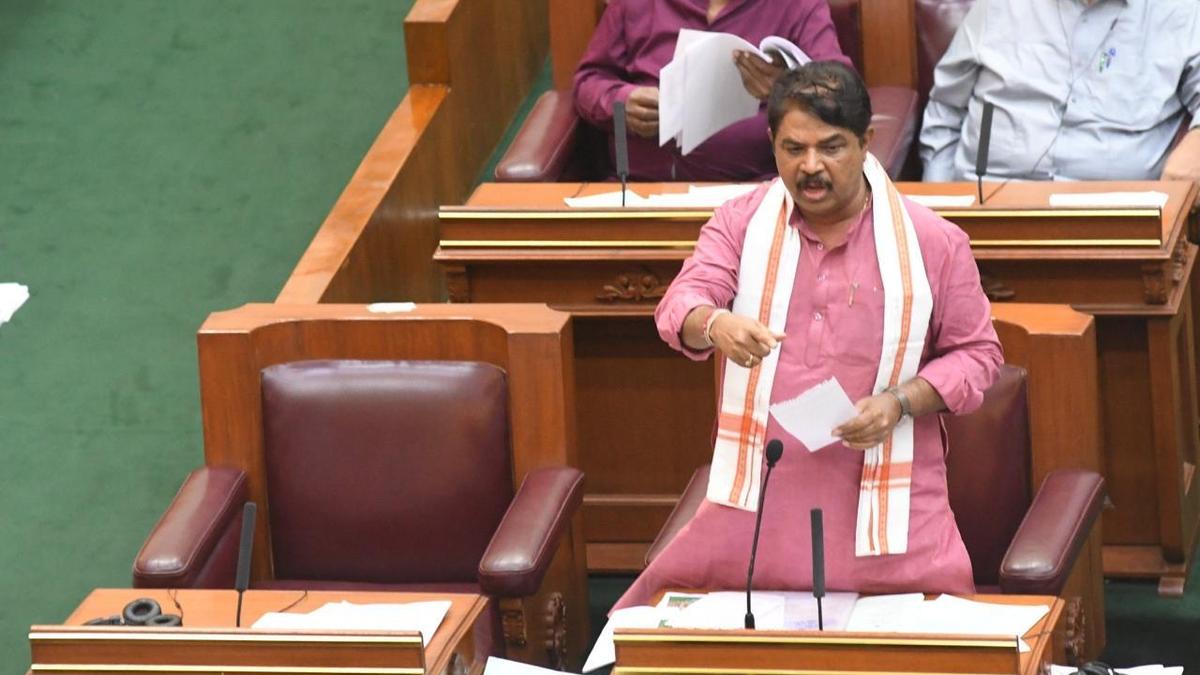
The issue has resonated beyond political circles, sparking debate among former police officials and civil society members. Many have acknowledged that arbitrary transfers have long been a concern in policing, affecting continuity and effectiveness. While some caution against drawing conclusions without evidence, others argue that repeated allegations over the years point to systemic issues that require serious examination. The BJP has said its intention is not to demoralise the police but to protect honest officers from undue pressure.
As the debate intensified, BJP leaders accused the government of silence and evasion. They pointed out that despite multiple instances of alleged misconduct linked to transfers, no comprehensive reforms have been undertaken. According to them, the existence of an “Indra-like” figure reflects a parallel power structure that undermines constitutional authority. The party has demanded transparency in transfer orders and a clear explanation of the criteria used for postings across the State.
Allegations of a Transfer Racket and Police–Criminal Nexus
At the heart of the BJP’s accusation is the claim that a systematic transfer racket has enabled close ties between certain police officers and criminal networks. The Opposition alleges that officers who comply with illegal demands or turn a blind eye to unlawful activities are rewarded with strategic postings. These include areas known for high economic activity or sensitivity, where control over law enforcement can yield influence and financial gain. According to the BJP, this arrangement benefits criminals while weakening the rule of law.
Party leaders have cited instances where officers were transferred soon after initiating action against influential individuals. They argue that such abrupt moves send a chilling message across the force, discouraging proactive policing. Over time, they claim, this creates an environment where officers prioritise survival over service. The BJP contends that this climate allows criminal elements to operate with impunity, confident that enforcement can be managed through transfers.
Former senior police officials, speaking in general terms, have acknowledged that frequent transfers disrupt investigations and weaken institutional memory. They note that continuity is essential for tackling organised crime and corruption. When officers are moved frequently, cases suffer and accountability becomes diffused. Critics argue that if transfers are influenced by external pressures, the damage is compounded, as the force loses both effectiveness and credibility.
The BJP has also raised concerns about the psychological impact on honest officers. According to them, officers who resist illegal influence face professional stagnation, repeated transfers or postings to insignificant roles. Such treatment, they claim, discourages integrity and encourages conformity. Over time, this erodes the ethical foundation of the police force. The Opposition has urged the government to recognise this as a serious governance issue rather than dismiss it as political rhetoric.
The alleged police–criminal nexus has been described by the BJP as a consequence of this transfer culture. They argue that when postings are influenced by unofficial power brokers, criminals gain indirect control over policing outcomes. This, they say, affects everything from investigation quality to prosecution rates. The party has questioned how law and order can be maintained if officers are compelled to serve interests other than the public good.
The government has countered that existing mechanisms ensure oversight of transfers and that allegations of a nexus are exaggerated. Officials have pointed to internal reviews and administrative checks as safeguards. However, critics argue that without transparency, such assurances offer little comfort. They say that publishing clear transfer policies and reasons for deviations could help address suspicion and rebuild trust.
The debate has also brought attention to the broader issue of police reforms. Experts note that insulating the police from political and external interference has been a long-standing recommendation. Fixed tenures, independent police boards and transparent transfer processes have been proposed repeatedly. The BJP has used the current controversy to reiterate the need for such reforms, arguing that the alleged role of “Indra” underscores their urgency.
Political Fallout and Demands for Accountability
The BJP has indicated that it will continue to press the issue until the government provides clear answers. Party leaders have demanded the constitution of an independent inquiry to investigate the alleged transfer racket. They argue that only an impartial probe can determine whether an “Indra” exists and assess the extent of influence over police postings. According to them, anything short of this would amount to a cover-up.
Inside the legislature, the issue has led to heated exchanges, with the Opposition accusing the government of arrogance and lack of transparency. The ruling party has responded by questioning the BJP’s intentions, suggesting that the allegations are aimed at diverting attention from other political issues. Despite these counter-claims, the controversy has refused to subside, indicating strong public interest.
Civil society organisations have called for restraint and responsibility from all sides. While acknowledging the seriousness of the allegations, they have urged political parties to avoid sensationalism. Some activists have suggested that the focus should remain on systemic reform rather than individual blame. They argue that if transfer irregularities exist, addressing structural weaknesses will yield more lasting solutions.
Public reaction has been mixed but attentive. Many citizens expressed concern over the possibility of compromised policing, noting that trust in law enforcement is essential for social stability. Others cautioned against accepting allegations without concrete evidence. However, there is broad agreement that transparency in police administration is necessary to maintain confidence.
The term “Indra” has itself become symbolic, representing fears of unaccountable power within institutions. Political analysts suggest that the BJP’s framing of the issue is intended to personalise an otherwise complex administrative problem, making it resonate more strongly with the public. Whether this strategy results in policy change remains to be seen, but it has undeniably forced the issue into the spotlight.
For the government, the controversy presents a test of credibility. How it responds may shape perceptions of its commitment to clean governance. A proactive approach, involving disclosure of transfer policies and independent review mechanisms, could help defuse tensions. Conversely, continued denial without engagement may deepen suspicion and prolong political conflict.
As the debate continues, the broader question remains unresolved. Who decides postings within the police force, and on what basis. The BJP’s provocative query about “Indra” has opened a wider conversation about power, accountability and institutional integrity. Regardless of political affiliations, the issue touches on the fundamental relationship between the state and its citizens.
Ultimately, the controversy underscores the importance of trust in public institutions. The police are tasked with upholding law and order, often under challenging circumstances. Ensuring that they function free from undue influence is essential for democracy. Whether the allegations lead to concrete reform or fade into political memory will depend on the actions taken in the coming weeks.
For now, the BJP’s question continues to echo across Karnataka’s political corridors. Who is “Indra”, and does such power truly exist within the system. The answer, many believe, will determine not just the fate of this controversy, but the credibility of governance itself.
Follow: Karnataka Government
Also read: Home | Channel 6 Network – Latest News, Breaking Updates: Politics, Business, Tech & More
