
The Bharatiya Janata Party (BJP) has submitted a formal petition to the Karnataka Governor, highlighting what it calls the increasing “criminalisation” within the state police force and the corresponding deterioration of law and order across the state. The party, through its senior leaders, expressed concern that multiple incidents of negligence, corruption, and misuse of authority by police personnel have created an environment of fear and mistrust among citizens. The petition urges the Governor to intervene and ensure strict oversight, claiming that current administrative measures are insufficient to curb misconduct and restore public confidence in law enforcement. The move signals heightened political pressure on the state government regarding safety and policing.
According to sources familiar with the petition, the BJP has cited specific instances where officers allegedly failed to act against politically connected individuals, delayed action on public complaints, or were themselves implicated in criminal activities. The party argues that such trends have eroded the credibility of the police force and undermined citizens’ trust in law enforcement. The petition reportedly calls for a comprehensive review of police appointments, transfers, and disciplinary mechanisms to ensure accountability and transparency. It also highlights that deterioration in law and order can adversely affect not just public safety but also economic activity and social harmony.
The BJP’s action comes amid rising political debates over the state’s handling of crime and public security. Party leaders have argued that lax policing and administrative complacency have allowed criminal elements to operate with impunity, particularly in urban centres such as Bengaluru, Mysuru, and Hubballi-Dharwad. The petition stresses the need for strict enforcement of the law and speedy resolution of cases to reassure citizens. It also demands that the Governor use constitutional powers to direct the government to take immediate corrective measures.
Political Implications and Public Perception
The petition has significant political undertones, reflecting the BJP’s strategy to highlight governance concerns while positioning itself as a party committed to law and order. Analysts note that the issue of police accountability resonates strongly with voters, especially urban residents who are sensitive to crime-related developments. By raising the matter with the Governor, the BJP signals a direct challenge to the ruling state administration, pressing the issue beyond party debates within the legislative assembly. This move also allows the BJP to frame itself as a watchdog on governance, emphasising citizen safety and administrative efficiency.
Public perception of the police force has been affected by a series of high-profile incidents involving alleged negligence or misconduct. Citizens’ complaints about delayed responses, bribery, and corruption have amplified the BJP’s arguments. In particular, the party points to cases involving organized crime, land disputes, and politically sensitive offences where prompt action was reportedly lacking. By highlighting these cases, the BJP aims to draw attention to systemic flaws rather than isolated events, framing the issue as a broader institutional problem requiring intervention at the highest levels.
The petition also raises questions about the current mechanisms for police oversight. BJP leaders have suggested that state-level monitoring committees and internal disciplinary boards have not been effective in curbing misconduct. They argue that accountability structures are either weak or influenced by political considerations, leading to selective enforcement. Strengthening these mechanisms, the party contends, is critical to ensure that officers act in accordance with law and ethical standards. The emphasis on structural reform signals a long-term concern about governance rather than a short-term political complaint.
Law and Order Challenges Across Karnataka
Karnataka has faced multiple law and order challenges in recent months, ranging from urban crime spikes to rural disputes escalating into violent confrontations. The BJP petition highlights that in several districts, incidents of assault, theft, and extortion have reportedly risen, with citizens expressing frustration over inadequate police intervention. The party claims that this deterioration affects not only daily safety but also investor confidence, public confidence in governance, and the overall image of the state. In addition, allegations of political bias in policing have further fuelled public criticism, with the BJP arguing that impartiality is essential for restoring trust.
The petition calls for specific measures, including stricter background checks during police recruitment, increased transparency in transfers and promotions, and independent oversight of complaints against officers. BJP leaders argue that such reforms are necessary to ensure a professional and accountable police force capable of maintaining law and order. Emphasising preventive policing and community engagement, the party also suggests deploying technology-driven monitoring to track performance and responsiveness, particularly in sensitive urban areas.
Political analysts note that the petition is likely to intensify scrutiny of the state government’s law and order record. Opposition parties often use such filings to generate public debate and force administrative action, especially when governance issues intersect with high-visibility incidents. In this case, the BJP’s focus on “criminalisation” within the police force is designed to raise both moral and administrative concerns, putting pressure on the state administration to respond decisively.
The Governor’s response to the petition will be closely watched, as it can influence subsequent actions by the state government. Constitutional experts point out that while the Governor does not directly control policing, the office can request reports, recommend investigations, and urge the government to adopt remedial measures. The BJP’s petition, therefore, serves both as a formal grievance and a strategic step to attract attention at the highest levels of state oversight.
The move also resonates with wider public debates about policing standards in India. Across several states, questions about accountability, political interference, and citizen safety have prompted calls for reform. The BJP’s petition positions the party within this national conversation, highlighting the importance of professional, impartial, and effective law enforcement. By framing the issue as a threat to governance and civic life, the party seeks to elevate policing reform from an internal administrative matter to a matter of public concern.
In conclusion, the BJP’s petition to the Karnataka Governor regarding the alleged criminalisation of the police force and the deterioration of law and order underscores growing political and public concern over policing standards. By combining case-specific examples with calls for structural reform, the party aims to pressure the state government into action while highlighting its own commitment to citizen safety. The petition reflects the intersection of governance, accountability, and politics, signalling that law and order will remain a key issue in Karnataka’s public discourse in the months ahead.
The issue’s long-term impact will depend on whether administrative reforms are implemented and whether public trust in law enforcement can be restored. For citizens, the petition highlights ongoing vulnerabilities, while for political parties, it offers both a point of critique and a potential pathway for advocacy. The Governor’s role, along with the state government’s response, will shape the narrative around accountability and professional conduct within Karnataka’s police force in the coming months.
The BJP’s petition has also sparked discussions among civil society organisations and citizen groups, many of which have supported calls for greater transparency and accountability within the police force. Local activists emphasise that public confidence in law enforcement is essential for effective governance and social cohesion. They argue that addressing issues such as delayed response times, corruption, and alleged collusion with criminal elements is crucial not only for justice but also for broader civic stability. Several groups have urged independent audits and citizen oversight mechanisms to complement administrative reforms.
Legal experts have weighed in on the petition, noting that while the Governor cannot directly control policing, constitutional provisions allow for oversight and recommendations. They suggest that the Governor could instruct the state government to submit detailed reports on pending cases, disciplinary actions, and measures to prevent misconduct. Such interventions, they note, could set precedents for strengthening accountability mechanisms across the state. The BJP’s move, therefore, may also influence administrative and legal discourse on policing beyond Karnataka.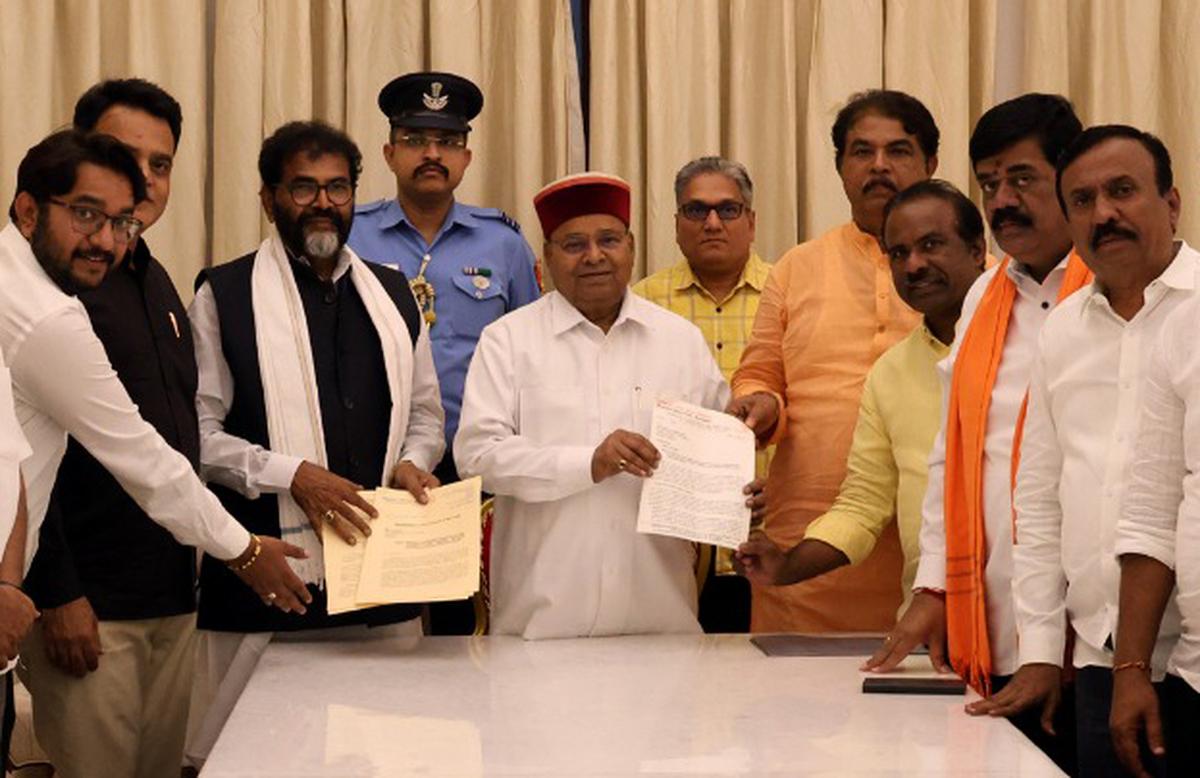
The issue has drawn attention to the broader challenges of police administration in India, where large workloads, political pressure, and limited resources often complicate enforcement. BJP leaders argue that structural reforms are essential to prevent misuse of power and ensure impartiality. Measures such as merit-based promotions, independent complaint monitoring, and stricter internal audits have been highlighted as potential solutions. The petition frames these steps as necessary to restore public trust and reinforce the rule of law in Karnataka.
Opposition parties have also responded to the petition, with some calling it a politically motivated move designed to target the ruling government. They argue that highlighting selective incidents does not reflect the overall performance of the police force and that reforms must be implemented in a collaborative, non-partisan manner. This exchange has intensified political debate, making law and order a central topic in state-level discourse ahead of upcoming elections and public scrutiny.
The petition has additionally highlighted the role of technology and digital monitoring in modern policing. BJP leaders have suggested deploying real-time reporting systems, crime-tracking dashboards, and mobile applications to enhance responsiveness and transparency. By integrating technology into law enforcement, the party argues that accountability can be strengthened, enabling citizens to track complaints and monitor progress. Such proposals align with national conversations on e-governance and smart policing, linking Karnataka’s challenges to broader administrative innovations.
Finally, the BJP has indicated that the petition is just the first step in sustained efforts to push for police reforms in Karnataka. Party officials have stated that they will continue to monitor developments closely, engage with citizens, and follow up with additional recommendations as necessary. The petition, they argue, reflects a long-term commitment to professionalising law enforcement and ensuring public safety. Its success, however, will depend on the state government’s willingness to implement meaningful reforms, the Governor’s oversight, and ongoing public engagement to restore confidence in Karnataka’s policing system.
Follow: Karnataka Government
Also read: Home | Channel 6 Network – Latest News, Breaking Updates: Politics, Business, Tech & More
