
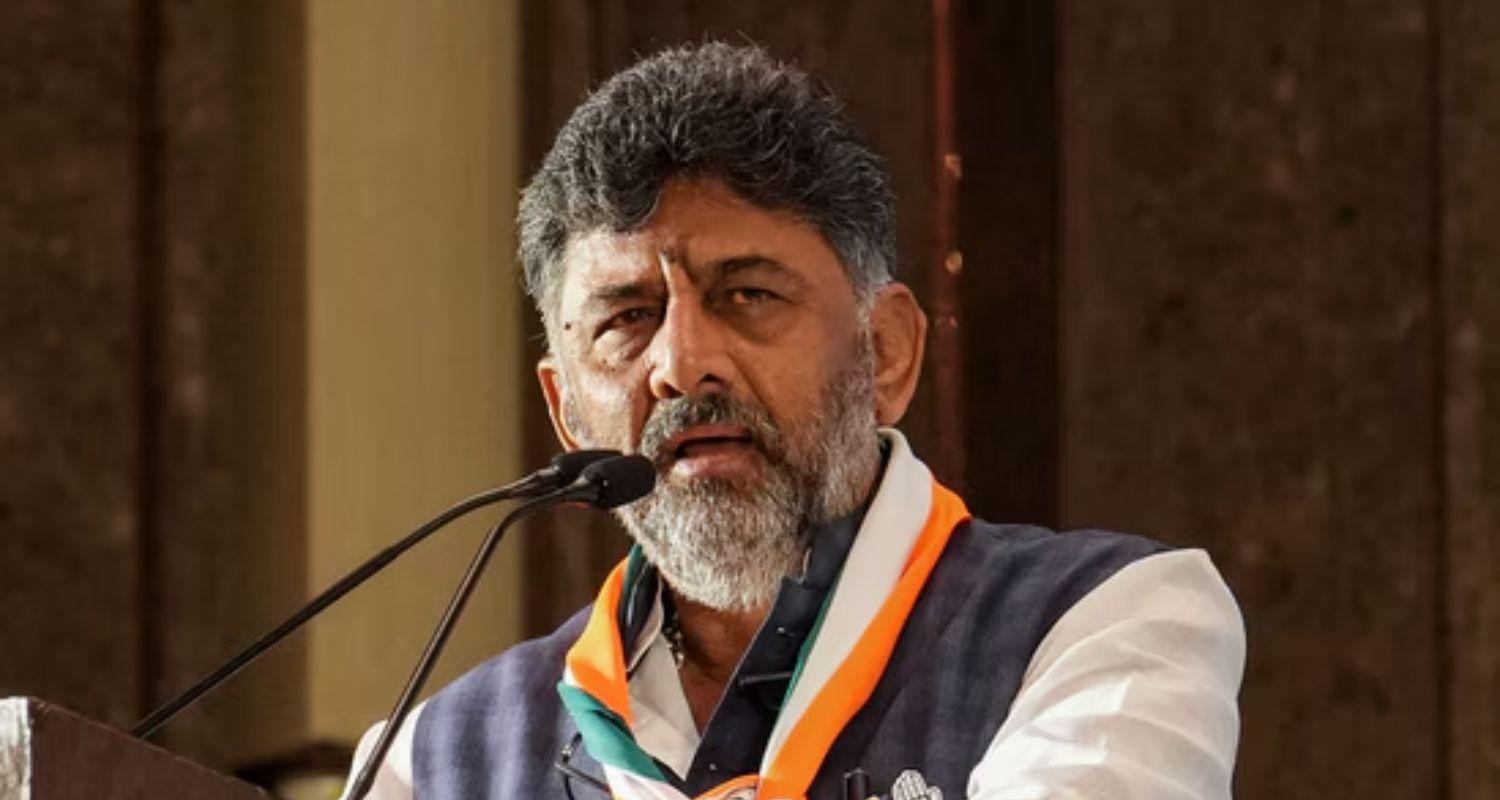
The Bharatiya Janata Party has mounted a sharp political attack on Karnataka Deputy Chief Minister D.K. Shivakumar for skipping the World Economic Forum meeting in Davos, framing the absence as symbolic of what it calls the State government’s lack of seriousness in attracting global investment. The issue has quickly snowballed into a wider political debate, with the BJP accusing the ruling Congress of mixed priorities, while the government insists that governance responsibilities at home took precedence. The controversy reflects deeper political fault lines over development narratives, leadership optics, and the politics of global visibility.
The controversy has also exposed internal differences in how political parties prioritise international engagement. Within the BJP, leaders have consistently projected global forums as essential extensions of governance, arguing that visibility translates into credibility. They contend that States competing for foreign direct investment must maintain a continuous international presence. By contrast, the Congress leadership in Karnataka appears to emphasise decentralised decision-making and on-ground administration, arguing that outcomes matter more than symbolic participation. This divergence in approach reflects contrasting political philosophies rather than a single administrative choice.
Observers note that the BJP’s criticism is aimed as much at perception management as policy debate. By framing the Davos absence as a snub to investors, the party seeks to plant doubts about the Congress government’s seriousness on economic growth. Such narratives, even if contested, can influence investor sentiment indirectly by shaping media discourse. The ruling party, therefore, faces the challenge of countering not just political attacks but also the broader impression that Karnataka’s global outreach may be losing momentum under its watch.
At the bureaucratic level, officials have attempted to downplay the political noise, stressing that investor interactions are ongoing through embassies, trade missions, and sector-specific engagements. They argue that global investment today relies less on summit diplomacy and more on sustained follow-up, regulatory ease, and project execution. According to them, Karnataka’s institutional capacity ensures continuity regardless of political travel schedules. However, they also acknowledge privately that high-profile forums provide access to decision-makers that routine channels cannot always replicate.
The episode has also sparked debate within civil society and academic circles about the actual returns from participation in elite global gatherings. Critics question whether such forums deliver measurable benefits proportional to the resources and political attention they command. Supporters counter that intangible gains, such as reputation-building and long-term relationships, are difficult to quantify but crucial. This broader debate has been drawn into the political crossfire, with both sides selectively invoking arguments that suit their narratives.
As the political exchange continues, attention is likely to shift back to measurable outcomes such as investment announcements, job creation figures, and project implementation timelines. If the Congress government is able to demonstrate strong economic performance in the coming months, the BJP’s criticism may lose traction. If not, the Davos absence could be repeatedly invoked as an early warning sign. For now, the issue remains a potent example of how governance decisions are quickly politicised in an environment where perception often rivals performance.
Background and Context
The World Economic Forum at Davos has traditionally been seen as a platform for Indian States to showcase investment potential, court multinational corporations, and signal policy stability. Karnataka, long regarded as a leading investment destination, has previously sent senior leadership to the summit to reinforce its global economic standing. Against this backdrop, the absence of the Deputy Chief Minister has been seized upon by the BJP as a political opportunity to question the Congress government’s commitment to economic diplomacy and investor confidence.
BJP leaders have argued that Davos is not merely a symbolic gathering but a crucial space for relationship-building that can translate into long-term economic gains. They claim that senior leadership presence sends a message of seriousness and ambition, especially when competition among States for foreign investment is intense. The party has contrasted the Deputy Chief Minister’s absence with past instances where Karnataka’s leaders actively engaged with global stakeholders to reinforce the State’s brand.
Political Attack and BJP’s Position
The BJP’s criticism has been pointed and persistent. Party spokespersons alleged that skipping the World Economic Forum undermines Karnataka’s image as a progressive, investment-friendly State. They questioned whether internal political compulsions or administrative disorganisation led to the decision, suggesting that the absence reflects misplaced priorities. According to the BJP, leadership visibility at global platforms is as important as policy intent, and the failure to show up sends a negative signal to potential investors.
Some BJP leaders went further, framing the issue as emblematic of what they describe as a governance style focused more on domestic political management than long-term economic strategy. They argued that while the Congress government highlights welfare schemes and social justice, it must also demonstrate equal commitment to economic growth and job creation. The Davos absence, they claimed, weakens Karnataka’s competitive edge at a time when other States are aggressively marketing themselves on the global stage.
Government’s Response and Explanation
The Congress government has firmly rejected the BJP’s accusations, stating that the Deputy Chief Minister’s decision to skip the World Economic Forum was driven by pressing administrative responsibilities in Karnataka. Government sources said the State leadership remained engaged with investment promotion efforts through other channels and that the absence of one leader does not diminish Karnataka’s economic outreach. They emphasised that development work on the ground cannot be paused for international events.
Senior Congress leaders argued that governance is not a photo opportunity and that tangible outcomes matter more than symbolic appearances. They pointed out that the government continues to engage investors through structured forums, departmental outreach, and follow-up mechanisms. According to them, the BJP’s criticism ignores the reality that investment decisions are influenced by policy stability, infrastructure, and governance quality rather than mere presence at high-profile events.
Political Optics Versus Administrative Priorities
The controversy has reignited a familiar debate in Indian politics about optics versus substance. For the BJP, the Deputy Chief Minister’s absence is an opportunity to frame the Congress government as lacking ambition on the global stage. For the Congress, the criticism underscores what it sees as an obsession with optics rather than governance outcomes. Political analysts note that such debates often resonate because they tap into public perceptions of leadership seriousness and global relevance.
The BJP has attempted to amplify the issue by linking it to broader narratives about Karnataka’s economic direction under the Congress. Party leaders have questioned whether the government is sufficiently proactive in engaging global investors, especially at a time when economic uncertainties demand assertive outreach. They argue that leadership presence at international forums complements domestic policy efforts and strengthens investor confidence.
On the other hand, the Congress has sought to reframe the discussion by highlighting the Deputy Chief Minister’s role in managing critical State-level responsibilities. Supporters argue that prioritising administrative work demonstrates commitment to governance rather than neglect. They also point out that Karnataka’s investment appeal rests on decades of institutional strength that cannot be undone by the absence of a single leader at one event.
Impact on Investment Narrative
The political sparring has inevitably drawn attention to Karnataka’s broader investment narrative. The State has historically positioned itself as a hub for technology, manufacturing, and innovation. Any suggestion of reduced global engagement risks denting that image, even if temporarily. Business chambers and industry observers have largely adopted a cautious stance, noting that while leadership presence matters, sustained policy clarity and execution are more critical.
Some industry voices have suggested that the controversy highlights the need for institutionalised investment promotion mechanisms that are not overly dependent on individual leaders. They argue that strong departments, professional outreach teams, and consistent follow-up can ensure continuity regardless of political schedules. At the same time, they acknowledge that high-profile events like Davos offer networking opportunities that are difficult to replicate elsewhere.
Opposition Strategy and Political Timing
The BJP’s attack also needs to be viewed in the context of political timing. With electoral narratives constantly evolving, opposition parties often seize moments that can be framed as governance lapses. By focusing on the Davos absence, the BJP aims to question the Congress government’s economic credibility without directly challenging its welfare agenda, which enjoys popular support.
Political commentators observe that such issues are effective because they blend symbolism with substance. The idea of skipping a global economic forum can be portrayed as a missed opportunity, regardless of the underlying reasons. For the BJP, the controversy allows it to project itself as pro-investment and globally oriented, reinforcing its broader national narrative.
Public Perception and Long-Term Implications
Public reaction to the controversy has been mixed. While some sections view the BJP’s criticism as legitimate scrutiny, others see it as political point-scoring. For many citizens, the relevance of the World Economic Forum is abstract, and their concerns are more immediate, relating to employment, infrastructure, and cost of living. The Congress government has attempted to tap into this sentiment by stressing that its focus remains on delivery rather than appearances.
In the long term, the impact of the controversy will depend on outcomes rather than rhetoric. If Karnataka continues to attract significant investment and generate employment, the Davos debate may fade into political background noise. Conversely, any slowdown could retroactively lend weight to the opposition’s criticism. The episode thus serves as a reminder that political narratives often gain or lose credibility based on subsequent developments.
Conclusion
The BJP’s dig at the Karnataka Deputy Chief Minister for skipping the World Economic Forum underscores the enduring tension between political optics and administrative priorities. While the opposition frames the absence as a missed global opportunity, the government insists that governance at home cannot be subordinated to international symbolism. The debate reveals how leadership decisions are increasingly scrutinised through both political and economic lenses. Ultimately, Karnataka’s development trajectory will be judged not by attendance at global forums alone, but by the tangible outcomes of policy, investment, and governance on the ground.
Follow: Karnataka Government
Also read: Home | Channel 6 Network – Latest News, Breaking Updates: Politics, Business, Tech & More
