
The Central Empowered Committee (CEC) has submitted a crucial report to the Supreme Court recommending the restoration of the 2016 draft notification related to the Bannerghatta National Park, a move that could significantly alter the future of one of Karnataka’s most sensitive ecological zones. The recommendation has reignited an intense debate over conservation, development, legality, and the rights of communities living around the protected area. Bannerghatta, long viewed as Bengaluru’s ecological shield, now stands at the centre of a high-stakes decision that could define how environmental governance is enforced in rapidly urbanising regions.
According to the CEC’s assessment, the dilution and non-finalisation of the 2016 draft notification weakened statutory protections around the national park. The draft notification had proposed stringent eco-sensitive zone regulations, clearly defining permissible and prohibited activities around the park’s boundary. By recommending its restoration, the CEC has signalled that environmental safeguards were compromised over time, either through administrative inaction or policy reversals that favoured developmental pressures.
Bannerghatta National Park holds exceptional ecological value, serving as a habitat for elephants, leopards, sloth bears, and numerous endemic species. It also functions as a crucial wildlife corridor connecting forest landscapes in southern Karnataka and Tamil Nadu. Conservationists argue that weakening protective measures around the park risks habitat fragmentation, increased human-animal conflict, and irreversible ecological damage.
The CEC report emphasises that the 2016 draft notification was prepared after extensive scientific and administrative consultation, and that its intent was to balance conservation with regulated human activity. Its restoration, therefore, is being projected not as a fresh imposition but as a return to an already established framework that was never fully implemented.
The Supreme Court’s consideration of the recommendation is expected to have far-reaching implications, not only for Bannerghatta but for eco-sensitive zones across the country. As urban expansion pushes against forest boundaries, the case highlights the tension between environmental protection and development aspirations.

WHY THE 2016 DRAFT NOTIFICATION MATTERS
The 2016 draft notification on Bannerghatta National Park was a critical policy instrument aimed at defining eco-sensitive zones around the protected area. These zones act as buffers, regulating construction, mining, industrial activity, and large-scale infrastructure projects that could otherwise encroach upon wildlife habitats. The draft outlined graded restrictions based on proximity to the park, ensuring that human activity near the boundary remained ecologically sustainable.
Over the years, however, the notification remained in limbo. Subsequent revisions and delays led to confusion over applicable regulations, creating a regulatory vacuum that allowed piecemeal development. Environmental groups have consistently argued that this uncertainty benefitted real estate interests and commercial establishments at the cost of long-term ecological stability.
The CEC, in its report to the Supreme Court, has underscored that the failure to finalise or enforce the 2016 draft undermined the intent of environmental protection laws. The committee noted that regulatory ambiguity weakens enforcement, making it difficult for authorities to prevent environmentally damaging activities.
If the Supreme Court accepts the recommendation, it could send a strong signal that environmental regulations cannot be indefinitely postponed or selectively applied. Such a decision may compel governments to integrate ecological considerations more seriously into urban planning processes.
From a legal standpoint, the restoration of the draft notification would reassert the primacy of precautionary principles in environmental governance. Courts have repeatedly held that when ecological damage is irreversible, the burden lies on the state to err on the side of protection. The CEC’s recommendation aligns with this judicial philosophy.
Critics of the draft, however, argue that the notification imposes severe restrictions on local populations, affecting livelihoods, housing, and access to basic infrastructure. They claim that blanket eco-sensitive zones fail to account for ground realities, particularly in areas where villages predate the declaration of protected forests.
The Supreme Court now faces the complex task of balancing these competing claims. Restoring the 2016 draft could strengthen conservation but may also require nuanced implementation to avoid undue hardship for residents. The CEC has hinted that regulatory clarity, rather than ad hoc relaxations, is essential to resolve such tensions._vb_74.jpeg)
CONSERVATION VERSUS DEVELOPMENT PRESSURES
Bannerghatta National Park’s proximity to Bengaluru makes it uniquely vulnerable. As the city expands southward, land values around the park have surged, intensifying pressure for residential layouts, resorts, roads, and commercial hubs. Environmentalists argue that without strong legal buffers, the park risks becoming an isolated green island surrounded by concrete.
The CEC report points out that unchecked development around protected areas often leads to ecological degradation that is gradual but cumulative. Loss of tree cover, increased traffic, noise pollution, and waste generation directly impact wildlife behaviour. For species like elephants, whose migratory paths cut across forest and non-forest land, even minor disruptions can escalate into conflict with humans.
As the Court examines the CEC report, the case stands as a reminder that environmental governance is as much about foresight as it is about regulation. The decision will reflect how the state values long-term ecological security against immediate developmental pressures.
In the larger narrative of India’s environmental challenges, the Bannerghatta case underscores a critical question: whether conservation commitments remain negotiable, or whether they form an unyielding foundation for sustainable development. The answer, shaped by judicial wisdom and institutional resolve, will resonate well beyond the forests of Bannerghatta.
Development advocates counter that sustainable growth and environmental protection need not be mutually exclusive. They argue that improved infrastructure, regulated tourism, and community participation can coexist with conservation goals. However, conservationists warn that such arguments are frequently used to justify incremental dilution of safeguards.
The 2016 draft notification attempted to create a structured regulatory environment, allowing certain activities while prohibiting others. Its non-implementation, according to the CEC, resulted in selective enforcement that undermined both conservation and credibility of governance.
Urban planners observing the case note that Bannerghatta represents a broader challenge facing Indian cities. As metropolitan regions expand, protected forests are increasingly seen as obstacles rather than assets. The CEC’s recommendation is therefore being viewed as a test case for whether environmental limits can be enforced despite economic and political pressure.
If the Supreme Court accepts the recommendation, it could send a strong signal that environmental regulations cannot be indefinitely postponed or selectively applied. Such a decision may compel governments to integrate ecological considerations more seriously into urban planning processes.
LEGAL IMPLICATIONS AND JUDICIAL SCRUTINY
The involvement of the Central Empowered Committee adds significant weight to the matter. Constituted to assist the Supreme Court in forest and environmental cases, the CEC’s findings often shape judicial outcomes. Its recommendation to restore the 2016 draft notification indicates serious concern over regulatory dilution.
Legally, the case touches upon the interpretation of environmental statutes, particularly the Environment Protection Act and wildlife conservation laws. The Supreme Court has, in previous rulings, affirmed that eco-sensitive zones are essential tools for safeguarding protected areas from anthropogenic pressure.
The CEC has highlighted that prolonged uncertainty over the notification has led to litigation, administrative inconsistency, and erosion of public trust. Restoring the draft could provide a clear legal framework, reducing disputes and enabling consistent enforcement.
However, the Court must also consider principles of natural justice. Residents and institutions that developed land during periods of regulatory ambiguity may challenge retrospective enforcement. This raises questions about compensation, regularisation, and phased compliance.
Legal experts suggest that the Court may adopt a calibrated approach, restoring the draft notification while allowing limited exemptions or transition periods. Such an approach could preserve ecological objectives while mitigating social and economic disruption.
The case also underscores the judiciary’s expanding role in environmental governance. As executive actions come under scrutiny, courts are increasingly being called upon to arbitrate between conservation imperatives and development claims. The Bannerghatta case exemplifies this evolving dynamic.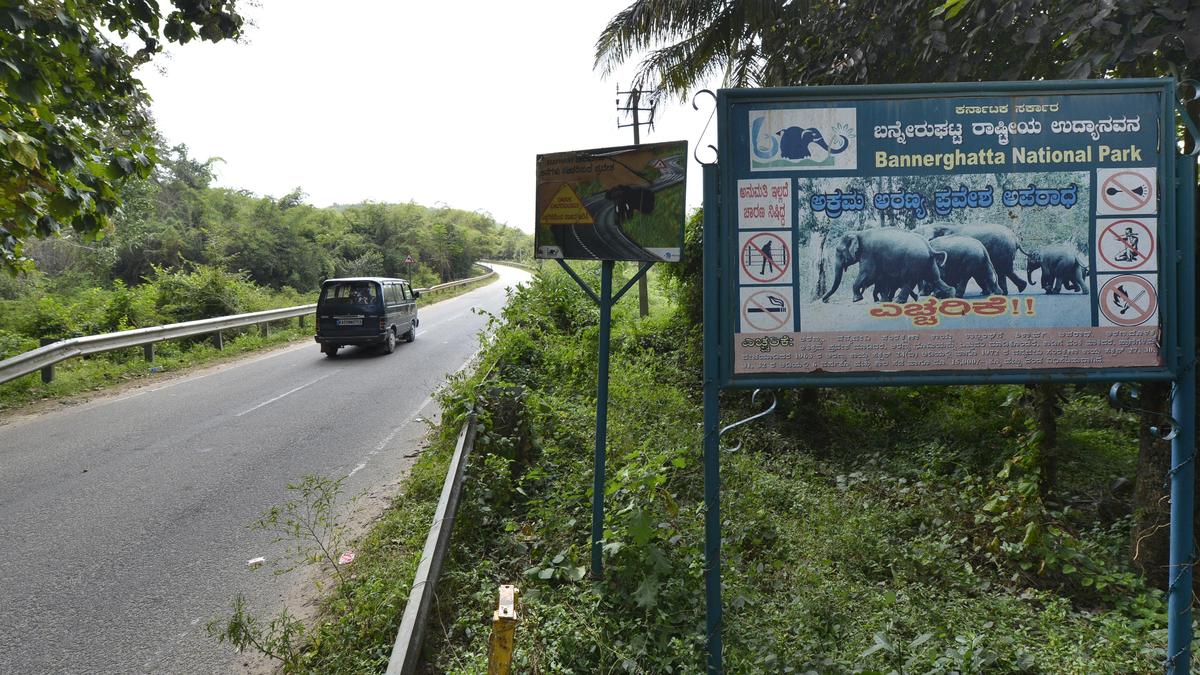
ECOLOGICAL STAKES AND FUTURE OUTCOMES
At its core, the CEC recommendation is about safeguarding ecological integrity. Bannerghatta National Park is not merely a recreational space or a wildlife attraction; it is a living ecosystem that supports biodiversity, regulates climate, and contributes to groundwater recharge. Its degradation would have consequences far beyond its boundaries.
Environmental scientists warn that once buffer zones are compromised, restoration becomes extremely difficult. Fragmented habitats reduce genetic diversity, weaken species resilience, and increase vulnerability to climate stress. The long-term costs of such damage often exceed the short-term economic gains of development.
The Supreme Court’s eventual decision will shape the park’s future trajectory. Acceptance of the CEC recommendation could reinforce conservation-first governance and set a precedent for restoring diluted environmental safeguards elsewhere. Rejection or modification, on the other hand, may embolden further regulatory relaxation around protected areas.
For citizens of Bengaluru and surrounding regions, the outcome holds tangible implications. Bannerghatta acts as a green lung, influencing air quality and ecological balance. Protecting it is not merely an environmental issue but a public health and sustainability concern.
As the Court examines the CEC report, the case stands as a reminder that environmental governance is as much about foresight as it is about regulation. The decision will reflect how the state values long-term ecological security against immediate developmental pressures.
In the larger narrative of India’s environmental challenges, the Bannerghatta case underscores a critical question: whether conservation commitments remain negotiable, or whether they form an unyielding foundation for sustainable development. The answer, shaped by judicial wisdom and institutional resolve, will resonate well beyond the forests of Bannerghatta.
Follow: Karnataka Government
Also read: Home | Channel 6 Network – Latest News, Breaking Updates: Politics, Business, Tech & More
