
A foundation stone-laying ceremony in Koppal district descended into chaos on Tuesday after a chair was hurled at senior BJP leader and Union Minister V. Somanna, triggering widespread outrage and raising serious concerns about political intolerance and public safety in Karnataka. The incident, which occurred in full public view, has sparked sharp reactions across the political spectrum, with leaders condemning the act as a dangerous escalation of political hostility and demanding strict action against those responsible.
The dramatic episode unfolded during an official event meant to mark the beginning of a development project, turning what was supposed to be a celebratory occasion into a flashpoint of controversy. Although Somanna escaped without serious injury, the act has intensified debates on deteriorating political culture, lapses in security arrangements, and the growing normalisation of violence and aggression in public life.
Incident unfolds amid tense atmosphere
According to eyewitnesses, the ceremony was progressing as planned, with elected representatives, officials, and local residents gathered at the venue. As Somanna was seated on the dais along with other dignitaries, a sudden commotion broke out from among the crowd. In the midst of shouting and jostling, a chair was reportedly picked up and hurled in the direction of the stage, narrowly missing the minister.
Security personnel quickly intervened, surrounding Somanna and escorting him to a safer area. The event was abruptly halted, and officials moved to restore order. Videos and images of the incident soon circulated widely, drawing public attention and triggering a flurry of political reactions.
Those present described the scene as chaotic and alarming, with several attendees panicking as the situation spiralled out of control. Some said the incident appeared to stem from local anger over unresolved grievances, while others alleged it was a deliberate attempt to intimidate the minister.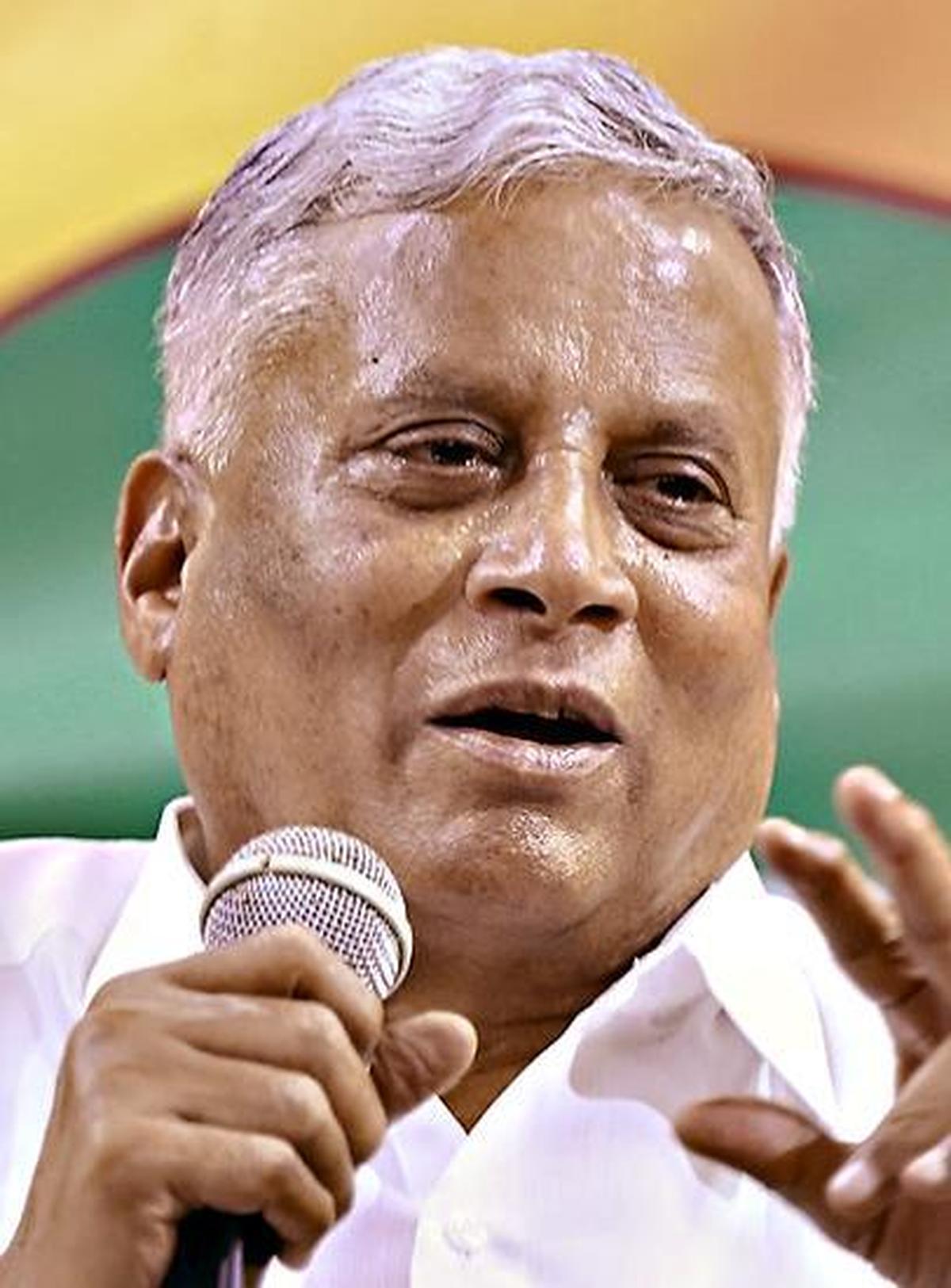
Immediate response and police action
Police officials said they acted swiftly to secure the venue and identify those involved in the disturbance. Preliminary investigations suggested that the chair was thrown by an individual who managed to breach the inner security cordon. Officers confirmed that a case had been registered, and efforts were underway to trace and apprehend the suspect.
Senior police officers acknowledged that while standard security protocols were in place, the incident exposed vulnerabilities in crowd management. They said additional personnel would be deployed for future high-profile events in the district, and security arrangements would be reviewed to prevent a recurrence.
Authorities also began questioning event organisers and security staff to determine whether there were lapses in screening or intelligence inputs that could have anticipated the unrest. The police stressed that no leniency would be shown and that stringent action would be taken against anyone found guilty of endangering public safety.
Somanna condemns violence, calls for calm
Responding to the incident, Somanna strongly condemned the act, describing it as unacceptable and harmful to democratic values. He said differences of opinion should be expressed through dialogue and lawful means, not through violence or intimidation.
“I have always believed in peaceful engagement with the public. What happened today is deeply unfortunate. Violence has no place in democracy,” he said. While expressing gratitude that no one was seriously injured, Somanna urged people to maintain calm and allow the authorities to investigate the matter thoroughly.
The Union Minister also appealed to political leaders across parties to introspect and work towards restoring civility in public discourse. He cautioned that such incidents could discourage genuine engagement between elected representatives and citizens, ultimately harming governance and development.
BJP terms attack ‘assault on democracy’
The BJP reacted sharply, terming the incident an “assault on democracy” and accusing opposition forces of fostering an atmosphere of hostility against its leaders. Senior BJP leaders demanded immediate arrests and strict punishment, arguing that attacks on public representatives undermine democratic institutions.
Party leaders said the incident reflected a worrying trend where political disagreements were increasingly manifesting as physical aggression. They urged the State government to ensure the safety of all elected representatives, irrespective of party affiliation, and to take proactive measures to curb political violence.
Several BJP leaders also questioned whether sufficient security was provided to Somanna, given his stature and the sensitive nature of public events. They demanded accountability from district authorities and sought a detailed report on the security arrangements.
Opposition reactions and calls for inquiry
Opposition parties, while condemning the act, accused the BJP of politicising the incident. Congress leaders said violence of any kind was unacceptable and must be condemned unequivocally, but they also urged the ruling party at the Centre to reflect on the growing anger among the public.
Some opposition leaders argued that such incidents were symptomatic of deeper socio-political issues, including local grievances, unemployment, and perceptions of neglect. They called for a comprehensive inquiry into the circumstances that led to the outburst, including whether the event had triggered unresolved local tensions.
The JD(S) also condemned the incident and called for restraint from all sides. Party leaders said Karnataka’s political culture had historically been known for relative civility, and recent incidents threatened to erode that legacy.
Local grievances and underlying tensions
Residents of Koppal pointed to simmering discontent over delayed projects, land issues, and perceived lack of responsiveness from authorities. Some locals claimed that repeated attempts to raise concerns through official channels had gone unanswered, leading to frustration.
While condemning the violent act, community leaders said it was important for elected representatives to engage more actively with grassroots issues. They argued that transparency, timely communication, and accountability could help prevent such incidents by addressing grievances before they escalate.
However, many residents also expressed fear that the incident could lead to increased policing and restrictions on public gatherings, affecting ordinary citizens. They urged authorities to strike a balance between ensuring security and preserving democratic freedoms.
Security concerns at public events
The chair-hurling incident has reignited debate over security arrangements at public functions involving political leaders. Experts pointed out that while open interactions are a hallmark of democracy, they require robust planning and intelligence coordination to ensure safety.
Security analysts said crowd control, access restrictions, and advance intelligence gathering were critical, especially in regions with a history of political tension. They also emphasised the need for coordination between local police, event organisers, and political parties to identify potential flashpoints.
The incident in Koppal, they argued, should serve as a wake-up call for authorities to reassess protocols and invest in training personnel to handle unpredictable situations without resorting to excessive force.
Impact on political discourse
Observers noted that such incidents contribute to a climate of fear and hostility, discouraging meaningful dialogue between leaders and citizens. When public events turn confrontational, they said, the space for constructive criticism and engagement shrinks.
Political analysts warned that normalising aggression could have long-term consequences for democracy, including reduced public participation and increased polarisation. They urged leaders to set an example by condemning violence unequivocally and fostering respectful debate.
The incident has also raised questions about the tone of political rhetoric, with some analysts arguing that inflammatory language can embolden individuals to resort to extreme actions.
Legal implications and accountability
Legal experts said the act of hurling an object at a public representative could attract serious charges, including attempt to cause harm and disruption of public order. If intent to injure is established, the accused could face stringent penalties.
They emphasised that swift and transparent legal action was essential to send a strong message that violence would not be tolerated. At the same time, they cautioned against collective blame or punitive measures that could infringe on civil liberties.
The outcome of the investigation, they said, would be closely watched as a test of the State’s commitment to upholding the rule of law.
Broader pattern of political unrest
The Koppal incident adds to a series of recent episodes across the country where political events have witnessed disruptions, protests, and clashes. Analysts say these incidents reflect broader anxieties and frustrations in society, often exacerbated by economic pressures and political polarisation.
They argue that addressing these underlying issues requires more than policing. Inclusive governance, responsive administration, and credible grievance redressal mechanisms are essential to restore trust and reduce the likelihood of confrontations.
Voices urging restraint and reform
Civil society groups and senior public figures have urged all political actors to exercise restraint and prioritise dialogue over confrontation. They stressed that while dissent is a democratic right, it must be expressed peacefully.
Some activists called for structured public consultations and town-hall style meetings where citizens can air grievances in a controlled and respectful environment. They argued that such forums could reduce the risk of spontaneous outbursts at large public events.
Conclusion
The chair-hurling incident during the foundation stone-laying ceremony in Koppal has sent shockwaves through Karnataka’s political landscape, highlighting the fragile state of public discourse and the urgent need for introspection. While the immediate focus remains on identifying and punishing those responsible, the episode raises deeper questions about political culture, security, and governance.
As investigations continue, the incident stands as a stark reminder that democracy thrives on dialogue, respect, and peaceful engagement. Ensuring the safety of public representatives and citizens alike, while addressing legitimate grievances, will be crucial in preventing such alarming episodes from recurring.
Follow: Karnataka Government
Also read: Home | Channel 6 Network – Latest News, Breaking Updates: Politics, Business, Tech & More
