
Commuters along the Chandapura–Attibele stretch in Bengaluru are facing severe delays as ongoing roadworks continue to disrupt smooth traffic flow. The construction, aimed at widening the road and improving drainage, has led to bottlenecks during peak hours, turning what is usually a 30-minute commute into a frustrating two-hour ordeal. Residents, office-goers, and logistics operators have expressed growing frustration over the prolonged work and lack of alternate routes.
Officials from the Bengaluru Metropolitan Transport Corporation (BMTC) and local traffic police have noted that the stretch connects key industrial, residential, and commercial areas, making it a critical corridor for daily commuters. The roadworks, which include lane expansion, resurfacing, and installation of safety barriers, have narrowed available lanes, forcing vehicles to merge and slowing traffic considerably. Temporary diversions have been implemented, but congestion remains a major issue.
Traffic congestion along the Chandapura–Attibele stretch has also affected school and college transportation. Parents and students report that school buses are frequently delayed, forcing adjustments to pick-up and drop-off schedules. College-goers commuting to educational institutions in the corridor face similar delays, impacting punctuality for classes and examinations. Authorities are coordinating with educational institutions to stagger timings and ease peak-hour congestion wherever possible.
Logistics and delivery services operating along the stretch have reported significant operational setbacks. Transport operators cite increased fuel consumption, vehicle wear and tear, and delayed deliveries due to prolonged traffic jams. Several companies have sought temporary alternate routes, but the lack of proper feeder roads has limited efficiency. Officials are exploring additional bypasses and temporary service lanes to facilitate commercial movement.
Residents have expressed concern over the health impact of prolonged exposure to dust and noise from construction. Many households in adjoining areas have reported respiratory issues and discomfort due to constant air pollution. The construction team has been asked to step up mitigation measures, including water sprinkling, dust barriers, and scheduling high-noise activities during daytime hours to reduce disturbance to local communities.
Emergency services, including ambulances and fire response units, have faced challenges navigating the congested stretch. Police and traffic officials have coordinated with hospitals and emergency service providers to identify priority lanes and signal adjustments to allow swift passage of essential vehicles. Authorities continue to monitor emergency access and implement measures to prevent delays in critical situations.
Public transport commuters, particularly BMTC bus passengers, have been facing overcrowding and extended travel times. Authorities are reportedly increasing the frequency of buses along affected routes and providing updates on expected delays through digital platforms. Despite these measures, passengers continue to experience frustration due to slow-moving traffic and limited alternate routes.
The construction team has undertaken phased work to manage congestion, with lane closures rotated and work scheduled during non-peak hours where feasible. Officials emphasise that such phased approaches, though not eliminating delays, aim to balance construction efficiency with commuter convenience. Additional signage and temporary traffic diversions have been installed to guide motorists safely through work zones.
Local business owners along the corridor have voiced concerns about reduced customer footfall due to the traffic snarls. Shops and small enterprises reliant on daily commuters have seen a decline in sales, prompting calls for improved traffic management or temporary compensation mechanisms for affected businesses. Authorities are engaging with local business associations to identify solutions and provide timely updates.
Authorities have assured that once the roadworks are completed, the Chandapura–Attibele stretch will feature enhanced lanes, improved drainage, modern signage, and safer pedestrian access. The upgrade is expected to significantly improve traffic flow, reduce travel time, and support industrial and commercial activities in the region. Officials have urged commuters to remain patient and plan their travel while long-term benefits take shape.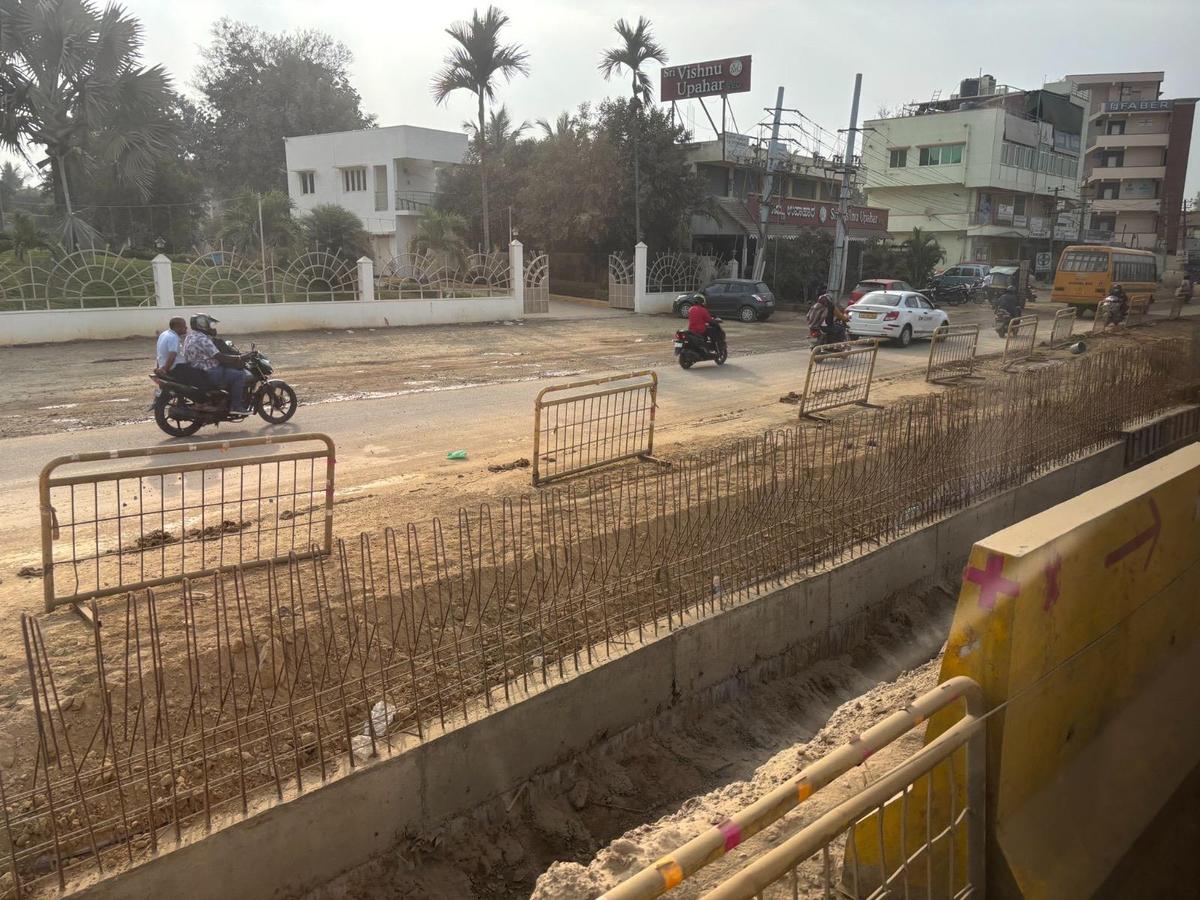
COMPLAINING COMMUTERS AND DAILY STRUGGLES
Daily commuters report that travel time has increased exponentially, affecting both personal schedules and professional commitments. Office-goers say they are forced to leave homes much earlier, while transport operators cite delays in deliveries and increased fuel costs. Local residents have also complained about noise, dust, and safety hazards caused by uneven surfaces and construction equipment. Many are urging authorities to expedite the work or provide better alternate routes.
Traffic police have been deployed at key junctions to manage congestion and prevent accidents. Officials have also requested commuters to plan their travel during off-peak hours when possible. Authorities stressed that the project, though causing temporary inconvenience, is expected to significantly improve road capacity, reduce accidents, and facilitate smoother traffic once completed.
INFRASTRUCTURE UPGRADES UNDERWAY
The Chandapura–Attibele stretch is part of a broader urban development plan aimed at decongesting major arterial roads and supporting Bengaluru’s growing vehicular population. Work includes widening lanes, constructing proper footpaths, enhancing drainage systems, and installing signage and safety barriers. Officials said the upgrades will benefit long-term traffic flow, especially for heavy vehicles commuting to industrial hubs and logistics centres in the region.
Civil engineers involved in the project highlighted that unforeseen delays are common in urban roadworks due to land acquisition challenges, utility relocations, and weather conditions. They assured that teams are working around the clock to complete the project while maintaining safety standards. Authorities hope that once finished, the upgraded road will reduce travel time, improve connectivity, and support economic activities in the corridor.
IMPACT ON LOCAL ECONOMY AND TRANSPORT
Small businesses along the stretch have reported reduced footfall due to traffic snarls, affecting daily revenue. Delivery services and public transport operations are similarly affected, with buses running late and schedules disrupted. The Karnataka Road Development Corporation (KRDCL) has said that efforts are underway to coordinate with business owners to ensure minimal disruption while maintaining the pace of construction.
Residents have suggested implementing temporary measures such as dedicated service lanes, better signage for diversions, and traffic signals at congested intersections. Some commuters have turned to digital maps and navigation apps to identify alternative routes, but heavy traffic across adjacent roads has limited their effectiveness. Local authorities are considering adjusting traffic signals and deploying additional police personnel during peak hours.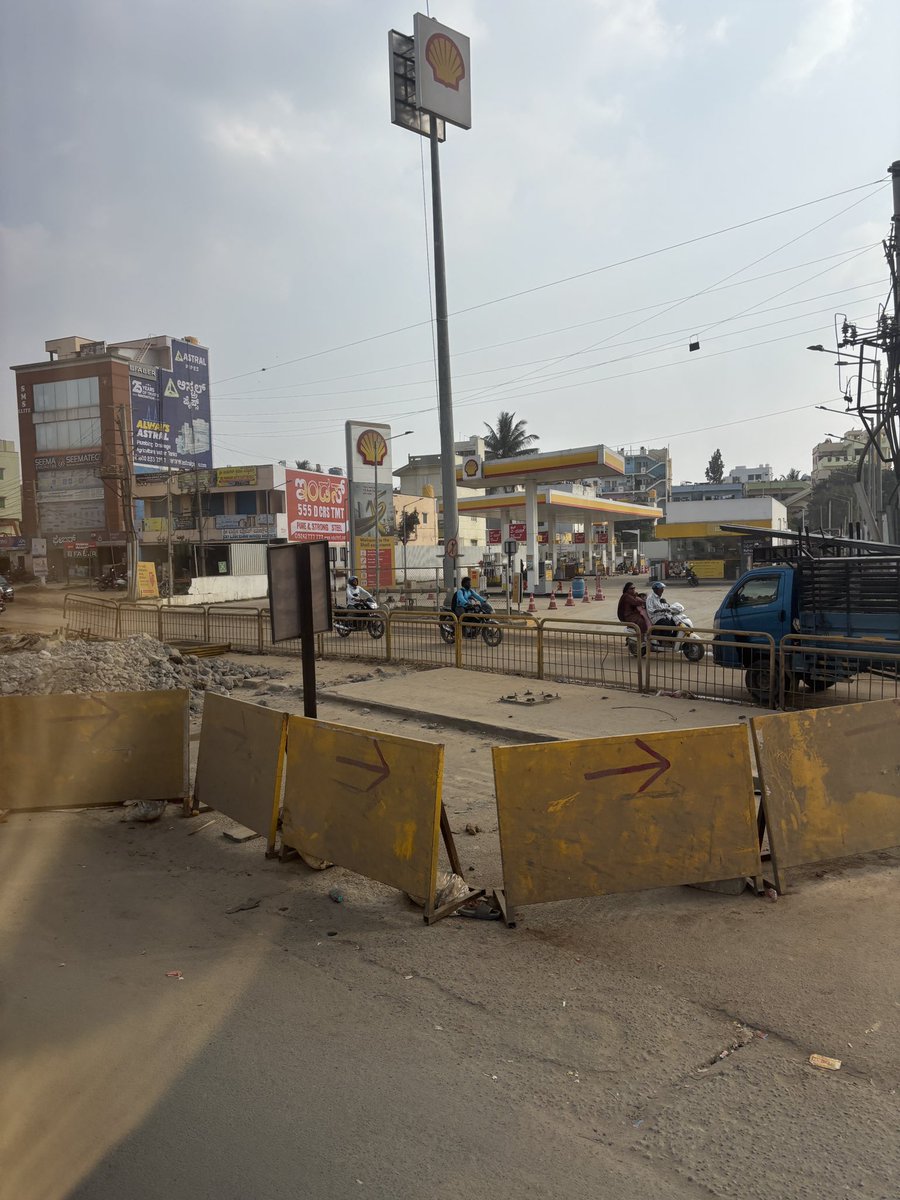
PUBLIC SAFETY AND CONVENIENCE
Safety concerns have been raised as uneven road surfaces, construction machinery, and heavy vehicle movement create hazardous conditions for motorists, two-wheeler riders, and pedestrians. Traffic police have urged caution and adherence to speed limits, while the construction team has installed barricades and warning signs at critical points. Officials stressed that pedestrian safety and accident prevention remain a top priority during the ongoing works.
Environmental concerns have also been highlighted, particularly dust pollution affecting nearby residential areas. Temporary water sprinkling and dust control measures have been implemented, but residents continue to report health issues, including respiratory discomfort. Authorities said stricter monitoring of pollution levels and mitigation strategies will continue until construction is completed.
EXPECTED COMPLETION AND LONG-TERM BENEFITS
The Chandapura–Attibele road widening and improvement project is expected to be completed within the next few months, according to officials. Once finished, commuters can expect smoother traffic, better connectivity to industrial zones, and improved safety for pedestrians and cyclists. Authorities emphasise that the temporary inconvenience is a trade-off for long-term infrastructure benefits, including reduced congestion and faster travel times for heavy vehicles.
Officials have assured that periodic updates on project progress and traffic advisories will be shared with the public through local media and digital platforms. Residents are encouraged to follow updates to plan travel accordingly. Once operational, the upgraded stretch is expected to significantly improve commuting efficiency, strengthen economic activity along the corridor, and enhance overall urban mobility in southern Bengaluru.
LOOKING AHEAD
While frustration among commuters is palpable, authorities maintain that the Chandapura–Attibele stretch upgrade is a crucial step in modernising Bengaluru’s urban infrastructure. Effective communication, phased traffic management, and safety measures are being prioritised to minimise disruptions. The project exemplifies the challenges of urban expansion and the balancing act between development and daily convenience, highlighting the need for proactive planning and citizen cooperation in a rapidly growing metropolis.
Authorities have also proposed using digital traffic monitoring systems along the Chandapura–Attibele stretch to manage congestion more effectively. Cameras and sensors will track vehicle movement in real time, enabling traffic police to adjust signals, deploy personnel to hotspots, and provide timely alerts to commuters about delays or alternative routes. Officials believe this technology-driven approach can significantly reduce peak-hour congestion once fully implemented.
Residents and commuters have demanded better communication regarding ongoing roadworks. Many expressed frustration over the lack of clear signage and timely updates on lane closures, detours, and expected completion timelines. In response, authorities said they will provide daily advisories through local media, social platforms, and traffic apps to help commuters plan their journeys more efficiently.
Motorists have also highlighted safety concerns along the stretch, particularly for two-wheelers and pedestrians navigating narrow, partially closed lanes. Traffic police and construction authorities have set up additional barricades, warning signs, and speed restrictions to mitigate accident risks. Authorities stressed that while congestion is temporary, safety remains a top priority during construction.
Public transport operators are exploring flexible scheduling and route adjustments to cope with delays. Some BMTC bus routes have been temporarily rerouted to adjacent roads, while shuttle services are being considered for heavily congested segments. Authorities hope these measures will ease commuter pressure and maintain connectivity despite ongoing construction challenges.
Experts note that the Chandapura–Attibele roadwork project highlights the challenges of urban infrastructure development in rapidly growing cities. Balancing construction efficiency with commuter convenience requires careful planning, phased execution, and proactive communication. While the stretch remains congested, authorities assure that the completed project will deliver long-term improvements in safety, travel time, and economic activity for the region.
Follow: Karnataka Government
Also read: Home | Channel 6 Network – Latest News, Breaking Updates: Politics, Business, Tech & More
