
Chinese Influencer Found Homeless After Promised Job Offer Abroad
Chinese influencer reports have shocked social media users after a young woman known online as “Umi” was found homeless in Cambodia. Once followed by nearly 58,000 people for her polished online presence, her real-life condition stood in sharp contrast to the image she shared on social platforms.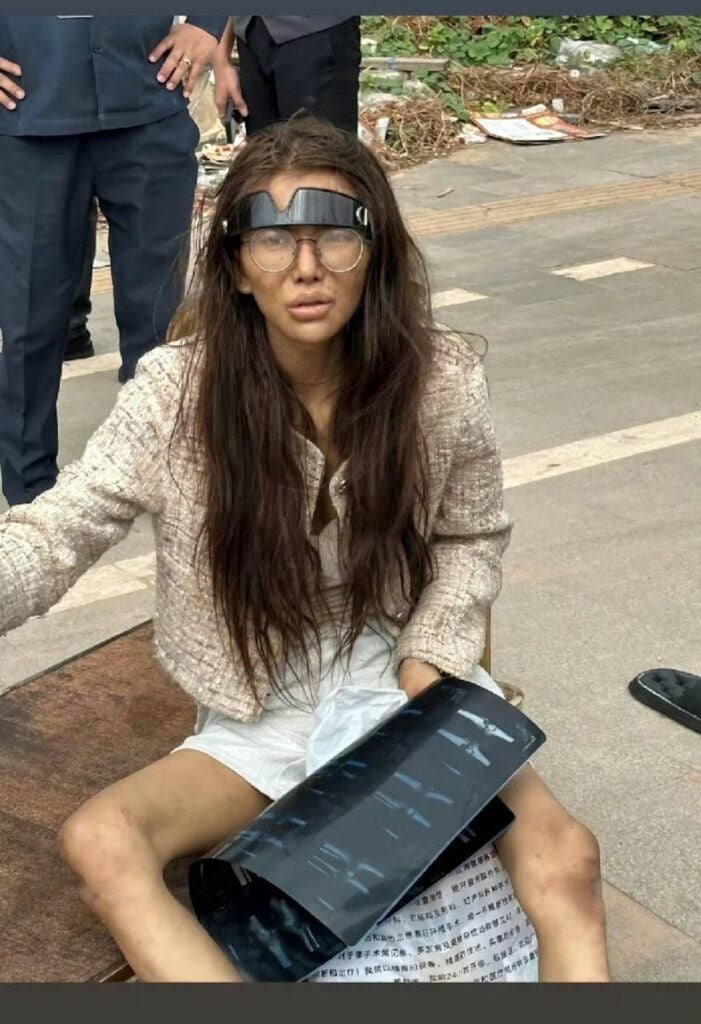
The case gained attention in China after Umi went missing for several weeks. Friends and followers initially believed she had taken up a well-paid overseas job opportunity, as she had mentioned plans to travel abroad for work. What followed instead was a troubling chain of events that has now raised concerns about overseas recruitment traps targeting young internet personalities.
Authorities and local volunteers later found her living without stable shelter, money, or proper identification. Her physical appearance and living conditions showed clear signs of distress, drawing widespread concern and debate across Chinese social media.
Chinese Influencer Disappearance and the Job Offer That Changed Everything
Chinese influencer Umi reportedly accepted a job offer that promised high income and professional growth in Cambodia. Like many digital creators trying to expand their careers, she believed the opportunity would help her move beyond online content and secure financial stability.
According to reports circulating in China, the job details were vague, and communication with the recruiters stopped soon after she arrived. Without legal employment documents or local support, she was left stranded. Her phone access became limited, making it difficult for her to contact family or followers.
This pattern is not unfamiliar. Southeast Asia has seen a rise in cases where individuals are lured with attractive job offers and later abandoned, exploited, or forced into unsafe environments. Umi’s case brought renewed attention to this issue, especially because of her public identity as an influencer.
Chinese Influencer Image Versus Reality on the Ground
Chinese influencer culture often presents success as effortless, creating the illusion that online popularity guarantees real-world security. Umi’s situation exposed how fragile that assumption can be. Despite having tens of thousands of followers, she lacked basic protections once she was outside her home country.
Online fame did not translate into legal safeguards, emergency support, or financial security. Her case became a reminder that digital influence does not replace proper contracts, verified employers, or embassy registration when working abroad.
Social media users reacted strongly, questioning why influencers are increasingly targeted by overseas recruiters. Experts suggest that influencers are often seen as easy targets because they seek visibility, income growth, and international exposure.
Chinese Influencer Case Sparks Debate in China
Chinese influencer discussions quickly dominated online platforms in China after the story broke. Many users expressed concern over the lack of awareness among young creators regarding overseas job risks. Others criticised the culture of chasing fast money without proper verification.
The case also triggered conversations about online responsibility. Some argued that platforms should do more to educate creators about employment risks, while others pointed out that individuals must take accountability for their choices.
Chinese authorities have repeatedly warned citizens against accepting overseas job offers without verified documentation. Umi’s situation reinforced those warnings and highlighted how easily personal safety can be compromised when proper checks are ignored.
Chinese Influencer Safety and the Bigger Picture
Chinese influencer Umi’s story is not an isolated incident. Similar cases involving entertainers, models, and online personalities have surfaced in recent years. Many follow the same pattern: attractive job offers, limited transparency, loss of communication, and eventual distress.
View this post on Instagram
What makes this case stand out is the visibility. Influencers are often seen as privileged or protected, but this incident showed that vulnerability exists regardless of follower count. Without legal preparation and institutional support, anyone can be exposed to serious risk.
The case has encouraged renewed calls for awareness campaigns targeting young creators who may be tempted by overseas offers. It has also prompted discussions about cross-border recruitment monitoring and stronger embassy support systems. Also Read: Dharmendra Pradhan Releases “Khutbat-e-Modi: Lal Qila Ki Faseel Se”, Urdu Compilation of PM’s Independence Day Speeches: 2026
Conclusion
Chinese influencer Umi’s experience serves as a serious reminder that online fame does not guarantee real-world safety. Behind polished profiles and follower counts, basic precautions still matter. Her case stands as a warning about unchecked overseas job offers and the risks they carry when trust replaces verification.
