
A high-profile and sensitive case alleging the disrobing of a woman during a police arrest in Hubballi has taken a decisive turn, with the Karnataka Home Minister confirming that a Criminal Investigation Department probe has been ordered after receiving approval from the Chief Minister. The development comes amid widespread public outrage, political sparring, and growing concerns over police conduct and accountability. The case, which has triggered intense debate across Karnataka, is now expected to be examined independently, with the CID tasked to ascertain facts, fix responsibility, and determine whether established legal procedures and human rights norms were violated during the arrest.
The decision to order a CID probe has also revived discussions on the implementation of arrest guidelines laid down by the Supreme Court, particularly those concerning women. Legal observers pointed out that the law mandates the presence of women police personnel during arrests and prohibits any form of indignity or humiliation. Any deviation from these norms, if proven, could amount to serious violations warranting criminal prosecution and departmental penalties. The CID inquiry is expected to closely examine whether these safeguards were followed in letter and spirit during the Hubballi incident.
Within police circles, the case has prompted introspection on operational practices and command responsibility. Senior officers have reportedly been asked to ensure stricter supervision during arrests and crowd-control operations. Sources indicated that internal advisories may be issued to reinforce compliance with standard operating procedures, especially in sensitive cases. The outcome of the probe could also influence future training modules at police academies, with a renewed emphasis on human rights, gender sensitivity, and lawful use of authority.
The alleged incident has also resonated beyond Hubballi, triggering conversations across Karnataka about custodial conduct and police-citizen relations. Social activists argue that incidents of alleged excesses erode public confidence in law enforcement and discourage victims from approaching the police. They have urged the government to treat the case as an opportunity to strengthen institutional accountability rather than viewing it as an isolated episode. The CID probe, they say, must be transparent and its findings made public to restore trust.
Political reactions continue to shape the narrative around the case. While opposition parties have vowed to keep the issue alive until justice is delivered, ruling party leaders have insisted that administrative decisions should not be politicised. Some leaders have called for restraint, warning that premature judgments could demoralise the police force. However, there is broad consensus across the political spectrum that any proven misconduct must be dealt with firmly to uphold the credibility of the system.
From a legal standpoint, experts note that the CID’s findings could lead to multiple outcomes, ranging from closure of the case if allegations are found baseless to registration of criminal cases and disciplinary action if wrongdoing is established. The probe may also recommend institutional reforms, including better documentation of arrests and increased use of technology for transparency. Such recommendations, if implemented, could have a lasting impact on policing practices in the State.
The woman at the centre of the controversy has become a symbol in a larger debate about dignity, power, and accountability. Women’s groups have emphasised that regardless of the outcome, the State must ensure support systems for complainants, including legal aid and counselling. They argue that fear of retaliation or social stigma often prevents victims from speaking out, making independent investigations like the CID probe crucial for justice.
As Karnataka awaits the findings of the CID investigation, the Hubballi case stands as a reminder of the fragile balance between authority and accountability. The manner in which the State handles the probe and acts on its conclusions will be closely watched by citizens, rights groups, and legal experts alike. For many, the case is not just about one incident, but about reaffirming the principle that law enforcement must operate within the bounds of law, dignity, and constitutional values at all times.
According to the Home Minister, the decision to hand over the investigation to the CID was taken in the interest of transparency and fairness, given the seriousness of the allegations and the public attention the case has attracted. He said the State government was committed to ensuring that justice is delivered, irrespective of the rank or position of those involved. The minister emphasised that the government would not shield any official if wrongdoing is established, adding that the probe would be conducted in a time-bound and impartial manner.
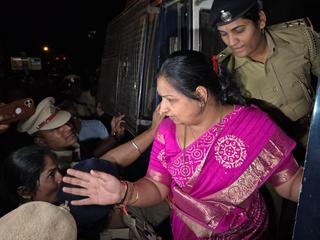
The alleged incident reportedly occurred during a police operation in Hubballi, where a woman was taken into custody. Soon after, claims emerged that she was disrobed or subjected to humiliating treatment during the arrest process. Visuals and testimonies that surfaced in the aftermath intensified the controversy, prompting opposition parties, civil rights groups, and women’s organisations to demand a high-level, independent inquiry. The police, however, initially denied the allegations, maintaining that standard procedures were followed and that no misconduct took place.
As the issue escalated, the government faced mounting pressure to move the investigation away from the local police machinery. The Home Minister acknowledged that public confidence in the probe was critical, and that transferring the case to the CID would help address doubts and restore trust. He also clarified that the approval of the Chief Minister was obtained before issuing formal orders, underscoring the seriousness with which the government was treating the matter.
POLITICAL STORM AND QUESTIONS OF POLICE ACCOUNTABILITY
The Hubballi disrobing allegation quickly turned into a political flashpoint, with opposition parties accusing the government of attempting to downplay the incident and protect erring officials. Leaders across party lines described the allegations as deeply disturbing, particularly in a State that prides itself on progressive values and strong legal institutions. Several opposition legislators demanded the suspension of the police personnel involved until the completion of the inquiry, arguing that allowing them to continue in service could influence witnesses or compromise the investigation.
In response, the ruling dispensation maintained that due process must be followed and that punitive action could only be taken after establishing facts. The Home Minister reiterated that the CID probe would have full authority to examine all aspects of the case, including the conduct of individual officers, the circumstances of the arrest, and compliance with Supreme Court guidelines on arrest and detention, especially in cases involving women. He also pointed out that the government had a track record of acting against police officials in previous instances where misconduct was proven.
Women’s rights groups and civil liberties organisations have played a key role in keeping the issue in the public domain. They have argued that the case highlights deeper structural problems within policing, including inadequate gender sensitisation, misuse of power, and lack of accountability mechanisms. Activists have called for mandatory body cameras, independent oversight boards, and stricter enforcement of arrest protocols to prevent similar incidents in the future. The CID probe, they say, must go beyond the immediate allegation and examine systemic lapses, if any.
Legal experts note that allegations of disrobing or custodial humiliation are treated with utmost seriousness under Indian law, as they involve violations of personal dignity and fundamental rights. They point out that even procedural lapses, if established, can attract criminal liability and departmental action. The outcome of the CID investigation, therefore, could have far-reaching implications not just for the officers involved but also for policing standards across Karnataka.
GOVERNMENT STAND AND THE ROA D AHEAD
 D AHEAD
The State government has sought to strike a balance between responding to public outrage and ensuring procedural fairness. Senior officials said the CID has been instructed to conduct a comprehensive inquiry, record statements from all parties involved, analyse video evidence if available, and submit a detailed report to the government. The Home Minister assured that the findings of the probe would be acted upon without delay, and that corrective measures would be implemented to prevent recurrence of such incidents.
He also appealed to the public to allow the investigation to run its course, cautioning against drawing conclusions before the facts are fully established. At the same time, he acknowledged the emotional and social impact of the allegations, particularly on women, and reiterated the government’s commitment to safeguarding dignity and rights during law enforcement actions. Officials indicated that parallel departmental reviews of arrest procedures and training modules may also be initiated based on the probe’s findings.
In Hubballi, the incident has left a palpable sense of unease, with sections of the public expressing fear and mistrust towards the police, while others urge restraint and faith in the legal process. Community leaders have called for dialogue between the police and citizens to rebuild confidence and ensure that enforcement actions are perceived as lawful and humane. The CID probe is seen as a critical step in this direction, offering the possibility of clarity and closure.
As the investigation unfolds, all eyes will be on the CID’s findings and the government’s response. The case has once again brought into focus the delicate balance between law enforcement authority and individual rights, especially in situations involving women. Whether the probe leads to accountability, reforms, or systemic changes will determine not just the outcome of this case, but also the broader message the State sends about justice, transparency, and the rule of law.
Follow: Karnataka Government
Also read: Home | Channel 6 Network – Latest News, Breaking Updates: Politics, Business, Tech & More
