
The participation of sitting legislators and senior Congress leaders in a Hindu Samajotsava rally held in Belagavi district has triggered intense political discussion in Karnataka, blurring conventional ideological lines and reopening debates around religion, public mobilization, and electoral strategy. The rally, organised under the banner of Hindu Samajotsava, saw the unexpected presence of Kittur MLA and several Congress leaders, signalling a moment that many observers describe as politically symbolic and socially loaded. While organisers projected the event as a cultural assertion, its political undertones were unmistakable, especially given the timing and the participants involved.
Beyond immediate political reactions, the Belagavi rally has also reignited academic and media debates on the redefinition of secularism in Indian politics. Scholars argue that secular engagement is increasingly being interpreted not as distance from religion, but as equal visibility across religious spaces. This shift, they say, reflects changing voter psychology, where cultural recognition is often equated with political respect. The Congress leaders’ presence at the Hindu Samajotsava rally is thus being examined as part of a broader national trend where political actors recalibrate traditional doctrines to remain electorally relevant while attempting to retain constitutional legitimacy.
Media coverage of the rally has further amplified its significance, with television debates and opinion columns dissecting the symbolism of participation rather than the content of speeches. Visuals of Congress leaders sharing the dais with organisers of a Hindu-centric event have circulated widely, shaping public perception irrespective of clarifications issued later. Analysts point out that in contemporary politics, imagery often carries greater weight than intent. In this context, the rally has become a visual shorthand for the evolving strategies of mainstream parties navigating identity-driven politics.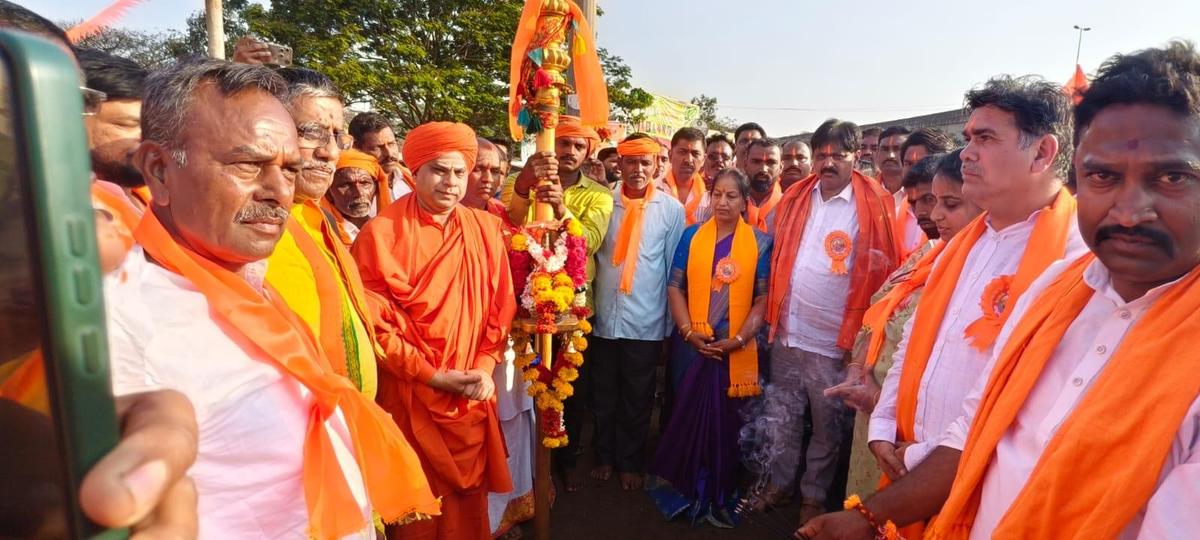
As discussions continue, the Belagavi Hindu Samajotsava rally stands as a moment that captures the uncertainties and adaptations of Karnataka’s political class. Whether viewed as cultural outreach, strategic signalling, or ideological drift, the episode underscores the increasing difficulty of separating faith, identity, and politics in public life. For voters, parties, and observers alike, the rally prompts deeper reflection on what political representation means in a society where cultural assertion and democratic pluralism are in constant negotiation.
Held amid heightened political consciousness in the region, the rally drew large crowds from surrounding taluks and villages, with participants waving saffron flags, chanting religious slogans, and calling for unity among Hindu communities. The presence of Congress leaders, traditionally associated with secular politics, stood out sharply against the ideological backdrop of the event. Their participation has sparked both praise and criticism, reflecting the evolving nature of political engagement in Karnataka, where religion, identity, and governance increasingly intersect in complex ways.
Local residents described the rally as peaceful but charged, with speeches focusing on cultural pride, social unity, and perceived threats to religious traditions. While no direct political calls were made from the stage, the symbolism of elected representatives sharing space with religious leaders did not go unnoticed. Political analysts suggest that such participation reflects an attempt to connect with grassroots sentiments that have gained momentum across regions, particularly in northern Karnataka, where identity-based mobilisation has historically influenced electoral outcomes.
The organisers of the Hindu Samajotsava maintained that the rally was non-political in nature and aimed solely at promoting harmony, cultural awareness, and collective identity. However, critics argue that the involvement of political figures inevitably politicises the event, regardless of stated intentions. This tension between declared purpose and perceived impact has become central to the discourse surrounding the rally.
For the Congress party, the episode raises important questions about ideological positioning and electoral pragmatism. While the party has traditionally emphasised pluralism and secularism, recent years have seen leaders across parties recalibrating their public engagements in response to shifting voter expectations. The Belagavi rally may thus represent not an anomaly, but a sign of broader transformations underway in Karnataka’s political landscape.
Cultural Assertion or Political Signal?
The Hindu Samajotsava rally in Belagavi district was framed by its organisers as a celebration of cultural heritage and religious unity, with emphasis on traditions, rituals, and historical narratives associated with Hindu society. Speakers highlighted the importance of preserving cultural practices, strengthening social bonds, and fostering pride among younger generations. The stage was adorned with religious symbols, images of deities, and banners invoking unity, setting a tone that was devotional yet assertive.
The participation of the Kittur MLA and Congress leaders added a new dimension to the gathering. Their presence was acknowledged with applause from the crowd, and though their speeches avoided overt political messaging, they spoke about social harmony, cultural respect, and the importance of listening to people’s sentiments. Observers noted that the careful choice of words suggested an awareness of the sensitivity surrounding their participation.
Belagavi district has long been a politically significant region, marked by linguistic, cultural, and ideological diversity. Events like Hindu Samajotsava often attract attention not only for their cultural content but also for their potential to influence political alignments. The rally’s scale and the attendance of leaders from different political backgrounds have amplified its significance beyond a routine cultural event.
Within Congress circles, reactions to the leaders’ participation have been mixed. Some party members privately defended the move, arguing that engaging with religious and cultural platforms does not necessarily contradict secular values. Others expressed concern that such participation could dilute the party’s ideological clarity and send conflicting signals to minority communities and core supporters.
Political commentators point out that the Congress, like other parties, is navigating a changing electorate where cultural identity plays a prominent role. Ignoring such platforms, they argue, risks alienating sections of voters who view cultural assertion as integral to their social identity. From this perspective, participation in events like Hindu Samajotsava is seen as strategic engagement rather than ideological compromise.
At the same time, civil society groups have raised questions about the long-term implications of political leaders aligning with religious mobilisations. They warn that such trends could normalise the blending of governance and religious assertion, potentially affecting social cohesion. The Belagavi rally thus becomes a case study in the delicate balance between cultural outreach and political responsibility.
The absence of any reported law-and-order issues during the rally was highlighted by district authorities, who maintained that adequate security arrangements were in place. Officials stated that permissions were granted following standard procedures and that the event concluded peacefully. However, the political ripples generated by the rally continue to unfold, suggesting that its impact will be felt well beyond the day it was held.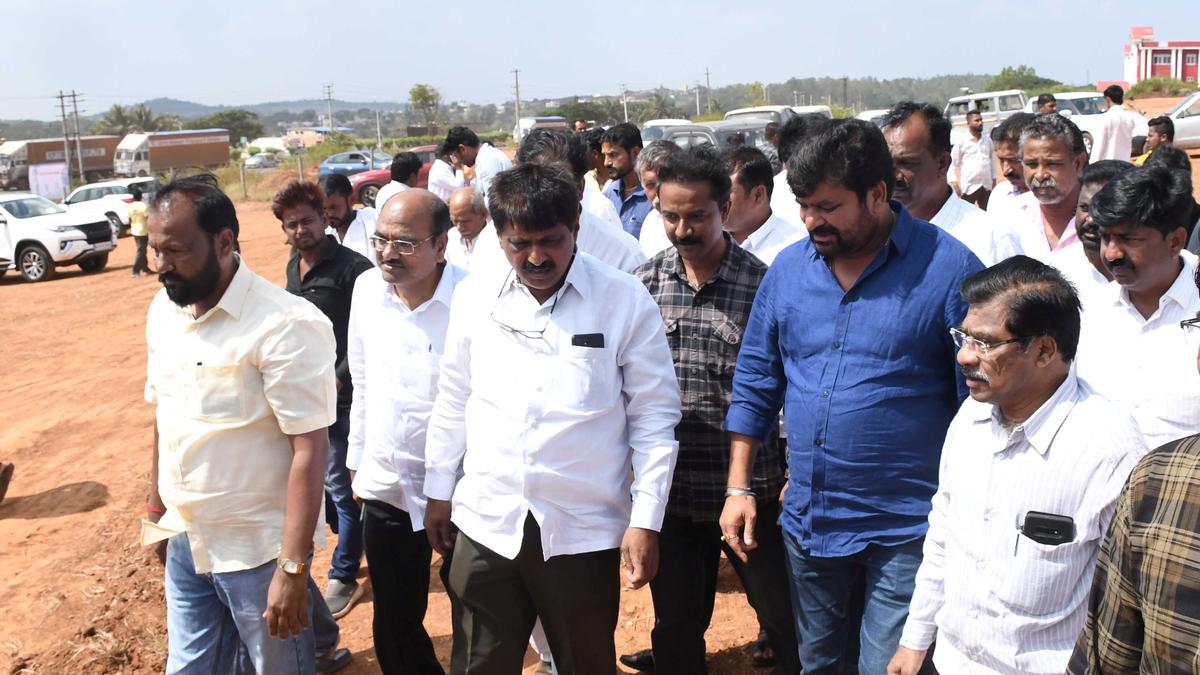
Political Reactions and Broader Implications
The participation of Congress leaders in the Hindu Samajotsava rally has elicited strong reactions from across the political spectrum. Opposition parties have seized upon the development to question the Congress’s ideological consistency, accusing it of opportunism and selective secularism. Some leaders argued that the move reflects an attempt to counter the influence of right-wing organisations by adopting similar outreach strategies, while others dismissed it as a superficial gesture lacking conviction.
Within the ruling establishment, the episode has been viewed as indicative of the changing contours of political competition in Karnataka. Analysts note that ideological boundaries that once appeared rigid are increasingly porous, shaped by local dynamics and electoral calculations. The Belagavi rally, they argue, exemplifies how regional leaders often prioritise constituency-level engagement over broader ideological narratives.
The Kittur MLA, responding to queries about participation, emphasised the cultural nature of the event and reiterated commitment to constitutional values. Statements released by participating leaders stressed that respecting cultural sentiments does not equate to endorsing exclusionary politics. These clarifications, however, have done little to quell debate, as critics continue to scrutinise the optics and implications of the move.
For minority communities, the development has sparked unease, with some community representatives expressing concern over what they perceive as a shift in political messaging. They argue that visible participation in majoritarian events, even if framed as cultural, can send unsettling signals in a diverse society. Calls have been made for political leaders to reaffirm their commitment to inclusive governance and equal representation.
On the other hand, several attendees at the rally welcomed the presence of Congress leaders, interpreting it as recognition of cultural aspirations often perceived as sidelined. For them, the event symbolised an opportunity for dialogue between political representatives and community groups, bridging gaps that have widened in recent years. This divergence in perceptions highlights the complexity of public response to such engagements.
The episode also raises questions about the future of political mobilisation in Karnataka. As parties seek to consolidate support in a competitive environment, the role of cultural and religious platforms is likely to expand. Whether this trend leads to greater social engagement or deeper polarisation remains an open question, dependent on how leaders navigate these spaces.
Academics studying political behaviour suggest that participation in cultural events can have varied outcomes, influenced by messaging, context, and follow-up actions. In the absence of overtly divisive rhetoric, such engagements may be absorbed into the broader political landscape without lasting impact. However, repeated alignment with identity-based mobilisations could gradually reshape public expectations and norms.
As Karnataka approaches future electoral milestones, incidents like the Belagavi Hindu Samajotsava rally are likely to be revisited as markers of shifting political strategies. The participation of Congress leaders in the event underscores a period of transition, where traditional ideological signposts are being reassessed in response to evolving ground realities.
In the immediate term, party leadership is expected to internally review the developments and assess their implications for organisational coherence and voter outreach. Whether the episode becomes a footnote or a turning point will depend on how it is contextualised within the party’s broader narrative and actions in the months ahead.
Ultimately, the rally reflects the dynamic interplay between culture and politics in contemporary Karnataka. As leaders and parties adapt to changing social currents, the challenge lies in engaging with cultural identities without undermining the pluralistic foundations of democratic governance. The Belagavi episode serves as a reminder that symbolism matters, and that public participation by elected representatives carries meanings that extend far beyond the stage.
Follow: Karnataka Government
Also read: Home | Channel 6 Network – Latest News, Breaking Updates: Politics, Business, Tech & More
