
The ongoing internal debates within the Karnataka Congress over leadership roles in the Legislative Council have brought renewed focus on the position of Council Chairperson Basavaraj Horatti. Despite the ruling party’s attempts to assert control over key posts, political observers believe Horatti is likely to retain his role for the foreseeable future. The leadership tussle, driven by factional interests and the Congress’s efforts to consolidate power, has sparked discussions on legislative stability and the dynamics between the government and the opposition. The situation has become a defining marker of the evolving political landscape in Karnataka.
Background of the Council Dynamics
The Karnataka Legislative Council, with its unique composition and multi-party presence, has always required delicate political management. Horatti, a veteran politician with decades of legislative experience, has helmed the Chairperson’s post through multiple political shifts. Though the Congress holds significant influence in the House, it lacks complete dominance, making consensus-driven leadership crucial. In recent months, talk within party circles centred on whether the Congress would push for replacing Horatti with someone aligned more firmly with its organisational structure. This internal expectation emerged as part of a larger reshuffle being considered within the party.
Congress’s Internal Leadership Pressures
The Congress has been under pressure to reward loyalists, accommodate senior leaders, and restructure key legislative positions after forming the government. For some within the party, the Council Chairpersonship represents an important opportunity to assert political authority. Several groups reportedly argued that the position should reflect the party’s numerical strength and ideological priorities. However, the leadership has been cautious, aware that sudden changes may trigger friction with opposition parties and risk procedural complications. Balancing internal aspirations with institutional stability has therefore become a central challenge for the party’s decision-makers.
Why Horatti’s Position Appears Secure
Despite the internal pressures, many within and outside the Congress believe Horatti is likely to remain in the post. His long tenure has earned him respect across party lines, making him an acceptable figure to both the ruling and opposition benches. Additionally, any move to replace him would require strategic preparation and broad consensus—factors not currently aligned within the Congress. Leaders recognise that attempting a leadership overhaul without careful groundwork could escalate tensions during legislative sessions. As a result, stability has emerged as the immediate priority, favouring Horatti’s continued leadership in the Council.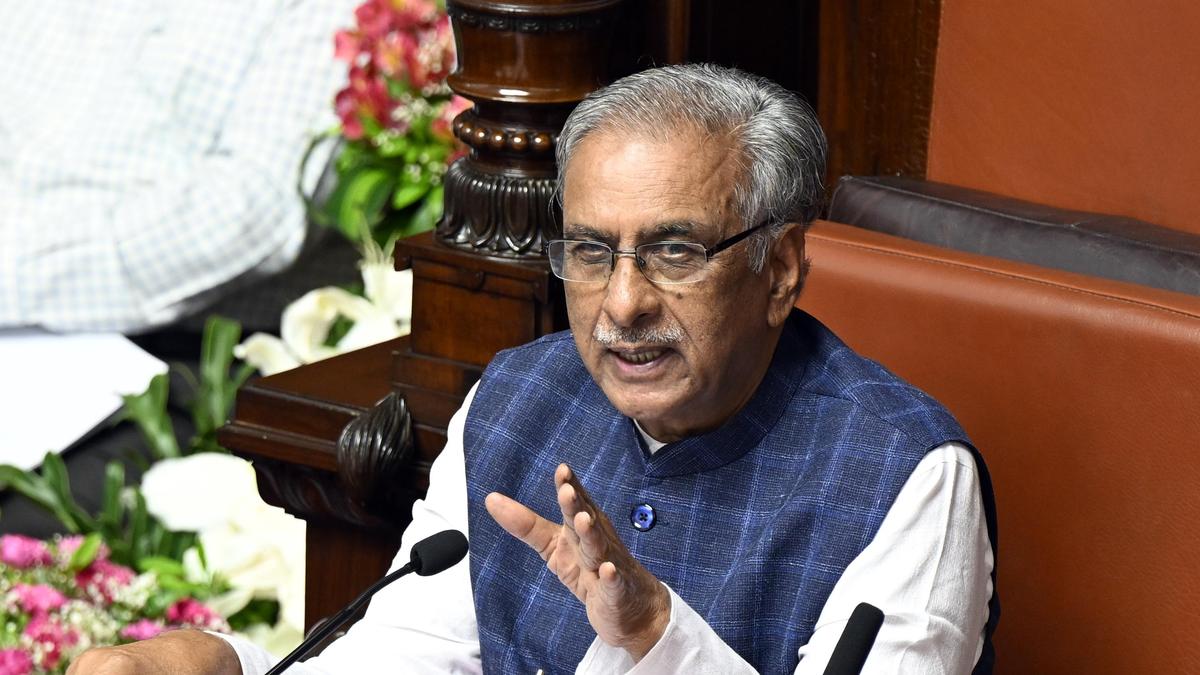
Opposition’s Strategic Interests
For the opposition, particularly the BJP and JD(S), retaining Horatti as Chairperson helps maintain a familiar structure in the Council. His experience and reputation for neutrality give opposition members confidence in procedural fairness. They have, therefore, shown no urgency in pushing for a change. In fact, speculations suggest that any attempt by Congress to replace him would be met with coordinated resistance, potentially leading to procedural blocks. The opposition’s stance indirectly strengthens Horatti’s position, creating a political buffer that complicates Congress’s internal ambitions.
Pressure From Congress’s Factions
Factions within Congress continue to push for representation in high-profile legislative roles. These groups argue that senior party loyalists must be rewarded with institutional responsibilities, especially after contributing significantly to electoral victories. Some leaders view the Council Chairpersonship as a symbolic post that should reflect the ruling party’s authority. Yet, the high-command’s hesitation stems from concerns that faction-driven appointments could further intensify internal rivalries. With the party already juggling regional, caste-based, and leadership-alignment pressures, making major structural changes in the Council has proven politically risky.
Role of the High Command
The Congress high command has been closely monitoring the situation, aware that any misstep could fuel factional conflicts or embolden the opposition. Senior leaders reportedly favour a cautious approach, preferring to maintain continuity rather than disrupt legislative proceedings. The high command is also mindful of the larger political narrative—projecting stability and cohesion is vital as the party prepares for upcoming electoral battles. Replacing Horatti, a respected and experienced politician, could introduce uncertainties that undermine this narrative. Consequently, the leadership appears inclined to preserve the status quo.
Legislative Stability as a Priority
With crucial bills expected to be tabled in the coming months, the government is prioritising smooth functioning of the Council. Any attempt to alter the Chairpersonship now risks procedural disruptions and political confrontation. Leaders argue that consistency in the Council’s leadership is essential for ensuring orderly debate and timely passage of government initiatives. Horatti’s familiarity with the House and his ability to maintain decorum are considered assets. Therefore, institutional stability has emerged as a significant factor supporting his continuation in the role.
Public and Political Reactions
Political analysts and civil society observers have expressed varied opinions on whether Congress should attempt reshuffling key positions. Some argue that the ruling party is justified in seeking greater control over legislative leadership, while others believe continuity is crucial for safeguarding democratic functioning. Public discussions have also reflected scepticism about leadership tussles overshadowing more pressing governance issues. Many voters view the political manoeuvring as internal power-play rather than a matter of public interest. This widespread sentiment has influenced the party’s cautious approach to decision-making.
Horatti’s Reputation and Track Record
Basavaraj Horatti’s long political journey has shaped his standing in Karnataka’s legislative ecosystem. Known for his calm demeanour and ability to accommodate differing viewpoints, he has presided over the Council through politically turbulent phases. His experience enables him to manage debates, address disruptions, and uphold procedural traditions. Legislators across parties acknowledge his role in ensuring balanced discussions. This widespread respect has contributed significantly to the belief that his continuation will help maintain maturity and decorum in the Council, especially at a time of rising political friction.
Congress’s Difficulty in Reaching Consensus
Within Congress, decision-making on this issue has been complicated by the lack of consensus. Leaders from different regions and factions have divergent views on whether a reshuffle is necessary or prudent. Some argue that asserting control over the Council is essential for strengthening governance. Others insist that forcing a leadership change would invite unnecessary conflict. This internal divergence delays any decisive move, indirectly favouring Horatti. The inability to produce a unified stance reflects broader challenges the party faces in harmonising internal expectations with administrative priorities.
Impact on Legislative Functioning
The uncertainty surrounding leadership posts can influence legislative momentum. Although no official moves have been made, speculation has already created mild tension between parties. Government functionaries prefer that the Council operates without distractions, especially when policy issues demand attention. Opposition parties are alert to any signs of political overreach and have prepared strategies to counter attempts to alter leadership positions. Horatti’s presence, for now, offers predictability. Many believe that retaining him can reduce the risk of legislative standstills and ensure continuity in committee operations.
Complexities Behind Leadership Claims
Political positioning within the Council is shaped by factors beyond mere numbers. Personality, credibility, cross-party relationships, and procedural expertise all contribute to leadership suitability. Congress leaders recognise that installing a new Chairperson without broad acceptability could hamper the functioning of the House. Additionally, equations within the coalition supporting the government must be considered. These complexities explain why replacing Horatti is not a straightforward administrative decision but a politically sensitive process with long-term implications for governance and party dynamics.
Opposition’s Potential Responses
If Congress were to push aggressively for a new Chairperson, the opposition is expected to react strongly. Strategies may include procedural challenges, coordinated walkouts, or efforts to block legislative business. Such confrontational politics would reflect poorly on the ruling party and undermine its governance narrative. Recognising this, Congress leaders are wary of triggering avoidable disputes. The perception that Horatti ensures fairness and predictability has reduced the opposition’s willingness to consider an alternative. Thus, any move toward leadership change would likely escalate tensions within the Council.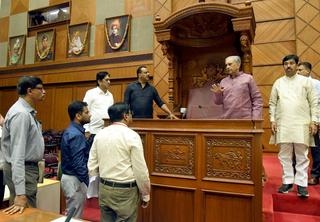
Historical Precedents in Leadership Shifts
Karnataka’s political history features multiple instances where leadership changes in the Council triggered instability. Previous attempts to replace presiding officers have often resulted in prolonged disputes, disruptions, and claims of procedural violations. These precedents serve as cautionary examples for present-day decision-makers. Several leaders within Congress argue that the party must avoid repeating past mistakes. Maintaining Horatti, they suggest, is a prudent choice that ensures continuity and avoids reopening old political wounds. The historical lessons play a significant role in shaping current attitudes toward leadership changes.
Political Messaging and Optics
The Congress government is conscious of the optics associated with internal reshuffles. At a time when it seeks to project unity and efficiency, a contentious move to replace the Council Chairperson may send mixed signals. Critics could interpret the decision as factional appeasement rather than administrative necessity. The ruling party is therefore deliberating not only the operational implications but also the political messaging. Keeping Horatti in place aligns with a narrative of stability and maturity—attributes the government aims to highlight as it deals with complex governance responsibilities.
Implications for Future Political Strategies
The developments surrounding the Chairperson’s post could influence the party’s long-term strategies. Leaders involved in organisational restructuring must balance regional representation, loyalty, experience, and political rewards. Decisions made now will set precedents for future appointments. If Congress maintains status quo, it signals a preference for stability over consolidation of power. If it eventually pursues a leadership change, it indicates confidence in its legislative strength and willingness to assert control. Either path carries consequences for internal cohesion and the party’s positioning within the State’s political landscape.
Possible Scenarios Ahead
Three scenarios dominate political discussions. The first is continuation of the status quo, with Horatti remaining Chairperson until the political climate stabilises. The second involves a delayed reshuffle, executed only after the party builds broader consensus. The third, less likely scenario is an abrupt leadership change triggered by factional pressure or strategic calculations. The party’s next steps will depend on legislative priorities, internal negotiations, and the overall political environment. For now, momentum favours the first scenario, with stability being valued over confrontation.
Conclusion
The debate surrounding the Karnataka Legislative Council’s leadership has brought renewed attention to Basavaraj Horatti’s role and the Congress party’s internal complexities. Despite factional pressure and organisational expectations, the political climate seems to favour continuity. With crucial legislative tasks ahead, the government appears unwilling to risk instability by pursuing an abrupt change. Horatti’s experience, cross-party acceptance, and steady leadership have positioned him as the most viable choice for the immediate future. As deliberations continue, the coming months will determine whether stability or restructuring shapes the next phase of Karnataka’s legislative politics.
Follow: Karnataka Government
Also read: Home | Channel 6 Network – Latest News, Breaking Updates: Politics, Business, Tech & More
