
In a move that has stirred public outrage, the warden of a private engineering college in Karnataka was arrested on charges of making derogatory remarks against the Kannada language. The incident, reported on campus premises, quickly drew widespread attention on social media, prompting protests from local students, language activists, and political leaders. Authorities said that legal action was initiated under relevant sections of the Indian Penal Code and the Karnataka Official Language Act, which safeguards the dignity of the state language.
According to police sources, the warden’s comments were made during a private gathering on campus but were recorded and circulated widely, escalating the matter. The remarks were considered offensive and disrespectful to Kannada, leading to immediate complaints from students and faculty members. The administration of the college reportedly cooperated with law enforcement agencies during the investigation, enabling swift action.
Local language activists and cultural organisations condemned the incident, calling it an affront to Karnataka’s linguistic heritage. They demanded strict action and urged authorities to ensure such incidents do not recur. Several protests were organised near the college campus, with students and activists carrying placards emphasizing respect for Kannada and the importance of promoting regional languages within educational institutions.
Political leaders also weighed in on the matter. Some condemned the warden’s behaviour as unbecoming of an educational administrator, while others urged authorities to take stringent action to maintain respect for the Kannada language. Many stressed that linguistic sensitivity is essential in fostering cultural pride and unity among students and citizens alike.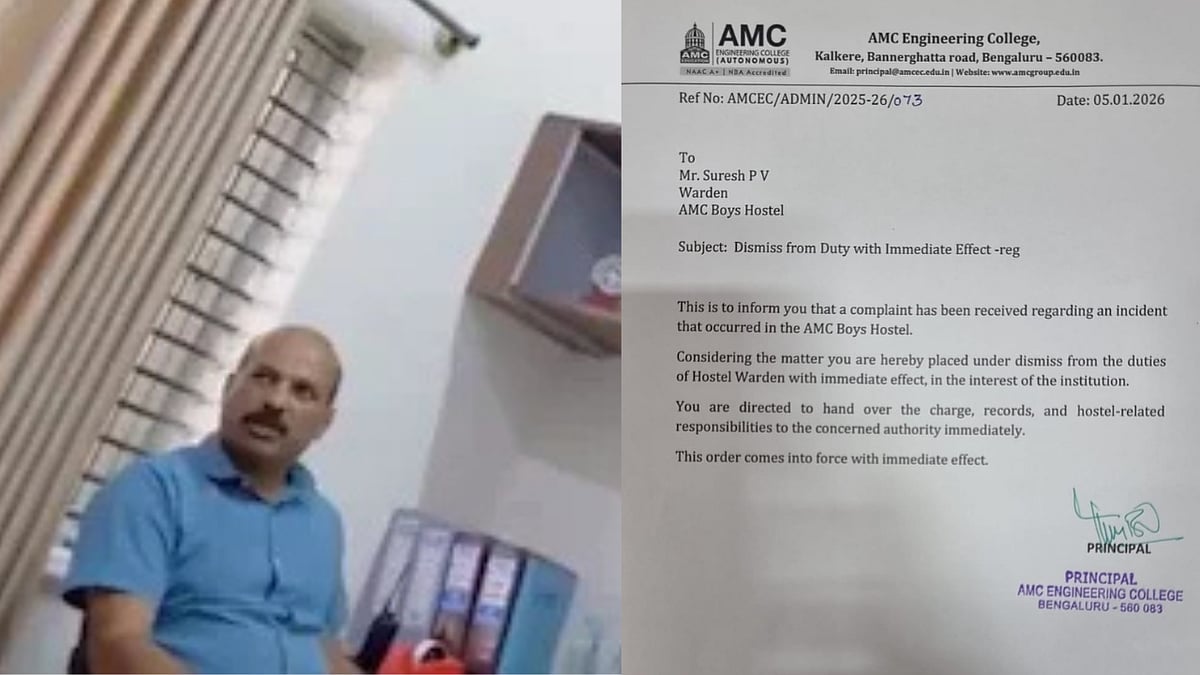
LEGAL AND SOCIAL IMPLICATIONS
Law enforcement officials stated that the arrest was made following due procedure, with the warden produced before a local magistrate. Police clarified that the charges pertain to derogatory remarks targeting a regional language, a matter considered serious under state law. Investigations are ongoing to ascertain the context and potential involvement of others, although preliminary findings suggest that the remarks were personal and not part of any organised campaign.
Legal experts noted that this case highlights the delicate balance between freedom of speech and respect for cultural sentiments. While individuals are entitled to express opinions, statements that demean a language or community can be punishable under Indian law. The arrest sets a precedent reinforcing that administrators and educators must exercise caution and sensitivity when making public or private comments.
The Karnataka Official Language Act, under which the complaint was filed, ensures that Kannada is given priority in government offices, educational institutions, and public communication. Derogatory remarks against the language are considered an offence because they undermine its status and cultural significance. Advocates argue that awareness of such legal provisions is critical, especially among those in leadership positions in educational institutions.
Social media played a significant role in amplifying the incident, with videos and screenshots going viral soon after the remarks were made public. While many users expressed outrage, some cautioned against using the situation for political gain or communal polarization. Authorities have urged people to maintain calm while investigations continue.
IMPACT ON THE EDUCATIONAL COMMUNITY
Students from the college expressed disappointment and shock at the warden’s comments, saying that such behaviour undermines the institution’s credibility. Several student groups have called for sensitivity training and mandatory workshops on regional language respect within colleges. Faculty members noted that the incident is an opportunity to reinforce cultural awareness and inclusivity in educational settings.
The management of the private college released a statement expressing regret over the incident and reaffirming their commitment to promoting Kannada and other cultural values. They said that they are cooperating fully with authorities and would initiate internal reviews to prevent recurrence. Experts suggest that administrative accountability in such cases is as important as legal action to maintain trust among students and the public.
The arrest has prompted discussions on social media about the responsibilities of educators in shaping cultural and linguistic awareness among students. Several student groups highlighted that leaders in educational institutions are role models, and their words carry weight that can influence young minds positively or negatively. The warden’s remarks, according to critics, risked normalising disrespect towards Kannada and undermining efforts to preserve regional identity.
Some cultural organisations have proposed that private colleges implement formal programmes celebrating Karnataka’s language, literature, and heritage. Activities such as Kannada essay competitions, debate forums, and literary clubs could reinforce appreciation among students. Advocates argued that such initiatives would create a culture of pride and respect, reducing the likelihood of incidents like the one involving the warden.
Parents of students attending the college expressed concern over the impact on their children. Many felt the incident created unnecessary tension within the campus and worried about its long-term effect on students’ understanding of cultural respect. Parent-teacher associations have reportedly requested the college administration to take stronger measures to reinforce inclusivity and language sensitivity across all levels of staff and student interactions.
Political leaders from across the spectrum weighed in on the incident, emphasising the significance of protecting Kannada in both public and private spheres. Some urged the State government to tighten regulations on language sensitivity in educational institutions, while others highlighted the importance of balancing legal action with educational interventions. All leaders, however, agreed that derogatory remarks against Kannada cannot be tolerated under any circumstances.
Legal analysts note that the arrest also underscores the effectiveness of Karnataka’s language protection laws. By taking swift action, authorities have sent a message that derogatory statements targeting Kannada will be addressed promptly. They argue that such measures are essential not only for justice but also for reinforcing societal norms that respect regional languages and cultural identity.
The warden has reportedly issued an apology following the arrest, though authorities indicated that legal proceedings will continue independently of personal statements. Experts suggested that while apologies are important, they cannot substitute for formal accountability, which serves to maintain public trust in the educational system and the law.
Student activism around the case has been particularly notable. Several student unions organised peaceful demonstrations on campus and in surrounding areas, demanding stricter enforcement of language protection measures and awareness campaigns. Leaders of these movements emphasised that protecting Kannada is not about limiting freedom of expression but ensuring respect for the cultural and linguistic heritage of Karnataka.
Educational psychologists highlighted that incidents like these can have both immediate and long-term impacts on student perception. Witnessing a senior figure disrespect a regional language may influence students’ attitudes, potentially fostering apathy or bias. Reinforcing positive messages about Kannada through workshops, curricular inclusion, and faculty conduct guidelines is therefore critical for shaping respectful behaviour.
Finally, cultural commentators and linguists observed that the incident opens a broader conversation about the coexistence of global and regional languages in private educational institutions. While English-medium colleges dominate the higher education landscape, regional languages like Kannada remain central to identity and cultural continuity. The challenge, they argue, lies in creating an environment where both linguistic pride and academic aspirations coexist without conflict.
Cultural organisations in Karnataka have highlighted the need for broader awareness campaigns emphasizing respect for Kannada and other regional languages. Educational institutions, they argue, should integrate language pride into curricula and extracurricular activities to cultivate respect from a young age.
The incident has also sparked a broader debate on the role of language in education. While English remains the medium of instruction in many private colleges, the importance of regional languages as carriers of culture and identity has gained renewed attention. Linguists and educators alike stress that promoting bilingual proficiency—respecting local languages while maintaining global competencies—is essential for holistic development.
GOVERNMENT RESPONSE AND FUTURE MEASURES
State authorities have confirmed that the matter will be pursued rigorously, ensuring that legal provisions protecting Kannada are upheld. Officials indicated that complaints from students, activists, and cultural bodies will be taken into account during judicial proceedings. Police and educational regulators have been asked to monitor private institutions to prevent similar incidents.
Experts suggest that preventive measures, including mandatory cultural sensitivity workshops, can help avert conflicts arising from disrespect towards local languages. Additionally, college administrations are advised to establish clear codes of conduct for staff and faculty to reinforce accountability.
The warden’s arrest has sparked conversations across Karnataka about linguistic pride, respect, and cultural awareness. Many believe that while legal action is necessary, fostering empathy and education around language and culture is equally important. Observers noted that the case could serve as a wake-up call for educational institutions to promote values of respect, inclusivity, and awareness among staff and students alike.
As the case proceeds through the legal system, stakeholders are watching closely, emphasising the importance of ensuring justice while preserving social harmony. The episode serves as a stark reminder that in Karnataka, respect for Kannada is not merely cultural but also a legal and moral expectation, particularly for those entrusted with shaping young minds.
The arrest, protests, and public discourse together underline a critical lesson: educational leaders must uphold values of respect, cultural sensitivity, and ethical conduct at all times. Failure to do so can have far-reaching social, legal, and institutional consequences, shaping public perception and influencing policy debates for years to come.
Follow: Karnataka Government
Also read: Home | Channel 6 Network – Latest News, Breaking Updates: Politics, Business, Tech & More
