
The Karnataka government’s draft wage rules, reportedly aligned closely with the Centre’s framework, have sparked discussion among labour groups, trade unions, and policy observers over their implications for worker coverage. Stakeholders argue that while harmonization with national standards may ensure administrative consistency, it could also leave gaps in addressing state-specific labour realities. The draft rules are part of a broader effort to modernize wage regulation, streamline compliance, and bring uniformity to definitions and procedures. However, worker representatives have expressed apprehension that mirroring central provisions without sufficient local adaptation may narrow the scope of protections for informal and vulnerable workers.
Legal scholars have pointed out that the interpretation of wage rules often becomes the subject of litigation, especially when definitions affect benefits and entitlements. Ambiguities in phrasing or calculation methods can lead to disputes between employers and workers, sometimes lasting years. Clear explanatory notes and illustrative examples within the rules may help reduce confusion. Experts suggest that clarity at the drafting stage can prevent long-term legal uncertainty, benefiting both employees seeking fair compensation and employers aiming for compliance.
Another dimension involves migrant labour, which forms a substantial part of Karnataka’s workforce in construction, hospitality, and manufacturing. Migrant workers often move between states, making regulatory alignment beneficial in theory. However, activists argue that portability of rights must be ensured alongside uniform rules. Access to grievance redressal systems, language accessibility in documentation, and awareness campaigns become critical so that migrant workers understand their entitlements under the revised framework.
Digital compliance systems are expected to play a larger role if the draft rules are finalized in their current form. Online wage records, digital registers, and electronic filings may simplify processes, but they also raise concerns about accessibility for small establishments and workers in rural areas. Training sessions and support centres could be necessary to ensure that digitization does not unintentionally exclude those unfamiliar with technology. Bridging the digital divide remains a key factor in successful implementation.
Labour researchers also emphasize the importance of periodic wage revisions to keep pace with living costs. Even well-structured rules may lose relevance if wage thresholds remain static amid inflation. They suggest linking certain benchmarks to cost-of-living indices to maintain purchasing power. Without such mechanisms, workers may experience declining real income despite formal compliance with regulations. This issue has been highlighted by unions as central to long-term livelihood security.
Youth entering the workforce represent another group affected by regulatory changes. Many young workers begin careers in gig platforms, startups, or short-term contracts. If definitions of employment or wage components do not adequately reflect these emerging work models, gaps in protection may widen. Policy experts argue that modern labour rules must evolve with changing employment patterns, ensuring that innovation in business models does not come at the expense of worker rights.
From an administrative perspective, coordination between state departments becomes essential. Wage rules intersect with social security, industrial relations, and skill development policies. Integrated data systems could help monitor compliance and identify sectors with recurring issues. Such coordination may also enable targeted inspections and awareness drives. Officials note that cross-departmental collaboration strengthens the overall effectiveness of labour governance.
As discussions continue, observers underline that the ultimate measure of reform lies in its real-world impact. Whether the draft rules expand formalization, improve wage transparency, and protect vulnerable workers will depend on implementation quality. Constructive engagement between government, employers, and worker groups could transform current concerns into opportunities for refinement. The evolving debate highlights the dynamic nature of labour policy, where economic modernization must move hand in hand with social protection to ensure inclusive growth.
Labour activists point out that Karnataka has a significant workforce in sectors such as construction, gig services, small-scale manufacturing, and agriculture-related occupations. These sectors often involve irregular employment, seasonal income, and limited formal documentation. Concerns have been raised that strict definitions or procedural requirements could unintentionally exclude workers who do not fit conventional employment categories. Trade union leaders emphasized that wage rules should reflect ground realities, ensuring that those in precarious jobs are not left outside regulatory coverage.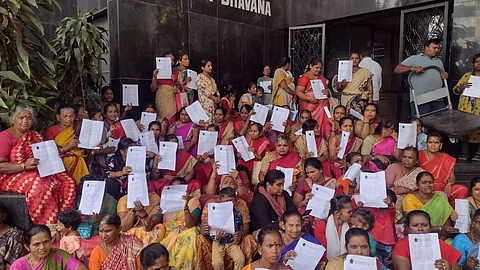
Government officials, on the other hand, have indicated that aligning with central rules promotes clarity for employers operating across states. Uniform definitions of wages, working hours, and compliance procedures can reduce confusion and litigation. Authorities maintain that simplification is intended to improve enforcement and transparency rather than weaken worker safeguards. They argue that consistent frameworks may help streamline dispute resolution and inspection mechanisms.
Despite these assurances, worker organizations have urged a consultative approach before finalization. They say that draft rules must be evaluated for their impact on small enterprises and contract labour arrangements, which are common in Karnataka’s urban and semi-urban regions. The debate highlights the challenge of balancing administrative efficiency with inclusive labour protection.
Many experts note that wage regulation plays a critical role in ensuring social stability. Fair and predictable income supports household consumption, education, and health outcomes. If regulatory changes reduce the number of workers covered or complicate access to benefits, the broader social impact could be significant. This perspective has intensified calls for careful scrutiny of the draft provisions.
Coverage Gaps and Informal Sector Concerns
A key issue in the debate is the definition of “wages” and the components included or excluded under the draft rules. Labour economists explain that technical adjustments in classification can influence overtime calculations, social security contributions, and bonus eligibility. If allowances form a larger share of total compensation but fall outside wage definitions, workers may see reduced benefits over time. Trade unions fear that such structuring could become more common if regulatory oversight weakens.
The informal sector remains a central concern. In Karnataka, a large proportion of workers operate without formal contracts. Domestic workers, street vendors, delivery personnel, and home-based artisans often lack documented employment relationships. Activists argue that any framework that relies heavily on formal employer-employee documentation risks overlooking these categories. They recommend simplified registration processes and flexible compliance mechanisms that accommodate informal arrangements.
Another issue involves enforcement capacity. Even well-designed rules can falter if inspection systems are overstretched. Labour departments often manage large jurisdictions with limited staff. Observers suggest that digitization of records and complaint mechanisms could help, but only if accompanied by training and resources. Worker advocates insist that enforcement must remain proactive rather than complaint-driven, as vulnerable workers may hesitate to report violations.
Small and medium enterprises have also voiced concerns, though from a different perspective. Some industry representatives argue that overly complex rules increase compliance costs, particularly for businesses recovering from economic disruptions. They support alignment with central provisions as a way to reduce administrative burden. However, they acknowledge that clarity is needed to avoid unintended disputes.
The Karnataka government’s draft wage rules, reportedly aligned closely with the Centre’s framework, have sparked discussion among labour groups, trade unions, and policy observers over their implications for worker coverage. Stakeholders argue that while harmonization with national standards may ensure administrative consistency, it could also leave gaps in addressing state-specific labour realities. The draft rules are part of a broader effort to modernize wage regulation, streamline compliance, and bring uniformity to definitions and procedures. However, worker representatives have expressed apprehension that mirroring central provisions without sufficient local adaptation may narrow the scope of protections for informal and vulnerable workers.
Balancing Reform with Social Protection
Policy analysts describe the situation as part of a broader transition in India’s labour governance landscape. As labour codes and rules evolve, states must interpret central frameworks while considering local economic patterns. Karnataka’s diverse economy, spanning technology hubs and rural districts, presents unique challenges. A one-size-fits-all approach may not fully capture this diversity. Analysts suggest that supplementary guidelines or state-specific notifications could bridge gaps without deviating from the central structure.
Social security linkages are another dimension. Wage definitions influence contributions to provident funds, insurance schemes, and other benefits. Worker groups caution that any narrowing of the wage base could affect long-term financial security. They advocate periodic reviews to assess whether revised rules produce unintended outcomes. Transparent data collection on coverage levels may help policymakers make evidence-based adjustments.
Public consultations have been highlighted as essential to building consensus. Labour law specialists note that inclusive dialogue can identify ambiguities and practical difficulties before rules take effect. Employers, unions, and independent experts each bring perspectives that can improve policy design. Such engagement may also reduce the likelihood of future legal challenges.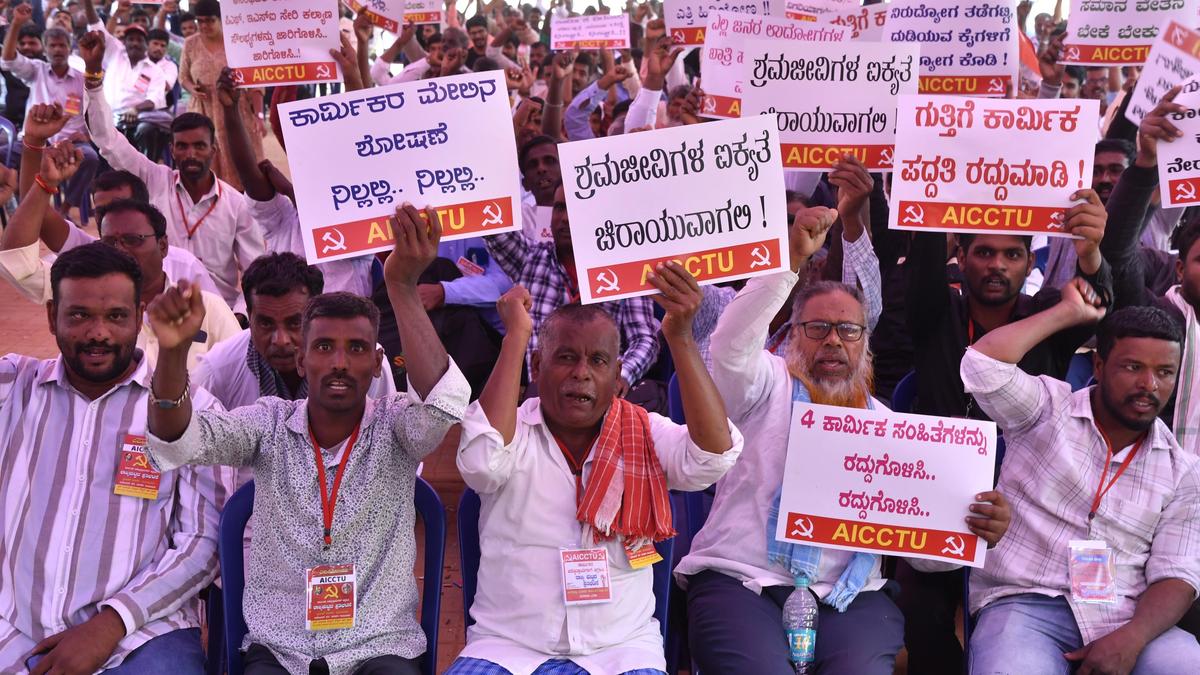
The gender dimension has also surfaced in discussions. Women constitute a large share of informal and part-time workers. If rules inadvertently exclude these categories, gender disparities could widen. Advocates urge policymakers to consider how wage structures and compliance procedures affect women workers, particularly those balancing employment with caregiving responsibilities.
At a broader level, the debate reflects the tension between regulatory simplification and substantive protection. Streamlined rules can encourage investment and reduce bureaucracy, but must not erode safeguards that ensure dignified livelihoods. Observers suggest that impact assessments and pilot implementation phases could help identify issues early.
The Karnataka government is expected to review feedback before finalizing the draft rules. Officials have indicated openness to suggestions while emphasizing the need to modernize labour administration. The outcome of this process will likely influence how other states approach similar reforms.
Ultimately, wage regulation sits at the intersection of economic growth and social justice. Ensuring that reforms strengthen rather than weaken worker security is a shared responsibility among policymakers, employers, and civil society. The ongoing discussion underscores that labour policy is not merely technical but deeply connected to the everyday lives of millions of workers striving for stability and fair treatment.
Follow: Karnataka Government
Also read: Home | Channel 6 Network – Latest News, Breaking Updates: Politics, Business, Tech & More
