
Cylindrical pod scanning idea spreads online after viral video claims to show instant shoe creation
Cylindrical pod scanning became the latest talking point on social media after a 15-second video showed a foot placed inside a rotating pod that formed a white sneaker around it in seconds. The clip, presented as a breakthrough from Japan, gathered more than eight million views and created widespread curiosity among viewers who believed it showcased a new revolution in custom footwear. The smooth rotation of the pod, the fast formation of the shoe, and the clean laboratory setting made the video look convincing at first glance, leading many to share it as evidence of futuristic production technology.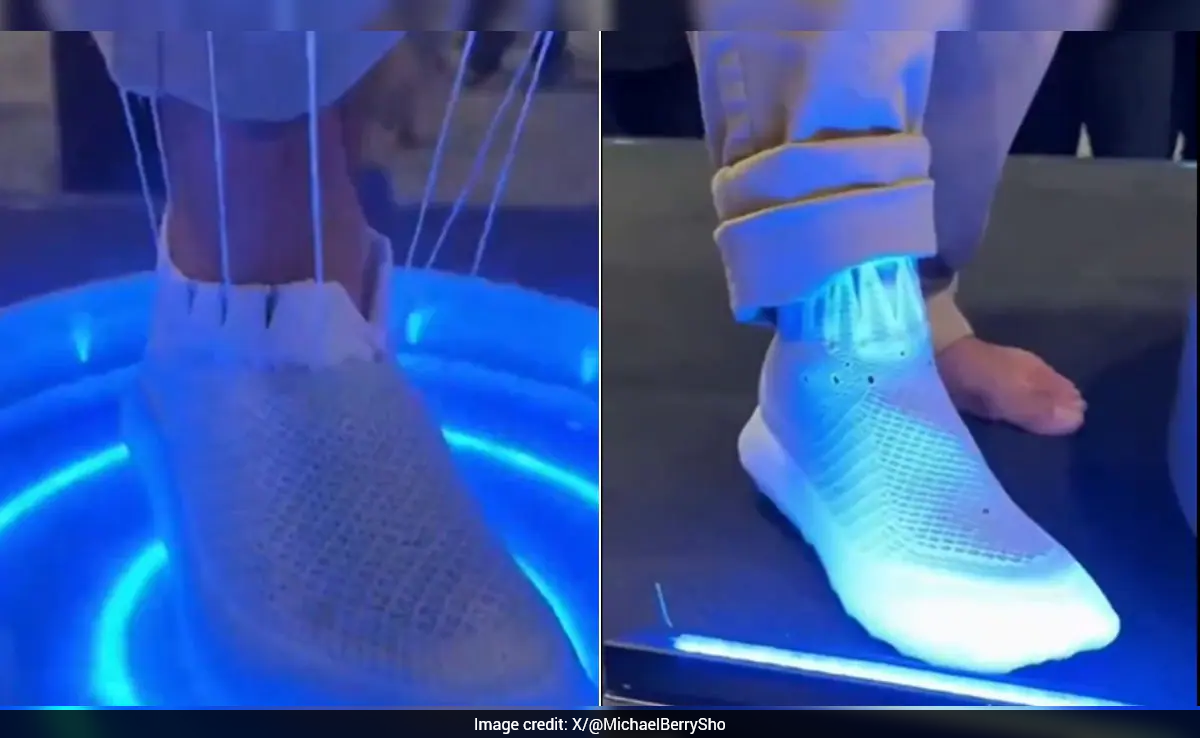
However, community discussions soon shifted the attention from excitement to doubt. Users began checking for credible companies, research groups, and patents linked to the innovation. No verified details emerged. Multiple independent fact-checks and comments pointed toward the possibility of the video being AI-generated. The lighting, texture of the sneaker material, and formation pattern carried tell-tale digital inconsistencies that experienced users immediately noticed. Despite this, the clip continued spreading rapidly, reflecting how believable artificial visuals can become in the age of deepfake-style content.
The pitch of a pod that scans a foot and produces a ready-to-wear shoe within seconds appealed to a large number of people who follow advancements in wearable technology. But the absence of any trusted manufacturer connected to the clip raised concerns about how easily fictional demonstrations now blend with real achievements. In the past few months, visually realistic technology clips generated through AI tools have repeatedly gone viral, creating uncertainty among viewers who struggle to identify what is genuine and what is synthetic.
Cylindrical pod scanning debate highlights the gap between fiction and actual shoe-tech progress
While the viral clip was likely fictional, the attention it received reflects real movement happening in the footwear industry. Cylindrical pod scanning may not exist in this form, but the idea of shoes designed through personalized scanning and rapid production is not entirely imaginary. Brands around the world have been experimenting with new methods that bring custom manufacturing closer to everyday buyers. Companies working with 3D printing have already proved that making products based on a user’s physical measurements is possible, though still limited by speed and cost.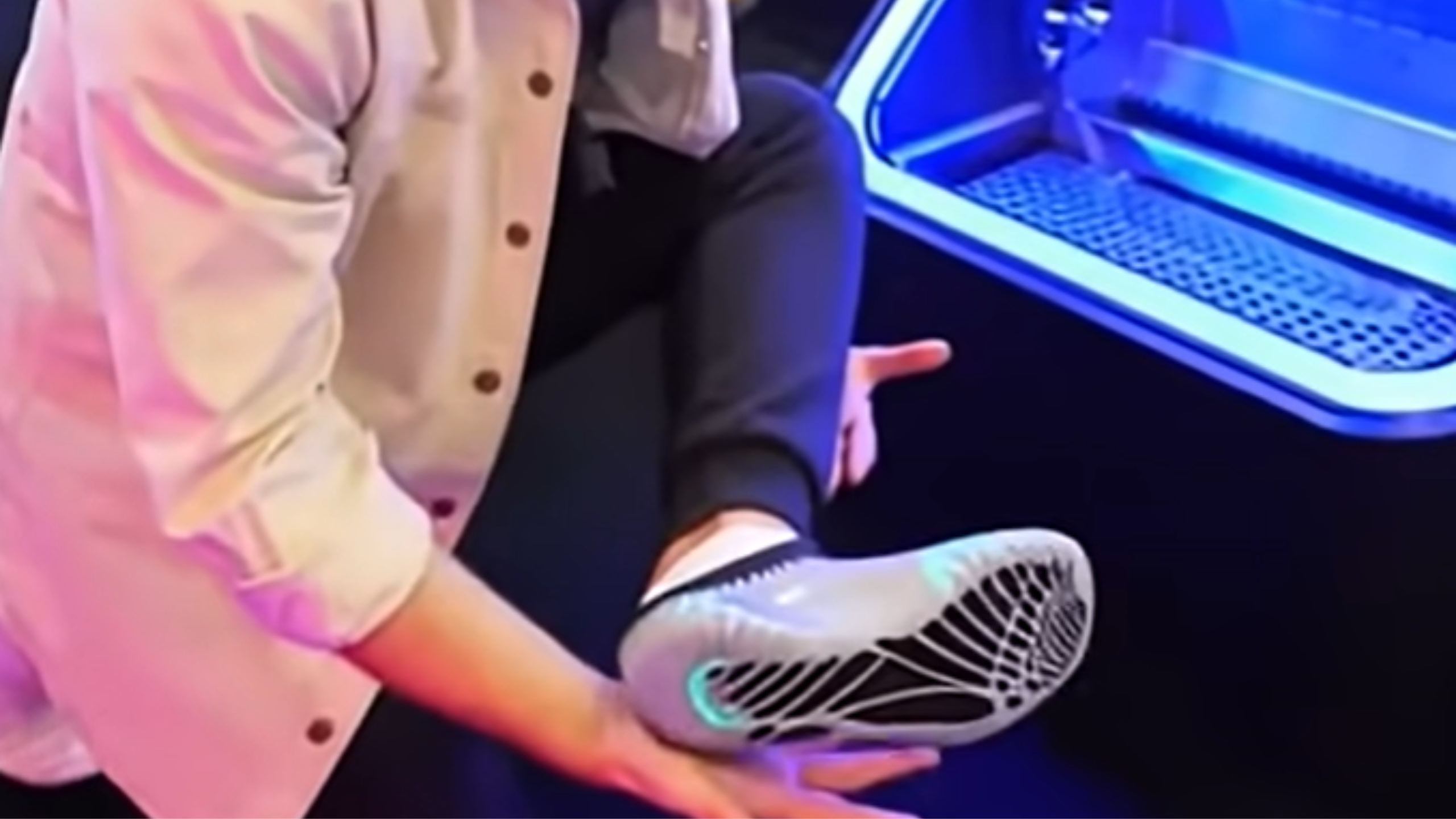
A well-known example is Adidas’ Futurecraft 4D programme, which began in 2017. The company used a process called digital light synthesis to print midsoles with lattice structures tailored to support the wearer’s movement style. These shoes were not made in seconds, and they did not form directly around the foot, but they demonstrated how highly customized sports footwear could be manufactured more precisely than ever before. Nike and other brands have also invested in similar areas, exploring designs that respond better to weight, pressure, and walking patterns.
The viral cylinder-based concept shared online exaggerated what technology can currently deliver. Even the fastest industrial 3D printers today require significant time to create a strong, wearable structure. Materials used in the video appeared unrealistic, offering no evidence of the durability or flexibility needed for real-world shoes. Experts in product design noted that the formation of the sneaker in the clip ignored essential stages such as cooling, bonding, and structural reinforcement. This suggested that the pod was not based on any existing engineering process.
Cylindrical pod scanning moment reveals how AI-generated tech clips shape public expectations
The quick spread of the clip highlights how social media platforms have become fertile ground for AI-generated “innovation videos.” People often share them without verification because the visuals appear clean and the narrative is compelling. Cylindrical pod scanning became a symbol of this trend, where a fictional idea gains attention simply because it feels possible within modern technological growth.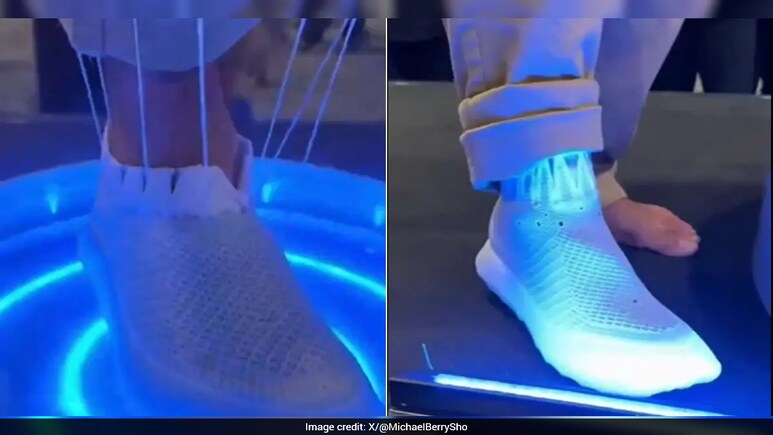
Designers familiar with footwear manufacturing pointed out that the shapes and shadows in the viral video lacked the imperfections normally present in real production environments. Some parts of the sneaker merged too smoothly, and the pod’s surface reflected light in a way typical of computer-generated frames. These signs were enough for experienced viewers to classify the clip as synthetic, yet many others still believed it was a breakthrough.
View this post on Instagram
Even though the video was not real, it triggered a broader conversation about the future of personalized shoes. People remain interested in fast production, reduced waste, and custom fit. If technology continues to advance, concepts inspired by these fictional clips might someday become real, though through different methods and much slower timelines. Also Read: Pokémon GO Max Battle Weekend: 1 Major Debut That Changes the Event Experience
Conclusion
The cylindrical pod scanning clip may not represent a real invention, but its popularity shows how easily artificial content can shape public expectations. While the technology seen in the video does not exist today, real progress in customized footwear continues to grow at a steady pace, far away from viral exaggerations.
