
Jnanpith awardee and eminent Konkani writer Damodar Mauzo has urged writers to remain steadfast in their responsibility to highlight lacunae in society and to honestly record differences with the dominant narrative, even when such writing invites discomfort or resistance. Speaking at a literary gathering, Mauzo said literature loses its moral and cultural relevance the moment it begins to merely echo the views of the majority instead of questioning them. According to him, a writer’s role is not to seek approval but to provoke thought, challenge complacency, and give voice to the silences that society often chooses to ignore.
Mauzo observed that societies progress not through uniform agreement but through the courage to confront uncomfortable truths. He said literature has historically played a crucial role in documenting dissent, social contradictions, and ethical failures, often long before such issues found space in mainstream discourse. Writers, he added, must resist the temptation to dilute their voice for popularity or safety, as doing so weakens the transformative power of the written word.
Reflecting on his own literary journey, Mauzo said he never consciously set out to oppose prevailing ideas but remained committed to honesty. “When you write truthfully, differences with the majority arise naturally,” he remarked. He cautioned that the growing expectation for writers to align with dominant ideologies or social sentiments threatens the independence of literature and reduces it to propaganda or entertainment devoid of depth.
The Jnanpith awardee stressed that disagreement should not be mistaken for hostility. Writing that questions social norms or exposes injustice, he said, is an act of care rather than confrontation. A society that suppresses such voices risks stagnation, as it loses the ability to self-reflect and reform.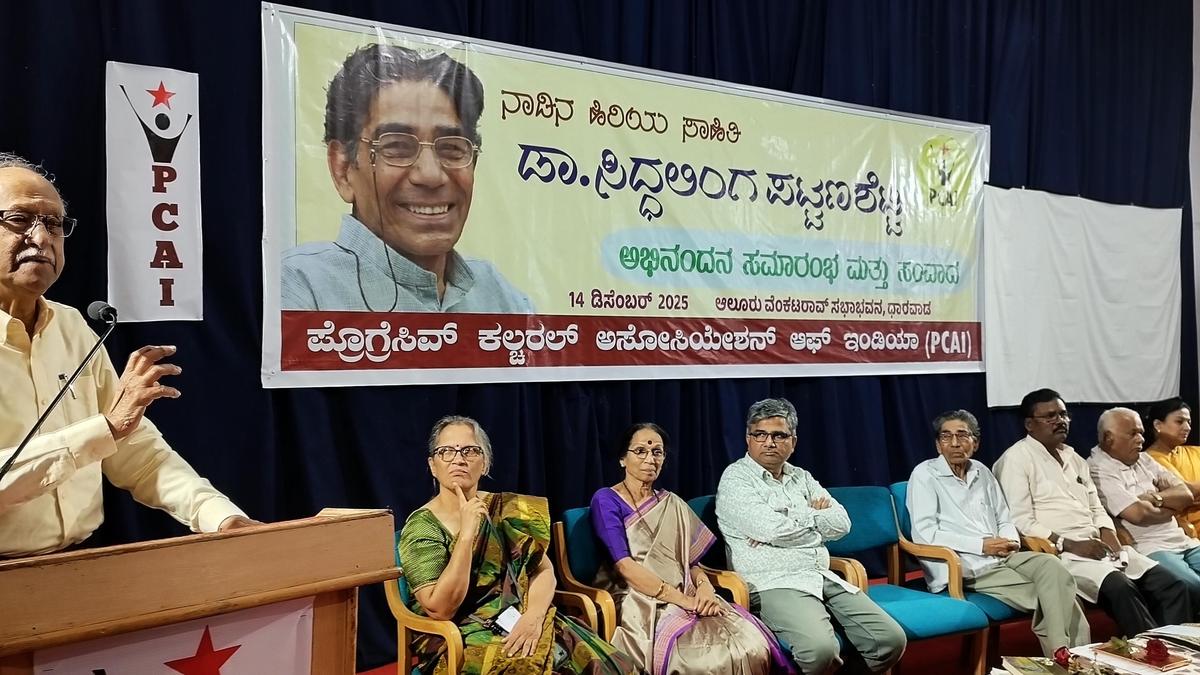
Literature as a Mirror to Society’s Blind Spots
Mauzo emphasised that one of literature’s most enduring functions is to act as a mirror reflecting society’s blind spots. While popular narratives often highlight success, progress, and consensus, literature must also illuminate marginalisation, hypocrisy, and unresolved contradictions. He said writers should focus not only on what society celebrates but also on what it avoids discussing.
He pointed out that every era has its dominant ideas, often shaped by power, politics, and cultural influence. Literature, he said, must operate independently of these forces to remain truthful. Writers who unquestioningly accept majority views risk reinforcing injustice, particularly when those views marginalise vulnerable communities.
Mauzo noted that disagreement recorded through literature becomes a valuable historical document. What may appear unpopular or controversial in one generation often gains recognition in another. He cited examples of writers whose works were criticised or ignored during their lifetimes but later acknowledged as vital social commentaries.
He also spoke about the pressure writers face in the age of instant reactions and social media outrage. Unlike earlier times, writers today are subjected to immediate judgment, often without nuanced reading. Mauzo urged authors not to allow fear of backlash to dictate their creative choices. “If writing begins with fear, it ends in silence,” he said.
According to him, the role of literature is not to provide comfort alone but also to create unease when necessary. It is this unease, he argued, that pushes societies to introspect and evolve. Sanitised writing that avoids controversy may enjoy temporary acceptance but lacks lasting impact.
Mauzo stressed that recording differences with the majority does not mean rejecting collective values entirely. Instead, it involves examining whose voices are missing from the collective narrative and why. Writers, he said, must consciously listen to the margins to present a fuller picture of reality.
The Writer’s Ethical Responsibility in Polarised Times
Addressing the growing polarisation in society, Mauzo said the responsibility of writers has become more complex and more urgent. When public discourse is dominated by extremes, literature must serve as a space for nuance, reflection, and moral questioning. He warned that silence in such times often amounts to complicity.
Mauzo expressed concern over attempts to categorise writers based on perceived ideological loyalties. Such labelling, he said, undermines creative freedom and discourages independent thought. A writer’s allegiance, he asserted, should be to truth and human experience, not to political or social camps.
He also highlighted the importance of language in shaping resistance. Writing in regional and indigenous languages, he said, plays a crucial role in preserving cultural diversity and challenging dominant narratives imposed through more powerful linguistic mediums. Literature in languages like Konkani carries lived experiences that might otherwise be erased or homogenised.
The Jnanpith awardee reflected on censorship, both overt and subtle, that writers encounter. While outright bans attract attention, he said self-censorship is more dangerous. When writers internalise fear and begin to avoid certain themes, society loses critical voices without realising it.
Mauzo encouraged young writers to read widely and critically, not only contemporary works but also literature from different historical and cultural contexts. Exposure to diverse perspectives, he said, strengthens a writer’s ability to question assumptions and resist conformity.
He acknowledged that standing apart from the majority can be isolating. However, he reminded writers that literature is not a solitary act confined to the present moment. Words written with integrity often find resonance across time, connecting writers with readers they may never meet.
Writing as Memory, Resistance, and Hope
Mauzo underlined that literature serves as a form of social memory, preserving experiences that official histories often overlook. Writers who document injustice, inequality, and dissent create archives of conscience that future generations can access. Such writing, he said, ensures that uncomfortable truths are not erased by convenience or power.
He spoke about the emotional labour involved in writing against the grain. Engaging with social flaws and human suffering can be draining, yet it is necessary. Mauzo said writers must find ways to sustain themselves emotionally without retreating from difficult subjects.
The veteran writer also rejected the notion that literature must always offer solutions. Sometimes, he said, asking the right questions is more important than providing answers. Writing that unsettles certainty opens space for dialogue, which is the first step toward change.
Mauzo stressed that disagreement expressed through literature should strive for empathy rather than bitterness. Even when critiquing society, he said, writers must remember their shared humanity with those they critique. Compassion, he noted, strengthens dissent by grounding it in moral concern rather than anger.
He reflected on the relationship between literature and democracy, describing both as dependent on plurality of voices. Just as democracy weakens when dissent is silenced, literature becomes impoverished when only agreeable narratives survive.
Mauzo concluded by urging writers to remain patient and resilient. Recognition, he said, should never be the primary motivation for writing. True literary contribution often unfolds slowly, influencing minds quietly rather than dramatically.
In his closing remarks, the Jnanpith awardee said that societies may resist uncomfortable writing, but they ultimately need it to grow. By showcasing lacunae and recording differences with the majority, writers perform an act of service, preserving the ethical core of culture. In choosing honesty over approval, Mauzo said, writers keep alive the spirit of inquiry that allows societies not just to exist, but to evolve.
Mauzo also spoke about the danger of reducing literature to a tool of validation rather than exploration. When writers are expected to affirm existing beliefs, he said, creativity becomes constrained and repetitive. Literature then risks losing its capacity to surprise, disturb, and awaken readers to perspectives they may not have previously considered.
He emphasised that disagreement in writing does not automatically imply rejection of tradition. On the contrary, Mauzo said, meaningful critique often emerges from deep engagement with cultural and social traditions. Writers who question inherited norms, he added, frequently do so out of concern for preserving the ethical foundations of those very traditions.
The Jnanpith awardee drew attention to the marginalisation of certain themes within mainstream publishing. Issues related to caste, gender, labour, and displacement, he said, are often deemed “unmarketable” despite their social relevance. Writers must resist commercial pressures that push them away from uncomfortable but necessary subjects.
Mauzo reflected on the responsibility of literary institutions and academies, urging them to protect diversity of thought rather than promote uniformity. Awards and recognition, he said, should encourage intellectual courage and originality, not conformity or ideological alignment.
He also acknowledged the role of readers in sustaining critical literature. An engaged readership, Mauzo said, must be willing to read patiently, question their own assumptions, and accept discomfort as part of the reading experience. Without such readers, even the most honest writing struggles to find space.
Mauzo observed that the speed of contemporary life has reduced attention spans, affecting how literature is consumed. In such a climate, he said, writers should not simplify their work merely to suit trends. Depth and complexity, he argued, are essential for capturing the realities of human experience.
He cautioned against mistaking loud opinion for truth. In an era where dominant narratives are amplified through repetition, literature must slow down thought and encourage reflection. Writing that resists haste, he said, allows readers to engage more deeply with moral and social questions.
The veteran writer also spoke about mentorship, urging established authors to support younger voices who take risks. Encouragement and guidance, he said, can help emerging writers navigate criticism without abandoning their convictions.
Mauzo concluded that writing is ultimately an act of faith — faith in language, in readers, and in the possibility of change. By continuing to write honestly, even when misunderstood, writers contribute to a living cultural dialogue that keeps society open, self-critical, and humane.
He ended by reminding the audience that literature’s greatest strength lies in its refusal to be unanimous. It is in disagreement, plurality, and persistent questioning that writing retains its relevance, ensuring that the complexities of society are neither simplified nor forgotten.
Follow: Karnataka Government
Also read: Home | Channel 6 Network – Latest News, Breaking Updates: Politics, Business, Tech & More
