
Death by jumbo in Tamil Nadu exposes risks faced by rural commuters
Death by jumbo in Tamil Nadu once again brought attention to the fragile relationship between forest wildlife and human settlements after a 60-year-old farmer was trampled to death by a wild elephant near Thalli in Krishnagiri district. The incident occurred on Saturday evening when the victim was travelling with his son on a two-wheeler through a forest stretch commonly used by villagers for daily travel.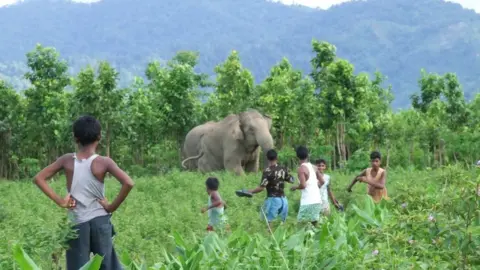
The deceased, identified as Venkatesappa, was a resident of Belakarai village and depended on agriculture for his livelihood. He was heading towards a nearby village along with his son Lokesh to purchase daily essentials when the tragic incident took place. The route they used passes through the Thammapuram forest beat under the Jawalagiri forest range, an area known for frequent elephant movement.
According to forest officials, a lone tusker suddenly emerged on the road and charged at the two-wheeler. The impact caused the vehicle to topple. Lokesh, who was riding the vehicle, managed to escape by running away, while his father was caught by the elephant and trampled on the spot. The attack was sudden and left little chance for intervention or rescue.
Villagers stated that this forest road is the only accessible route for several nearby hamlets, forcing residents to pass through wildlife corridors regularly. Despite repeated requests for safer alternatives, the situation has remained unchanged for years, increasing the risk to human lives.
Death by jumbo in Tamil Nadu triggers protest and compensation demands
Death by jumbo in Tamil Nadu sparked immediate unrest among villagers, who gathered at the Ganganapalli bus stop with the victim’s body and staged a road blockade that lasted several hours. The protest reflected long-standing frustration over the lack of infrastructure and safety measures in forest-adjacent villages.
Residents demanded the construction of an all-weather road within the forest area to ensure safe access to their village. They also sought enhanced compensation of ₹20 lakh for the victim’s family and a government job for one eligible family member. Protesters stated that similar incidents have occurred in the past and warned that human-wildlife conflict would continue unless concrete action was taken.
Forest and revenue officials reached the spot and held discussions with the villagers to ease tensions. Authorities explained the procedural steps involved in forest road development and assured the community that safety measures were being reviewed. The protest was eventually withdrawn after officials promised to process compensation without delay.
Death by jumbo in Tamil Nadu reflects recurring safety gaps
On Sunday, a postmortem examination was conducted at the Denkanikottai Government Hospital. Officials handed over an immediate relief amount of ₹50,000 to the victim’s family. The remaining compensation of ₹9.5 lakh will be released once required documents are submitted, as per existing government norms.
Death by jumbo in Tamil Nadu is not an isolated incident. Forest department records show that several human deaths have occurred in border villages due to elephant encounters over the past few years. Increased human activity, shrinking forest cover, and blocked elephant corridors have intensified such conflicts.
Experts note that elephants often use traditional migration paths that now overlap with roads and settlements. Night-time travel through forest areas, especially on two-wheelers, further increases risk due to limited visibility and sudden animal movement.
Death by jumbo in Tamil Nadu calls for long-term solutions
Death by jumbo in Tamil Nadu has once again highlighted the urgent need for long-term planning. Wildlife experts recommend improved early-warning systems, solar fencing, designated safe corridors, and alternative routes for villagers. Awareness programs on safe travel timings and movement patterns of elephants are also considered crucial.
Authorities have acknowledged the need to balance conservation efforts with human safety. However, villagers insist that without immediate infrastructure support, lives will continue to be at risk. Also Read: Tribal Dept to Team Up With Global Chess Body to Reshape Learning in Schools in 2026
Conclusion
Death by jumbo in Tamil Nadu underscores the serious consequences of unresolved human-wildlife conflict. While compensation provides temporary relief, sustained safety measures and infrastructure development remain essential to prevent further loss of life in forest-border communities.
