
High Court Warns Of Contempt Charges In Tamil Nadu Deepam Row amid mounting legal tension
High Court Warns Of Contempt Charges In Tamil Nadu Deepam Row, drawing sharp attention to the prolonged dispute surrounding the lighting of the Karthigai Deepam at the Thirupparankundram hilltop. The Madurai Bench of the Madras High Court has made it clear that senior Tamil Nadu officials may face contempt proceedings if they fail to properly explain why earlier court orders were not carried out.
The warning
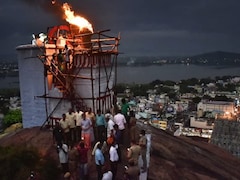
came during the hearing of contempt petitions linked to a December order that permitted the lighting of the traditional Deepam on a pillar at the hilltop site. Justice G R Swaminathan observed that despite repeated opportunities, the authorities had not offered a satisfactory explanation for the delay and alleged obstruction in implementing the court’s direction.
The court indicated that it would proceed to frame contempt charges on February 2 if “proper cause” was not shown. The judge also stressed that the judiciary would not indefinitely wait for explanations when its orders were not followed in letter and spirit.
Administrative actions under scrutiny
The case has placed several senior officials under close judicial scrutiny. The Madurai District Collector, the City Police Commissioner, senior police officers, and the temple administration appeared before the court. The State’s top police official participated through video conferencing.
The court revisited the sequence of events following its earlier order. After permission was granted for the Deepam, a prohibitory order was issued under Section 163 of the Bharatiya Nagarik Suraksha Sanhita. This order was later struck down by the High Court. Despite this, the lighting of the Deepam was allegedly prevented again, leading the court to conclude that its directive was being deliberately frustrated.
Justice Swaminathan observed that issuing a prohibitory order soon after a judicial direction raised serious concerns about administrative intent. Even after the prohibitory order was quashed, obstacles reportedly remained on the ground, particularly due to police actions.
The court also examined events during the Sandhanakoodu festival, where a flag was reportedly hoisted by dargah authorities on a tree located on land that has since been declared temple property by a Division Bench. This incident prompted sharp observations from the court regarding enforcement and selective permissions.
Allegations of trespass and police inaction
The temple administration informed the court that no permission had been granted for the flag hoisting and described the act as an unauthorised entry onto temple land. The temple’s Executive Officer assured the court that a formal police complaint would be filed regarding the incident.
The judge recorded that such an act could amount to criminal trespass and noted the seriousness of the assurance given to initiate legal action. The court questioned how such activities were allowed while a judicially approved religious practice was allegedly blocked.
Officials present before the court maintained that they acted independently and not under any external pressure. The State government, represented by the Additional Advocate General, sought more time, citing pending appeals related to the contempt proceedings.
While granting time until February 2, the court made it clear that the next hearing would be decisive. It stated that failure to justify the actions taken by the authorities would result in contempt charges being formally framed. Also Read : Thiruparankundram: Madras HC warns contempt, asks why deepam was not lit despite court order
Conclusion
The High Court’s warning in the Tamil Nadu Deepam row underscores the seriousness with which judicial orders must be implemented. As the next hearing approaches, the case is expected to test the accountability of the administration and reaffirm the authority of the court in sensitive religious and land-related disputes.
