
The Karnataka High Court has issued a notice to the State Election Commission on a plea seeking a direction to notify the election schedule for the Shivamogga City Corporation within 15 days, bringing renewed focus on long-pending urban local body elections in the State. The court’s intervention has revived public debate around democratic delays, administrative accountability, and the constitutional mandate to conduct timely municipal elections. The case has also intensified political attention on Shivamogga, a key urban centre, where the absence of an elected civic body has raised concerns over governance and representation.
The plea, filed by a concerned citizen, contends that the continued delay in announcing the election schedule violates constitutional provisions and undermines grassroots democracy. It argues that elected representatives are essential for responsive urban governance and that prolonged administrative control weakens accountability. Taking note of these arguments, the High Court sought a response from the State Election Commission, directing it to explain the reasons for the delay and its preparedness to conduct elections within a defined timeframe.
For residents of Shivamogga, the court’s notice has stirred cautious optimism. The city corporation has been functioning without an elected council, with administrators overseeing civic affairs. While officials maintain that essential services continue uninterrupted, citizens and political leaders alike argue that the absence of elected representatives limits public participation and weakens grievance redressal mechanisms. Issues such as infrastructure development, sanitation, water supply, and urban planning are often cited as areas where democratic oversight is crucial.
The matter has wider implications beyond Shivamogga. Across Karnataka, delays in municipal elections have been a recurring issue, often attributed to factors such as ward delimitation, reservation disputes, and legal challenges. Critics, however, argue that these reasons are frequently used to justify prolonged postponements. The High Court’s intervention is therefore being viewed as a potential turning point in reaffirming the importance of timely local body elections.
Legal experts note that the Constitution envisages urban local bodies as the third tier of governance, with fixed tenures and regular elections. Any deviation from this framework, they argue, must be exceptional and justified by compelling reasons. By issuing notice to the State Election Commission, the court has signalled its willingness to scrutinise delays more closely, reinforcing the principle that democracy cannot be put on indefinite hold.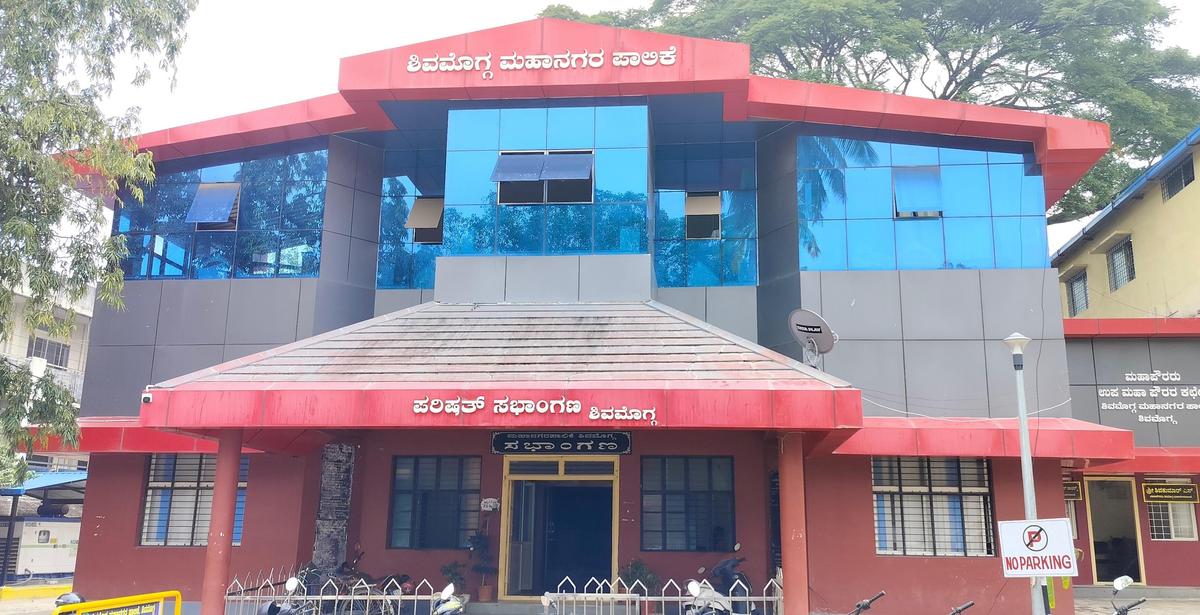
The State Election Commission has yet to place its detailed response on record, but officials have previously cited administrative and legal complexities as reasons for delays. Whether these explanations will satisfy judicial scrutiny remains to be seen. For now, the court’s notice has placed the issue squarely in the public domain, prompting renewed discussion on the health of local democracy in Karnataka.
Legal Arguments, Constitutional Mandate, and Commission’s Role
At the heart of the plea lies the argument that the State Election Commission is constitutionally bound to conduct municipal elections in a timely manner. The petitioner has asserted that repeated postponements erode public faith in democratic institutions and create a governance vacuum at the local level. According to the plea, administrative arrangements cannot substitute for elected councils, which are accountable to the electorate and reflective of local aspirations.
The High Court’s decision to issue notice indicates that it found the concerns raised worthy of examination. Legal observers point out that courts have, in the past, intervened to ensure that constitutional bodies discharge their duties without undue delay. While the judiciary traditionally exercises restraint in matters of election scheduling, it has also emphasised that constitutional obligations cannot be indefinitely deferred.
The role of the State Election Commission is central to the case. As an independent constitutional authority, the Commission is tasked with supervising, directing, and controlling the conduct of elections to local bodies. Its independence is meant to insulate the electoral process from political interference. However, with independence comes responsibility, and critics argue that prolonged delays risk undermining the Commission’s credibility.
One of the key issues likely to be examined is whether the reasons cited for the delay are legally sustainable. Ward delimitation and reservation of seats are often complex processes, involving data collection, public consultation, and adherence to statutory norms. Yet, the petitioner contends that these processes should be completed within reasonable timeframes and cannot be used to justify indefinite postponement of elections.
The plea also highlights the democratic cost of delay. Without elected councillors, decision-making becomes centralised, and citizens lose direct channels to voice local concerns. While administrators may ensure continuity of services, they lack the political mandate to make long-term policy decisions. This, the petitioner argues, affects urban development and weakens participatory governance.
The High Court’s notice to the Commission has also brought attention to the balance between administrative preparedness and democratic urgency. Even if logistical challenges exist, courts have previously held that the right to vote and to be represented is fundamental in a democratic system. The outcome of this case could therefore set an important precedent for how delays in local body elections are viewed and addressed.
Political Reactions and Civic Implications
The court’s intervention has triggered varied political reactions across the spectrum. Opposition parties have welcomed the notice, alleging that delays in municipal elections are deliberate and aimed at avoiding democratic accountability. They argue that ruling administrations prefer prolonged bureaucratic control over elected councils, particularly in politically sensitive urban centres like Shivamogga.
Ruling party leaders, on the other hand, have urged caution, emphasising that elections must be conducted in a free and fair manner, which requires adequate preparation. They maintain that procedural requirements, including reservation and delimitation, must be completed correctly to avoid future legal disputes. According to them, rushing the process could lead to flawed elections and subsequent litigation.
Within Shivamogga, civic activists and resident welfare associations have expressed hope that the case will expedite the election process. Many have pointed out that local issues often remain unresolved in the absence of elected representatives who can raise them forcefully within the council. Development priorities, they argue, should be shaped by those directly accountable to the people rather than appointed officials.
The prolonged absence of elections has also had implications for political participation. Aspiring councillors and grassroots workers have been in a state of uncertainty, unable to plan campaigns or engage meaningfully with voters. This uncertainty, observers note, weakens political mobilisation at the local level and dampens civic enthusiasm.
Economically, the lack of an elected council can affect urban development initiatives. Decisions on major projects, budgeting, and long-term planning are often deferred or taken cautiously under administrative arrangements. Investors and contractors sometimes prefer the clarity that comes with an elected body empowered to take policy decisions. From this perspective, timely elections are linked not just to democracy but also to urban growth.
The High Court’s notice has therefore been seen as more than a legal formality. It has reignited broader conversations about the role of urban local bodies in shaping cities and the need to respect democratic timelines. Whether this momentum will translate into swift action now depends largely on the State Election Commission’s response and the court’s subsequent directions.
Looking Ahead: Timeline, Accountability, and Democratic Expectations
As the case progresses, attention will focus on how the State Election Commission responds to the court’s notice. If the Commission outlines a clear and time-bound plan for notifying the election schedule, it could address many of the concerns raised. However, if delays continue without convincing justification, the court may consider issuing stronger directions to ensure compliance with constitutional mandates.
Legal experts caution that while courts can nudge constitutional bodies toward action, the ultimate goal should be systemic reform rather than ad hoc judicial intervention. Establishing clear timelines, improving coordination between departments, and anticipating legal hurdles could help prevent recurring delays in the future. The Shivamogga case, they argue, should serve as a catalyst for such reforms.
For citizens, the issue goes beyond legal technicalities. At stake is the principle that democracy must function at all levels, including the grassroots. Municipal councils play a critical role in shaping everyday life, from roads and drainage to markets and public spaces. Delays in elections disconnect citizens from these decision-making processes, weakening the democratic fabric.
The 15-day timeline mentioned in the plea has taken on symbolic significance, representing urgency and accountability. Whether or not elections are notified within that exact period, the court’s emphasis on timeliness sends a clear message. Democratic processes, it suggests, cannot be relegated to administrative convenience.
Political analysts believe that the outcome of the case could influence similar situations across Karnataka. If the High Court takes a firm stance, it may encourage faster action in other municipalities awaiting elections. Conversely, a lenient approach could embolden further delays. Either way, the case is likely to shape the discourse around urban governance in the State.
As Shivamogga awaits clarity, the High Court’s notice has already achieved one outcome: it has brought the issue of delayed municipal elections into sharp focus. The coming days will reveal whether this judicial intervention translates into concrete steps toward restoring elected local governance. For now, it stands as a reminder that democracy thrives not just in grand elections, but in the timely functioning of institutions closest to the people.
Follow: Karnataka Government
Also read: Home | Channel 6 Network – Latest News, Breaking Updates: Politics, Business, Tech & More
