
The announcement that former Minister K.S. Eshwarappa will join a protest against the Sharavati Pumped Storage Project in Shivamogga on February 12 has added fresh political weight to an agitation that has been steadily gathering momentum across the Malnad region. What began as a localised environmental concern has now evolved into a broader political and social movement, drawing attention to questions of ecological sustainability, regional consent, and development priorities. Eshwarappa’s decision to participate is being seen as a significant moment, not only because of his stature but also because it reflects growing unease within political circles over the project’s long-term consequences.
Political observers note that Eshwarappa’s participation could embolden other leaders, both within and outside his party, to publicly question large infrastructure projects in ecologically sensitive regions. Until now, many elected representatives have limited their interventions to closed-door discussions, wary of appearing anti-development. The Sharavati protest, however, has created a space where dissent is framed as environmental stewardship rather than political obstruction, potentially reshaping how such debates unfold in the public sphere.
The protest has also drawn attention to the broader governance challenges surrounding river basin management in Karnataka. Experts argue that projects are often evaluated in isolation, without adequately considering cumulative impacts on river systems already burdened by dams, diversions, and climate variability. In the Sharavati basin, critics say successive interventions have steadily reduced the river’s resilience, making any additional stress disproportionately damaging over time.
Youth groups and student organisations from Shivamogga and nearby districts have begun mobilising in support of the protest, marking a generational shift in environmental activism. Many young participants see the Sharavati issue as emblematic of a larger struggle to protect natural resources amid rapid infrastructure expansion. Their involvement has injected fresh energy into the movement, broadening it beyond traditional activist circles and veteran campaigners.
Meanwhile, administrative sources indicate that district officials are preparing for the February 12 protest with heightened security and logistical arrangements. While authorities have stressed the importance of maintaining law and order, they have also acknowledged the right to peaceful protest. The manner in which the administration handles the event is likely to influence public perception of the State’s responsiveness to dissenting voices.
Energy sector analysts caution that the Sharavati controversy could have ripple effects on future pumped storage proposals across the State. Investors and planners are closely watching how the government navigates resistance, as prolonged uncertainty can affect project timelines and cost structures. At the same time, analysts say meaningful engagement with stakeholders could strengthen project design and public acceptance in the long run.
As the protest date approaches, the Sharavati Pumped Storage Project has come to represent more than a single infrastructure initiative. It has become a test of how Karnataka balances energy ambitions with ecological responsibility, and how political leadership responds when development priorities collide with grassroots concerns. The outcome of this confrontation, many believe, will shape not only the future of the Sharavati river, but the trajectory of environmental decision-making in the State.
The Sharavati river, long regarded as a lifeline for the Western Ghats region, holds deep emotional, ecological, and cultural significance for communities in Shivamogga and neighbouring districts. Farmers, environmental activists, and local residents have repeatedly expressed fears that the pumped storage project could alter water flows, disrupt fragile ecosystems, and affect livelihoods dependent on the river. With Eshwarappa joining the protest, these concerns are now expected to gain greater visibility at the State level, potentially forcing policymakers to respond more directly.
Organisers of the protest say February 12 will mark a decisive phase in the movement, aiming to demonstrate that opposition to the project cuts across political affiliations. They argue that resistance is rooted not in party politics but in the lived realities of people who depend on the Sharavati basin for agriculture, drinking water, and ecological balance. The presence of a senior political figure, they believe, will help amplify voices that have so far struggled to break through administrative and bureaucratic layers.
Eshwarappa, a senior leader from Shivamogga with a long political career, has been associated with several mass movements in the past. His entry into the protest has prompted both support and criticism, with some welcoming his stance as an act of regional solidarity, while others question the timing and political motivations behind the move. Regardless of intent, his participation has undeniably shifted the spotlight onto the Sharavati Pumped Storage Project at a moment when public scrutiny is intensifying.
The State government, meanwhile, has maintained that the project is essential to meet Karnataka’s growing energy needs, particularly in the context of renewable integration and peak power demand. Officials argue that pumped storage projects are critical for energy security and grid stability. However, critics counter that such arguments often overlook site-specific environmental costs and the cumulative impact of large infrastructure projects in ecologically sensitive zones like the Western Ghats.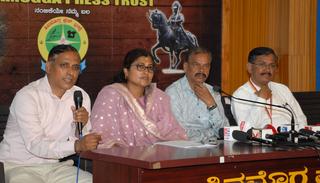
As the protest date approaches, Shivamogga has become the focal point of a larger debate on development versus conservation. The Sharavati issue now stands at the intersection of environmental ethics, regional identity, and political accountability, with February 12 shaping up to be more than just another protest day.
ROOTS OF RESISTANCE AND THE ECOLOGICAL ARGUMENT
Opposition to the Sharavati Pumped Storage Project has been brewing for years, driven primarily by environmental groups and local communities who fear irreversible damage to the river basin. Activists argue that pumped storage projects, while marketed as clean energy solutions, involve extensive land alteration, deforestation, and changes to natural water cycles. In the case of Sharavati, they warn that the river’s delicate balance, already under pressure from existing dams and hydropower installations, could be pushed beyond recovery.
Local farmers have voiced concerns about the impact on irrigation patterns and groundwater recharge. They say that even minor disruptions in seasonal flows can have cascading effects on crop cycles, soil fertility, and drinking water availability. Many villages in the region rely on the Sharavati and its tributaries not just economically, but culturally, with rituals and community practices deeply intertwined with the river.
Environmental experts have also raised alarms about the project’s location within the Western Ghats, a globally recognised biodiversity hotspot. They caution that construction activity, tunnelling, and increased human presence could fragment habitats and threaten endemic species. The fear is that once ecological damage sets in, mitigation measures often fall short, leaving communities to bear long-term consequences.
Protest organisers argue that environmental impact assessments have not adequately addressed these localised risks. They claim that consultations were either insufficient or poorly communicated, leading to a sense of exclusion among affected populations. This perceived gap between decision-makers and ground realities has fuelled mistrust and hardened opposition to the project.
The involvement of K.S. Eshwarappa has reinforced the argument that concerns extend beyond activist circles. Supporters say his participation reflects a broader recognition that development projects must be evaluated not just on technical feasibility, but on social and ecological cost. They see his stance as lending legitimacy to long-standing fears that were earlier dismissed as emotional or anti-development.
At the same time, government officials continue to emphasise that modern pumped storage projects are designed with safeguards to minimise environmental harm. They argue that halting such projects could slow Karnataka’s transition to cleaner energy sources. This clash of narratives has turned the Sharavati project into a symbol of a deeper struggle over how sustainability is defined and who gets to define it.
POLITICAL SIGNALS AND THE ROAD AHEAD
Eshwarappa’s decision to join the protest has sent mixed signals within political circles, particularly within his own party. While some leaders have remained cautious, others privately acknowledge that resistance to the project resonates strongly with local sentiments in Shivamogga and surrounding areas. The episode has exposed potential fault lines between centralised development agendas and regional priorities, a tension that has surfaced repeatedly in Karnataka’s recent political history.
Analysts say the protest could influence how future infrastructure projects are communicated and implemented. Large-scale initiatives in ecologically sensitive regions are increasingly facing resistance, not just from activists but from elected representatives responding to grassroots pressure. The Sharavati agitation, with its expanding support base, may serve as a case study in how public participation shapes policy outcomes.
The State government now faces a delicate balancing act. Ignoring the protest risks deepening public resentment, while halting or significantly altering the project could have implications for energy planning and investment confidence. Officials may be compelled to revisit environmental assessments, hold wider consultations, or explore alternative approaches that address both power needs and ecological concerns.
For local communities, February 12 is being framed as a moment of assertion rather than confrontation. Organisers say the protest aims to reaffirm the idea that development must be participatory and context-sensitive. They argue that rivers like Sharavati are not merely resources to be optimised but living systems that sustain generations.
There is also a broader political undercurrent to the movement. By stepping into the protest space, Eshwarappa has reopened conversations about the role of senior leaders in amplifying local issues, even when they challenge dominant narratives. Whether this move will translate into tangible policy shifts remains uncertain, but it has undeniably altered the tone of the debate.
As Shivamogga prepares for the protest, the Sharavati Pumped Storage Project stands at a crossroads. What happens next will depend not only on administrative decisions but on how seriously the voices raised on February 12 are heard. For now, the protest symbolises a growing demand for development that respects both people and the landscapes they inhabit, making the Sharavati question one that extends far beyond the banks of the river itself.
Follow: Karnataka Government
Also read: Home | Channel 6 Network – Latest News, Breaking Updates: Politics, Business, Tech & More
