
Maharashtra Chief Minister Devendra Fadnavis has launched a fierce rebuttal to political rivals Uddhav Thackeray and Raj Thackeray, following remarks by the Thackeray cousins that the Brihanmumbai Municipal Corporation elections could be pivotal for the future of Marathi people and their influence in Mumbai. Speaking at a major election rally in Mumbai, Fadnavis asserted that no one, regardless of lineage or political standing, can separate Mumbai from Maharashtra, underscoring the city’s deep cultural and historical ties to the state. His comments marked a significant escalation in the rhetoric ahead of the high-stakes civic polls scheduled for January 15, 2026, where control of India’s richest municipal body is up for grabs.
Fadnavis’s remarks came amid intense campaigning, with parties across the political spectrum amplifying issues like regional pride, identity politics and governance records. The chief minister’s statement was aimed not only at countering the Thackerays’ narrative but also at reassuring Marathi voters and undecided citizens that Mumbai’s future will remain firmly within the fabric of Maharashtra’s political and cultural identity.
Fadnavis Declares Mumbai Inseparable From Maharashtra
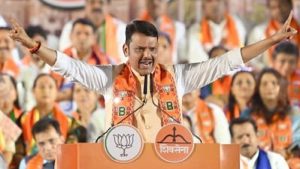
Addressing supporters at a rally in Shivaji Park, Fadnavis took aim at the opposition, claiming that attempts to frame the BMC election as a struggle for cultural survival were misleading and emotionally charged for political gain. He argued that Mumbai’s status as part of Maharashtra is unassailable and rooted in the collective will of its residents, not subject to change by any political figure or family legacy.
Fadnavis reiterated that Mumbai’s development and integration with the rest of the state should transcend factional battles and that attempts to create division over identity were distractions from substantive issues like civic infrastructure, public services and administrative efficiency. In his speech, he emphasised that the election should be about governance performance and citizens’ welfare rather than symbolic assertions of regional belonging.
Context of the Thackeray Comments
Earlier in the campaign cycle, Uddhav Thackeray and Raj Thackeray had sought to cast the civic polls as a defining moment for Marathi speakers in Mumbai. They raised concerns that the demographic and political dynamics of the city were shifting in ways that could marginalise local Maharashtrian interests if not countered effectively at the ballot box. Critics of the chief minister’s narrative have sometimes described these fears as part of a broader strategy to mobilise voters on cultural lines.
The Thackerays’ focus on identity politics has resonated with segments of the electorate who see Mumbai’s rapid growth and influx of new residents as diluting the influence of traditional Marathi communities. This sentiment has been a recurring theme in Maharashtra politics, particularly in urban centres where economic expansion and migration have transformed social structures.
Political Strategy and Appeal to Marathi Voters
In his rebuttal, Fadnavis also highlighted the importance of inclusive development and inclusive governance. He stressed that policies benefiting all residents, regardless of linguistic or community background, would strengthen Mumbai’s role as a global city while honouring its roots in Maharashtra’s history. Critics argue that such a message also serves to broaden voter appeal beyond narrow identity segments and underscores the ruling alliance’s focus on administrative performance.
The chief minister further noted that while Marathi remains a critical cultural element and is emphasised in educational policy, the political narrative should not devolve into exclusionary rhetoric. He called for substantive dialogues on urban challenges such as infrastructure, sanitation and housing, suggesting that tangible governance outcomes should be central to electoral decision-making.
Reactions From Opposition Leaders
In response to Fadnavis’s comments, leaders from the Thackeray alliance have defended their emphasis on cultural issues, asserting that safeguarding the interests of the Marathi people in Mumbai is not about exclusion but about preserving heritage and ensuring equitable representation. They argue that rapid urban growth and political realignments have left traditional communities feeling overlooked, making identity issues legitimate for electoral debate.
Some opposition voices contend that the ruling party’s response has at times downplayed the emotional and historical significance of such concerns, framing them instead as political tactics rather than genuine grassroots sentiments. However, both sides agree that the upcoming BMC polls will serve as a key indicator of how voters balance identity narratives with governance performance.
Voter Considerations in the BMC Election
As the civic polls approach, voters in Mumbai have been weighing a range of issues. Beyond debates over identity, many residents are focused on practical concerns such as traffic congestion, noise and air pollution, waste management, water supply, housing affordability and public health infrastructure. These everyday challenges form an important backdrop to the political campaigns of all parties, and their prominence in voter priorities suggests that the outcome may hinge on how well candidates articulate solutions to these problems.
Analysts note that while emotive appeals can energise specific voter bases, pragmatic governance issues often drive broader electoral outcomes. In a city as diverse and fast-paced as Mumbai, balancing cultural pride with policy effectiveness could prove decisive in determining which party or alliance gains control of the BMC’s significant budget and administrative authority.
Significance of Mumbai’s Role in Maharashtra Politics
Mumbai’s political importance extends far beyond its municipal boundaries. As India’s financial capital and a hub of economic activity, decisions made at the BMC level can have cascading effects on regional development, investment flows and public policy priorities across Maharashtra. Control of the municipal corporation typically affords considerable influence over urban planning, resource allocation and civic service delivery — factors that underscore why the city’s elections attract heated debate and high-profile interventions.
Fadnavis’s insistence on Mumbai’s inseparability from Maharashtra can thus be seen as both a cultural assertion and a strategic appeal to voters who see the city’s identity as intertwined with their own sense of belonging and future prospects.
Looking Ahead to Polling Day
With election day approaching, both the Mahayuti alliance led by Fadnavis and opposition forces including the Thackeray duo are intensifying their outreach efforts across Mumbai’s wards. Campaigns are focusing on town halls, public meetings, community events and door-to-door engagement as they seek to mobilise supporters on multiple fronts. While debates over cultural identity and political narratives will continue, the practical concerns of urban governance are likely to remain central to voter decision-making.
As Mumbai prepares for voting, the rivalry between different political leaders underscores the competitive nature of civic politics in the city and highlights how elections to local bodies like the BMC can reflect broader currents in state and national discourse.
Read More: https://channel6network.com/wp-admin/post.php?post=66981&action=edit
