
Around 52,000 women in Karnataka have reportedly been denied benefits under the State government’s Gruha Lakshmi scheme due to discrepancies linked to tax records, prompting concern among beneficiaries and policymakers alike. Addressing the issue, the concerned Minister said the government has taken note of the problem and steps are underway to resolve genuine cases. The development has sparked debate over eligibility verification processes and the challenges faced by welfare schemes that rely on digital and financial databases to determine beneficiary status.
Field officers have begun door-to-door verification in certain districts where a high number of grievances were recorded. Officials said this step is meant to reduce the burden on beneficiaries who may find it difficult to travel to government offices. Local revenue staff are cross-checking income details, property records, and household status to determine eligibility accurately. Authorities believe that in-person verification can resolve discrepancies faster than relying solely on digital systems. This approach is also expected to build confidence among affected women, who have expressed uncertainty about how their financial records were interpreted in the initial screening process.
District administrations are reportedly setting up temporary facilitation centers to guide women through the correction process. At these centers, applicants can submit updated documents, clarify tax-related details, and seek assistance in linking bank accounts or identification records. Volunteers and self-help group members have been roped in to help beneficiaries understand procedures. Officials said clear instructions in local languages are being provided to avoid confusion. Such support mechanisms aim to ensure that lack of digital literacy or paperwork does not prevent eligible women from accessing benefits meant to support household stability.
Social policy experts emphasize that welfare schemes must account for informal income patterns common among low-income families. Many women may have small financial transactions or legacy records that appear in tax databases without reflecting current economic realities. Analysts argue that automated filters sometimes fail to distinguish between minor past entries and present-day vulnerability. They suggest periodic data cleansing and flexible review criteria. Integrating socio-economic surveys with financial data could help create a more accurate picture of household status, ensuring that deserving beneficiaries are not inadvertently excluded.
Community leaders have urged authorities to maintain transparency about the review timeline and criteria being used. They say uncertainty about payment restoration creates stress among families who depend on the scheme for essential expenses. Public announcements, village meetings, and information campaigns are being recommended to keep beneficiaries informed. Officials acknowledged that communication gaps can lead to mistrust and have pledged to issue regular updates through local administration channels. Clear and consistent messaging is seen as key to preventing rumors and ensuring that affected women remain engaged in the correction process.
Women who have filed appeals shared that the financial assistance under Gruha Lakshmi often supports children’s education and healthcare needs. Interruptions have forced some families to borrow from informal sources, adding financial pressure. Social workers highlighted that timely restoration of benefits can prevent debt cycles and protect household well-being. They stressed that welfare programs designed for economic security must also consider the emotional impact of sudden payment stoppages. Authorities said they are prioritizing cases where prolonged delays could cause hardship.
Government representatives indicated that data integration systems are being reviewed to identify technical loopholes that led to misclassification. Software filters may be recalibrated to distinguish between active taxpayers and those with negligible or outdated entries. Officials said this technical refinement will reduce similar issues in future welfare rollouts. They emphasized that the experience is being used as a learning opportunity to strengthen digital governance systems while safeguarding beneficiary rights.
Financial inclusion experts note that linking welfare schemes with formal databases has long-term benefits, including improved accountability and reduced duplication. However, they caution that technology must remain a tool rather than a barrier. Human intervention and contextual assessment are necessary safeguards in welfare delivery. Experts recommend a hybrid model where automated systems flag cases but final decisions involve field verification. This balance, they say, helps maintain both efficiency and fairness in public assistance programs.
Opposition leaders continue to monitor the situation, calling for periodic reports on how many cases have been resolved. They argue that legislative oversight ensures that corrective measures are implemented effectively. Government officials have responded that progress updates will be shared once verification rounds are completed. The issue has sparked broader discussion on strengthening grievance redressal frameworks within social schemes. Ensuring quick, accessible complaint resolution is increasingly recognized as essential to sustaining public trust.
Civil society organizations are organizing awareness drives to inform women about documentation and appeal procedures. Workshops conducted in rural areas aim to explain how tax records may affect eligibility and what steps can be taken to correct errors. Volunteers are helping women collect necessary papers and submit applications. Such grassroots engagement is helping bridge the gap between administrative processes and community understanding. Observers say these collaborative efforts demonstrate how public participation can strengthen welfare delivery.
As the resolution process continues, authorities maintain that the scheme’s intent remains unchanged: to support women-led households and enhance financial security. Officials reiterated that no eligible beneficiary will be permanently excluded due to technical discrepancies. The ongoing corrective measures reflect an effort to align digital governance with social welfare objectives. Experts conclude that lessons learned from this episode could guide improvements in future schemes, ensuring that technology and human oversight work together to deliver benefits efficiently and equitably across Karnataka.
The Gruha Lakshmi scheme, designed to provide financial assistance to women heads of households, is considered one of the key social welfare initiatives in Karnataka. Officials stated that the denial of benefits in these cases was not arbitrary but based on income and tax-related data that flagged certain applicants as ineligible. However, many of the affected women reportedly claim they fall within the intended beneficiary category and may have been excluded due to outdated or misinterpreted financial records.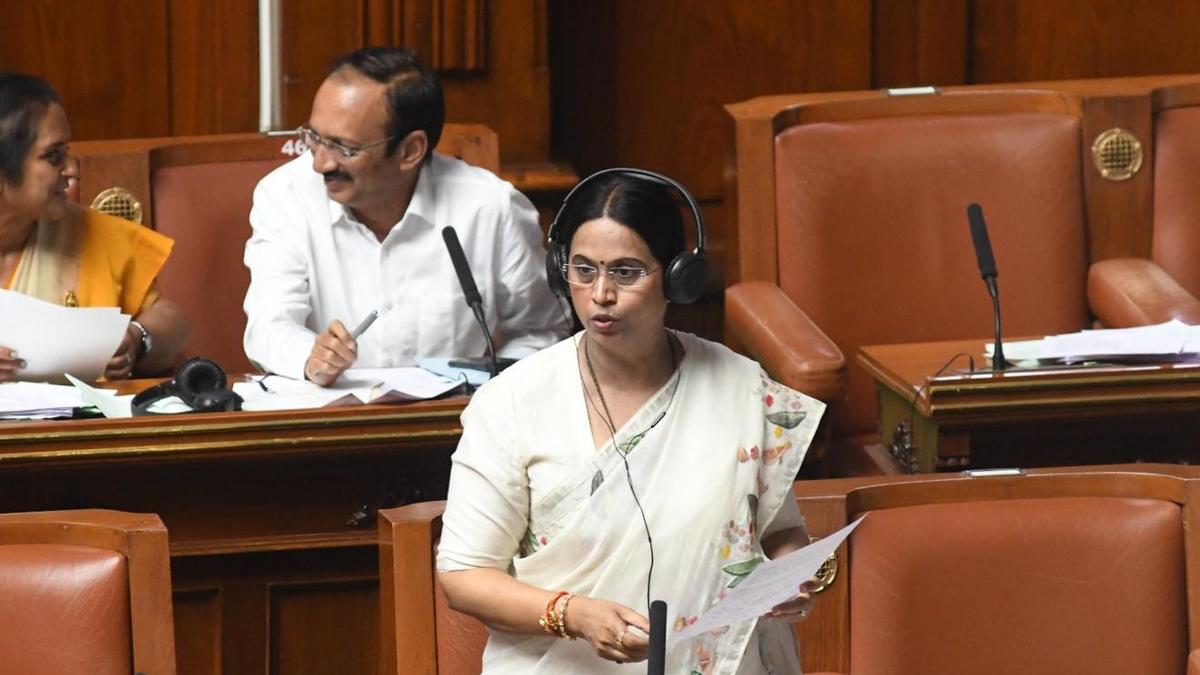
The Minister clarified that the government is reviewing the cases and working with departments handling tax and revenue data to correct any technical or clerical errors. He emphasized that the scheme’s objective remains to support economically vulnerable households and that genuine beneficiaries will not be left out. According to officials, field-level verification and grievance redressal mechanisms are being strengthened to ensure that deserving applicants receive the promised assistance without unnecessary delay.
Beneficiaries expressed distress over the sudden stoppage or denial of funds, stating that the monthly assistance plays a crucial role in managing household expenses. For many families, the scheme supports daily needs such as groceries, education costs, and healthcare. Social workers noted that even short disruptions in welfare payments can significantly affect low-income households. They urged authorities to expedite the review process and maintain clear communication with applicants to prevent confusion and anxiety.
Officials explained that integration of multiple databases is intended to prevent duplication and ensure transparency, but it can sometimes lead to mismatches. Differences in name spelling, outdated income records, or technical linking errors between Aadhaar, bank, and tax databases may cause legitimate beneficiaries to be flagged incorrectly. Authorities said that resolving such issues requires careful verification to balance accuracy with fairness.
VERIFICATION CHALLENGES AND GOVERNMENT RESPONSE
Policy analysts point out that large-scale welfare schemes often face administrative challenges when digital verification systems are introduced. While such systems improve efficiency and reduce fraud, they can inadvertently exclude eligible individuals due to data inconsistencies. In the case of Gruha Lakshmi, tax-related indicators appear to have triggered automated ineligibility in some cases. Experts suggest that human oversight and local verification remain essential components of welfare administration.
The Minister stated that district-level officials have been instructed to review grievances on priority. Special camps and help desks may be organized to assist women in updating records and submitting clarifications. Authorities are also exploring coordination with tax departments to reassess cases where small or inactive tax records may have led to misclassification. The goal, officials said, is to ensure that technical filters do not override the scheme’s welfare intent.
Opposition leaders have raised concerns about the situation, urging the government to ensure transparency and timely resolution. They argue that beneficiaries should not suffer due to bureaucratic or technical errors. Some legislators called for a temporary relaxation of automated exclusion criteria until verification is completed. The issue has brought attention to the need for robust grievance redressal mechanisms within welfare programs.
Women’s groups have welcomed the Minister’s assurance but stressed the importance of swift action. They noted that beneficiaries often lack awareness of documentation requirements and may find it difficult to navigate digital correction processes. Civil society organizations have offered to assist in awareness drives and help women file appeals. They believe community-level support can bridge gaps between policy design and ground realities.
IMPACT ON HOUSEHOLDS AND NEXT STEPS
Economists highlight that direct benefit schemes like Gruha Lakshmi are designed to enhance financial stability for households, particularly empowering women. Interruptions can affect not only consumption patterns but also confidence in public welfare systems. Ensuring continuity and reliability of payments is therefore essential for both economic and social reasons. Experts recommend periodic audits of verification systems to minimize unintended exclusions.
Officials reiterated that no permanent cancellation has been ordered and that affected cases are under review. Beneficiaries have been encouraged to approach local authorities with necessary documents to facilitate re-evaluation. The government has assured that corrections will be made where errors are found, and eligible women will receive due benefits.
The episode underscores the complexity of administering large-scale welfare programs in a data-driven environment. While technology enhances transparency, it also requires careful calibration to prevent genuine beneficiaries from being excluded. Observers say the government’s response and speed of resolution will be crucial in maintaining trust in the scheme.
As the review process continues, authorities and community organizations alike emphasize the importance of communication, accessibility, and empathy in addressing beneficiaries’ concerns. Ensuring that welfare reaches intended recipients remains the central priority, and officials maintain that corrective measures are being taken to align implementation with the scheme’s core objective of supporting women-led households across Karnataka.
Follow: Karnataka Government
Also read: Home | Channel 6 Network – Latest News, Breaking Updates: Politics, Business, Tech & More
