
The Karnataka Assembly witnessed sharp exchanges after a Minister candidly admitted that the government was “helpless” in compelling private sugar mills to install weighbridges, triggering strong backlash from legislators cutting across party lines. The admission came during a discussion on complaints by sugarcane farmers who allege systematic under-weighing of their produce at mills, leading to financial losses year after year. The Minister’s statement, intended to explain administrative limitations, instead intensified anger among MLAs, many of whom accused the government of surrendering regulatory authority to powerful sugar industry interests.
Members argued that the absence of weighbridges at mill premises has long enabled opaque practices, forcing farmers to rely on manual or mill-controlled measurements. Several legislators said farmers had repeatedly flagged discrepancies between the actual cane supplied and the weight recorded by mills, but their grievances had remained unresolved. The Minister’s remark that the government lacked the power to enforce compliance was seen as an alarming abdication of responsibility, particularly in a sector that supports lakhs of rural households.
The issue holds political significance as the sugar belt remains a key electoral region. Legislators warned that continued inaction could deepen rural distress and erode public trust in governance. They stressed that while farmers are bound by strict rules under various agricultural and revenue laws, mills appear to operate with impunity, creating an uneven and unjust system.
Several sugarcane farmers addressed the media outside the Legislature, expressing frustration over what they describe as a systemic failure. They said repeated complaints to local authorities and mill management had yielded little result, and many now feel compelled to pursue legal avenues to recover dues. “We deliver our cane in good faith, yet the weights recorded are often manipulated. How can we survive if the government itself admits it cannot enforce fairness?” one farmer asked, highlighting the human cost of administrative inaction.
Union leaders have also stepped up pressure, warning of statewide agitations if decisive measures are not taken. They argued that sugarcane farmers form the backbone of Karnataka’s rural economy and that delayed payments or under-weighing creates cascading effects on credit, household expenses, and social welfare. Several unions have proposed mass mobilisations, demonstrations at mills, and even temporary refusal to supply cane until weighbridges are installed and compliance is ensured.
Experts in agricultural policy point to gaps in the legal framework governing sugar mills. While the Sugarcane Control Order and State regulations prescribe responsibilities for mill operators, enforcement mechanisms remain weak. Most importantly, penal provisions for non-compliance are rarely invoked, and courts often take years to adjudicate disputes. Without binding enforcement, voluntary compliance is insufficient, leaving farmers vulnerable to exploitation despite existing rules.
Digital solutions have been suggested as a potential way forward. Proposals include installing automated weighbridges connected to centralised monitoring systems that allow real-time verification of weights and billing. While the Minister mentioned exploring such options, MLAs argued that pilot projects should have been rolled out long ago and called for immediate implementation. “Technology can reduce disputes and restore trust. The government must move faster,” said a senior legislator from the opposition.
Financial constraints cited by mills were challenged by lawmakers and experts alike. Several mills have reported record profits in recent years, benefiting from high sugar prices and government procurement policies. Legislators argued that claiming financial inability to install weighbridges is not acceptable when the costs are marginal relative to profits and the social responsibility involved. The ethical and moral imperative of fair play, they said, cannot be ignored.
The debate also touched on political accountability. MLAs accused successive governments of ignoring the issue for decades, allowing a culture of opacity to persist. Some legislators pointed out that sugarcane-growing regions often hold significant electoral weight, making inaction politically costly. Yet, bureaucratic hesitancy and legal caution have consistently delayed reforms, aggravating farmers’ grievances and feeding distrust toward authorities.
Several technical officers explained that enforcement is complicated by multiple ownership structures. Some mills operate as cooperative societies with complex management hierarchies, while others are private corporations. This diversity makes standardised enforcement challenging. Officials said efforts were underway to issue revised guidelines mandating weighbridge installation and periodic audits, but final notification and implementation are still pending.
In some districts, farmers have taken matters into their own hands, deploying independent weighing services or hiring private engineers to monitor delivery. While this ensures greater transparency locally, it imposes additional costs on smallholders and cannot be scaled across the State. Lawmakers highlighted that it is the government’s responsibility to institutionalise transparency, rather than leaving farmers to fend for themselves.
Economic analysts also warned of broader implications. Sugarcane is a major input for the sugar and ethanol industries, both of which contribute to Karnataka’s revenue and rural employment. Disputes over weighing and payments risk disrupting supply chains, affecting mill operations and downstream production. Ensuring fair measurement is therefore not just a farmers’ issue but a matter of economic stability and rural livelihoods.
In concluding remarks, several legislators urged the government to convene an expert committee to study the weighbridge issue and recommend enforceable solutions within a fixed timeline. They stressed that symbolic gestures or advisory circulars would not suffice. Farmers, unions, and politicians alike are watching closely, and the government’s next steps will be critical in determining whether trust between producers and mills can be restored, or whether years of simmering resentment will escalate into a larger crisis.
Farmers’ Grievances and Legislative Anger
During the debate, MLAs recounted instances where farmers were allegedly short-paid despite supplying high-quality cane. Many said weighbridges are the most basic transparency mechanism and questioned why mills had been allowed to function for decades without them. Opposition members accused the government of shielding mill owners, some of whom wield significant political and economic influence in the State.
The Minister attempted to clarify that sugar mills operate under a mix of State and central regulations, and that enforcement powers are limited unless specific provisions are invoked. He said repeated advisories had been issued, but compliance could not be forced without legal backing. This explanation, however, failed to pacify the House. Legislators demanded to know why amendments had not been brought in or why existing laws were not being strengthened to protect farmers’ interests.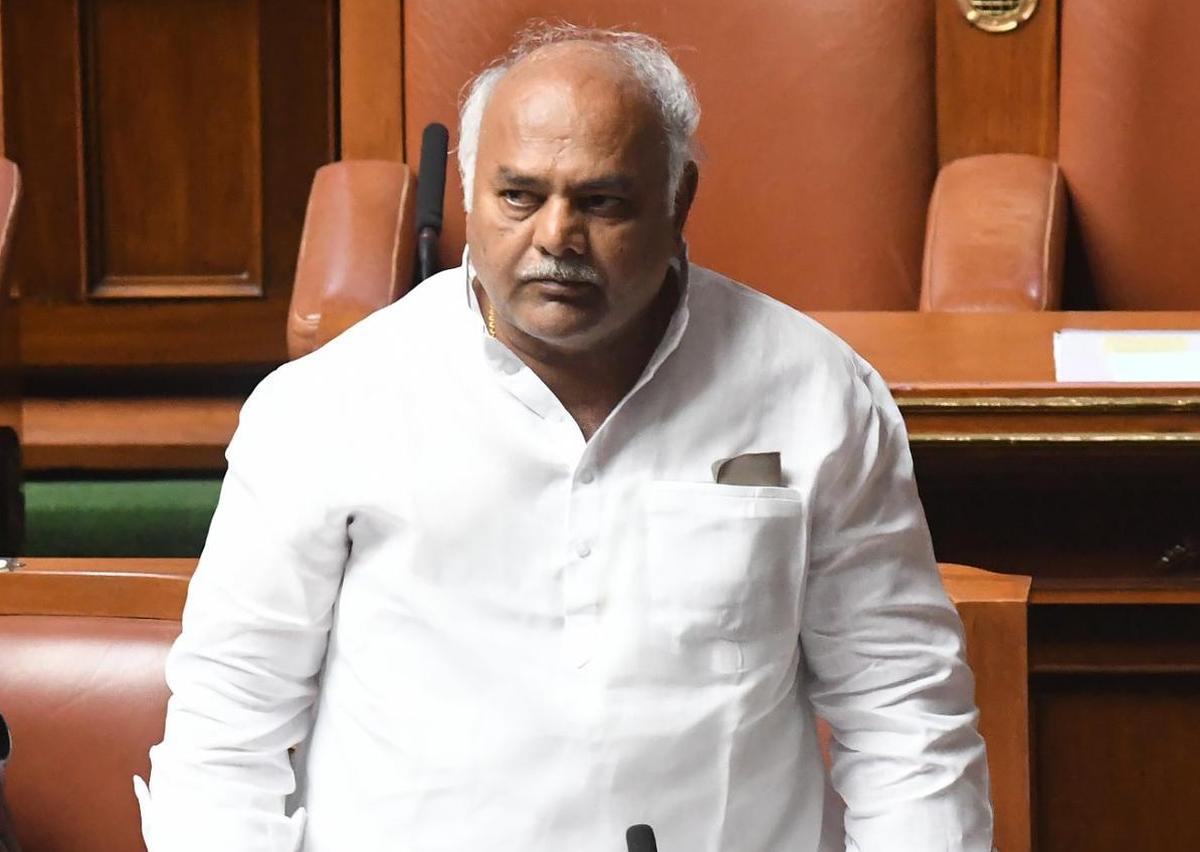
Some ruling party MLAs also expressed discomfort, distancing themselves from the Minister’s remarks. They argued that telling farmers the government is powerless sends a damaging message and emboldens exploitative practices. A few members demanded that the government fix accountability on officials who failed to ensure basic infrastructure at mills despite repeated complaints.
Structural Gaps and Regulatory Limits
Officials later pointed out that many sugar mills claim logistical and financial constraints in installing weighbridges, especially older units. Some mills argue that cane is weighed at collection centres, making weighbridges at factory gates redundant. Farmers, however, contest this claim, saying weights recorded at collection points are often altered during final billing, leaving them with little recourse.
Experts note that Karnataka’s sugar sector reflects a broader regulatory challenge. While the government fixes cane prices, controls movement schedules, and enforces supply obligations on farmers, monitoring mechanisms remain weak. The absence of mandatory weighbridges creates a trust deficit that disproportionately affects small and marginal farmers, who lack bargaining power.
The Minister said the government was examining the possibility of framing clearer guidelines and incentivising mills to adopt transparent weighing systems. He added that digital solutions were also being explored to reduce disputes. However, MLAs insisted that voluntary compliance had failed and that only firm legal mandates would restore confidence.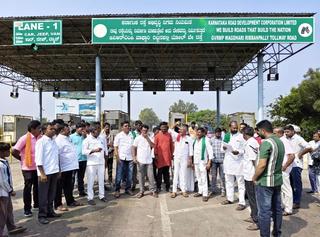
Political Fallout and Farmer Anxiety
The controversy has sparked concern beyond the Assembly. Farmer unions described the Minister’s statement as “deeply disturbing” and warned of protests if the government failed to act swiftly. They argued that the admission confirmed what farmers had long suspected: that the system is stacked against them. Union leaders demanded immediate intervention, including surprise inspections and penalties for mills found violating fair trade norms.
Political observers say the episode exposes tensions within the government between administrative caution and political accountability. While ministers may be constrained by legal frameworks, public admission of helplessness risks appearing insensitive to rural suffering. With sugarcane arrears and delayed payments already fuelling discontent, the weighbridge issue has added another layer of grievance.
Opposition parties have indicated they will continue to press the matter, both inside and outside the Legislature. They argue that the government must choose between standing with farmers or appearing subservient to industrial lobbies. Some leaders have demanded a House committee to study the issue and recommend enforceable solutions.
The Road Ahead
In response to the uproar, the Minister assured the House that the government would revisit the legal framework governing sugar mills and explore all options to ensure fair weighing practices. He said protecting farmers’ interests remained a priority, even as he acknowledged the complexities involved. Whether this assurance translates into concrete action remains to be seen.
For farmers in Karnataka’s sugar belt, the debate has reinforced a long-standing demand for transparency and accountability. The weighbridge controversy is no longer just a technical issue; it has become a symbol of the power imbalance between cultivators and industry. As pressure mounts, the government faces a critical test of credibility. Its response will determine whether trust can be rebuilt or whether resentment in the cane fields will continue to grow, season after season.
Follow: Karnataka Government
Also read: Home | Channel 6 Network – Latest News, Breaking Updates: Politics, Business, Tech & More
