
Farmers in a village of Belagavi district staged a strong protest against what they described as large-scale and indiscriminate felling of trees in their locality, alleging that the activity threatens both their livelihoods and the region’s fragile ecological balance. The demonstration, attended by cultivators, agricultural workers, and local residents, saw participants gather near the site where dozens of mature trees were reportedly cut in recent days. Holding placards and raising slogans, the protesters demanded an immediate halt to further tree removal and sought intervention from district authorities, stating that the loss of green cover would directly impact groundwater levels, soil health, and microclimatic stability.
According to the farmers, the trees that were felled included several native species that had stood for decades and served as natural windbreakers and shade providers for crops and livestock. Villagers claimed that the cutting was carried out rapidly, with little prior notice or public consultation, leading to confusion and anger among residents. Many expressed concern that such actions undermine the traditional agricultural landscape, where trees play a crucial role in preventing soil erosion and maintaining biodiversity. The protestors said that the absence of clear communication from officials had deepened mistrust and left the community feeling excluded from decisions affecting their environment.
Elderly farmers at the protest recalled how earlier generations had consciously preserved tree cover as part of sustainable farming practices, integrating orchards and shade trees into fields. They argued that the sudden removal of these trees disrupts a long-standing balance between cultivation and conservation. Women farmers, who also participated in large numbers, voiced fears about rising temperatures in open fields, which could make farm work more difficult and reduce crop yields. They emphasized that trees provide more than ecological benefits, offering fruit, fodder, and fuelwood that supplement rural household incomes and contribute to food security.
Several protestors alleged that the tree felling was linked to a development or infrastructure-related activity, though details remained unclear. They demanded that authorities publicly disclose the purpose of the project, environmental clearances obtained, and any compensatory afforestation plans. Without such transparency, they said, the community would continue to resist the operation. Local activists supporting the farmers stressed that environmental regulations require careful assessment before large-scale tree removal and argued that ignoring these norms could have long-term consequences for both people and wildlife in the area.
Village leaders who addressed the gathering called for a joint inspection by forest officials, revenue authorities, and representatives of the gram panchayat. They insisted that the voices of local cultivators must be heard before further action is taken. Protestors also warned that loss of tree cover could reduce bird populations that naturally control pests, thereby increasing farmers’ dependence on chemical pesticides. This, they said, would raise cultivation costs and harm soil quality over time. The demonstration remained largely peaceful, though emotions ran high as residents described the felling as an attack on their shared natural heritage.
Officials from the district administration acknowledged receiving complaints and said they would examine the matter. Preliminary statements indicated that the tree cutting may have been authorized under specific provisions, but authorities assured that any irregularities would be addressed. Farmers, however, maintained that official explanations must be accompanied by on-ground verification and written assurances. They demanded a temporary suspension of all tree-related activity until a full review is completed. The protest highlighted the growing tension between development initiatives and environmental preservation in rural regions where communities depend directly on natural resources for survival.
GROWING ECOLOGICAL AND LIVELIHOOD CONCERNS
Environmental experts note that trees in agricultural landscapes serve multiple ecological functions beyond aesthetic value. They help regulate local climate by reducing heat intensity, improve water retention in soil, and support pollinators essential for crop production. In semi-arid districts like parts of Belagavi, tree cover can significantly influence groundwater recharge by slowing runoff and enhancing infiltration. Farmers at the protest argued that removing mature trees in large numbers could reverse years of natural resource management efforts. They stressed that climate variability already poses challenges, and reducing green cover would only make farming more uncertain and vulnerable.
Younger farmers expressed frustration that environmental costs are often borne by rural communities while benefits of development are seen elsewhere. They said that if projects require land or tree removal, authorities should involve residents from the planning stage and ensure fair compensation and rehabilitation measures. Protestors also called for scientific studies to assess how many trees can be removed without harming ecological balance. They emphasized that token compensatory planting of saplings cannot replace the immediate ecosystem services provided by fully grown trees that have matured over decades in the local landscape.
Teachers and students from nearby institutions reportedly joined the demonstration in solidarity, underscoring the broader social concern over environmental degradation. Speakers at the protest highlighted the importance of educating younger generations about conservation and sustainable resource use. They warned that if current trends continue, rural children may grow up in landscapes stripped of shade and biodiversity. The issue, they said, is not merely about individual trees but about preserving a way of life rooted in coexistence with nature. The presence of youth lent the protest a sense of urgency and intergenerational responsibility.
Farmers also pointed to the cultural significance of trees, noting that many species are associated with local traditions and community spaces. Village elders described how certain trees serve as meeting points, landmarks, and sites for festivals or rituals. Losing them, they argued, erodes social bonds and collective memory. Such perspectives highlight how environmental issues intersect with cultural identity. Protest leaders said that development must respect these intangible values and avoid treating natural assets as expendable. They urged policymakers to adopt a more holistic approach that integrates ecological, economic, and social considerations in decision-making processes.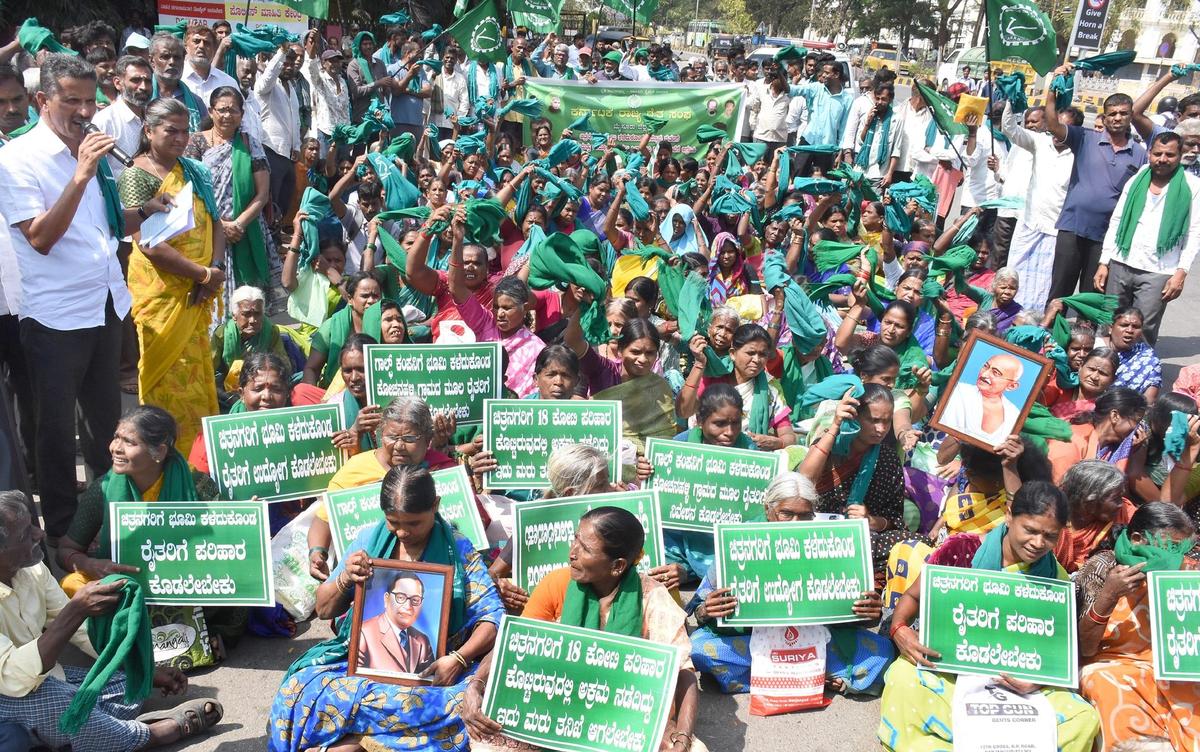
DEMAND FOR TRANSPARENCY AND ACCOUNTABILITY
As the protest continued, delegations of farmers sought meetings with senior officials to present memoranda outlining their demands. These included a halt to further felling, public disclosure of project details, and a commitment to replant native species in adequate numbers. Farmers insisted that reforestation efforts should occur within or near the affected village to ensure local ecological recovery. They also asked for community participation in monitoring afforestation, arguing that local stewardship improves survival rates of saplings. Such demands reflect a growing awareness among rural populations about environmental governance and their rights in development processes.
Political representatives from the region have reportedly taken note of the agitation, with some promising to raise the issue in appropriate forums. While opinions differ on the necessity of the underlying project, there appears to be consensus that communication gaps have fueled the unrest. Observers say that timely dialogue between authorities and residents could help defuse tensions and lead to mutually acceptable solutions. The situation illustrates how environmental decisions, when perceived as unilateral, can trigger strong local resistance. Effective governance, experts suggest, depends not only on legal compliance but also on trust-building and participatory approaches.
The Belagavi protest adds to a broader pattern of community-led environmental movements across the State, where villagers increasingly assert their role as custodians of natural resources. From opposing quarrying to safeguarding water bodies, such actions reflect rising grassroots engagement with ecological issues. Analysts believe that these movements signal a shift toward more decentralized environmental awareness, driven by lived experiences of climate stress and resource scarcity. Authorities may need to adapt policy frameworks to better incorporate local knowledge and consent, recognizing that sustainable development requires cooperation rather than confrontation.
For now, the farmers in the Belagavi village remain resolute, stating they will continue peaceful demonstrations until their concerns are addressed. Their protest underscores the delicate balance between infrastructure expansion and environmental stewardship in agrarian regions. As negotiations unfold, the outcome could influence how similar disputes are managed in the future. At stake is not only the fate of a cluster of trees but also the principle that communities most affected by environmental decisions should have a decisive voice. The episode serves as a reminder that development, to be enduring, must grow alongside respect for nature.
As the agitation gained momentum, farmer representatives began coordinating with environmental groups and legal advisers to explore possible avenues for formal redress. They discussed submitting petitions to the district administration and, if required, approaching higher authorities to seek a review of permissions granted for the tree felling. Some activists pointed out that environmental impact assessments and local consultations are intended to prevent precisely such conflicts. They argued that adherence to these procedures not only protects ecosystems but also shields projects from delays caused by public opposition. The unfolding situation in Belagavi, they said, demonstrates the cost of perceived procedural gaps.
Agricultural scientists observing the issue highlighted that tree cover plays a stabilizing role in mixed farming systems common in the region. Trees reduce wind speed, lower evapotranspiration, and create microhabitats that support beneficial insects. Their removal can increase exposure of crops to heat stress, potentially affecting yields of sensitive varieties. Experts cautioned that while infrastructure growth is important, ecological services provided by established trees often go unaccounted for in project planning. They suggested that mapping and valuing such services could guide more balanced decisions, ensuring that economic gains do not come at disproportionate environmental expense.
Meanwhile, social media amplified the voices of the protesting farmers, bringing wider attention to the issue. Images of tree stumps and gatherings of villagers circulated online, prompting discussions about rural environmental rights. Some commentators urged authorities to use the incident as an opportunity to showcase responsive governance by engaging openly with affected communities. Others stressed that quick resolution is essential to prevent the issue from escalating into a prolonged standoff. The visibility generated through digital platforms has added pressure on officials to clarify facts and demonstrate that due process is being followed.
In the days ahead, the focus is likely to shift toward dialogue and verification. If officials conduct joint inspections and share documentation on project approvals, the scope for misunderstanding may narrow. Farmers have indicated that they are not opposed to development per se but want assurance that ecological safeguards are respected. Their stance reflects a broader rural perspective that progress must be sustainable and inclusive. How authorities address these concerns could set a precedent for handling similar disputes, reinforcing the principle that environmental governance works best when communities are partners rather than bystanders.
Follow: Karnataka Government
Also read: Home | Channel 6 Network – Latest News, Breaking Updates: Politics, Business, Tech & More
