
In a thought-provoking address that resonated deeply with scholars, policymakers, and civil society representatives, statesman and former diplomat Gopalkrishna Gandhi stressed that India’s democratic health depends on two parallel commitments — a government willing to listen to criticism and citizens who remain open to self-criticism. His remarks came at a public lecture focusing on contemporary challenges to democratic discourse, where he highlighted the widening distrust between institutions and the people, urging a renewal of political humility and civic responsibility.
Background and Context
Gandhi drew attention to India’s long democratic journey, emphasising that dissent had always strengthened the nation’s political fabric. He recalled how leaders in earlier decades treated opposing viewpoints as essential correctives rather than threats. According to him, the erosion of trust in recent years stems from a tendency among governments to view criticism as a personal attack, and among citizens to treat self-reflection as optional. He argued that both attitudes must change for democratic systems to thrive in a world increasingly defined by polarisation.
Need for a Responsive Government
Emphasising the first half of his argument, Gandhi asserted that governments must be receptive to criticism, even when it challenges their core policies. A state that discourages inconvenient questions, he noted, risks slipping into complacency and authoritarian habits. He argued that administrations should treat criticism as a diagnostic tool that highlights institutional blind spots. In his view, leadership that demonstrates openness to dissent signals confidence in its own legitimacy and respect for democratic norms.
Role of Citizens and Critics
Gandhi then turned to the responsibilities of citizens, especially public intellectuals and social critics. He argued that those who scrutinise the government must also be willing to introspect and reassess their assumptions. Critics, he said, must avoid falling into the trap of absolute certainty. Just as governments must cultivate humility, so must individuals who hold them accountable. Self-criticism, according to Gandhi, is the moral balance that prevents activism and commentary from becoming dogmatic.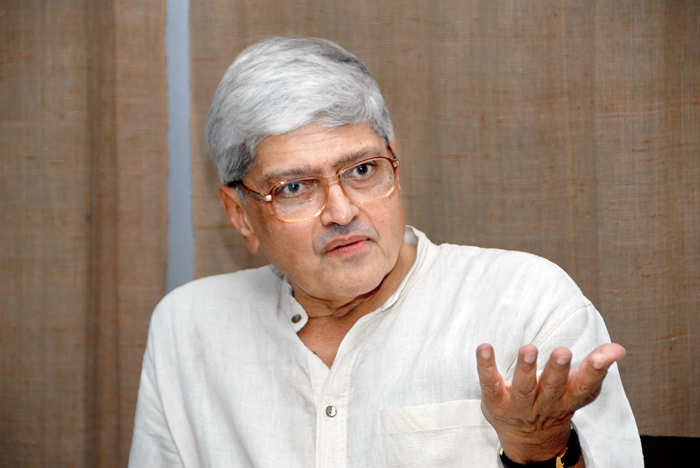
Historical Patterns of Dissent
Reflecting on India’s political past, Gandhi pointed out that the country had repeatedly relied on dissent to course-correct. He cited periods when students, writers, workers, and activists openly questioned policies, compelling governments to reassess their approaches. These moments, he said, were possible because both sides — protesters and authorities — retained a sense of shared purpose. The weakening of this shared purpose today, he warned, diminishes the possibility of honest dialogue and constructive conflict resolution.
Impact of Polarised Public Discourse
One of Gandhi’s strongest observations concerned the shrinking space for nuanced debate. He lamented that social media platforms, although powerful tools for expression, often reduce arguments to hostile sound bites. In such environments, articulating balanced criticism becomes difficult, and acknowledging one’s own errors becomes nearly impossible. The result, he said, is a public sphere dominated by defensiveness rather than empathy, where the loudest voices overshadow reasoned reflection.
Media’s Burden and Responsibility
Gandhi highlighted the critical role of the media, calling it a bridge that connects power structures with the public. He urged journalists to uphold fairness, resist sensationalism, and avoid becoming extensions of political propaganda. He insisted that robust journalism requires reporters who challenge authority without abandoning journalistic self-discipline. The media, he said, must neither fear the state nor indulge in unchecked activism. Balance, transparency, and introspection were essential for its credibility.
Institutions and Democratic Resilience
Another theme Gandhi elaborated on was the importance of independent institutions. Courts, election bodies, universities, and civil servants, he said, must maintain autonomy even during political turbulence. Their strength, however, depends on a culture of mutual respect. When governments sideline institutional independence or when critics dismiss institutions entirely, democratic stability weakens. He appealed for renewed trust in institutions, grounded in both accountability and patience.
Ethics and Moral Leadership
Gandhi emphasised that democratic systems cannot rest solely on constitutional frameworks — they require moral leadership. Ethical conduct, he argued, should guide decisions at every level of governance. A government secure in its moral foundations does not fear criticism but sees it as a compass. Similarly, public commentators grounded in ethical self-awareness contribute positively to national dialogue. Without ethics, he warned, political and civic life becomes transactional and hollow.
Youth and the Future of Democratic Debate
A significant portion of Gandhi’s speech addressed young Indians, whom he described as the custodians of the country’s next democratic chapter. He urged students to cultivate the courage to question policies while also learning the discipline of evaluating their own beliefs. He encouraged educational institutions to prioritise critical-thinking skills over rote learning, stressing that societies flourish when youth engage in democratic processes with openness and self-reflection.
Civil Society’s Expanding Role
Gandhi acknowledged the growing influence of civil society organisations in shaping policy debates. He said these groups serve as vital intermediaries between the public and the government. However, he cautioned that they must maintain transparency and avoid ideological rigidity. Civil society, he said, thrives when it remains rooted in facts, fairness, and introspection, becoming both a mirror and a guide for governments and communities alike.
Balancing Activism and Responsibility
In addressing the current wave of political activism across the country, Gandhi noted that passion alone cannot fuel sustainable movements. Social causes, he argued, gain long-term strength when activists embrace accountability and adaptability. He warned against absolutist narratives that divide society into heroes and villains, insisting that real change emerges from collaboration, dialogue, and an honest willingness to consider opposing viewpoints.
Economic Policy and Public Dialogue
Touching upon governance beyond political freedoms, Gandhi highlighted the importance of public discussion in shaping economic policy. He criticised the tendency to frame economic debates as purely technical matters, arguing that economic decisions affect social welfare and must therefore invite widespread scrutiny. Without openness to criticism, he said, governments risk designing policies that benefit a few while burdening many. Similarly, critics must acknowledge the complexity of policymaking before offering sweeping judgments.
Judiciary and the Culture of Accountability
Gandhi reiterated that the judiciary’s authority must remain free from political pressures. He welcomed recent conversations about judicial reform but stressed that these discussions must occur within an atmosphere of mutual respect. Criticism of judicial decisions is valid, he said, but only when grounded in reason rather than resentment. Judges too, he argued, must remain open to feedback without perceiving every critique as an attack on judicial independence.
Regional Politics and Democratic Health
Gandhi also addressed the growing tensions in regional politics, emphasising that federal systems flourish when the Centre and States remain willing to listen to each other’s concerns. Confrontation, he warned, disrupts governance and diminishes public trust. A government open to criticism, he said, must also be open to the voices of States, local bodies, and marginalised communities. Only then can national unity coexist with regional autonomy.
Gandhi also addressed the growing tensions in regional politics, emphasising that federal systems flourish when the Centre and States remain willing to listen to each other’s concerns. Confrontation, he warned, disrupts governance and diminishes public trust. A government open to criticism, he said, must also be open to the voices of States, local bodies, and marginalised communities. Only then can national unity coexist with regional autonomy.)
Cultural Dialogue and Social Harmony
He also spoke about India’s cultural diversity, noting that the richness of the country’s traditions stems from centuries of debate, adaptation, and coexistence. When cultural discussions become polarised, Gandhi warned, society risks losing this heritage of dialogue. He urged artists, writers, and cultural leaders to remain spaces for reflection, capable of critiquing power while also questioning their own assumptions about history, identity, and belonging.
Technology, Surveillance, and Citizen Rights
Gandhi expressed concern about the expanding role of technology in governance, particularly the risks surrounding surveillance and data privacy. He argued that citizens must remain vigilant about their rights and governments must maintain transparency about digital monitoring. At the same time, he encouraged critics of technological policy to acknowledge the benefits of innovation and avoid dismissing technological tools outright. Balance, he said, is essential to safeguarding freedom.
Gandhi expressed concern about the expanding role of technology in governance, particularly the risks surrounding surveillance and data privacy. He argued that citizens must remain vigilant about their rights and governments must maintain transparency about digital monitoring. At the same time, he encouraged critics of technological policy to acknowledge the benefits of innovation and avoid dismissing technological tools outright. Balance, he said, is essential to safeguarding freedom.
Reimagining Dialogue in a New Political Era
He suggested that India must reimagine democratic dialogue for a rapidly changing world. As the nation navigates new economic realities, shifting global alliances, and evolving technologies, the willingness to listen — both within government and among the public — will determine the strength of democratic institutions. Gandhi urged leaders to abandon defensiveness and encouraged citizens to shed cynicism, promoting a culture where disagreement strengthens rather than fractures the nation.
Conclusion
Gopalkrishna Gandhi’s message placed equal responsibility on the government and the governed. A healthy democracy, he said, cannot be built on one-sided accountability. Governments must be open to criticism, and critics must be open to self-criticism. Only through this dual commitment can India preserve the spirit of participatory democracy that has guided it for decades. His address called for humility, empathy, and renewed respect for the art of dialogue — values that remain essential as India charts its democratic future.
Follow: Karnataka Government
Also read: Home | Channel 6 Network – Latest News, Breaking Updates: Politics, Business, Tech & More
