
The Karnataka government has set an ambitious target of achieving at least 75% admissions in government first-grade colleges across the State this academic year, signalling a renewed focus on strengthening public higher education and reversing years of declining enrolment. The move comes amid concerns over falling student numbers in government institutions, growing preference for private , and questions over the sustainability of the public system.
Officials have emphasised the role of technology in achieving the admissions target. have been instructed to update websites with detailed course information, eligibility criteria, fee structures, and scholarship details. Social media campaigns and messaging platforms are being used to reach prospective students, particularly in semi-urban and rural areas. The department hopes that enhanced digital visibility will attract students who may otherwise consider private colleges due to lack of awareness about government options. “Information is the first step toward choice,” said a senior official, noting that many eligible students remain unaware of government in their district.
Several are also introducing mentorship programmes for incoming students to improve retention rates. Senior students and alumni are being roped in to guide first-year students, helping them navigate academics, co-curricular activities, and career planning. Officials said such mentorship initiatives aim to make students feel integrated and supported from the outset, reducing dropouts and improving overall satisfaction. “A welcoming and engaging environment is as important as the course itself,” said one principal, stressing that holistic student experience will be key to meeting enrolment targets sustainably.
Civil society groups have welcomed the government’s renewed focus on first-grade colleges but urged that quality enhancement measures accompany the admissions drive. They recommended upgrading laboratory facilities, library resources, and digital infrastructure to ensure students receive education comparable to private institutions. Experts noted that government colleges often have the potential to deliver high-quality teaching at low cost if they receive adequate support and resources. “Meeting targets is only half the battle; the real goal is to retain students and ensure meaningful learning,” a senior education consultant said.
As the admission season progresses, the coming months will test both the administrative capacity of the and the effectiveness of outreach strategies. Observers noted that the 75% target, if achieved, could serve as a benchmark for other States grappling with declining government enrolments. Beyond the numbers, the effort reflects a broader commitment to strengthening public education and reinforcing its role in social equity. For students, parents, and educators alike, the initiative represents both hope and a challenge: to restore faith in government as institutions of opportunity, learning, and long-term growth.
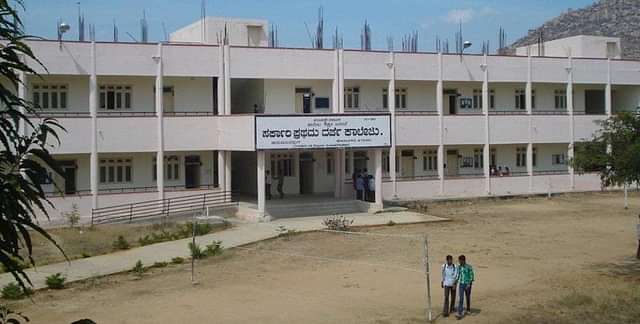
Senior officials in the Department of Collegiate Education said the target has been communicated to principals of government first-grade colleges, along with directions to intensify outreach, improve academic offerings and ensure a student-friendly environment. The emphasis, officials said, is not merely on numbers but on restoring confidence in government colleges as affordable, quality institutions catering especially to students from rural, semi-urban and economically weaker backgrounds.
Government first-grade colleges form the backbone of Karnataka’s undergraduate education system, particularly in districts where private colleges are either scarce or unaffordable. However, enrolment trends over the past decade have shown a steady decline in many such colleges due to factors such as competition from private institutions, migration to urban centres, perceived quality gaps and limited course diversity.
By setting a clear numerical target, the government hopes to energise college administrations and introduce accountability into the admissions process. Officials said achieving 75% occupancy would not only improve academic vibrancy but also strengthen the case for additional funding, faculty recruitment and infrastructure development.
The move has drawn mixed reactions from educators, students and policy experts. While many have welcomed the renewed attention to public colleges, others have cautioned that targets alone will not address deeper structural issues affecting enrolment.
Why Admissions Have Declined and What the Government Plans to Do
Data from the Collegiate Education Department indicate that several government first-grade colleges have been operating at less than 50% capacity in recent years, with some rural colleges recording even lower figures. Officials attribute this trend to multiple factors, including demographic changes, students opting for professional courses, and aggressive marketing by private colleges offering perceived placement advantages.
Another major factor, educators say, is the mismatch between courses offered and evolving student aspirations. While many government colleges continue to focus on traditional arts and science programmes, students increasingly seek skill-oriented and interdisciplinary courses aligned with employment opportunities.
In response, the government has instructed colleges to actively promote existing courses and highlight advantages such as low fees, scholarships and experienced faculty. Principals have been asked to engage with pre-university colleges, hold counselling sessions, and use community outreach to attract students.
Officials also said efforts are under way to introduce new programmes, including vocational, skill-based and emerging discipline courses, subject to approval and resource availability. Some colleges have already begun offering add-on courses, certificate programmes and industry-oriented modules to make degrees more attractive.
The department has further emphasised the importance of improving campus facilities, including libraries, laboratories and digital infrastructure. “Students must feel that government colleges can offer a holistic learning experience, not just affordable education,” a senior official said.
Role of Principals, Faculty and Local Outreach
The success of the 75% admissions target largely depends on the role played by college leadership and faculty, officials said. Principals have been asked to take ownership of admissions performance and work closely with staff to create a welcoming academic environment.
Faculty members have been encouraged to engage directly with prospective students and parents, addressing concerns about teaching quality, examination patterns and career prospects. Some colleges have begun organising open-house events and orientation programmes to familiarise students with campus life.
In rural areas, teachers have been asked to visit nearby villages and schools to spread awareness about admission deadlines, course options and financial assistance schemes. Educators say such grassroots engagement is essential to reach first-generation learners who may lack access to information.
However, faculty associations have pointed out that staff shortages and administrative burdens make outreach challenging. Several government colleges continue to function with vacant teaching posts, relying on guest lecturers. “Targets must be matched with adequate staffing and support,” said a senior lecturer, warning that overburdened faculty cannot be expected to shoulder additional responsibilities indefinitely.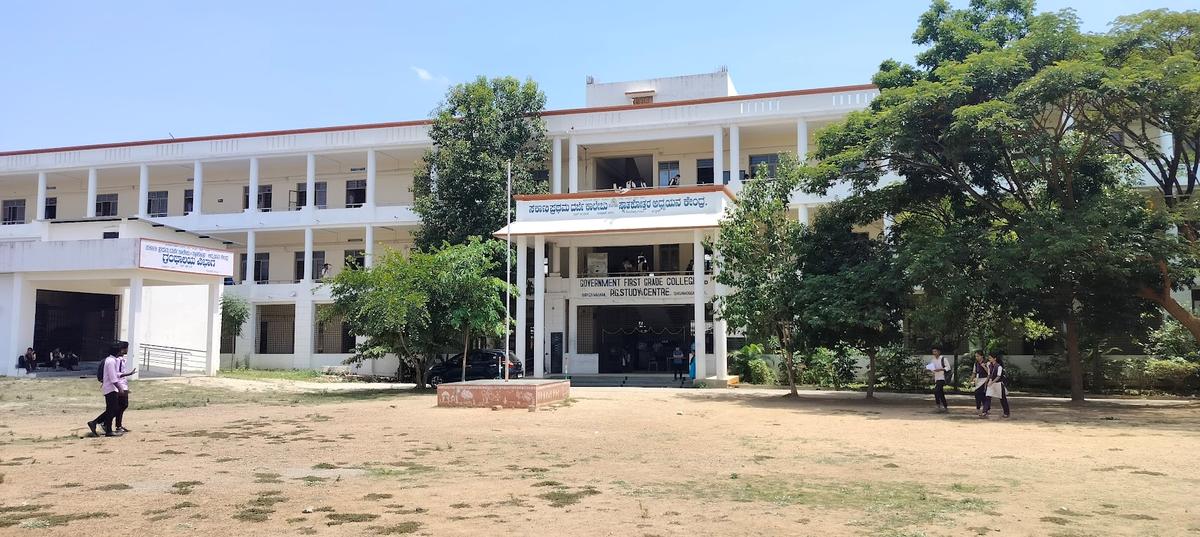
Students’ Perspectives and Affordability Advantage
For many students, especially those from low-income families, government first-grade colleges remain the most viable option for higher education. With minimal tuition fees, access to scholarships and proximity to home, these institutions offer a lifeline to those who cannot afford private colleges.
Students currently enrolled in government colleges said the affordability factor remains a strong draw, but perceptions around quality need improvement. “Fees are low, and teachers are supportive, but infrastructure and exposure need to improve,” said a final-year arts student from north Karnataka.
Several students said that better career guidance, internship opportunities and campus placements would significantly enhance the appeal of government colleges. They said many peers choose private institutions because they promise industry connections, even if those promises are not always fulfilled.
Parents, too, expressed cautious optimism about the government’s focus on admissions. “If government colleges improve facilities and ensure regular classes, more parents will trust them,” said a farmer whose daughter plans to enrol in a government college.
Experts Warn Against Numbers-Only Approach
Education experts have welcomed the intent behind the admissions target but cautioned against viewing it purely as a numerical exercise. They argue that sustainable enrolment growth requires long-term reforms addressing curriculum relevance, faculty strength and student support systems.
“Filling seats is not enough. Students must stay, learn and graduate with meaningful outcomes,” said a former university vice-chancellor. He said retention rates, learning quality and employability must be considered alongside admissions.
Experts also stressed the need for decentralised planning, noting that challenges differ across regions. Urban government colleges may struggle with competition from private institutions, while rural colleges face issues such as migration and limited awareness. “A one-size-fits-all approach will not work,” an education analyst said.
Some experts suggested linking admissions targets with incentives such as additional grants, infrastructure support or new course approvals for colleges that show improvement. They also called for systematic monitoring to ensure that pressure to meet targets does not result in lowering academic standards.
Government’s Broader Vision for Public Higher Education
Officials said the admissions drive is part of a broader effort to revitalise government higher education institutions. Alongside enrolment targets, the department is working on faculty recruitment, curriculum updates and digital integration.
There are also plans to strengthen academic autonomy and encourage innovation at the college level. Officials said colleges would be encouraged to collaborate with local industries, research institutions and civil society organisations to enrich learning experiences.
The government believes that strong public colleges are essential for social equity and regional development. “Government first-grade colleges are not just educational institutions; they are social institutions that promote inclusion,” an official said.
A Test Year for Government Colleges
As the admission season gathers pace, the 75% target has become both a challenge and an opportunity for government first-grade colleges. Success could help restore faith in public higher education and justify greater investment. Failure, however, may intensify debates about consolidation or restructuring of underperforming institutions.
Educators say the coming months will reveal whether the government’s push translates into meaningful change or remains a short-term drive. Much will depend on how effectively colleges communicate their strengths, address weaknesses and engage with students.
For thousands of aspiring undergraduates, the outcome will shape their educational choices and futures. As one college principal put it, “This is not just about meeting a percentage. It is about proving that government colleges still matter.”
Follow: Karnataka Government
Also read: Home | Channel 6 Network – Latest News, Breaking Updates: Politics, Business, Tech & More
