
A political storm unfolded in Karnataka after Women and Child Development Minister Laxmi Hebbalkar issued a public apology in the Legislative Council for providing what she described as “wrong” information regarding payments under the Gruha Lakshmi scheme. The apology came after BJP members staged a dharna inside the House, accusing the government of misleading legislators and beneficiaries about the status of fund disbursement under one of the State’s flagship welfare programmes. The episode triggered an intense debate on transparency, administrative accountability, and the political handling of welfare delivery in Karnataka.
The Gruha Lakshmi scheme, which provides monthly financial assistance to women heads of households, has been projected by the Congress government as a cornerstone of its social welfare agenda. Since its launch, the programme has reached lakhs of beneficiaries across the State, but it has also faced criticism over delays, technical glitches, and exclusion errors. The controversy erupted when the Minister, responding to a question in the Council, shared figures related to pending payments that were later challenged by the Opposition as inaccurate.
The episode has also drawn attention to the pressures faced by ministers in legislatures where real-time data is increasingly demanded. With welfare schemes operating through digital platforms that are constantly updated, figures can change within hours. Analysts point out that this creates a challenging environment where political accountability intersects with technical complexity. They argue that governments may need to institutionalise periodic data freezes for legislative reporting to ensure consistency and avoid contradictory statements.
Women’s groups observing the developments said the apology, while significant, must translate into tangible administrative improvements. Several organisations working at the grassroots level reported that beneficiaries often struggle to understand why payments are delayed or skipped, as official communication rarely reaches them in accessible formats. They urged the government to involve local anganwadi workers, self-help groups, and panchayat-level officials to disseminate accurate information and assist women in resolving issues related to bank accounts or documentation.
Within the Congress party, leaders have sought to downplay the controversy, emphasising that the core objective of the Gruha Lakshmi scheme remains intact. Party insiders said that internal reviews are underway to strengthen coordination between the Women and Child Development Department, the finance wing, and district administrations. The aim, they said, is to ensure that future legislative responses are backed by cross-verified data, reducing the scope for similar disputes.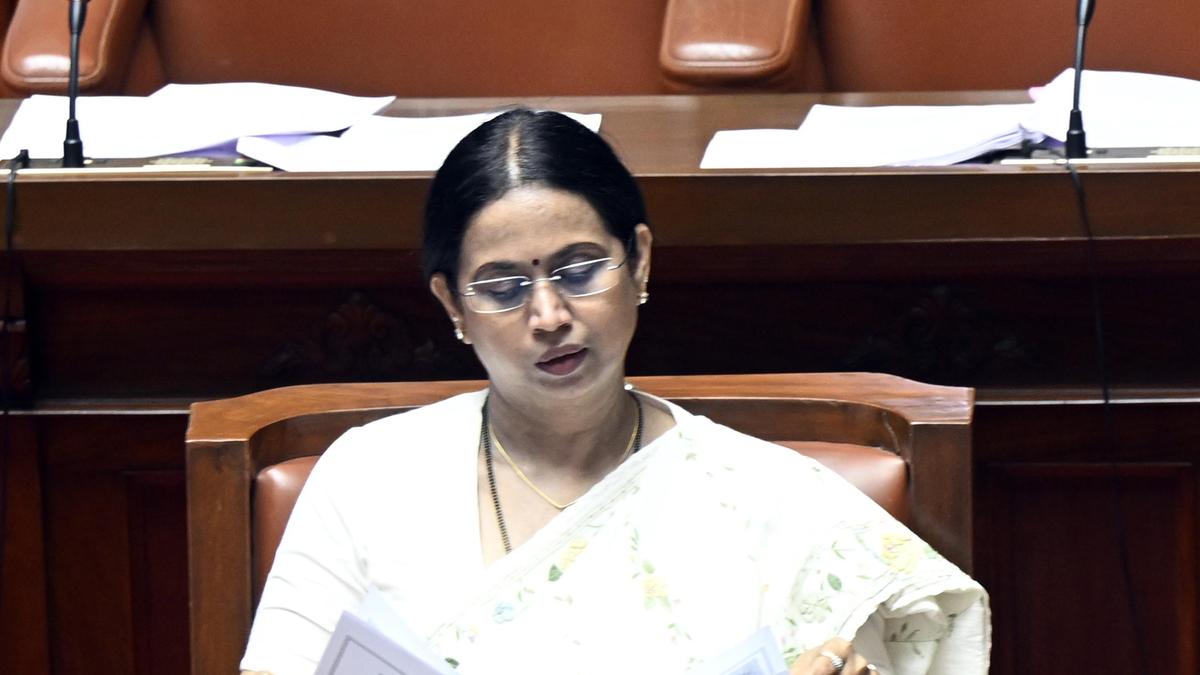
The Opposition, meanwhile, has signalled that welfare delivery will remain a central plank of its legislative strategy. BJP leaders believe that scrutiny of flagship schemes resonates strongly with the public, particularly when economic pressures are high. By focusing on gaps between official claims and beneficiary experiences, they aim to position themselves as watchdogs of governance rather than mere critics of policy intent.
Political commentators note that such confrontations are becoming more frequent as welfare programmes expand in scale and visibility. Cash transfer schemes, while popular, expose governments to heightened scrutiny because delays are immediately felt by households. Unlike infrastructure projects, where timelines are longer and impacts less direct, welfare payments create daily expectations that leave little room for administrative lapses.
There is also growing discussion about the role of technology partners in welfare implementation. Experts argue that outsourcing critical components such as payment processing and data management requires robust oversight. When glitches occur, responsibility often becomes diffused between departments and vendors, complicating accountability. Clear contractual obligations and performance benchmarks, they say, are essential to prevent beneficiaries from bearing the brunt of systemic failures.
From a legislative standpoint, some members suggested the need for a dedicated oversight committee on welfare schemes. Such a body could regularly review implementation data, hear grievances, and recommend corrective measures. Proponents believe this would shift debates from confrontational protests to more structured scrutiny, benefiting both policymakers and beneficiaries.
The controversy has also sparked introspection within the civil services. Senior officials acknowledged that welfare schemes demand not just efficient execution but also precise communication. Training programmes are being discussed to help officials present complex data in clear and accurate ways, especially when briefing ministers or responding to legislative questions.
For beneficiaries, however, the political and procedural dimensions matter less than the assurance of timely support. Many women depend on the Gruha Lakshmi assistance to meet essential expenses such as food, school supplies, and healthcare. Any disruption, even for a month, can upset household finances, reinforcing the importance of reliability over rhetoric.
As Karnataka’s legislature resumes its regular business, the Gruha Lakshmi episode is likely to serve as a reference point in future debates on governance and accountability. Whether it leads to sustained improvements in data integrity and service delivery remains to be seen. What is clear, observers say, is that welfare schemes now operate under an unforgiving spotlight, where accuracy, transparency, and responsiveness are no longer optional but fundamental to political credibility.
BJP members alleged that the information presented understated the extent of payment delays and sought an official clarification. When the discrepancy persisted, Opposition members stormed the well of the House and staged a sit-in protest, demanding an apology and a clear statement on the actual status of disbursements. The House witnessed repeated adjournments as tempers flared, with ruling party members accusing the Opposition of politicising a welfare scheme and the BJP insisting that accountability was non-negotiable.
Eventually, Minister Laxmi Hebbalkar rose in the House and acknowledged that the data she had earlier presented was incorrect. She apologised to the Council, stating that the mistake was unintentional and arose from reliance on preliminary departmental inputs. She assured members that she would place corrected and verified information on record and reiterated the government’s commitment to ensuring that all eligible beneficiaries receive payments without further delay.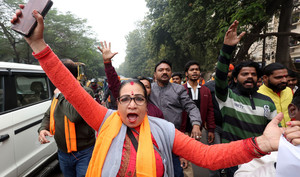
Dharna, Data Dispute, and the Politics of Welfare
The BJP, however, maintained that the issue went beyond a clerical error. Opposition leaders argued that inaccurate statements on welfare delivery erode public trust, especially when schemes like Gruha Lakshmi directly affect the livelihoods of economically vulnerable women. They pointed out that beneficiaries across several districts had been complaining of missed installments, Aadhaar seeding issues, and banking failures, which were not adequately reflected in official responses.
During the debate, BJP members accused the government of projecting an overly optimistic picture of welfare implementation while ignoring ground realities. They demanded that the government release district-wise data on payments made, pending cases, and reasons for delays. Some members also sought a third-party audit of the scheme’s implementation, arguing that internal reviews may not capture systemic failures.
Ruling party members countered these allegations by highlighting the scale and complexity of the programme. They said that implementing a universal cash transfer scheme of this magnitude inevitably involves transitional challenges, particularly during the initial months. Congress leaders accused the BJP of selective outrage, noting that similar issues had occurred in welfare schemes implemented by previous governments without provoking comparable protests.
The Minister herself stressed that the government had already resolved many technical issues and that pending cases largely involved documentation mismatches or banking problems beyond the immediate control of the department. She said continuous coordination was underway with banks, district administrations, and technology partners to streamline the process. The apology, she maintained, should be seen as an act of responsibility rather than an admission of systemic failure.
Transparency, Trust, and the Road Ahead for Gruha Lakshmi
The incident has reignited broader discussions about the governance of large-scale welfare schemes. Policy experts note that while direct benefit transfer programmes have significantly reduced leakages, they have also made governments more dependent on accurate data integration across departments. Even minor discrepancies, when amplified in political forums, can undermine confidence in otherwise impactful initiatives.
Social activists working with women beneficiaries said that the controversy reflects a deeper communication gap between policymakers and recipients. Many women, they pointed out, are less concerned about political debates and more anxious about irregular payments that affect household budgeting. They urged the government to establish clearer grievance redressal mechanisms at the local level and to proactively communicate timelines and reasons for delays.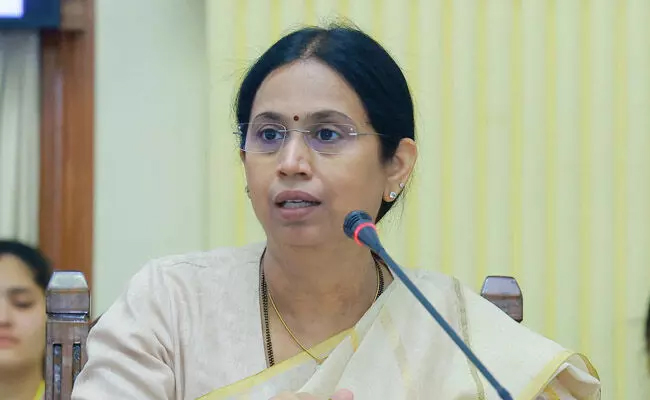
Within bureaucratic circles, the episode has reportedly prompted a review of internal data verification processes before ministers respond to legislative queries. Senior officials acknowledged that real-time data from welfare schemes can fluctuate due to daily updates and that greater caution is needed when presenting figures in the House. Strengthening coordination between departments and ensuring finalised data before public disclosure has emerged as a key lesson.
The Opposition, while welcoming the apology, said it would continue to monitor the scheme’s implementation closely. BJP leaders indicated that they would raise the issue again if discrepancies persist, framing their stance as a duty toward beneficiaries rather than a political tactic. They also urged the government to table a detailed status report in the next session to prevent similar controversies.
For the Congress government, the incident is a reminder of the political risks associated with high-profile welfare promises. Gruha Lakshmi remains central to its social justice narrative, and any perception of mismanagement could have electoral implications. At the same time, the Minister’s apology has been interpreted by some observers as an attempt to set a tone of accountability, even amid adversarial politics.
As the House moved on after the apology, the underlying questions remained unresolved. Can large welfare schemes maintain accuracy and transparency at scale? How should governments balance optimism with realism when reporting progress? And how can political debate be structured to improve delivery rather than merely score points? The answers to these questions will shape not only the future of the Gruha Lakshmi scheme but also the credibility of welfare governance in Karnataka.
Follow: Karnataka Government
Also read: Home | Channel 6 Network – Latest News, Breaking Updates: Politics, Business, Tech & More
