
Chief Minister Siddaramaiah’s announcement of a superspeciality hospital for Haveri district has sparked a wave of optimism across the region, marking a potentially decisive moment in Karnataka’s public healthcare journey. For decades, residents of Haveri and neighbouring districts have depended on distant urban centres for advanced medical treatment, often travelling long hours under distressing circumstances. The Chief Minister’s declaration is being viewed not merely as an infrastructure commitment, but as an emotional assurance to a region that has long felt overlooked in access to quality healthcare.
The proposed superspeciality hospital is expected to offer advanced medical services across multiple disciplines, reducing the burden on tertiary hospitals in cities such as Hubballi, Dharwad, and Bengaluru. Addressing a public gathering, the Chief Minister emphasised that equitable healthcare is a cornerstone of social justice and that regional imbalance in medical infrastructure must be corrected. The announcement aligns with the government’s stated objective of strengthening district-level healthcare and reducing avoidable patient migration.
Haveri district, largely agrarian and semi-urban, has historically struggled with limited access to specialised treatment. Patients requiring cardiology, neurology, oncology, or advanced trauma care have often faced delays that proved costly, both financially and medically. The proposed facility is expected to bridge this gap, bringing critical care closer to people’s homes.
The announcement has also generated political attention, with local leaders welcoming the move as a long-pending demand finally being acknowledged. Civil society groups and healthcare advocates see it as an opportunity to transform the district’s health outcomes, provided the project is executed efficiently and staffed adequately.
The declaration of a superspeciality hospital in Haveri carries political as well as administrative significance. Healthcare has emerged as a key governance issue, especially after the pandemic exposed systemic vulnerabilities. By focusing on district-level capacity building, the government signals a shift from city-centric development to more inclusive regional planning.
Political observers note that Haveri’s inclusion reflects the government’s attempt to address historical imbalances. The district has often featured in development debates as an area requiring targeted intervention. The announcement allows the ruling administration to reinforce its narrative of welfare-oriented governance and commitment to rural and semi-urban development.
While timelines and specific budgetary allocations are yet to be detailed, the Chief Minister assured that the hospital would be developed with modern infrastructure and specialist manpower. For Haveri’s residents, the declaration represents hope, dignity, and the promise of timely medical care.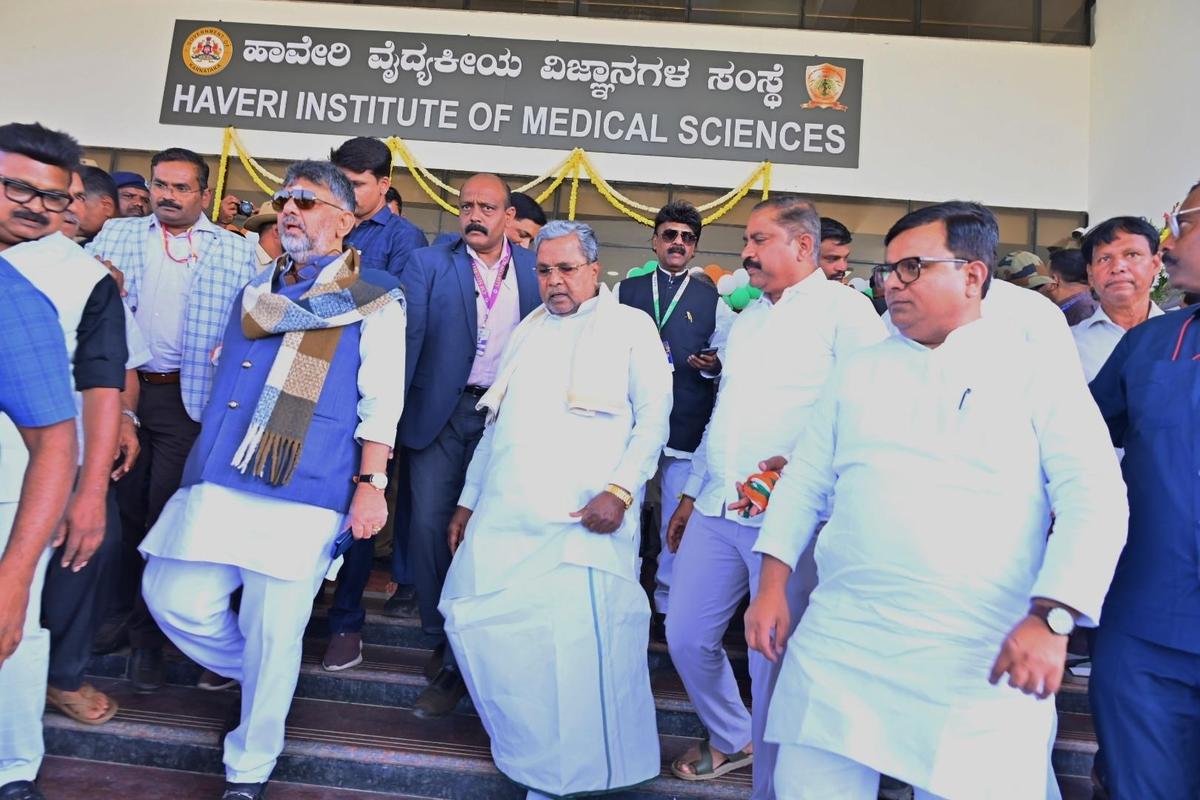
WHY HAVERI NEEDS A SUPERSPECIALITY HOSPITAL
Haveri’s healthcare challenges are rooted in geography, demography, and infrastructure gaps. Despite being centrally located in Karnataka, the district lacks advanced medical facilities capable of handling complex cases. District hospitals and taluk-level healthcare centres manage routine and emergency care, but serious conditions often require referrals to urban hospitals, placing immense strain on patients and families.
Medical professionals point out that delays in referral-based systems can be life-threatening. Conditions such as heart attacks, strokes, severe trauma, and complicated pregnancies demand immediate specialised intervention. The absence of a superspeciality hospital has meant that patients often lose critical time during transport, sometimes with fatal consequences.
The Chief Minister’s announcement directly addresses this systemic gap. By situating advanced care within the district, the government aims to decentralise healthcare and reduce pressure on metropolitan hospitals. Experts argue that such decentralisation is essential for improving overall healthcare efficiency and equity.
From a socio-economic perspective, the lack of local specialised care has also imposed financial hardship. Travel costs, accommodation expenses in cities, and loss of daily wages add to the burden of already vulnerable households. A local superspeciality hospital could significantly reduce out-of-pocket expenditure and emotional stress.
Public health advocates also highlight that improved medical infrastructure can have a multiplier effect. It encourages early diagnosis, regular follow-ups, and better disease management. Over time, this can lead to lower mortality rates and improved quality of life.
However, experts caution that infrastructure alone is insufficient. The success of the hospital will depend on staffing, equipment, maintenance, and integration with primary healthcare networks. Recruiting and retaining specialists in non-metro areas remains a challenge that the government will need to address proactively.
The announcement has thus been welcomed as a crucial first step, with expectations that planning and implementation will reflect the urgency of the district’s healthcare needs.
POLITICAL CONTEXT AND GOVERNANCE SIGNALS
The declaration of a superspeciality hospital in Haveri carries political as well as administrative significance. Healthcare has emerged as a key governance issue, especially after the pandemic exposed systemic vulnerabilities. By focusing on district-level capacity building, the government signals a shift from city-centric development to more inclusive regional planning.
Political observers note that Haveri’s inclusion reflects the government’s attempt to address historical imbalances. The district has often featured in development debates as an area requiring targeted intervention. The announcement allows the ruling administration to reinforce its narrative of welfare-oriented governance and commitment to rural and semi-urban development.
As excitement settles, expectations are giving way to cautious optimism. Residents, activists, and healthcare professionals are keenly watching how the announcement translates into action. Past experiences have taught communities that declarations must be backed by consistent administrative effort.
Key questions remain unanswered: when will construction begin, how will specialists be recruited, and what range of services will the hospital ultimately provide? Transparency on these aspects will be critical for sustaining public confidence.
Opposition leaders have cautiously welcomed the move while urging clarity on timelines and funding. Past experiences with delayed or incomplete projects have made public scrutiny inevitable. Critics argue that announcements must translate into tangible outcomes, especially in sectors as critical as healthcare.
The Chief Minister, however, reiterated that the project would be closely monitored to ensure timely completion. He stressed that healthcare infrastructure should not be viewed as an electoral promise but as a long-term investment in human capital.
Within the administration, the project is expected to involve coordination across departments, including health, public works, and finance. Effective governance will require transparent tendering processes, realistic timelines, and accountability mechanisms to avoid cost overruns and delays.
The political message underlying the announcement is clear: access to advanced healthcare should not depend on one’s proximity to Bengaluru or other major cities. By committing to Haveri, the government reinforces the principle that development must reach the periphery, not remain concentrated at the centre.
IMPACT ON REGIONAL HEALTHCARE AND ECONOMY
Beyond healthcare outcomes, the proposed superspeciality hospital is expected to influence Haveri’s broader socio-economic landscape. Large healthcare facilities often become anchors for regional development, attracting ancillary services such as pharmacies, diagnostic centres, hostels, and transport services.
Employment generation is another anticipated benefit. From doctors and nurses to technicians, support staff, and administrative personnel, the hospital could create a wide range of jobs. This could also encourage skilled professionals to settle in the district, contributing to local economic growth.
Educational institutions may benefit as well. Medical colleges and nursing schools in nearby regions could explore academic collaborations, training programmes, and internships. Such linkages strengthen healthcare ecosystems and promote continuous skill development.
For patients, the psychological impact of having advanced care nearby cannot be overstated. Knowing that specialised treatment is accessible within the district fosters trust in the public health system. This trust is crucial for encouraging people to seek timely medical help rather than delaying care due to logistical constraints.
However, challenges remain. Ensuring uninterrupted power supply, reliable water resources, and advanced medical equipment maintenance will be essential. Public health experts also stress the importance of integrating the superspeciality hospital with primary health centres to ensure seamless referrals and follow-up care.
If implemented effectively, the hospital could serve as a model for decentralised healthcare in Karnataka. Success in Haveri may encourage similar initiatives in other underserved districts, gradually reshaping the state’s healthcare map.
EXPECTATIONS, CHALLENGES, AND THE ROAD AHEAD
As excitement settles, expectations are giving way to cautious optimism. Residents, activists, and healthcare professionals are keenly watching how the announcement translates into action. Past experiences have taught communities that declarations must be backed by consistent administrative effort.
Key questions remain unanswered: when will construction begin, how will specialists be recruited, and what range of services will the hospital ultimately provide? Transparency on these aspects will be critical for sustaining public confidence.
Healthcare analysts recommend phased development, starting with core superspeciality services and gradually expanding capacity. They also stress the need for digital health integration, telemedicine facilities, and emergency response systems to maximise impact.
The Chief Minister’s emphasis on equitable healthcare has set a moral benchmark. Delivering on this promise will require more than infrastructure spending; it will demand sustained political will, administrative competence, and community engagement.
For Haveri, the announcement represents more than a hospital. It symbolises recognition, inclusion, and the possibility of a future where access to life-saving care does not depend on distance or privilege.
In the broader context of Karnataka’s development narrative, the superspeciality hospital proposal stands as a test of governance credibility. If realised as envisioned, it could transform not only Haveri’s healthcare landscape but also public trust in the state’s ability to deliver meaningful change.
Ultimately, the true measure of this announcement will be seen not in foundation stones or press statements, but in lives saved, suffering reduced, and dignity restored to patients who no longer have to travel far in search of hope.
Follow: Karnataka Government
Also read: Home | Channel 6 Network – Latest News, Breaking Updates: Politics, Business, Tech & More
