
Former Chief Minister and Janata Dal (Secular) leader H.D. Kumaraswamy on Tuesday sought a Central Bureau of Investigation (CBI) inquiry into the controversial Ballari incident, accusing the State government of deliberately attempting to shield those responsible. Escalating his attack on the ruling dispensation, Kumaraswamy claimed that the manner in which the investigation was progressing raised serious doubts about the government’s intent and commitment to justice. He alleged that political pressure, administrative interference, and selective silence were being used to protect influential individuals allegedly involved in the case.
Serious allegations against the State government
Addressing the media in Bengaluru, Kumaraswamy said the Ballari incident was not an isolated lapse but a grave matter with far-reaching implications for law and order in Karnataka. He alleged that the government’s response had been defensive rather than proactive, suggesting an attempt to manage the fallout rather than uncover the truth. According to him, the delay in decisive action, inconsistencies in official statements, and the absence of accountability from senior officials pointed to a deliberate effort to shield the accused.
Kumaraswamy asserted that when cases involve politically connected individuals or powerful interests, State agencies often come under pressure, making an independent probe impossible. “This is precisely why a CBI inquiry is necessary. Only a central agency, functioning outside the influence of the State government, can ensure a fair and impartial investigation,” he said.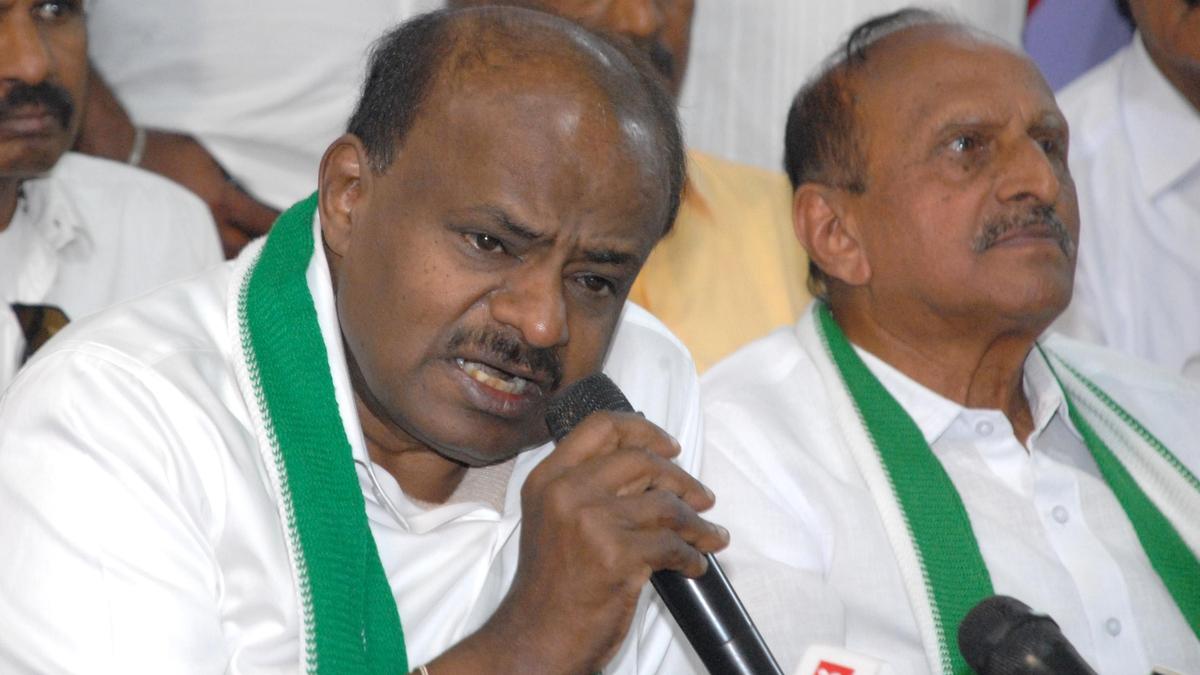
Background of the Ballari incident
The Ballari incident, which has triggered political outrage, reportedly involved serious allegations that have shaken public confidence in governance and policing. While the government has maintained that due process is being followed, the opposition has questioned the credibility of the investigation from the outset. The incident has drawn attention not only because of its gravity but also because of the region’s history of politically sensitive cases and allegations of misuse of power.
Kumaraswamy noted that Ballari has long been associated with controversial episodes involving mining, political patronage, and administrative complicity. He argued that this historical context made it even more crucial to ensure transparency and independence in the current investigation. “People of Ballari and the State deserve to know the truth, not a watered-down version shaped by political convenience,” he said.
Alleged attempts to dilute the case
The JD(S) leader accused the government of attempting to dilute the seriousness of the case by controlling the narrative and limiting the scope of investigation. He alleged that initial charges were being softened and that key questions were being avoided by the authorities. According to him, there was a visible reluctance to probe the role of influential individuals who may have been involved either directly or indirectly.
Kumaraswamy claimed that officers who initially acted with integrity were either sidelined or pressured, while others were instructed to toe the official line. “This pattern is not new. We have seen it repeatedly whenever the truth threatens those in power,” he said, warning that such actions would erode public trust in institutions meant to uphold justice.
Demand for accountability at the highest level
Emphasising that responsibility could not stop at lower-level officials, Kumaraswamy demanded accountability from senior bureaucrats and political leaders. He questioned why ministers concerned had not made clear, unambiguous statements condemning the incident and assuring strict action. Silence, he said, was itself a form of complicity.
He also demanded that the Chief Minister clarify the government’s position on a CBI inquiry and explain why it was hesitant to hand over the case if it had nothing to hide. “If the government is confident about its integrity, it should welcome an independent probe. Resistance only strengthens suspicion,” Kumaraswamy said.
Political reactions and counter-allegations
The demand for a CBI inquiry has intensified political confrontation in the State, with opposition parties rallying around the issue and the ruling party dismissing the allegations as politically motivated. Leaders from the Congress have accused Kumaraswamy of attempting to score political points by sensationalising the incident. They have maintained that the State police are capable of conducting a fair investigation and that calling for a CBI probe at this stage is unnecessary.
Government representatives have argued that the demand for a central agency probe undermines the credibility of State institutions. They have also pointed out that CBI inquiries are often time-consuming and do not automatically guarantee faster or better outcomes. However, opposition leaders counter that credibility, not speed, is the primary concern in a case of this nature.
H.D. Kumaraswamy’s demand for a CBI inquiry into the Ballari incident has transformed the case into a major political flashpoint in Karnataka. By accusing the government of shielding the accused, he has questioned not only the integrity of the investigation but also the broader commitment of the administration to justice and accountability. As political rhetoric intensifies and public attention grows, the government faces a critical test. Its response will determine whether the controversy subsides or escalates into a larger confrontation over institutional credibility and the rule of law.
JD(S) plans statewide agitation
Kumaraswamy announced that his party would launch a statewide agitation if the government continued to resist the demand for a CBI inquiry. He said the JD(S) would mobilise public opinion through protests, memoranda, and awareness campaigns to highlight what it described as an attempt to suppress the truth. The party, he said, would also raise the issue in the Legislature and seek intervention from the Governor if necessary.
According to Kumaraswamy, public pressure was essential to ensure justice. “When governments fail to act, it is the responsibility of the opposition and civil society to speak up. We will not allow this issue to be buried,” he declared.
Impact on governance and public trust
The controversy has once again brought into focus concerns about governance and accountability in Karnataka. Analysts note that repeated allegations of cover-ups and selective investigations have contributed to growing public cynicism. The Ballari incident, they say, has become a test case for the government’s commitment to transparency and the rule of law.
Legal experts have pointed out that while a CBI inquiry is not a panacea, it can help restore public confidence in cases where State agencies are perceived to be compromised. They also caution, however, that political consensus and judicial oversight are crucial to ensure that such probes are not derailed by jurisdictional conflicts or bureaucratic delays.
Historical context of CBI probes in Karnataka
Karnataka has witnessed several high-profile CBI investigations in the past, particularly in cases involving corruption, mining irregularities, and custodial violence. Some of these probes have led to convictions, while others have dragged on for years without conclusive outcomes. Kumaraswamy himself has, in the past, both supported and criticised CBI inquiries depending on the circumstances, a fact highlighted by his political opponents.
Addressing this criticism, Kumaraswamy said his demand was based on the seriousness of the allegations and the apparent conflict of interest in the current investigation. “This is not about politics. This is about justice. When the system fails, extraordinary measures are required,” he said.
Government’s defence and official stance
The State government has maintained that it is committed to a thorough and unbiased investigation. Senior officials have stated that all evidence is being examined and that no one will be spared if found guilty. They have also urged opposition leaders not to prejudge the outcome or demoralise investigating officers through public statements.
However, critics argue that such assurances have become routine and often fail to translate into concrete action. They point to previous cases where initial promises of strict action faded over time, leaving victims and their families disillusioned.
Voices from Ballari
Residents of Ballari have expressed mixed reactions to the political developments. While some welcomed Kumaraswamy’s demand for a CBI probe, others expressed fatigue over prolonged political battles that, they fear, may not bring tangible results. Several local activists said what the region needed was swift justice and systemic reforms to prevent similar incidents in the future.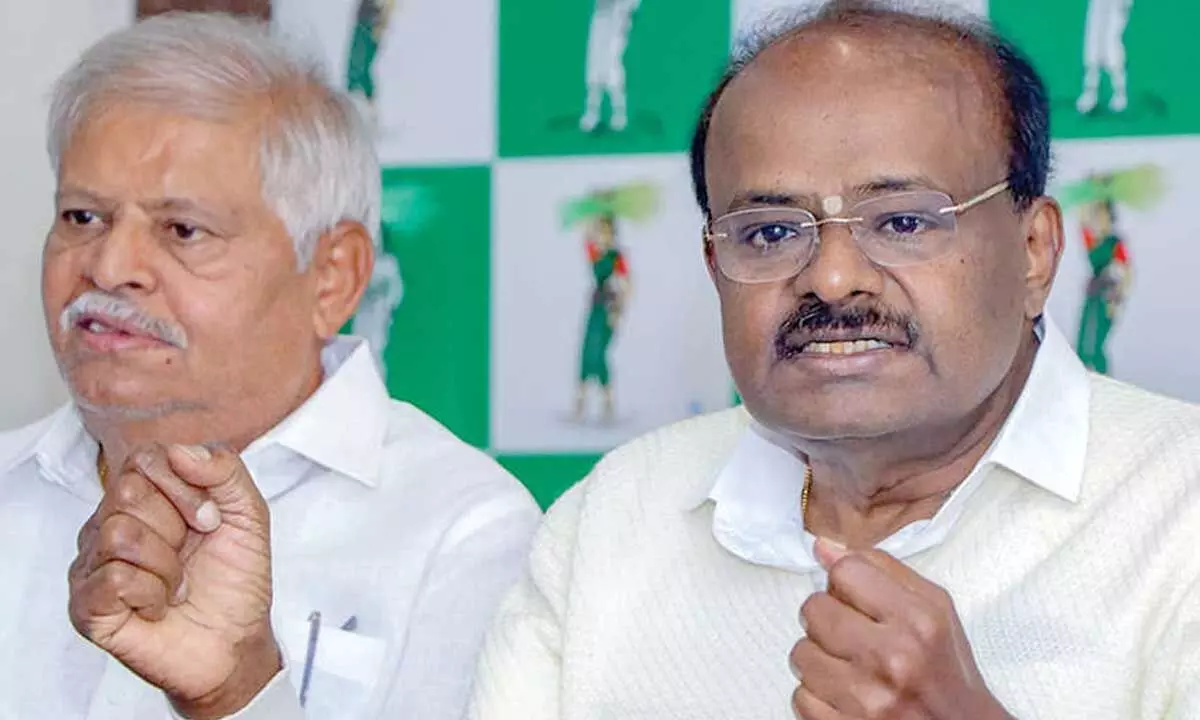
Families affected by the incident have reportedly demanded clarity and transparency from the authorities. They have called for regular updates on the progress of the investigation and protection from any form of intimidation. Civil society groups have also urged the government to prioritise victims’ rights over political considerations.
Legal possibilities and the road ahead
Legal experts say that the decision to hand over a case to the CBI can be taken either by the State government or directed by the courts. If the government refuses, opposition parties or affected individuals may approach the High Court seeking judicial intervention. Such a move could further intensify the political and legal battle surrounding the case.
For now, the Ballari incident remains at the centre of a growing political storm. Kumaraswamy’s demand has added pressure on the government at a time when it is already facing scrutiny on multiple fronts. Whether the government agrees to a CBI inquiry or continues with the State-led investigation will likely shape the political narrative in the coming weeks.
Conclusion
H.D. Kumaraswamy’s demand for a CBI inquiry into the Ballari incident has transformed the case into a major political flashpoint in Karnataka. By accusing the government of shielding the accused, he has questioned not only the integrity of the investigation but also the broader commitment of the administration to justice and accountability. As political rhetoric intensifies and public attention grows, the government faces a critical test. Its response will determine whether the controversy subsides or escalates into a larger confrontation over institutional credibility and the rule of law.
Follow: Karnataka Government
Also read: Home | Channel 6 Network – Latest News, Breaking Updates: Politics, Business, Tech & More
