
Karnataka Pradesh Congress Committee president and Deputy Chief Minister D.K. Shivakumar on Tuesday sought to downplay speculation surrounding leadership change in the State, asserting that the Congress high command would take a call at an “appropriate time.” His remarks come amid persistent political chatter, opposition attacks and internal discussions within the ruling party about stability, succession and the future course of governance in Karnataka. While reiterating his loyalty to the party and its collective leadership, Shivakumar’s statement has once again brought the issue of leadership to the centre of political discourse in the State.
Senior party functionaries have indicated that managing perceptions within the organisation is as important as managing governance. With a large number of newly elected legislators and ministers, the leadership is conscious that uncertainty over the future could affect morale. As a result, efforts are being made to keep communication channels open and ensure that party workers remain focused on organisational strengthening rather than internal speculation.
There is also an awareness within the Congress that public patience with political drama is limited. Voters who delivered a decisive mandate expect stability and delivery, not constant debate over leadership equations. Analysts point out that prolonged leadership chatter, even if unfounded, can distract from policy messaging and give the opposition space to question the government’s seriousness.
As the government settles into its term, the leadership question is likely to resurface periodically, driven by political cycles and external commentary. For now, Shivakumar’s assertion reflects a strategic pause rather than a resolution. How long this pause lasts, and how decisively the party addresses the issue when the time comes, will be crucial in shaping both internal cohesion and public confidence in the Congress government.
Speaking to reporters, Shivakumar made it clear that decisions regarding leadership are not taken in public forums or through media debates. He emphasised that the Congress is a disciplined organisation where the high command’s word is final. “We will wait. The high command knows everything and will call us at the appropriate time,” he said, adding that his focus remains on governance, party organisation and fulfilling promises made to the people.
The comments assume significance against the backdrop of repeated statements by opposition leaders, particularly the BJP and JD(S), who have sought to project instability within the Congress government. They have frequently alleged differences between Chief Minister Siddaramaiah and Shivakumar, claiming that a power struggle is brewing behind the scenes. Congress leaders, however, have consistently dismissed such claims as politically motivated attempts to weaken the government.
Shivakumar also underscored that the government enjoys the full confidence of the party leadership in Delhi. He pointed out that the Congress had come to power with a strong mandate and that its priority was to deliver on governance and welfare rather than indulge in speculation. According to him, internal discussions within the party are normal and should not be misconstrued as signs of discord.
The leadership issue has been a recurring theme since the Congress returned to power in Karnataka. While Siddaramaiah assumed office as Chief Minister, Shivakumar, who played a key role in the party’s electoral victory, took charge as Deputy Chief Minister and KPCC president. This arrangement, while stabilising in the immediate aftermath of the election, has continued to fuel questions about the future leadership trajectory of the party in the State.
Political observers note that Shivakumar’s measured response reflects an attempt to strike a balance between asserting his position and avoiding open confrontation. By repeatedly invoking the authority of the high command, he appears keen to signal loyalty while keeping his political options open.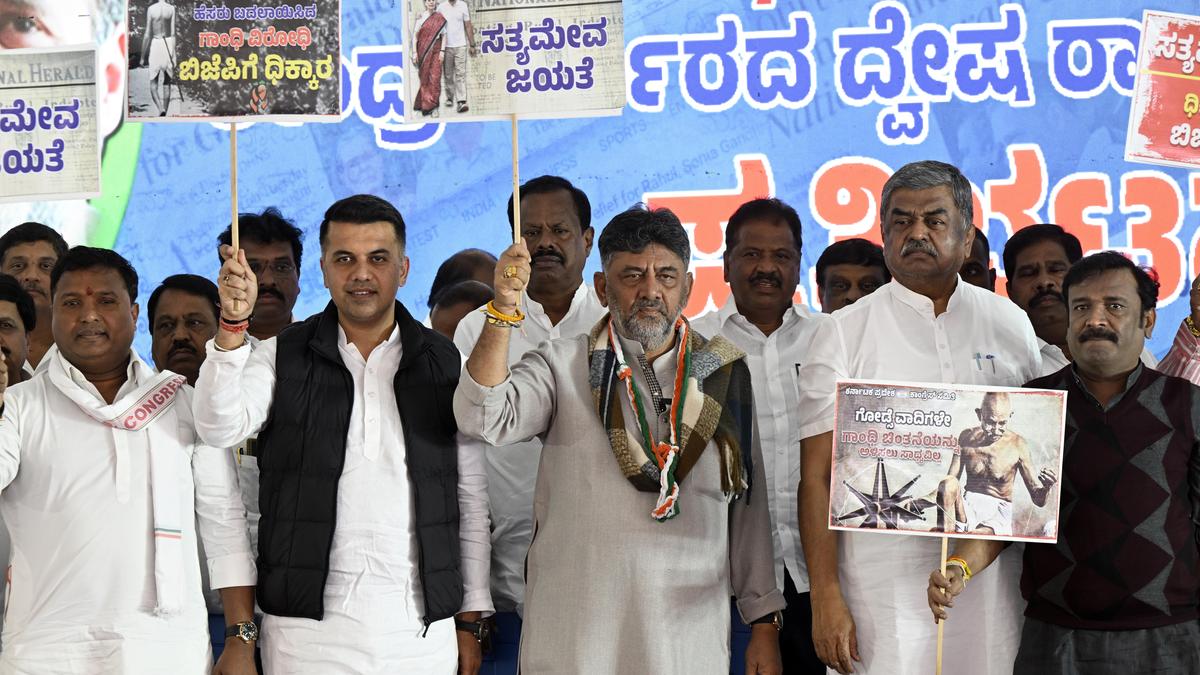
Balancing Governance and Political Speculation
Shivakumar used the opportunity to stress that governance, not leadership speculation, remains the government’s primary concern. He said the Congress government has been implementing its guarantees and development programmes despite financial and administrative challenges. According to him, the people of Karnataka are more interested in outcomes than internal political debates.
He pointed out that schemes related to social welfare, infrastructure development and administrative reforms are progressing steadily. “Our responsibility is to govern well. People did not vote for us to fight among ourselves. They voted for change and stability,” he said, adding that the government’s performance would speak for itself.
Shivakumar also highlighted the importance of collective leadership within the party. He said decisions are taken after consultations with ministers, legislators and party workers, ensuring that diverse voices are heard. This, he argued, is a strength rather than a weakness of the Congress.
The Deputy Chief Minister dismissed suggestions that differences between senior leaders were affecting administration. He said coordination between the Chief Minister, Cabinet colleagues and party leadership remains strong. “We meet regularly, discuss issues and take decisions in the interest of the State,” he said, insisting that there is no paralysis or confusion within the government.
He also took a swipe at the opposition for attempting to distract the government through constant criticism. According to him, the BJP, having lost power, is struggling to come to terms with its defeat and is therefore resorting to speculation and allegations. “They have no real issues to raise, so they keep talking about leadership,” he said.
Within the Congress, leaders have echoed Shivakumar’s stance, maintaining that the government is stable and united. Several ministers have publicly stated that both Siddaramaiah and Shivakumar are working in tandem and that the party is stronger because of this partnership. They argue that the Congress’s internal mechanisms are robust enough to handle differences without affecting governance.
However, political analysts note that leadership questions are unlikely to disappear entirely. Karnataka has a history of leadership tussles, and the Congress itself has experienced factionalism in the past. While the current arrangement has so far held, the timing and manner of any future decision by the high command will be crucial in determining the party’s trajectory.
Shivakumar’s insistence on waiting for the high command is seen as an attempt to prevent premature debates. By refusing to be drawn into specifics, he aims to project calm and confidence, even as speculation continues outside.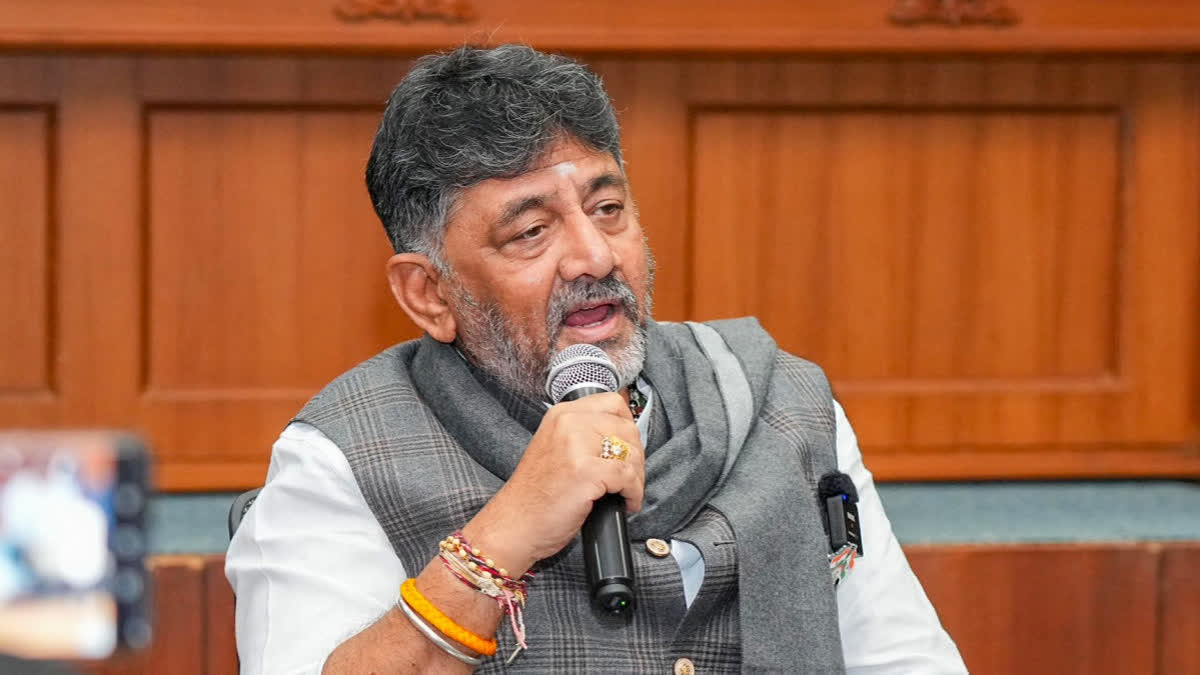
High Command, Power Sharing and the Road Ahead
The repeated reference to the “high command” reflects the centralised decision-making structure of the Congress. In Karnataka, as in several other States, major leadership decisions are ultimately taken by the party’s national leadership. Shivakumar’s statement reinforces this tradition, signalling that no unilateral move will be made at the State level.
Sources within the party say that the leadership in Delhi is closely monitoring the situation in Karnataka. Performance, public perception and political stability are expected to be key factors in any future decision. For now, the emphasis appears to be on ensuring that the government completes its full term without disruption.
The issue of power sharing has been a sensitive one. While there has been no official announcement regarding any rotation of leadership, speculation has persisted about possible changes mid-term. Congress leaders, however, have consistently refused to comment on timelines or arrangements, reiterating that such matters are internal.
Shivakumar’s political journey adds another layer of complexity. As a powerful organiser with strong grassroots support, particularly in southern Karnataka, he is widely seen as a potential Chief Ministerial candidate. At the same time, Siddaramaiah remains a mass leader with a strong social base and administrative experience. Managing the ambitions and expectations of both leaders is a delicate task for the party high command.
Party insiders suggest that the Congress is keen to avoid the mistakes of the past, where leadership changes led to instability and loss of public trust. The emphasis, therefore, is on unity and continuity. Shivakumar’s public posture of patience and loyalty aligns with this approach.
Opposition parties, however, continue to exploit the issue. The BJP has repeatedly claimed that there is an unspoken power-sharing agreement and that tensions are inevitable. The JD(S) has also sought to position itself as a stable alternative by highlighting alleged Congress infighting. These narratives, while denied by the Congress, keep the leadership issue alive in public discourse.
Civil society and political commentators have urged the ruling party to focus on transparency and communication. While internal discussions are a party’s prerogative, prolonged ambiguity can sometimes fuel rumours and uncertainty. Clear messaging, they argue, is essential to maintain public confidence.
For now, Shivakumar’s statement serves as a holding line. By emphasising trust in the high command and commitment to governance, he seeks to reassure party workers, legislators and the public. Whether this approach will be sufficient to quell speculation remains to be seen.
As Karnataka navigates complex challenges ranging from economic pressures to social welfare delivery, political stability will be closely watched. The leadership issue, though internal to the Congress, has wider implications for governance and policy continuity.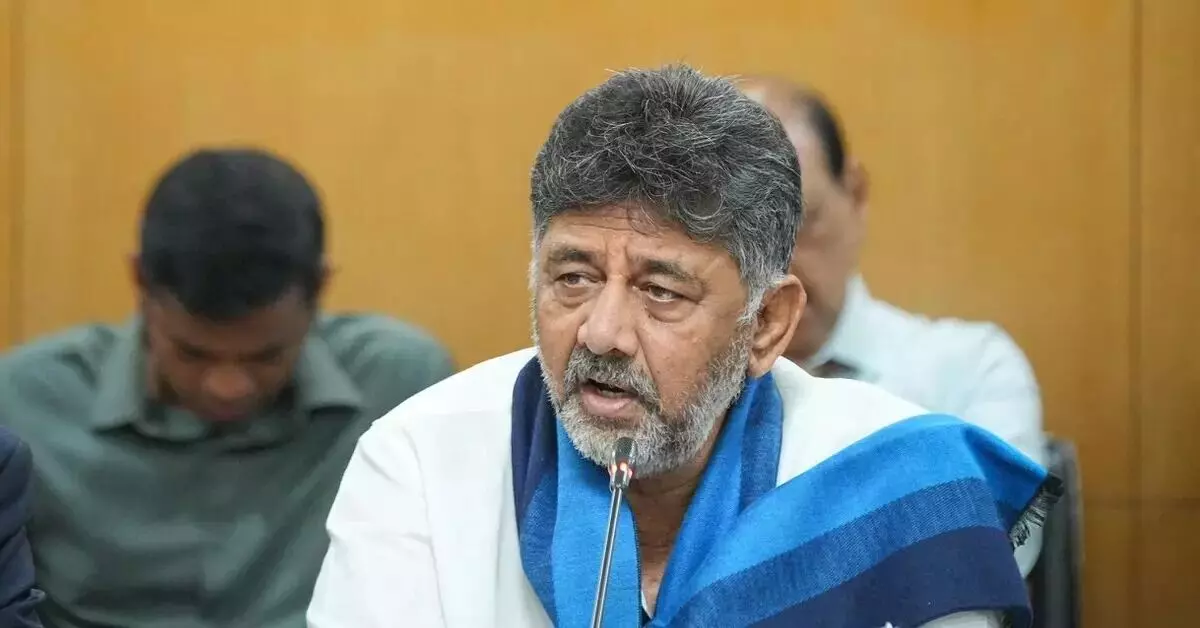
In the coming months, much will depend on how the Congress manages expectations within its ranks and communicates its intentions. Shivakumar’s words suggest a willingness to wait and abide by collective decisions. “The high command will call us at an appropriate time,” he said, a phrase that encapsulates both patience and anticipation.
Until that call comes, the Congress leadership in Karnataka appears determined to project unity and focus on administration. Whether this balance can be maintained amid constant scrutiny will shape not only the party’s future but also the political landscape of the State.
Follow: Karnataka Government
Also read: Home | Channel 6 Network – Latest News, Breaking Updates: Politics, Business, Tech & More
