Saturday, November 8, 2025
Home Blog

SIR-linked Death Count in Bengal Rises to Ten: Voter List Stress Sparks Anxiety, Protests and Political Outcry Across West Bengal

SIR-linked Death Count in Bengal Rises to Ten: The ongoing Special Intensive Revision (SIR) of voter lists in West Bengal has taken a grim turn, as families of two more deceased residents have claimed their loved ones died under psychological stress triggered by the process — raising the SIR-linked death count in Bengal to ten.

The controversy surrounding the SIR has deepened political tensions, inflamed public sentiment, and exposed the emotional cost of bureaucratic processes that many voters neither fully understand nor trust. The Election Commission of India (ECI), responsible for overseeing the voter roll revision, now faces mounting questions about communication, sensitivity, and human safety during mass enumeration drives.


The Two Latest Deaths Fuel Fears in Rural Bengal

In South 24 Parganas’ Kulpi block, 45-year-old Shahabuddin Paik reportedly collapsed after learning that both his and his wife’s names were missing from the 2002 base voter list used for verification under the SIR process. His family says he had been “visibly anxious” for days, repeatedly visiting the local office to understand why his name had vanished.

“He was scared. He kept saying if our names were not there, we would lose our rights as voters,” said a close relative. “He couldn’t sleep properly for a week.”

A similar tragedy unfolded in Birbhum’s Sainthia municipality, where Biman Pramanik, a 52-year-old shop owner, died following a heart attack after days of panic over a spelling error in his surname. His family alleged that he had become consumed by fear that the discrepancy would render him ineligible to vote.

The two deaths have added to a growing list of fatalities across districts like Howrah, Hooghly, and Murshidabad, where relatives have also cited “voter list stress” as the trigger for sudden cardiac arrests or suicides.


Understanding the SIR: What’s at Stake

The Special Intensive Revision (SIR) of electoral rolls is an exercise initiated by the Election Commission of India under Section 21 of the Representation of the People Act, 1950, and the Registration of Electors Rules, 1960.

It aims to clean up electoral rolls, remove duplicates, correct entries, and ensure that only eligible voters remain listed. However, the use of older reference lists — especially the 2002 roll — has caused confusion. Many voters are unable to find their names or are asked to produce proof linking them to that period, leading to widespread anxiety and misinformation.

📎 External official references:


The Growing Toll: Ten Deaths Across Six Districts

With the latest two incidents, West Bengal’s SIR-linked death count has reached ten, spanning districts such as Birbhum, South 24 Parganas, Hooghly, Howrah, Nadia, and Murshidabad.

Common threads run through these tragedies:

  • Missing or misspelled names in the 2002 reference list.
  • Confusion about eligibility.
  • Lack of proper communication from booth-level officers (BLOs).
  • Anxiety over being labelled “non-voter” or “outsider.”

In some cases, relatives reported that local officials failed to provide clear answers, while others described frantic visits to multiple government offices with no resolution.

“Every form he filled seemed to raise more questions. He felt cornered,” said a widow from Hooghly, whose husband died days after receiving an SIR verification notice.


Political Fallout: Trinamool and Opposition Lock Horns

The issue has sparked a fierce war of words between the Trinamool Congress (TMC) and opposition parties.

The ruling TMC has accused the Election Commission of conducting the process “in an atmosphere of fear and confusion.” Senior leaders claimed that “innocent people are dying due to administrative apathy.”

A TMC district leader from Birbhum said,

“When governance becomes heartless, even a voter list can kill. People are terrified of losing their identity.”

On the other hand, opposition figures — including representatives of the Bharatiya Janata Party (BJP) and Congress — have accused the TMC of “politicising tragedy” and spreading misinformation.

A senior opposition spokesperson stated:

“The SIR process is a standard legal procedure. Instead of calming people, the ruling party is fuelling panic for electoral gains.”

Amid this political tug-of-war, families of the deceased continue to demand accountability and counselling support for affected citizens.


Administrative Response: ECI’s Clarifications

The Election Commission of India has denied any wrongdoing or negligence. Officials have stressed that no citizen would be removed from the voter list without due process.

A senior ECI officer said:

“The SIR is designed to strengthen democracy, not exclude anyone. Every eligible voter has the right to submit claims and objections through Form 6 and related documents.”

To address the crisis, the ECI has instructed district administrations to:

  • Establish help desks at every polling booth.
  • Conduct awareness drives clarifying that absence from the 2002 list does not mean exclusion.
  • Extend verification deadlines.
  • Offer assistance for elderly and illiterate citizens during form filling.

However, many argue that the damage has already been done. The fear, once spread, is proving hard to contain.


Psychological Impact: When Bureaucracy Triggers Trauma

Mental health professionals have drawn attention to the growing psychological toll of the SIR process, particularly among older and rural populations.

Psychologist Dr Sutapa Roy, based in Kolkata, notes:

“Many people equate their name on the voter list with belonging. When they perceive that their identity is at risk, it triggers intense anxiety, insomnia, and in extreme cases, cardiac events.”

Local NGOs working in the districts have urged the administration to deploy counselling teams and public reassurance campaigns in affected communities.


Socio-Political Context: Fear of Exclusion Runs Deep

The anxiety over the SIR process echoes earlier controversies surrounding the National Register of Citizens (NRC) and citizenship documentation debates.

Although the ECI has clarified that SIR has no connection with citizenship verification, the memory of NRC-related distress in neighbouring Assam has left a deep psychological scar.

For many, especially in border districts, the mere idea of being labelled “ineligible” carries fears of social exclusion, economic vulnerability, and bureaucratic harassment.


Voices from the Ground

Residents across several districts expressed similar emotions — confusion, fear, and frustration.

“We don’t understand these forms. People are saying if your name isn’t there, you’ll lose your rights,” said a voter in Cooch Behar.

“They came asking for documents from 2002. My father wasn’t even alive then,” said a young man from Hooghly.

“My wife fainted when she saw our names missing. We feel punished for no reason,” said a daily-wage worker in Murshidabad.

Community leaders have urged the administration to focus on communication, not just verification.


Experts Call for Procedural Reforms

Several election analysts and policy experts have emphasised the need for more transparent, empathetic voter roll revision methods.

Key recommendations include:

  1. Clear public instructions in regional languages explaining that absence from older rolls does not imply loss of voting rights.
  2. Helpline numbers at ward and block levels with multilingual support.
  3. Simplified digital tools to verify electoral status online.
  4. Psychosocial support for communities reporting panic incidents.
  5. Regular public bulletins clarifying procedural safeguards.

📎 External institutional links for reforms & voter support:


Field Challenges: Lack of Clarity at Local Level

Ground reports indicate that booth-level officers (BLOs) are themselves struggling with unclear instructions and heavy workloads. Many areas face shortages of trained staff, miscommunication over forms, and logistical hurdles such as power outages or unavailability of updated voter data.

In remote areas, paper-based verification has replaced digital checks, leading to further errors and duplication. Villagers often depend on hearsay or rumours rather than official guidance.

“Our BLOs are overworked and under-trained,” said a district officer from North Bengal. “Without clear directives and communication tools, confusion is inevitable.”


Human Rights Perspective: A Matter Beyond Politics

Civil rights groups in Kolkata and Siliguri have urged that the SIR deaths be recognised as “administrative stress casualties.” They argue that while electoral integrity is vital, it cannot come at the cost of human life.

Legal observers point out that Article 21 of the Indian Constitution, which guarantees the right to life and dignity, extends to protection from bureaucratic harm.

A rights activist commented:

“No administrative process, however legitimate, should end in despair or death. These tragedies highlight how governance must become humane.”


The Road Ahead: Balancing Accuracy and Humanity

As the SIR continues through its next phases, the state government has announced intensified public awareness drives in collaboration with district magistrates and local bodies.

Efforts include:

  • Street campaigns explaining the revision process.
  • Audio messages in local languages through loudspeakers.
  • Ward-level grievance camps for corrections and clarifications.

Meanwhile, the Election Commission has stated that final rolls will be published only after all objections are resolved, ensuring that no genuine voter is left out.

However, opposition leaders remain sceptical, warning that unless the communication gap is closed, “fear may claim more lives than the process saves.”


Public Reaction: From Silence to Outrage

Social media platforms have seen an outpouring of anger and empathy under hashtags such as #BengalSIRDeaths and #RightToVoteLivesMatter.

Citizens are calling for accountability and urging authorities to implement safety nets for psychological distress during such drives. Civil society organisations have demanded an independent audit into all SIR-related deaths to ensure transparency.

“If people die because they fear their names are missing, we’ve failed as a democracy,” wrote one user in a viral post.


SIR-linked Death Count in Bengal Rises to Ten: Restoring Trust in the System

The SIR-linked death count in Bengal has become more than a statistic; it’s a mirror reflecting the fragile relationship between citizens and institutions.

For decades, India’s democracy has prided itself on its inclusive voter base — a system where every citizen, regardless of wealth or caste, holds an equal right to vote. Yet, the unfolding crisis in Bengal shows how that very right can turn into a source of fear when communication fails and empathy disappears from administration.

To rebuild trust, authorities must go beyond procedural correctness and embrace transparency, education, and emotional intelligence. The deaths in Bengal are not merely administrative footnotes; they are a call for reform, compassion, and clarity — before the next name lost on paper becomes another life lost in reality.


🔗 External Reference Links (for verification and context)

  1. Election Commission of India – Official Site: https://eci.gov.in
  2. National Voters’ Service Portal (NVSP): https://www.nvsp.in
  3. CEO West Bengal – Electoral Roll Access: https://ceowestbengal.nic.in
  4. Representation of the People Act, 1950 (PDF): https://legislative.gov.in/sites/default/files/A1950-43.pdf
  5. Registration of Electors Rules, 1960: https://eci.gov.in/files/file/6913-registration-of-electors-rules-1960/
  6. Right to Information Act, 2005 – Transparency in Electoral Administration: https://rti.gov.in

Also read: Home | Channel 6 Network – Latest News, Breaking Updates: Politics, Business, Tech & More

Sonagachi Sex Workers Fear Exclusion in Voter Roll Update Amid Special Summary Revision: Anxiety Grows Over Electoral Inclusion in Kolkata’s Red-Light District

Sonagachi Sex Workers Fear: In the heart of North Kolkata, where neon lights flicker above narrow lanes and conversations blend into the rhythm of survival, an unusual kind of anxiety is spreading. Hundreds of women working in Sonagachi, India’s largest red-light district, say they fear being left out of the latest voter roll update under the Special Summary Revision (SSR) 2025.

The concern stems from recent reports that many names from the locality are either missing or flagged for verification during the ongoing revision process by the Election Commission of India (ECI).

For the residents of Sonagachi, inclusion in the voter list is not just about elections — it is about recognition, rights, and identity in a society that often chooses to look away.


Sonagachi Sex Workers Fear: What Triggered the Concern

According to field reports and testimonies gathered by NGOs working in the area, the “special summary revision” — a nationwide electoral roll update drive — has created fresh apprehension among the local community of sex workers.

Many have claimed that their names, once registered, have been marked as “doubtful voters” or removed because of address mismatches, lack of documentation, or unverified identity proofs.

“We voted in the last election. We even showed our voter cards during health camps. Now, suddenly our names are not showing up,”
said Rekha (name changed), a sex worker who has lived in Sonagachi for over a decade.
“If we lose this, we lose our voice.”

External Reference: Election Commission of India – Special Summary Revision


Sonagachi: A Complex Urban Demographic

Sonagachi, located near Chitpur in North Kolkata, houses an estimated 10,000 to 12,000 sex workers, alongside thousands of dependents, small shopkeepers, and support workers.

It is not merely a red-light area but a dense socio-economic community with micro-economies, health initiatives, and local governance structures. The Durbar Mahila Samanwaya Committee (DMSC) — a prominent collective of sex workers — has been vocal in ensuring civic rights, healthcare, and identity recognition for its members.

Yet, despite decades of advocacy, identity documentation remains a chronic challenge.


Why the Voter Roll Update Matters

Inclusion in the electoral roll ensures not just the right to vote but also access to government welfare schemes, including healthcare, rations, and housing programs.
For sex workers — often migrants without permanent proof of residence — this inclusion symbolizes state recognition of their citizenship.

External Reference: Ministry of Women and Child Development, Government of India

Many women fear that if their names are dropped from the roll now, reinstating them could take months — effectively disenfranchising them before the next Lok Sabha election.


The Process and Pitfalls of the Special Summary Revision

The Special Summary Revision (SSR) allows eligible citizens to register, delete, or correct entries in the voter list annually.
However, officials often rely on door-to-door verification and residential proof, which becomes problematic in places like Sonagachi, where residents may not have tenancy papers or official address validation.

“Enumerators often ask for documents like rent receipts or utility bills, which most of our women don’t have because they live in shared or informal accommodations,”
explained Bharati Dey, secretary of the DMSC.
“Some are migrants from other states or Bangladesh. They live here for years but are denied recognition as residents.”


Fear of Social Stigma During Verification

Several sex workers reported that door-to-door verification teams hesitate to visit Sonagachi, citing safety and social discomfort.
As a result, whole clusters of addresses remain “unverified”, leading to mass deletion of names from the rolls.

“Our lanes are marked red-light, so some officials avoid coming,” said Lata, another resident. “We are treated as if our votes don’t count.”

Local NGOs have demanded gender-sensitive training for electoral officers, arguing that exclusion based on social stigma violates constitutional equality.

External Reference: National Human Rights Commission (NHRC)


Ground Realities: Identity vs. Legitimacy

In Sonagachi, the boundary between resident and migrant, citizen and undocumented worker, often blurs. Many sex workers come from rural Bengal, Bihar, Jharkhand, and even across the border from Bangladesh.

Those who have lived for years in Kolkata still struggle to get documents reflecting their current address. Without it, their names risk deletion.

“We have Aadhaar cards but not always with this address,” said Meena (name changed). “If we change it, we need a landlord’s signature — and most of them refuse because they don’t want to be linked with our profession.”

External Reference: UIDAI – Address Update Guidelines


DMSC’s Role and Appeal to Election Commission

The Durbar Mahila Samanwaya Committee has submitted a written appeal to the Chief Electoral Officer (CEO), West Bengal, demanding special verification camps within Sonagachi.

They have proposed on-site registration drives, allowing sex workers to self-declare their residence with NGO or peer verification, similar to methods used in refugee and migrant settlements.

“The Election Commission must adopt an inclusive verification model,” said Dr. Smarajit Jana, DMSC founder and public health expert.
“Citizenship cannot be tied to morality or permanent property ownership. Every adult woman here is an Indian citizen unless proven otherwise.”


The Legal and Constitutional Perspective

Under Article 326 of the Indian Constitution, every Indian citizen aged 18 or above has the right to vote.
However, procedural barriers — particularly residential proof requirements — have systematically excluded marginalized groups like migrant workers, homeless citizens, and sex workers.

Legal experts argue that the denial of voter registration due to address instability contradicts the spirit of universal adult franchise.

“The right to vote is fundamental to equality before law,” said Advocate Anindita Ghosh, a human rights lawyer in Kolkata.
“If the state can issue Aadhaar and PAN cards to individuals based on biometric identity, it cannot deny their right to vote on technical grounds.”

External Reference: Election Laws (Amendment) Act, 2021 – India Code


Socio-Political Implications: Voice and Visibility

Historically, sex workers have been politically invisible, despite their large numbers and economic contribution.
Inclusion in the voter list offers not just a democratic right but a tool of empowerment — to demand better sanitation, healthcare, and protection from police harassment.

“Voting makes us citizens in our own eyes,” said Shampa, a peer educator with the DMSC. “It’s our way to say — we exist.”

Political analysts say such exclusions weaken democratic inclusivity and can distort local electoral representation in densely populated urban wards.


The Challenge of Data Mismatch

Another issue plaguing Sonagachi residents is data mismatch between Aadhaar, voter ID, and ration card records.
In many cases, slight spelling differences or incomplete addresses cause records to be flagged as invalid.

These technical errors disproportionately affect those who cannot read or access online correction portals.

External Reference: Voter Helpline App – Election Commission of India


Government Response: Officials Deny Intentional Exclusion

When contacted, a senior officer at the Chief Electoral Office, West Bengal, said there is “no policy of discrimination.”
He added that special measures are being taken to include all eligible citizens.

“We are aware of the difficulties faced in certain areas like Sonagachi. Field verification will continue till November end, and all genuine voters will be reinstated,” the officer said.

Despite the assurance, local activists say implementation on the ground remains inconsistent.


Activism and Legal Mobilization

Several NGOs, including the DMSC, AIDWA, and Swayam, are planning to submit a joint memorandum to the Election Commission of India demanding inclusive voter verification in high-stigma areas.

They have also reached out to the National Human Rights Commission (NHRC) for intervention under Section 12(a) of the Protection of Human Rights Act, 1993.

External Reference: Protection of Human Rights Act, 1993 – India Code


Past Instances of Exclusion

This is not the first time sex workers in Sonagachi have faced disenfranchisement.
In 2014, several names were dropped from rolls after an administrative reshuffle. It took nearly two years and multiple petitions for the women to get re-registered.

“It feels like we have to prove we are human every five years,” said Kajal, a senior member of the DMSC.


Expert Views: Towards Inclusive Citizenship

Public policy experts suggest the Election Commission should collaborate with community-based organizations to bridge the verification gap.
A hybrid model involving biometric data and community witness verification could ensure accuracy while upholding inclusion.

“When marginalized citizens are systematically left out, it questions the integrity of democracy itself,” said Dr. Abhirup Bhattacharya, a political sociologist at Jadavpur University.

External Reference: Jadavpur University – Department of Political Science


Digital Solutions and Future Outlook

The Election Commission’s new initiative, ‘One Nation, One Voter ID’, aims to link voter IDs with Aadhaar to eliminate duplication.
However, civil rights groups caution that without strong privacy safeguards and ground-level training, such integration could worsen exclusion for vulnerable communities.

“Technology cannot replace human sensitivity,” said Bharati Dey. “We need empathy in administration, not just apps.”

External Reference: UIDAI Aadhaar-Voter Link Guidelines


Community Mobilization: Awareness Drives in Sonagachi

Over the past month, peer educators and social workers have been conducting voter awareness drives in the narrow lanes of Sonagachi.
They help residents check their enrollment status on ECI portals and assist with form-filling.

The DMSC has even set up a “Voter Help Desk” at its central office, helping women submit Form 6 and Form 8 applications online.

“We don’t want sympathy; we want paperwork,” said Rupali, who coordinates the initiative. “Our names must stay on the list — because our lives are on it.”


Public Sentiment: Identity and Dignity

Beyond bureaucracy, the issue touches something deeper — the struggle for dignity.
For women who have long been stigmatized, holding a voter card means belonging to the democratic mainstream.

“We are citizens of India. If our votes are valid, our lives are valid too,” said Anita, a senior DMSC member.


Conclusion: Democracy Begins at the Margins

The unfolding story in Sonagachi is not just about paperwork; it is about India’s promise of equality.
As the special summary revision continues, the Election Commission faces a defining test — whether it can uphold the constitutional right to vote for even the most marginalized citizens.

Until every woman in Sonagachi finds her name on that list, the question remains:
Can democracy truly be inclusive if its most invisible citizens are left behind?


External References for Verification

Sonagachi Sex Workers Fear: In the heart of North Kolkata, where neon lights flicker above narrow lanes and conversations blend into the rhythm of survival, an unusual kind of anxiety is spreading. Hundreds of women working in Sonagachi, India’s largest red-light district, say they fear being left out of the latest voter roll update under the Special Summary Revision (SSR) 2025.

The concern stems from recent reports that many names from the locality are either missing or flagged for verification during the ongoing revision process by the Election Commission of India (ECI).

For the residents of Sonagachi, inclusion in the voter list is not just about elections — it is about recognition, rights, and identity in a society that often chooses to look away.


Sonagachi Sex Workers Fear: What Triggered the Concern

According to field reports and testimonies gathered by NGOs working in the area, the “special summary revision” — a nationwide electoral roll update drive — has created fresh apprehension among the local community of sex workers.

Many have claimed that their names, once registered, have been marked as “doubtful voters” or removed because of address mismatches, lack of documentation, or unverified identity proofs.

“We voted in the last election. We even showed our voter cards during health camps. Now, suddenly our names are not showing up,”
said Rekha (name changed), a sex worker who has lived in Sonagachi for over a decade.
“If we lose this, we lose our voice.”

External Reference: Election Commission of India – Special Summary Revision


Sonagachi: A Complex Urban Demographic

Sonagachi, located near Chitpur in North Kolkata, houses an estimated 10,000 to 12,000 sex workers, alongside thousands of dependents, small shopkeepers, and support workers.

It is not merely a red-light area but a dense socio-economic community with micro-economies, health initiatives, and local governance structures. The Durbar Mahila Samanwaya Committee (DMSC) — a prominent collective of sex workers — has been vocal in ensuring civic rights, healthcare, and identity recognition for its members.

Yet, despite decades of advocacy, identity documentation remains a chronic challenge.


Why the Voter Roll Update Matters

Inclusion in the electoral roll ensures not just the right to vote but also access to government welfare schemes, including healthcare, rations, and housing programs.
For sex workers — often migrants without permanent proof of residence — this inclusion symbolizes state recognition of their citizenship.

External Reference: Ministry of Women and Child Development, Government of India

Many women fear that if their names are dropped from the roll now, reinstating them could take months — effectively disenfranchising them before the next Lok Sabha election.


The Process and Pitfalls of the Special Summary Revision

The Special Summary Revision (SSR) allows eligible citizens to register, delete, or correct entries in the voter list annually.
However, officials often rely on door-to-door verification and residential proof, which becomes problematic in places like Sonagachi, where residents may not have tenancy papers or official address validation.

“Enumerators often ask for documents like rent receipts or utility bills, which most of our women don’t have because they live in shared or informal accommodations,”
explained Bharati Dey, secretary of the DMSC.
“Some are migrants from other states or Bangladesh. They live here for years but are denied recognition as residents.”


Fear of Social Stigma During Verification

Several sex workers reported that door-to-door verification teams hesitate to visit Sonagachi, citing safety and social discomfort.
As a result, whole clusters of addresses remain “unverified”, leading to mass deletion of names from the rolls.

“Our lanes are marked red-light, so some officials avoid coming,” said Lata, another resident. “We are treated as if our votes don’t count.”

Local NGOs have demanded gender-sensitive training for electoral officers, arguing that exclusion based on social stigma violates constitutional equality.

External Reference: National Human Rights Commission (NHRC)


Ground Realities: Identity vs. Legitimacy

In Sonagachi, the boundary between resident and migrant, citizen and undocumented worker, often blurs. Many sex workers come from rural Bengal, Bihar, Jharkhand, and even across the border from Bangladesh.

Those who have lived for years in Kolkata still struggle to get documents reflecting their current address. Without it, their names risk deletion.

“We have Aadhaar cards but not always with this address,” said Meena (name changed). “If we change it, we need a landlord’s signature — and most of them refuse because they don’t want to be linked with our profession.”

External Reference: UIDAI – Address Update Guidelines


DMSC’s Role and Appeal to Election Commission

The Durbar Mahila Samanwaya Committee has submitted a written appeal to the Chief Electoral Officer (CEO), West Bengal, demanding special verification camps within Sonagachi.

They have proposed on-site registration drives, allowing sex workers to self-declare their residence with NGO or peer verification, similar to methods used in refugee and migrant settlements.

“The Election Commission must adopt an inclusive verification model,” said Dr. Smarajit Jana, DMSC founder and public health expert.
“Citizenship cannot be tied to morality or permanent property ownership. Every adult woman here is an Indian citizen unless proven otherwise.”


The Legal and Constitutional Perspective

Under Article 326 of the Indian Constitution, every Indian citizen aged 18 or above has the right to vote.
However, procedural barriers — particularly residential proof requirements — have systematically excluded marginalized groups like migrant workers, homeless citizens, and sex workers.

Legal experts argue that the denial of voter registration due to address instability contradicts the spirit of universal adult franchise.

“The right to vote is fundamental to equality before law,” said Advocate Anindita Ghosh, a human rights lawyer in Kolkata.
“If the state can issue Aadhaar and PAN cards to individuals based on biometric identity, it cannot deny their right to vote on technical grounds.”

External Reference: Election Laws (Amendment) Act, 2021 – India Code


Socio-Political Implications: Voice and Visibility

Historically, sex workers have been politically invisible, despite their large numbers and economic contribution.
Inclusion in the voter list offers not just a democratic right but a tool of empowerment — to demand better sanitation, healthcare, and protection from police harassment.

“Voting makes us citizens in our own eyes,” said Shampa, a peer educator with the DMSC. “It’s our way to say — we exist.”

Political analysts say such exclusions weaken democratic inclusivity and can distort local electoral representation in densely populated urban wards.


The Challenge of Data Mismatch

Another issue plaguing Sonagachi residents is data mismatch between Aadhaar, voter ID, and ration card records.
In many cases, slight spelling differences or incomplete addresses cause records to be flagged as invalid.

These technical errors disproportionately affect those who cannot read or access online correction portals.

External Reference: Voter Helpline App – Election Commission of India


Government Response: Officials Deny Intentional Exclusion

When contacted, a senior officer at the Chief Electoral Office, West Bengal, said there is “no policy of discrimination.”
He added that special measures are being taken to include all eligible citizens.

“We are aware of the difficulties faced in certain areas like Sonagachi. Field verification will continue till November end, and all genuine voters will be reinstated,” the officer said.

Despite the assurance, local activists say implementation on the ground remains inconsistent.


Activism and Legal Mobilization

Several NGOs, including the DMSC, AIDWA, and Swayam, are planning to submit a joint memorandum to the Election Commission of India demanding inclusive voter verification in high-stigma areas.

They have also reached out to the National Human Rights Commission (NHRC) for intervention under Section 12(a) of the Protection of Human Rights Act, 1993.

External Reference: Protection of Human Rights Act, 1993 – India Code


Past Instances of Exclusion

This is not the first time sex workers in Sonagachi have faced disenfranchisement.
In 2014, several names were dropped from rolls after an administrative reshuffle. It took nearly two years and multiple petitions for the women to get re-registered.

“It feels like we have to prove we are human every five years,” said Kajal, a senior member of the DMSC.


Expert Views: Towards Inclusive Citizenship

Public policy experts suggest the Election Commission should collaborate with community-based organizations to bridge the verification gap.
A hybrid model involving biometric data and community witness verification could ensure accuracy while upholding inclusion.

“When marginalized citizens are systematically left out, it questions the integrity of democracy itself,” said Dr. Abhirup Bhattacharya, a political sociologist at Jadavpur University.

External Reference: Jadavpur University – Department of Political Science


Digital Solutions and Future Outlook

The Election Commission’s new initiative, ‘One Nation, One Voter ID’, aims to link voter IDs with Aadhaar to eliminate duplication.
However, civil rights groups caution that without strong privacy safeguards and ground-level training, such integration could worsen exclusion for vulnerable communities.

“Technology cannot replace human sensitivity,” said Bharati Dey. “We need empathy in administration, not just apps.”

External Reference: UIDAI Aadhaar-Voter Link Guidelines


Community Mobilization: Awareness Drives in Sonagachi

Over the past month, peer educators and social workers have been conducting voter awareness drives in the narrow lanes of Sonagachi.
They help residents check their enrollment status on ECI portals and assist with form-filling.

The DMSC has even set up a “Voter Help Desk” at its central office, helping women submit Form 6 and Form 8 applications online.

“We don’t want sympathy; we want paperwork,” said Rupali, who coordinates the initiative. “Our names must stay on the list — because our lives are on it.”


Public Sentiment: Identity and Dignity

Beyond bureaucracy, the issue touches something deeper — the struggle for dignity.
For women who have long been stigmatized, holding a voter card means belonging to the democratic mainstream.

“We are citizens of India. If our votes are valid, our lives are valid too,” said Anita, a senior DMSC member.


Conclusion: Democracy Begins at the Margins

The unfolding story in Sonagachi is not just about paperwork; it is about India’s promise of equality.
As the special summary revision continues, the Election Commission faces a defining test — whether it can uphold the constitutional right to vote for even the most marginalized citizens.

Until every woman in Sonagachi finds her name on that list, the question remains:
Can democracy truly be inclusive if its most invisible citizens are left behind?


External References for Verification

Also read: Home | Channel 6 Network – Latest News, Breaking Updates: Politics, Business, Tech & More
Bangladeshi Man Caught with Fake Voter ID, Aadhaar, and PAN Near Siliguri Army Camp Raises Major Security Concerns in North Bengal

Bangladeshi Man Caught with Fake Voter ID: A major security concern erupted in North Bengal after police arrested a Bangladeshi national working inside an army camp near Siliguri, allegedly using fake Indian identification documents including a voter ID card, Aadhaar, and PAN card. The accused, identified as Md. Rashidul Islam, was reportedly employed as a contractual labourer within the camp premises before his forged credentials were uncovered during a routine verification drive.

Authorities said the incident, which occurred at a defence installation close to Bagdogra, has triggered a detailed probe by both local police and central intelligence agencies, given the sensitive nature of the location.


Investigation Begins After Identity Verification Raises Red Flags

Officials from the Siliguri Metropolitan Police confirmed that the man had been working under a civilian contractor responsible for routine maintenance at the camp. During a scheduled background check, discrepancies were noted in his documents.

“When we cross-verified his Aadhaar and voter ID numbers, they did not match with the central database,” said a senior investigating officer, speaking on condition of anonymity. “This immediately raised suspicion. Further inquiries confirmed that the individual is originally from Thakurgaon district of Bangladesh.”

Upon verification, his documents — a voter ID issued in Jalpaiguri, an Aadhaar card bearing a Siliguri address, and a PAN card linked to a local address — were all found to be counterfeit.

External reference: Unique Identification Authority of India (UIDAI)


Documents Seized and Forensic Verification Underway

The forensic team from Darjeeling district police has taken custody of all seized documents for examination. Initial reports suggest the use of high-quality printing equipment and forged holograms, making the documents appear authentic at first glance.

“The forgery is extremely sophisticated,” said a police forensic analyst. “The texture, lamination, and QR coding closely resemble original Aadhaar materials, which makes such cases extremely challenging for on-ground verification.”

Investigators believe that the accused procured the documents through a cross-border forgery network that operates between Bangladesh and North Bengal, using digital templates and smuggled biometric data.


Sensitive Security Context: Why Siliguri Matters

The area near Siliguri is part of the strategic “Chicken’s Neck” corridor, a narrow strip connecting mainland India to its northeastern states.
The presence of a military camp and major transit points like Bagdogra Airport and the Sevoke military cantonment makes this region extremely sensitive from a national security standpoint.

External reference: Indian Army Official Website

A senior defence source described the situation as “a reminder of how internal security breaches can begin with small administrative lapses.”
The army has reportedly launched an internal audit of all civilian employees and contractors associated with its North Bengal units.


Police Statements and Arrest Details

The accused was produced before the Siliguri Chief Judicial Magistrate Court and remanded to seven days of police custody. A case has been filed under multiple sections of the Indian Penal Code, Foreigners Act, and Passport Act, 1967.

“We are coordinating with the Intelligence Bureau (IB) and Border Security Force (BSF) to trace how this individual managed to obtain these fake documents,”
said Siliguri Police Commissioner Praveen Tripathi in a press briefing.
“The fact that he gained access to a defence site under false identity papers is alarming and will be treated with utmost seriousness.”


Legal Sections Invoked

Law/Act Section Description
Indian Penal Code (IPC) 465, 468, 471 Forgery of valuable documents and using forged identification papers
Foreigners Act, 1946 Section 14 Penalty for illegal stay without valid documents
Passport Act, 1967 Section 12 Offences related to illegal possession of Indian travel documents
Information Technology Act, 2000 Section 66D Cheating by impersonation using computer resources

External reference: Passport Act, 1967 – India Code


Bangladeshi Man Caught with Fake Voter ID: Tracing the Forgery Network

Investigators have begun backtracking phone records and financial transactions linked to the accused. Preliminary findings suggest connections with a document-forgery racket operating in South Dinajpur and possibly extending into Dhaka, Bangladesh.

Cybercrime units are also checking whether the accused’s Aadhaar enrolment data was fraudulently created through an illegitimate operator terminal, as seen in earlier cases where biometric data was misused.

“Such cases expose vulnerabilities in our local enrolment ecosystems,” said a former UIDAI official who requested anonymity. “If local operators fail to follow proper KYC verification, forged identities can easily slip through.”

External reference: Election Commission of India


How the Fake IDs Were Used

Police sources indicated that the fake voter ID allowed the accused to register as a resident of Jalpaiguri district, while the Aadhaar and PAN cards gave him legitimacy for employment and banking purposes.

Investigators believe he used these forged IDs to open a salary account at a local branch, secure employment clearance from a civilian contractor linked with the Indian Army, and even register a mobile number under Indian telecom records.


Broader Security Implications for North Bengal

The incident has intensified concerns about cross-border infiltration through unfenced stretches of the Indo-Bangladesh border in Cooch Behar and Jalpaiguri.
The BSF’s North Bengal Frontier has reportedly been alerted to recheck local identity verification drives.

External reference: Ministry of Home Affairs (MHA)

A retired army intelligence officer said,

“Fake ID possession inside a camp area is not a mere forgery issue — it’s a direct internal security risk. In areas like Siliguri, where defence assets and supply routes converge, any compromised personnel could leak logistical information.”


Political Reaction and Administrative Response

The arrest quickly became a matter of political discussion across Siliguri and Kolkata. Opposition leaders demanded a thorough multi-agency probe to understand how such lapses were possible in a restricted zone.

State Home Department officials have ordered a review of all private contractors supplying labour to defence establishments. “Verification standards must be uniform and multi-layered,” said a senior official in Nabanna, the state secretariat.

Meanwhile, local residents expressed shock, saying that the accused had lived in the area for months without suspicion.

“He behaved like any other worker, spoke fluent Bengali, and participated in local community gatherings,” said Sanjay Dey, a shop owner near the camp gate. “We never imagined he wasn’t Indian.”


Background: Document Fraud and Cross-Border Crimes

The arrest highlights a recurring pattern of document forgery in border districts of Bengal, where several rackets have been busted for providing Indian IDs to Bangladeshi nationals in exchange for money.

Such frauds undermine both national security and electoral integrity, as fake voter IDs can distort official rolls.

In recent years, the Election Commission of India has tightened its Systematic Voters’ Education and Electoral Participation (SVEEP) program and encouraged digital voter verification through Voter Helpline App and EPIC cross-check portals.

External reference: Voter Helpline App (ECI)


Legal Experts Speak on the Case

Legal experts say that while such cases may appear small, they have significant legal and diplomatic dimensions.

“If a foreign national obtains Indian IDs, it’s not only a domestic criminal issue but also a violation of international visa and residency norms,” said Advocate Richa Banerjee, a Siliguri-based legal practitioner.

She added that if proven guilty, the accused could face up to seven years in prison under combined provisions of the IPC and Foreigners Act, followed by deportation proceedings coordinated by the Ministry of External Affairs.


Coordination with Central Agencies

The case has now been referred to both the Enforcement Directorate (ED) and Intelligence Bureau (IB) for deeper financial and security analysis.
The agencies are investigating whether the accused had any financial or communicational link to foreign handlers or extremist organizations.

“No such link has been confirmed yet,” said an IB source, “but considering the location — a defence site — every possibility must be checked.”


Digital Verification and Policy Measures

Following the incident, officials are discussing stricter integration between Aadhaar and voter ID systems, a reform previously suggested by the Law Commission of India to prevent duplication or fraud.

The UIDAI and ECI are also considering geo-verification audits to flag suspicious enrolments from border areas.
Experts argue that the current loophole lies in the fragmented verification chain — local authorities often validate identity without cross-checking national registries.


Public Reaction in Siliguri

Residents of Siliguri expressed a mix of anxiety and relief following the arrest.

“We are relieved the authorities caught him before anything worse happened,” said Rekha Sharma, a local teacher. “But it’s worrying how easily fake IDs can be made in our country.”

Local civic bodies have started awareness drives, urging citizens to report any suspicious identity or employment verification activities in sensitive zones.


Conclusion: A Wake-Up Call for Multi-Agency Coordination

The Bangladeshi man caught with fake voter ID Aadhaar PAN near Siliguri army camp incident stands as a stark reminder of the vulnerabilities in India’s identification and verification system — particularly in border and military-sensitive regions.

Experts emphasize the need for inter-agency data sharing between the UIDAI, ECI, and Home Ministry to ensure fake documents are instantly flagged during cross-verification.

Until then, the Siliguri case serves as a critical wake-up call for both state and central authorities to plug the gaps before such breaches threaten national security again.


External References for Verification:

Also read: Home | Channel 6 Network – Latest News, Breaking Updates: Politics, Business, Tech & More

Shri Manohar Lal Proudly Inaugurates 18th (UMI) Urban Mobility India Conference & Exhibition 2025 in Gurugram

The 18th edition of the Urban Mobility India (UMI) Conference & Exhibition 2025 was inaugurated on November 7, 2025, in Gurugram, Haryana, by Shri Manohar Lal, Hon’ble Union Minister of Housing & Urban Affairs and Power. The event is organized jointly by the Ministry of Housing and Urban Affairs (MoHUA) and the Government of Haryana, through the Institute of Urban Transport (India) and Gurugram Metro Rail Limited (GMRL).​

Event Highlights and Attendance

The three-day conference, themed ‘Urban Development and Mobility Nexus’, brings together over 1,600 professionals including senior government officials, metro rail company managing directors, transport heads, international experts, academicians, and representatives from research institutions. It addresses the nexus between urban planning and mobility to enhance economic growth, environmental sustainability, social equity, and public health.

Shri Tokhan Sahu, Minister of State for Housing and Urban Affairs, Shri Srinivas Katikithala, Secretary MoHUA, and Dr. Chander Shekhar Khare, Managing Director of GMRL were also present among other dignitaries.​


Key Announcements by Shri Manohar Lal

Shri Manohar Lal extended greetings on the 150th anniversary of the national song Vande Mataram and lauded the contribution of the UMI Conference in shaping India’s urban mobility landscape. He highlighted India’s operational metro network of nearly 1,100 km, making it the third-largest in the world, soon to be the second largest.

The Minister announced the deployment of 10,000 electric buses in smaller cities across India under the PM e-Bus Sewa, including 100 electric buses earmarked specifically for Gurugram. He emphasized the importance of improving last-mile connectivity to boost metro ridership and assured active Ministry collaboration with States in this domain.

Shri Manohar Lal also declared that Delhi Metro Rail Corporation (DMRC) would perform as the nodal agency for consultancy, construction, turnkey projects, operations, and maintenance in India and abroad through its subsidiaries. DMRC will also support Mass Rapid Transit Systems (MRTS) planning and management across India. He further announced plans to replicate transport systems similar to the Regional Rapid Transit System (RRTS) in other major Indian cities.​

Conference Structure and Sessions

The conference features plenary sessions, panel discussions, technical presentations, and an exhibition showcasing innovations in sustainable and inclusive urban transport solutions. Shri Manohar Lal inaugurated the exhibition and took a ride in a retrofitted Electric Auto converted from CNG, demonstrating innovative urban transport initiatives.

Prominent topics include Transit Oriented Development (TOD), National Common Mobility Card (NCMC), integrated urban and mobility planning, and solutions for Tier-2 and Tier-3 cities.

Conclusion

The 18th UMI Conference & Exhibition 2025 stands as a vital platform for advancing India’s urban mobility through innovation, strategic policy frameworks, and sustainable infrastructure. Shri Manohar Lal’s leadership and key announcements underscore the government’s commitment to fostering equitable, environmentally friendly, and efficient urban transport systems nationwide.

For more real-time updates, visit Channel 6 Network.

Source: PIB

Ministry of Panchayati Raj Commemorates 150 Years of National Song Vande Mataram with Patriotic Fervour

The Ministry of Panchayati Raj organized a special event on November 7, 2025, to mark the 150th anniversary of India’s National Song, Vande Mataram. The commemoration coincided with the inaugural ceremony presided over by Prime Minister Shri Narendra Modi in New Delhi. Union Minister of State for Panchayati Raj, Prof. S. P. Singh Baghel, along with Shri Vivek Bharadwaj, Secretary of MoPR, and other Ministry officials actively participated in the event. They witnessed the live telecast of the Prime Minister’s address and joined the nationwide mass singing of Vande Mataram with great enthusiasm and patriotic spirit.​

Tribute to the Composer and Call to Youth

Prof. S.P. Singh Baghel paid homage to Shri Bankim Chandra Chattopadhyay, the revered composer whose timeless composition continues to evoke patriotism and devotion towards the Motherland. He urged the youth to embrace India’s rich civilization, cultural heritage, and traditions while actively contributing to the vision of a developed and progressive Viksit Bharat.

Shri Vivek Bharadwaj emphasized that the 150th anniversary of Vande Mataram symbolizes India’s growing spirit of unity, pride, and self-reliance. The Ministry has called upon all Panchayati Raj Institutions and Rural Local Bodies nationwide to propagate the message of Vande Mataram in every village, reinforcing national pride and collective participation in nation-building.​


Nationwide Significance and Legacy

The year 2025 marks 150 years since Vande Mataram was composed by Bankim Chandra Chatterjee, with its first appearance in the literary journal Bangadarshan as part of his novel Anandamath. The song invoked the Motherland as a symbol of strength, prosperity, and divinity, inspiring generations during the freedom struggle and continuing to serve as a timeless emblem of Indian unity and patriotism. The nationwide celebrations reflect the song’s enduring impact and its relevance in forging a united, self-reliant, and culturally vibrant India.​

Conclusion: Ministry of Panchayati Raj

The commemoration of the 150th anniversary of Vande Mataram brilliantly encapsulated the patriotic fervour and cultural pride associated with this national symbol. Through mass singing and community engagement, the Ministry reaffirmed its commitment to fostering unity, heritage awareness, and active nation-building at the grassroots level.

For more real-time updates, visit Channel 6 Network.

Source: PIB

56th International Film Festival of India (IFFI) 2025 Set to Celebrate Innovation, Inclusivity and Excellence in Goa

The 56th International Film Festival of India (IFFI) will be held in Goa from November 20 to 28, 2025. The curtain raiser event held in New Delhi highlighted an extensive programme featuring over 240 films from 81 countries, including 13 world premieres, 4 international premieres, and 46 Asian premieres. The festival has received a record 2,314 submissions from 127 countries, emphasizing IFFI’s growing stature on the global stage.​

Celebrating Women and New Talent

Union Minister of State for Information and Broadcasting, Dr. L. Murugan, announced the inclusion of over 50 women directors, underscoring the government’s commitment to celebrating Nari Shakti in cinema. The festival will also continue its OTT awards for excellence in web and streaming content, supporting emerging talents in screenwriting, production design, and sound. Measures to strengthen anti-piracy laws and simplify film certification are being implemented, along with the launch of the CBFC’s Ek Bharat Shreshtha Bharat certificate for multilingual films.​


Festival Highlights

  • Legendary actor Rajinikanth will be felicitated at the closing ceremony for his 50 years in cinema.

  • Japan is the Country Focus with curated presentations and collaborations, accompanied by partner countries Spain and Australia.

  • The festival includes 9 curated sections like Docu-Montage, Rising Stars, Experimental Films, UNICEF, and Restored Classics.

  • A grand Film Bazaar will present over 300 film projects for production, distribution, and collaboration, along with a dedicated Tech Pavilion showcasing innovations in VFX, animation, and CGI.

  • Multiple masterclasses, panel discussions, and interactive programs will feature celebrated film personalities and technical experts.

  • Accessibility measures including audio descriptions, sign language interpretation, and multilingual dubbing will ensure inclusive participation.​

Vision and Cultural Impact

Festival Director Shri Shekhar Kapur emphasized India’s unique position as the world’s largest film-making and film-watching nation. The festival aims to foster cultural understanding and peace through storytelling, embracing technologies like Artificial Intelligence as tools to empower creators and storytellers globally.

Conclusion: IFFI 2025

IFFI 2025 prepares to be a landmark event that champions creative excellence, inclusivity, and innovation while honoring cinematic legends and nurturing emerging talent. It solidifies India’s role as a global cinema hub fostering cultural dialogue, technological advancement, and artistic expression.

For more real-time updates, visit Channel 6 Network.

Source: PIB

TMC Flags Contradictory Election Commission Directions on Relatives Allowed in Bengal SIR Forms: Party Seeks Clarity as Voter Revision Row Deepens

TMC Flags Contradictory Election Commission: A fresh controversy has erupted in West Bengal over voter list revision procedures, as the Trinamool Congress (TMC) accused the Election Commission of India (ECI) of issuing contradictory directions regarding the inclusion of relatives in Special Summary Revision (SSR) or SIR (Special Integrated Revision) forms used for verifying electoral rolls.

According to senior TMC leaders, different district election officials across Bengal have received inconsistent guidelines from the Commission regarding whether relatives of voters can be included as “family members” for verification purposes — a process critical to maintaining the accuracy of the state’s voter database ahead of the 2026 Assembly elections.

The dispute, which emerged during the ongoing special revision of electoral rolls, has prompted the TMC to formally seek clarification from the ECI, arguing that discrepancies could lead to wrongful deletions, exclusion of eligible voters, and administrative confusion.


Background: The Special Integrated Revision and Its Political Significance

The Special Integrated Revision (SIR) of electoral rolls is an annual exercise conducted by the Election Commission of India to ensure the accuracy and inclusivity of voter lists.
In Bengal, where political competition is intense and voter turnout historically high, the process is particularly sensitive.

This year’s SIR has assumed greater importance as the state prepares for panchayat follow-up elections and the 2026 Assembly polls. District election offices have been tasked with verifying new voters, updating addresses, and correcting deletions caused by migration or death.

However, the Trinamool Congress claims that the Election Commission’s instructions on who qualifies as a “family member” eligible to assist in verification have been unclear and, in some cases, contradictory.

“In one district, relatives like brothers or sisters are being allowed to confirm voter details on behalf of family members. In another, they are being rejected outright. This lack of uniformity is causing chaos and suspicion,” said a senior TMC functionary at the state headquarters in Kolkata.


The Dispute Over ‘Relatives’ and Verification Rules

According to the Election Commission’s manual on electoral roll management, enumerators and Booth Level Officers (BLOs) are expected to verify the identity and residence of voters using family documents or self-declaration forms (Form 6, 7, 8 and 8A under the Registration of Electors Rules, 1960).

In Bengal, local BLOs reportedly sought clarification on whether relatives such as uncles, cousins, or in-laws could sign on behalf of absent voters living in the same household.

The confusion intensified when district election offices in Cooch Behar, North 24 Parganas, and Jalpaiguri allegedly issued differing interpretations of the rule.

TMC leaders have argued that this inconsistent interpretation could lead to mass errors and disenfranchisement.

“If the Election Commission allows relatives in one area and not in another, the process becomes discriminatory. Every voter deserves equal treatment across Bengal,” said TMC Rajya Sabha MP Derek O’Brien in a written statement.

He also accused the ECI of “deliberate ambiguity” that, he claimed, could open the door for voter suppression in opposition strongholds.


Election Commission’s Clarification Efforts

In response, senior officials from the Chief Electoral Officer (CEO) of West Bengal’s office have said that the Commission is aware of the issue and that an internal clarification is being circulated to ensure uniformity.

A senior election official in Kolkata stated:

“There is no contradiction in principle. The Commission’s position is that only family members residing in the same household can verify forms during the revision. However, field officers may have interpreted the rule differently due to language or procedural misunderstanding.”

The official added that a fresh circular was being issued to all District Election Officers (DEOs) and Electoral Registration Officers (EROs) to ensure standard interpretation across the state.


Trinamool’s Political Reaction and Allegations

The TMC has used the controversy to question the Election Commission’s impartiality, accusing it of bias and administrative lapses. Party spokesperson Kunal Ghosh alleged that the ECI’s functioning in Bengal has been “politically motivated” since the 2021 Assembly elections.

“We respect constitutional institutions, but when the Commission sends mixed signals on voter inclusion, it threatens democratic participation. These contradictions are unacceptable,” Ghosh said at a press conference.

The TMC has formally written to the Chief Electoral Officer of Bengal seeking a comprehensive clarification and uniform operational guidelines.

According to party insiders, the communication highlights at least seven instances of contradictory instructions from field-level officials, which could affect lakhs of voters if not rectified immediately.


TMC Flags Contradictory Election Commission- Opposition’s Counterpoint: ‘Political Theatre’

The opposition Bharatiya Janata Party (BJP), however, dismissed the TMC’s allegations, calling them an attempt to preempt accountability.

Suvendu Adhikari, Leader of the Opposition, said:

“The Election Commission is doing its job. The TMC fears clean-up of fake voters. Whenever the ECI tightens verification, they create drama. Bengal’s people know the truth.”

The BJP has long accused the ruling TMC of maintaining inflated voter rolls and manipulating booth-level data to gain electoral advantage in close contests.

Political analysts note that this clash between the TMC and ECI mirrors earlier confrontations — particularly during the 2021 Assembly elections, when the Commission deployed central forces and extended polling across eight phases, a move the TMC described as “politically driven.”


Legal and Administrative Context

Under the Representation of the People Act, 1950, the preparation and revision of electoral rolls must be conducted impartially and transparently by the Election Commission of India.

The Registration of Electors Rules, 1960, lays down specific procedures for form submission and verification.

  • Form 6: For new voter registration.
  • Form 7: For deletion or objection.
  • Form 8: For corrections.
  • Form 8A: For address transposition within the same constituency.

Each form requires documentary proof of age, residence, and citizenship — typically supported by Aadhaar, voter ID, or local certificates.
However, in rural Bengal, where many citizens live in joint families, multiple relatives may reside in the same household without direct documentary linkage — making the interpretation of “family member” crucial.

Administrative experts warn that unclear instructions could disproportionately affect such communities.

“The contradiction over relatives in SIR forms can seem minor, but in practice, it can exclude thousands of legitimate voters,” said Dr. Prabir Bhattacharya, former West Bengal State Election Commission official.


Grassroots Impact: Confusion Among Booth-Level Officers

Booth Level Officers (BLOs), who are responsible for field verification, are reportedly facing confusion on the ground.

In several blocks of Birbhum, Murshidabad, and Cooch Behar, BLOs said that they had not received uniform instructions on handling applications signed by relatives.

One BLO from Jalpaiguri, speaking on condition of anonymity, said:

“In one training session, we were told to accept a cousin or nephew’s signature if they live in the same house. In another, the district office said only immediate family members like parents, spouses, or children count. We need clear direction.”

This inconsistency has also led to the rejection of several voter forms during preliminary verification. NGOs monitoring voter inclusion have warned that if the confusion persists, it could disenfranchise vulnerable sections of society.


Civil Society and Legal Experts Call for Transparency

Civil rights organisations and election monitoring groups have echoed the TMC’s demand for clarity, though without directly attributing political motive.

The Association for Democratic Reforms (ADR), in a statement, said that while procedural uniformity is essential, political parties must refrain from sensationalising administrative lapses.

“Voter roll integrity is fundamental to free and fair elections. The Election Commission should publish clear FAQs and field guidelines in local languages to prevent confusion,” said an ADR spokesperson.

Legal experts also note that inconsistencies in the voter verification process could invite judicial scrutiny if not resolved soon.

“If the rule is applied differently across districts, it violates the principle of equality before law under Article 14 of the Constitution,” said Kolkata-based advocate Anindita Saha, who specialises in election law.


Past Controversies Between TMC and Election Commission

This is not the first time that the Trinamool Congress has accused the Election Commission of procedural contradictions.

  • In 2021, TMC alleged that the multi-phase polling schedule was designed to favour opposition parties.
  • In 2022, the party claimed inconsistencies in the publication of electoral roll supplements.
  • In 2024, before the Lok Sabha elections, it protested alleged delays in replacing deceased voters’ names in several districts.

Political observers see the current dispute as part of a continuing tug-of-war between the state’s ruling party and the central election authority.


Reactions from the Chief Electoral Officer’s Office

The Chief Electoral Officer (CEO) of West Bengal has sought to downplay the controversy, stating that standard operating procedures (SOPs) are being reinforced.

“We have reviewed the matter and are issuing uniform instructions to ensure consistency across districts. No eligible voter will be left out,” the CEO’s office said in a written response.

The Commission is also expected to launch a statewide voter awareness campaign to educate citizens about documentation and verification norms under the SIR process.


Administrative Reforms Under Discussion

Election officials are reportedly considering new measures to streamline verification, including:

  1. Digitised Household Linking: Using Aadhaar or other identifiers to verify family relations electronically.
  2. Standardised Training Modules: To ensure BLOs receive uniform interpretation of ECI guidelines.
  3. Voter Helpline Expansion: Through the 1950 helpline number and online portal https://voters.eci.gov.in.
  4. Joint Review Meetings: Between district magistrates, electoral officers, and representatives of major political parties to resolve procedural disputes.

If successfully implemented, these reforms could reduce discrepancies and rebuild confidence among both voters and political stakeholders.


Political Analysts Weigh In

Political scientist Dr. Ujjwal Chakraborty observes that the recurring conflict between TMC and the ECI reflects deeper tensions in India’s federal electoral framework.

“Bengal’s political environment magnifies every administrative issue into a political controversy. The contradiction over relatives in SIR forms is a procedural matter, but it has become a flashpoint because of mistrust,” he said.

He also noted that similar disputes have occurred in states like Uttar Pradesh and Bihar, but without the same intensity of public confrontation.


Public Sentiment and Field Feedback

Interviews conducted with voters in Cooch Behar and Murshidabad revealed mixed reactions.
Many residents expressed confusion about documentation, while others feared deletion from voter rolls if their family structure was not recognised.

“My son works in Kolkata; I live here with my brother. The BLO said I can’t list him as a relative since he’s not present. That means he’ll lose his vote?” asked Manju Das, a resident of Dinhata.

Others, however, expressed confidence that the Commission would resolve the issue soon.
A schoolteacher from Jalpaiguri said, “It’s a technical glitch. The Election Commission will clarify. But political parties are making it a bigger issue.”


The Broader Context: Electoral Integrity in West Bengal

West Bengal’s history of high voter participation — often exceeding 80% — underscores the importance of transparent electoral processes.
Any procedural ambiguity risks eroding trust among both voters and political actors.

The state has also been a testing ground for reforms like digital voter ID linking, poll booth mapping, and gender-neutral BLO assignments.
However, recurring allegations of inconsistencies, bias, or interference continue to shadow the electoral machinery.

Political analysts believe that the current episode, though technical, carries symbolic weight: it represents the fine balance between bureaucratic independence and political perception in India’s democracy.


Conclusion: The Road Ahead

As the Trinamool Congress continues to flag contradictory Election Commission directions on relatives allowed in Bengal SIR forms, the controversy underscores the challenges of conducting fair and consistent voter revisions in a politically charged environment.

While the Election Commission has promised uniform clarification and procedural correction, the incident has once again highlighted the fragile relationship between India’s constitutional institutions and political stakeholders.

The coming weeks will be crucial: uniform circulars, transparent communication, and public confidence-building will determine whether this procedural issue fades quietly or escalates into yet another flashpoint ahead of Bengal’s 2026 polls.


External Reference Links

Also read: Home | Channel 6 Network – Latest News, Breaking Updates: Politics, Business, Tech & More

Ministry of Corporate Affairs Proudly Advances ‘Swachh Bharat’ with Special Campaign 5.0

The Ministry of Corporate Affairs (MCA) actively contributed to the Government of India’s Swachh Bharat Mission by undertaking the Nationwide Special Campaign 5.0 aimed at promoting cleanliness, transparency, and administrative efficiency across its offices.​

Key Initiatives and Achievements

Under Special Campaign 5.0, MCA conducted 81 cleanliness and administrative efficiency drives throughout its headquarters, regional, and attached offices. The campaign focused on timely disposal of pending PMO/MP references, assurances, and CPGRAMs, as well as improved record management and disposal of old, unserviceable materials including e-waste. Approximately 2,548 files were weeded out, contributing significantly to creating cleaner and more organized office environments.


Implementation and Monitoring

The Ministry regularly updated progress and achievements on the Special Campaign Data & Performance Management (SCDPM) portal and disseminated information through official social media channels. This sustained effort aligns with the Government’s vision for a responsive and transparent administration, fostering greener workplaces and enhancing operational efficiency.​

Vision and Call to Action

MCA remains committed to maintaining the momentum of cleanliness and efficiency beyond the campaign period and urges citizens, companies, and institutions to collectively support this movement for a Cleaner Bharat. The campaign reinforces that collective participation is key to realizing the goals of Swachh Bharat and achieving a sustainable, clean, and green work environment.

Conclusion: Ministry of Corporate Affairs

The Ministry of Corporate Affairs’ engagement in Special Campaign 5.0 demonstrates proactive governance by addressing administrative backlogs and promoting environmentally responsible practices. This initiative strengthens MCA’s commitment to transparency, efficiency, and national cleanliness objectives forwarded by the Government of India.

For more real-time updates, visit Channel 6 Network.

Source: PIB

TEC and IIT Bombay Forge Strong Strategic MoU to Propel Next-Generation Telecom Technologies and Standards: 2025

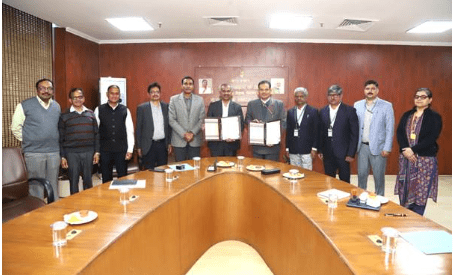
The Telecommunication Engineering Centre (TEC), the technical division of the Department of Telecommunications (DoT), Government of India, has entered into a Memorandum of Understanding (MoU) with the Indian Institute of Technology, Bombay (IIT Bombay) to collaborate on joint research, studies, and technical contributions in advanced telecom technologies and standardisation activities. This strategic partnership was formalized on November 7, 2025, at IIT Bombay.​

Focus Areas of Collaboration

The MoU outlines a comprehensive framework for joint efforts in several pioneering areas:

  • 6G Technologies: Study of 6G architecture, enabling technologies, and active participation in pre-standardization and global standards development, including contributions to 3GPP.

  • Artificial Intelligence in Telecom: Development and research on AI-driven telecom applications for intelligent networks, automation, and predictive maintenance, with the vision of embedding AI-native capabilities in future 6G systems.

  • Core Network: Collaborative research and technical contributions in telecommunications core networks.

  • Satellite Communication Systems: Indigenous design and development of low-cost satellite communication terminals focused on rural connectivity and remote sensing.

  • Signalling Requirements and Protocols: Joint studies on signaling protocols across Next Generation Networks (NGN), Voice over IP (VoIP), IMT-2020/2030, and signaling-based telecom architectures.


Strategic Goals and National Impact

The partnership intends to accelerate indigenous R&D and enhance India’s influence within global standardisation entities such as ITU-T and 3GPP. It aligns closely with the vision of Atmanirbhar Bharat, promoting self-reliance through development of India-specific standards, test frameworks, and home-grown telecom solutions. This initiative represents a significant leap towards securing critical communications infrastructure and reducing import dependency.​

Official Ceremony and Leadership

The MoU was signed by Shri Amit Kumar Srivastava, Deputy Director General (Mobile Technologies), TEC, and Prof. Sachin Patwardhan, Dean (Research & Development), IIT Bombay. The event was held in the presence of senior officials from both organizations, including Shri Syed Tausif Abbas, Senior DDG & Head (TEC), and faculty from IIT Bombay’s Electrical Engineering Department.

Conclusion

The TEC-IIT Bombay collaboration marks a pivotal step in India’s journey toward global leadership in cutting-edge telecom technologies and standardization. By merging academic excellence with government technical expertise, the partnership is set to drive innovation in core networks, AI-driven telecom systems, satellite communications, and signaling protocols, empowering India’s telecom ecosystem for the future.

For more real-time updates, visit Channel 6 Network.

Source: PIB

Ministry of Consumer Affairs, Food & Public Distribution Successfully Completes Special Campaign 5.0 to Enhance Cleanliness, Efficiency, and Grievance Redressal

The Ministry of Consumer Affairs, Food & Public Distribution has successfully concluded Special Campaign 5.0, a two-phase initiative aimed at improving office efficiency, cleanliness, and timely grievance redressal processes across its offices and related organizations. The campaign was inspired by Hon’ble Prime Minister Shri Narendra Modi’s vision to institutionalize Swachhata (cleanliness) and reduce pending work to strengthen governance and service delivery.​

Campaign Execution and Outcomes

The Special Campaign 5.0 was carried out in two phases: the Preparatory Phase from 15th to 30th September 2025, focusing on identification of pending files, appeals, references from Members of Parliament and State governments, grievances, records for weeding, scrap, e-waste, and sites needing cleaning or beautification; and the Implementation Phase from 2nd to 31st October 2025, where concerted efforts were made to clear identified pendency and promote cleanliness.


Key achievements include:

  • Clearing all pending matters including 7 State Government references, 11 MP references, 937 public grievances, and 15 grievance appeals.

  • Weeding out 123,853 physical files and closing 5,592 e-files.

  • Conducting 2,503 cleanliness campaigns, freeing 49,830 sq. ft. of office space.

  • Generating revenue of ₹1,40,96,339 from obsolete materials and e-waste disposal.

  • Department-wide participation including the Department of Food and Public Distribution (DFPD), BIS, NTH, NCCF, NCDRC, all RRSLs, and IILM Ranchi.

  • Resolving over 50,000 public grievances and 586 grievance appeals.

Transparency and Public Engagement

The campaign’s progress was closely tracked through the Special Campaign 5.0 portal and shared widely on social media platforms such as X (formerly Twitter), Instagram, Facebook, and via PIB releases, ensuring transparency and encouraging citizen engagement.

Commitment to Citizen-Centric Governance

The Ministry of Consumer Affairs, Food & Public Distribution demonstrated strong leadership and grassroots participation, aligning fully with the national agenda for clean, efficient, and citizen-friendly governance. The success of Special Campaign 5.0 strengthened the Ministry’s commitment to maintaining these high standards of service and administrative excellence.

Conclusion

Special Campaign 5.0 by the Ministry of Consumer Affairs, Food & Public Distribution stands as a model of systematic administrative reforms fostering cleanliness, efficiency, and rapid grievance redressal. This initiative significantly contributes to the government’s broader vision of a transparent, accountable, and responsive administration.

For more real-time updates, visit Channel 6 Network.

Source: PIB