
Male-centric administrative rules and rigid documentation norms are increasingly denying Scheduled Caste children their constitutional right to education in Karnataka, exposing deep structural gaps in welfare delivery and governance. What appears on paper as neutral eligibility criteria often translates, on the ground, into exclusion for children raised by single mothers, widows, deserted women, or female-headed households. As a result, thousands of SC students risk losing access to scholarships, hostels, fee reimbursements, and other educational entitlements that are meant to bridge historic inequalities.
At the heart of the problem lies the continued insistence on paternal identification as the primary marker of eligibility for welfare schemes. From caste certificates and income certificates to scholarship applications and hostel admissions, systems frequently demand the father’s name, income details, or caste proof as mandatory fields. For children whose fathers are deceased, absent, estranged, or undocumented, this requirement becomes an insurmountable barrier rather than a procedural formality.
Legal experts and child rights activists argue that such rules reflect an outdated, patriarchal understanding of family structures. In contemporary Karnataka, a growing number of children are being raised by mothers alone due to migration, death, abandonment, or domestic violence. Yet welfare systems continue to assume the presence of a male head of household, effectively rendering these children invisible within bureaucratic frameworks.
The impact is particularly severe for SC families, where economic vulnerability intersects with social marginalisation. Many SC women work in informal sectors such as domestic labour, sanitation, agriculture, or construction, without stable documentation of income or marital status. When their children attempt to access education-linked benefits, the absence of a father’s records often results in outright rejection or indefinite delays.
Educationists point out that these exclusions directly contradict constitutional guarantees under Articles 14, 15, and 21A, which promise equality, non-discrimination, and the right to free and compulsory education. They argue that administrative convenience cannot override fundamental rights, especially when the affected group includes some of the most vulnerable children in society.
In rural districts and urban slums alike, school administrators report cases of students being forced to drop out or skip exams because scholarships were denied due to “incomplete” family details. For many SC students, these scholarships are not incentives but necessities, covering uniforms, textbooks, transport, and basic nutrition. Without them, continuing education becomes financially impossible.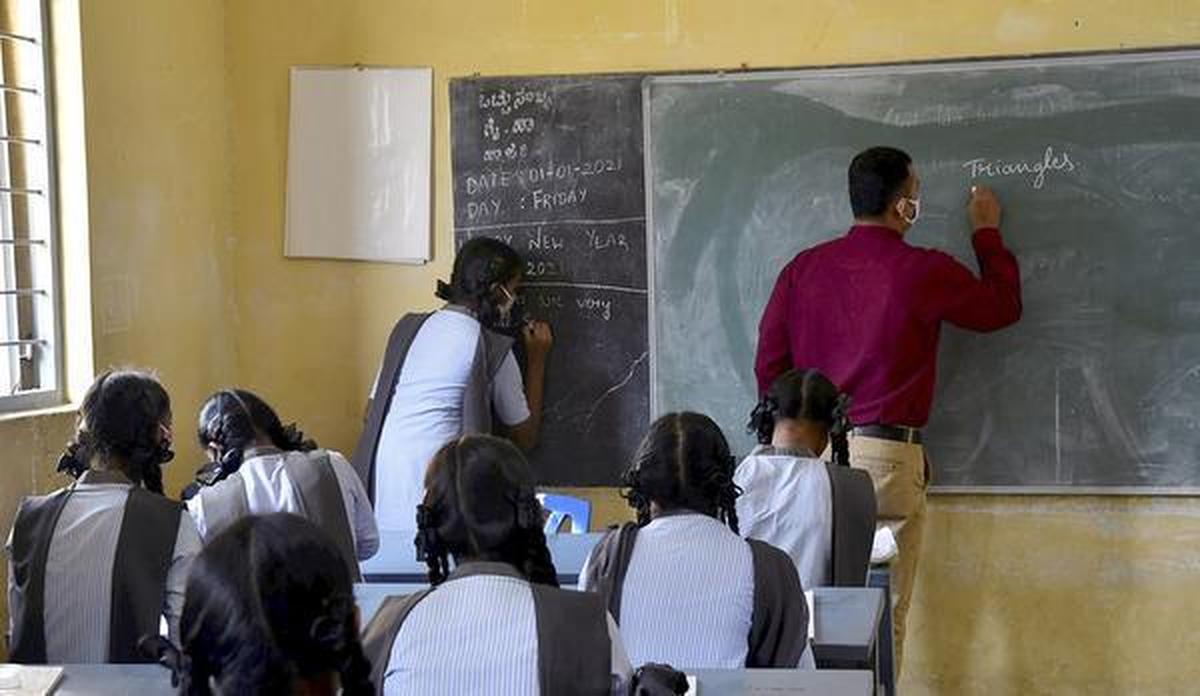
Patriarchy Embedded in Welfare Systems
Activists working with Dalit communities say the problem is not merely bureaucratic but deeply ideological. Welfare systems, they argue, are built around male lineage, inheritance, and authority, reinforcing the idea that legitimacy flows through fathers. This framework fails to recognise women as autonomous caregivers or heads of households, despite legal recognition of women’s rights and changing social realities.
In several documented cases, children of widows have been denied hostel admission because the application portal did not allow the mother to be listed as the primary guardian. In others, SC girls raised by single mothers were unable to obtain caste certificates because officials insisted on the father’s caste proof, even when the mother belonged to a Scheduled Caste and the child lived entirely under her care.
Officials often advise such families to approach local courts or revenue authorities for affidavits, a process that is time-consuming, expensive, and intimidating for economically weak households. Many women simply give up, unable to navigate complex legal procedures or take repeated days off work to pursue paperwork.
Social workers argue that this effectively punishes children for circumstances beyond their control. “A child does not choose their family structure,” one activist said. “Yet the system treats absence of a father as a disqualification rather than a vulnerability requiring support.”
The gendered bias is further compounded by digital governance. Online application portals, designed without flexibility, often have mandatory fields that cannot be bypassed. Mothers report being unable to submit forms because the system does not accept “not applicable” responses for father-related details, forcing them to enter inaccurate information or abandon the process altogether.
These digital barriers disproportionately affect SC families with limited digital literacy or access to assistance. What was intended as efficiency becomes exclusion, reinforcing inequalities under the guise of modernisation.
Consequences for Children and Society
The consequences of such exclusion extend far beyond individual cases. Educationists warn that denial of educational support at early stages leads to cumulative disadvantage, pushing SC children out of the schooling system altogether. Dropouts, they note, are rarely the result of lack of interest but of systemic neglect and economic pressure.
Girls are particularly vulnerable. In families headed by single SC women, girls are often the first to be withdrawn from school when resources dry up. Denial of scholarships or hostel facilities increases the likelihood of early marriage, child labour, or unpaid domestic work, perpetuating cycles of gender and caste oppression.
Mental health professionals highlight the psychological toll on children who repeatedly encounter rejection from institutions meant to support them. Being told that one is “ineligible” because of a missing father reinforces feelings of shame, illegitimacy, and alienation. Over time, this erodes trust in the State and its promises of equality.
Teachers in government schools report that students affected by such exclusions often show declining attendance and performance. Many are reluctant to participate in school activities due to inability to afford uniforms, stationery, or transport. Some eventually disappear from school rolls without formal dropout documentation, making the problem statistically invisible.
From a societal perspective, experts argue that denying education to SC children undermines long-term development goals. Education is a key driver of social mobility, economic productivity, and democratic participation. When structural barriers prevent access, the cost is borne not only by individuals but by society as a whole.
Legal and Policy Gaps
Legal scholars note that Karnataka’s welfare rules have not kept pace with progressive judgments recognising diverse family forms. Courts have repeatedly affirmed that a mother is a natural guardian and that children’s rights cannot be curtailed due to parental status. However, these principles are often not reflected in departmental circulars or implementation guidelines.
There is also a lack of inter-departmental coordination. While one department may recognise single mothers as heads of households, another continues to insist on paternal documentation. This fragmentation leaves families navigating contradictory requirements with little clarity or support.
Policy analysts argue that the problem is exacerbated by the absence of gender-sensitive audits of welfare schemes. Rules are rarely examined for their differential impact on women-led households or marginalised communities. As a result, discriminatory outcomes persist even without explicit discriminatory intent.
Civil society groups have called for immediate reforms, including acceptance of maternal lineage for caste and income certification, flexibility in digital forms, and clear instructions to officials to prioritise children’s rights over procedural rigidity. They stress that such changes require political will more than financial investment.
Some officials privately acknowledge the problem but cite fear of misuse or fraud as reasons for maintaining strict documentation norms. Activists counter that the solution to potential misuse cannot be blanket exclusion, especially when safeguards such as affidavits, community verification, and school records already exist.
Voices from the Ground
Single mothers from SC communities describe the process as humiliating and exhausting. Many recount being asked intrusive questions about their marital status, separation, or personal history while seeking certificates for their children. The lack of sensitivity, they say, discourages them from approaching authorities again.
Community organisations report that even when women manage to secure temporary relief through local intervention, benefits are often delayed or discontinued in subsequent years due to the same documentation issues. This uncertainty makes educational planning impossible for families already living on the edge.
Dalit rights groups argue that the issue reflects a broader failure to centre children’s rights in governance. Welfare schemes, they say, are designed around adult identities and hierarchies rather than children’s needs and lived realities.
The Way Forward
Experts agree that reform is both necessary and feasible. Recommendations include revising application forms to recognise mothers as primary guardians, issuing uniform guidelines across departments, training officials in gender and caste sensitivity, and establishing grievance redress mechanisms that are accessible and time-bound.
Some also advocate for proactive identification of at-risk children through schools, anganwadis, and local bodies, rather than relying solely on application-based systems. By shifting the burden from families to the State, they argue, welfare delivery can become more inclusive and rights-based.
There are also calls to involve SC women’s collectives and child rights organisations in policy design and monitoring. Their lived experience, activists say, is crucial to identifying blind spots that bureaucratic processes often overlook.
Ultimately, the debate is not merely about documentation but about dignity. When systems fail to recognise women as legitimate caregivers and children as rights-bearing citizens, they reinforce the very inequalities they claim to address.
As Karnataka positions itself as a leader in social justice and welfare, the persistence of male-centric rules poses a serious contradiction. For SC children standing at the intersection of caste, gender, and poverty, education remains the most powerful tool for transformation. Denying access to it, even indirectly, is not just administrative failure but moral injustice.
Whether the State chooses to reform these systems will determine not only the futures of thousands of children, but also the credibility of its commitment to equality, inclusion, and constitutional values.
Follow: Karnataka Government
Also read: Home | Channel 6 Network – Latest News, Breaking Updates: Politics, Business, Tech & More
