
Bengaluru’s slums are not accidental formations on the city’s margins but products of a repeating urban cycle shaped by migration, land politics, informal labour, and selective governance. As the city expanded into India’s technology capital, it simultaneously absorbed thousands of workers who built its roads, apartments, offices, and infrastructure, yet were never formally planned for. Slums emerged as survival spaces for these populations, growing quietly on vacant public land, lake beds, railway edges, and unused private plots. Over decades, these settlements became part of the city’s functional ecosystem, even as they remained officially invisible.
The making of slums in Bengaluru is closely tied to migration patterns. Workers from north Karnataka, Andhra Pradesh, Tamil Nadu, Odisha, West Bengal, and northern states arrive in search of daily wage work. Construction, waste management, domestic labour, street vending, and factory jobs draw people faster than the city’s housing systems can absorb them. With rental housing unaffordable and public housing scarce, migrants occupy land informally, often with tacit acceptance from local authorities. What begins as temporary shelter slowly turns into semi-permanent neighbourhoods with tin roofs, shared water taps, and informal electricity connections.
Land plays a central role in how slums are both created and destroyed. Many settlements arise on land considered undesirable at a particular moment, such as flood-prone areas, lake buffers, or land tied up in legal disputes. For years, these spaces remain ignored, allowing slums to grow. Over time, as land values rise or infrastructure projects are planned, the same land becomes valuable. Suddenly, settlements that were tolerated for decades are labelled illegal encroachments, setting the stage for eviction and demolition.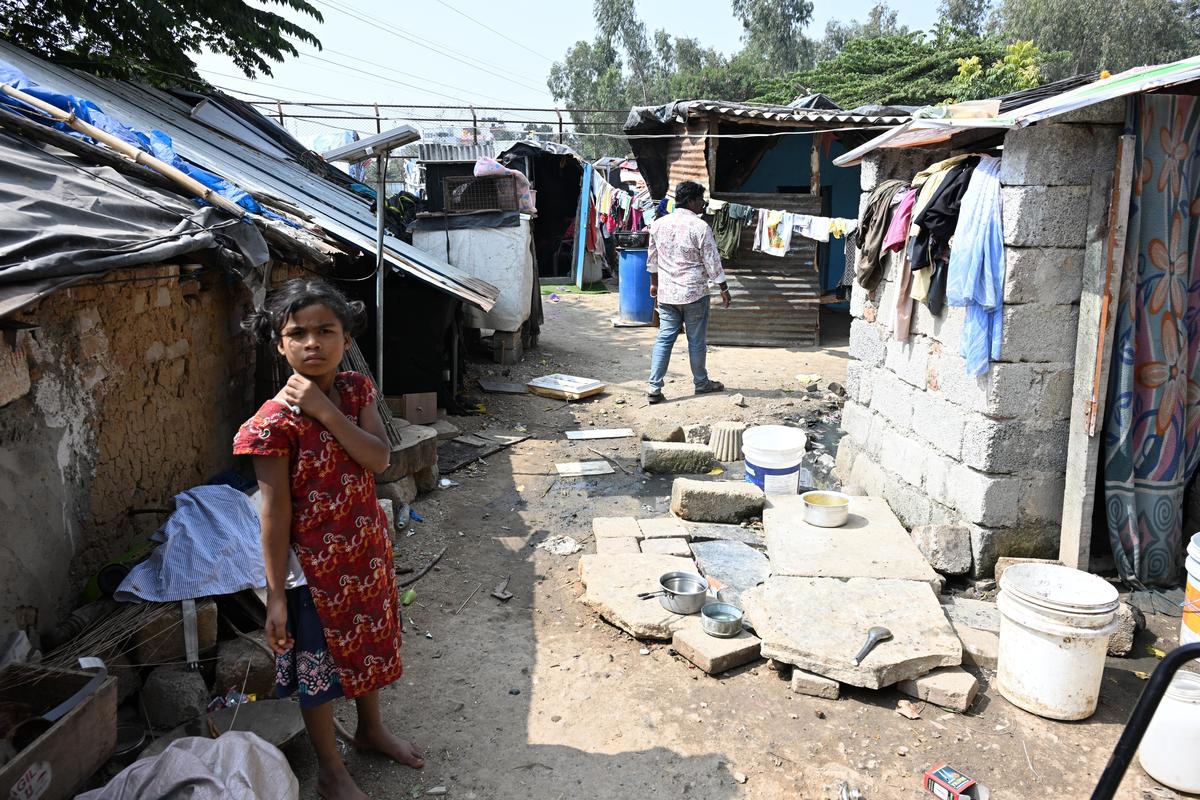
Political mediation often shapes the life cycle of slums. Local leaders, ward-level politicians, and intermediaries sometimes facilitate access to water, ration cards, voter IDs, and electricity connections in exchange for political support. This informal recognition provides residents a sense of security, even if legal tenure remains absent. Over time, generations grow up believing the settlement is permanent. This fragile stability, however, depends on political convenience. When priorities shift, protection disappears, exposing residents to eviction drives.
Urban planning in Bengaluru has historically prioritised commercial growth and infrastructure over affordable housing. Master plans repeatedly underestimated the housing needs of low-income workers, focusing instead on IT corridors, flyovers, and commercial zones. Slums filled this planning gap by providing proximity to workplaces. Domestic workers lived near gated communities, sanitation workers near wards they served, and construction workers near project sites. Slums thus became embedded within the city’s economic machinery, even as they were excluded from its formal imagination.
FROM INFORMAL HOMES TO “ILLEGAL ENCROACHMENTS”
The razing of slums in Bengaluru often begins with a change in narrative. Settlements once described as “poor localities” are reframed as “illegal encroachments” obstructing development or environmental restoration. Eviction notices typically cite lake rejuvenation, road widening, metro expansion, or public safety. While these objectives may be legitimate, the process often ignores the history of how the settlements came to exist and the city’s own role in allowing them to grow without alternatives.
Demolitions are frequently sudden and traumatic. Notices may be served with little warning, sometimes pasted on walls just days before action. Residents scramble to save belongings as bulldozers arrive, often escorted by police. Women, children, the elderly, and daily wage workers bear the immediate impact. Homes built over years are reduced to rubble within hours. For many families, documents proving residence are destroyed along with their houses, further weakening their ability to claim rehabilitation.
Relocation, when offered, is usually on the city’s outskirts. Rehabilitation colonies are often located far from workplaces, schools, and healthcare facilities. Long commutes increase expenses and reduce income stability. Many relocated families eventually return to informal settlements closer to the city core, restarting the cycle. Others rent out allotted flats and move back to slums, revealing a disconnect between housing policy and lived realities.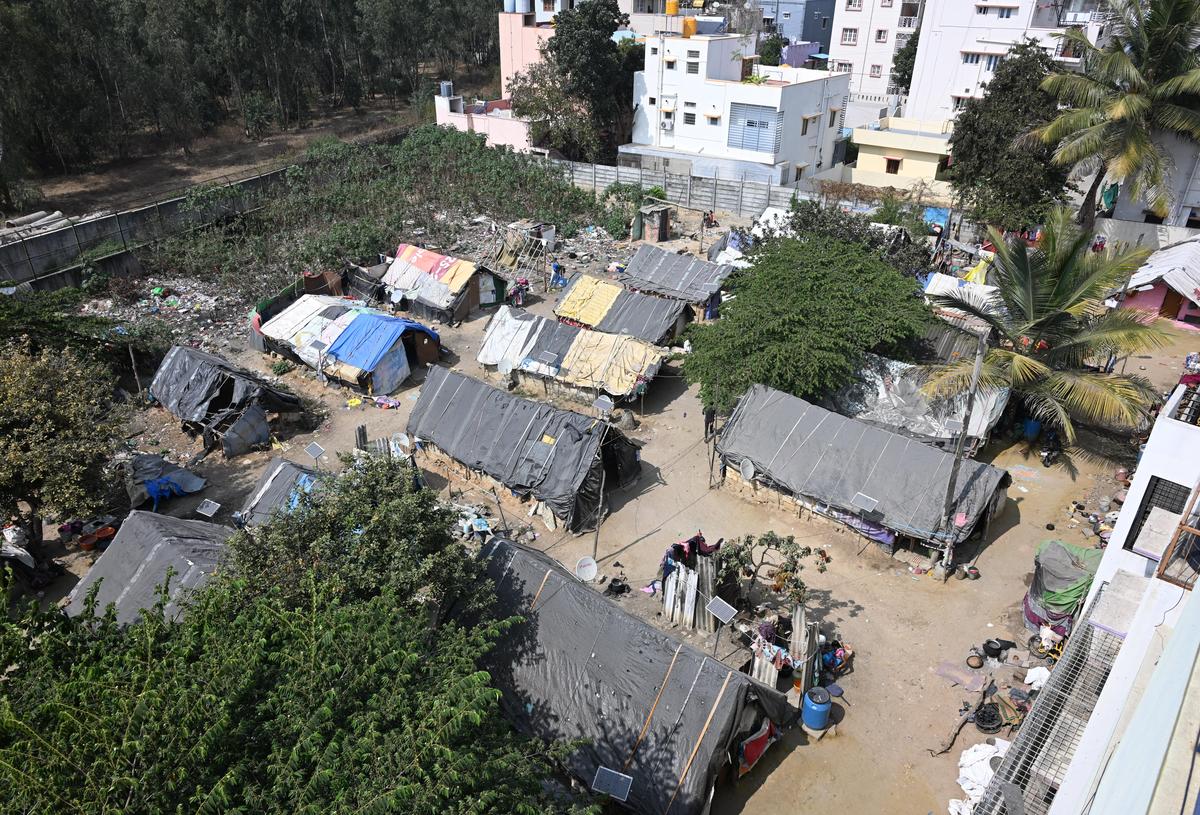
Environmental arguments are commonly used to justify evictions, especially around lakes and stormwater drains. While encroachments do contribute to ecological degradation, critics argue that selective enforcement targets the poor while overlooking violations by commercial establishments, luxury apartments, and infrastructure projects. This unequal application of environmental law fuels resentment and deepens distrust between slum communities and authorities.
Legal battles around slum demolitions often hinge on proof of residence before a cut-off date. Many residents lack formal documentation, especially migrants and informal workers. Even those eligible for rehabilitation face bureaucratic hurdles. Court orders may temporarily halt demolitions, but prolonged litigation creates uncertainty, leaving families in limbo. In some cases, slums are demolished despite ongoing legal proceedings, highlighting the imbalance of power between residents and the state.
Civil society groups and activists have repeatedly pointed out that slums are not merely housing problems but symptoms of deeper structural failures. They argue that demolitions without adequate rehabilitation violate the right to shelter and dignity. Surveys, mapping exercises, and participatory planning are often demanded but rarely implemented meaningfully. Instead, eviction becomes the default response to urban pressure.
WHO BENEFITS, WHO BEARS THE COST
The political economy of slum demolition reveals clear winners and losers. Cleared land often becomes available for infrastructure projects, commercial development, or beautification efforts that benefit middle and upper classes. Improved roads, restored lakes, and new transit corridors enhance property values and urban aesthetics. Meanwhile, displaced residents absorb the social and economic costs, losing not just homes but access to livelihoods, education, and community networks.
For the urban poor, slums provide more than shelter. They offer social support systems, childcare networks, credit arrangements, and cultural continuity. Demolitions fracture these networks, pushing families into isolation and vulnerability. Children’s education is disrupted, healthcare access declines, and women often face increased insecurity. The long-term psychological impact of repeated displacement is rarely acknowledged in policy discussions.
Bengaluru’s governance structure further complicates the issue. Multiple agencies control land, housing, and infrastructure, leading to fragmented responsibility. While one department clears slums for development, another struggles to provide housing. Coordination failures result in piecemeal solutions that address symptoms rather than root causes. Affordable rental housing, worker hostels, and inclusive zoning remain underdeveloped despite repeated policy announcements.
There are also instances where slums are selectively regularised. Settlements with political backing or strategic electoral importance may receive land titles, basic services, and upgrades. This uneven approach reinforces perceptions of arbitrariness and fuels competition among slum communities. Those excluded from regularisation feel punished for lacking political influence rather than legal standing.
Urban scholars argue that Bengaluru’s approach reflects a broader contradiction. The city depends on informal labour but resists integrating informal lives into formal planning. Slums are tolerated when they serve economic needs and removed when they inconvenience development agendas. This conditional acceptance creates instability, ensuring that slums are never fully resolved but continuously reproduced.
The question of dignity lies at the heart of the issue. When slums are portrayed solely as problems to be erased, residents are reduced to obstacles rather than citizens. Their contributions to the city’s growth remain unrecognised. A more humane approach, experts suggest, would treat slum residents as stakeholders in urban development, involving them in planning, upgrading, and decision-making.
Some alternative models exist. In-situ upgradation, where slums are improved without displacement, has shown promise in limited cases. Secure tenure, basic services, and community participation can transform settlements into liveable neighbourhoods. However, scaling such models requires political will and a shift away from demolition-driven urbanism.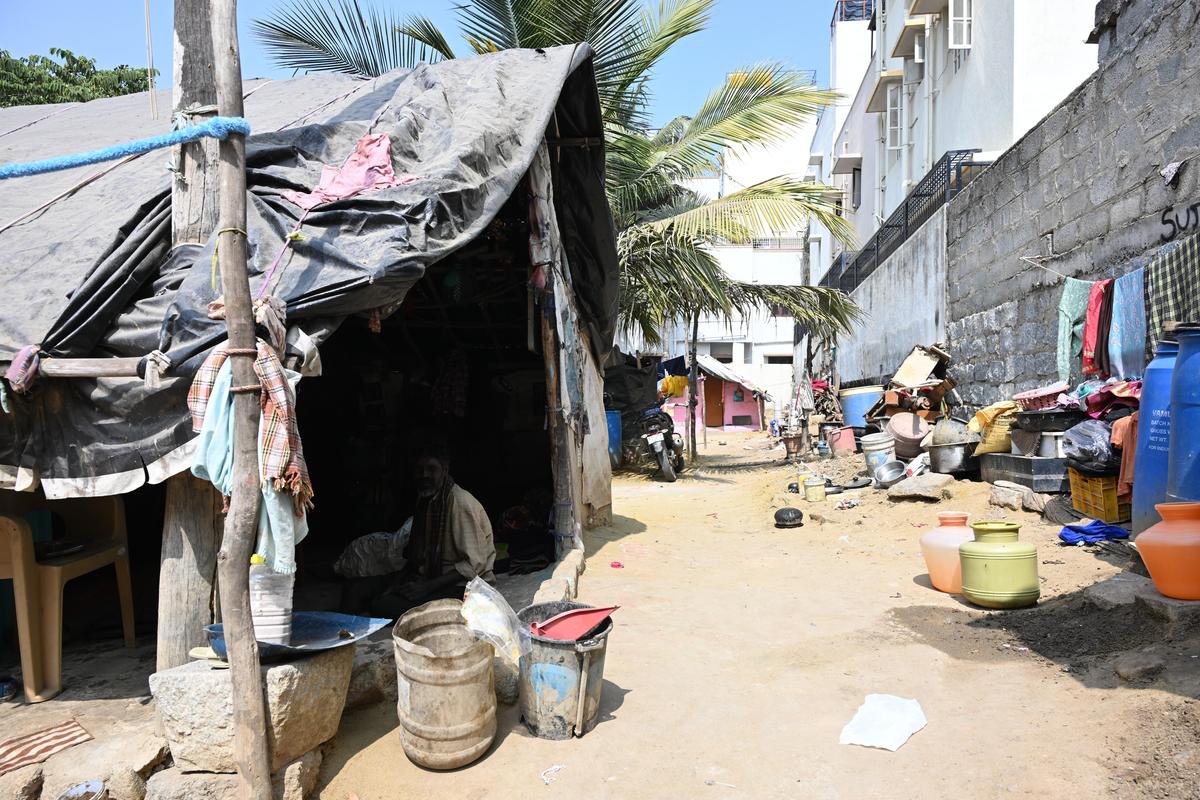
As Bengaluru continues to grow, the cycle of slum creation and destruction shows no sign of ending. Migration persists, affordable housing remains inadequate, and land pressures intensify. Without structural reform, new slums will emerge even as old ones are erased. The city will continue to build and break lives simultaneously.
In the end, how Bengaluru treats its slums reflects how it values its people. Slums are not failures of residents but failures of planning, policy, and inclusion. Until the city confronts this truth, bulldozers will keep returning, and the promise of an equitable urban future will remain out of reach for those who built the city but were never allowed to belong to it.
The media narrative surrounding slums and demolitions also plays a powerful role in shaping public perception. Headlines often frame evictions as necessary clean-up operations or development milestones, rarely foregrounding the human cost. Visuals of bulldozers and cleared land dominate coverage, while stories of displaced families fade quickly. This selective storytelling normalises displacement and reduces public empathy. Over time, it creates a moral distance between the city’s middle class and the urban poor, making repeated demolitions socially acceptable rather than politically contentious.
Judicial interventions have offered limited relief. While courts have occasionally emphasised the right to shelter and ordered rehabilitation, implementation remains inconsistent. Legal protections are often procedural rather than substantive, focusing on notice periods or documentation rather than long-term housing security. For slum residents, approaching courts requires resources, time, and legal awareness that many do not possess. As a result, access to justice becomes uneven, reinforcing existing inequalities rather than correcting them.
Urban planners increasingly warn that demolitions undermine resilience rather than improving it. Displaced populations often move into more precarious locations, such as deeper floodplains or unstable land, increasing vulnerability to climate-related disasters. Bengaluru’s recurring floods have exposed how eviction-driven planning worsens risk by pushing the poor into invisible, unsafe spaces. Instead of resolving environmental challenges, the cycle of displacement frequently shifts the problem geographically while deepening social fragility.
Ultimately, the question is not whether slums should exist, but why cities continue to produce them. Bengaluru’s experience shows that slums are an outcome of exclusionary growth, not individual failure. Until housing, transport, and employment policies are aligned with the realities of informal labour, slums will keep reappearing in new forms. Breaking the cycle requires acknowledging slum residents as integral to the city’s life, deserving of stability, dignity, and a permanent place in its future.
Follow: Karnataka Government
Also read: Home | Channel 6 Network – Latest News, Breaking Updates: Politics, Business, Tech & More
