
Hubballi witnessed intense public outrage and political uproar after allegations surfaced that a woman was forcibly disrobed by police personnel during her arrest, triggering protests, counter-allegations, and urgent questions about custodial conduct and women’s dignity. The incident, which unfolded dramatically and rapidly escalated into a law-and-order challenge, has put the spotlight firmly on police accountability, procedural ethics, and the fragile trust between citizens and law enforcement.
According to initial accounts, the woman was arrested following a local dispute that drew police intervention. What might have remained a routine arrest soon turned controversial when allegations emerged that she was subjected to humiliating treatment while in police custody. Visuals, testimonies, and conflicting narratives began circulating soon after, transforming the episode into a high-voltage public issue. Crowds gathered, tempers flared, and Hubballi’s streets became the stage for confrontation between protestors and authorities.
The police have denied intentional wrongdoing, stating that the arrest was conducted as per procedure and that any perceived misconduct was neither deliberate nor malicious. Senior officials have claimed that the woman resisted arrest, leading to a scuffle during which her clothing was allegedly disturbed inadvertently. This explanation, however, has failed to pacify public anger, with many questioning how such an outcome could occur during a lawful arrest, particularly involving a woman.
Political leaders across parties reacted swiftly, some condemning the alleged act as an assault on dignity, while others urged restraint until facts are established. Women’s rights groups, civil liberties activists, and legal observers have demanded an impartial inquiry, stressing that even the perception of custodial humiliation represents a serious failure of policing norms.
As tensions mounted, additional police forces were deployed to prevent further escalation. The district administration appealed for calm, assuring that the matter would be examined thoroughly. Yet, the emotional charge surrounding the incident reflects deeper anxieties about safety, power imbalance, and the vulnerability of women during encounters with authority.
The Hubballi episode has thus moved beyond a single arrest, becoming a larger symbol of public concern over how power is exercised and where accountability begins. The outcome of the inquiry will be closely watched, not only for justice in this specific case, but for what it signals about institutional sensitivity and reform.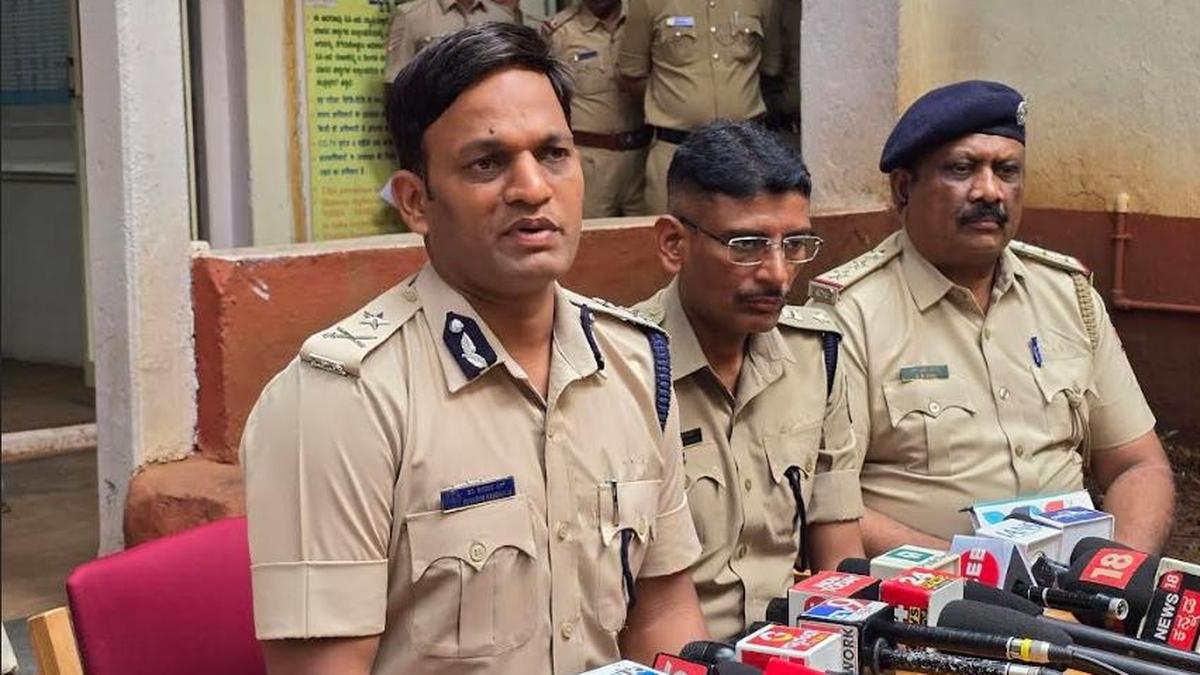
CONFLICTING VERSIONS AND THE BATTLE OVER NARRATIVE
As the incident dominated public discourse, sharply divergent versions of events emerged. The woman’s family and supporters alleged that she was deliberately stripped and humiliated during arrest, calling it a gross violation of human rights. They claimed that the act was punitive and meant to intimidate, asserting that such treatment could not be justified under any circumstance.
The police, on the other hand, presented a version centred on operational complexity. Officials stated that the woman was aggressive, resisted arrest, and that the situation became chaotic. According to them, the alleged disrobing was an unintended consequence of the physical struggle, not a conscious act by officers. They emphasised that no instruction or intent existed to humiliate the woman and that internal protocols were followed.
This clash of narratives has intensified scrutiny. Legal experts note that intent, while relevant, does not absolve responsibility if procedural safeguards were breached. Arresting officers are required to ensure minimal force, maintain dignity, and especially exercise heightened care when dealing with women. Any deviation, whether intentional or accidental, invites legal and moral accountability.
Eyewitness accounts have further complicated the picture. Some residents claim the police response was excessive, while others argue that the situation spiralled due to crowd interference. In the absence of conclusive evidence made public, speculation has flourished, amplifying emotions and polarisation.
The administration has acknowledged the seriousness of the allegations and confirmed that senior officers are reviewing available footage, statements, and arrest records. Suspension or reassignment of personnel involved has been demanded by activists, who argue that allowing officers to remain in position during inquiry undermines credibility.
The narrative battle unfolding in Hubballi underscores a recurring challenge in policing controversies. Once public trust is shaken, official explanations struggle to regain legitimacy unless accompanied by transparent and visible corrective action. The credibility of the investigation, therefore, will hinge not just on findings, but on how openly the process is conducted.
LEGAL, ETHICAL, AND INSTITUTIONAL QUESTIONS
The alleged incident raises fundamental questions about arrest procedures, especially concerning women. Indian policing guidelines mandate that women should be arrested by female officers, treated with dignity, and protected from physical or psychological harm. Any breach of these norms can attract serious legal consequences, including criminal liability.
As investigations proceed, Hubballi waits for clarity. The case will likely influence future policing protocols and judicial scrutiny of custodial conduct. More importantly, it will test whether institutions can rise to moments of crisis with accountability rather than defensiveness.
Ultimately, the incident challenges the state to reaffirm a fundamental principle: that law enforcement exists to protect, not degrade, and that dignity is non-negotiable, even in moments of conflict. The response to this crisis will determine whether that principle remains merely aspirational or truly enforced.
Legal scholars point out that custodial misconduct cases often falter due to lack of independent evidence and institutional reluctance. This makes judicial oversight crucial. Courts have repeatedly stressed that the power to arrest carries a corresponding duty to protect constitutional rights, including the right to dignity and bodily integrity.
Ethically, the case forces a re-examination of police training and culture. Critics argue that excessive reliance on force reflects deeper structural issues, including inadequate sensitisation, stress, and lack of accountability mechanisms. Supporters of the police counter that officers operate under extreme pressure and face unpredictable resistance, making split-second decisions unavoidable.
The Hubballi incident has also sparked debate within the force itself. Retired officers have called for clearer protocols and better equipment to manage arrests without physical confrontation. They argue that preventing such controversies requires investment in training, not just punitive action after incidents occur.
From an institutional perspective, the challenge lies in balancing morale and accountability. Swift punishment without due process can demoralise personnel, while delayed or defensive responses can erode public trust. The administration’s handling of this balance will shape perceptions far beyond Hubballi.
The alleged disrobing has thus become a lens through which broader systemic issues are being examined. It highlights how individual incidents can expose institutional vulnerabilities and provoke calls for reform that have long remained unaddressed.
PUBLIC OUTRAGE, PROTESTS, AND POLITICAL REACTIONS
The reaction on the streets of Hubballi was swift and intense. Protestors demanded immediate action, chanting slogans and confronting authorities. Women’s organisations staged demonstrations, framing the incident as an attack on dignity and a warning sign for all women interacting with law enforcement.
Political responses followed predictable lines, but with notable intensity. Opposition leaders accused the government of shielding police excesses, while ruling party representatives urged patience and due process. Statements ranged from outright condemnation to cautious calls for fact-based inquiry, reflecting the political sensitivity of the issue.
Social discourse around the incident has been equally charged. Many citizens expressed fear and anger, questioning whether ordinary individuals are safe during police action. Others warned against rushing to judgment, stressing the need to allow investigations to conclude.
The administration’s appeal for calm has had limited effect, as emotions remain raw. Additional security measures were implemented to prevent further unrest, underscoring how quickly a custodial allegation can escalate into a broader law-and-order concern.
For Hubballi, the incident has reopened unresolved debates about policing methods and citizen rights. Past controversies have left lingering mistrust, and the present episode risks deepening those divides unless addressed decisively and transparently.
A MOMENT OF RECKONING FOR POLICING AND RIGHTS
Beyond the immediate controversy, the Hubballi incident represents a moment of reckoning for policing standards and civil liberties. The alleged humiliation of a woman during arrest strikes at the core of democratic accountability, where the state’s authority must be exercised within strict ethical boundaries.
Human rights advocates argue that such incidents are not anomalies but symptoms of deeper structural neglect. They call for independent oversight bodies, mandatory body cameras, and stronger grievance redressal mechanisms to ensure accountability. Without systemic change, they warn, public faith will continue to erode.
The government has reiterated its commitment to impartial inquiry and corrective action if wrongdoing is established. However, assurances alone may not suffice. Restoring trust will require visible reforms, clear communication, and empathy toward those affected.
For the woman at the centre of the controversy, the incident has irrevocably altered her life. Regardless of legal outcomes, the social and psychological impact of alleged custodial humiliation is profound. Her experience has become a rallying point for wider demands for dignity and justice.
As investigations proceed, Hubballi waits for clarity. The case will likely influence future policing protocols and judicial scrutiny of custodial conduct. More importantly, it will test whether institutions can rise to moments of crisis with accountability rather than defensiveness.
Ultimately, the incident challenges the state to reaffirm a fundamental principle: that law enforcement exists to protect, not degrade, and that dignity is non-negotiable, even in moments of conflict. The response to this crisis will determine whether that principle remains merely aspirational or truly enforced.
Follow: Karnataka Government
Also read: Home | Channel 6 Network – Latest News, Breaking Updates: Politics, Business, Tech & More
