
The Karnataka Legislative Assembly has passed the Internal Reservation Bill after an intense and emotionally charged debate that brought longstanding questions of social justice, equity and constitutional balance back into sharp focus. While the government described the Bill as a corrective step to ensure fair distribution of reservation benefits among Scheduled Castes, the discussion was repeatedly interrupted by disagreements over the inclusion of the Alemari community and concerns related to the Economically Weaker Sections quota, exposing deep divisions both within the House and beyond it.
The passage of the Bill has also triggered renewed mobilisation among various social groups, with organisations both supporting and opposing internal reservation planning meetings and representations to the government. Leaders from communities that have long demanded sub-classification see the legislation as validation of their struggle, while others fear that redistribution may reduce their already limited access to opportunities. This divergence has underscored the need for careful communication by the State to prevent misinformation and social friction.
Academics studying caste and affirmative action have pointed out that Karnataka’s move will be closely watched nationally. Internal reservation within Scheduled Castes has been debated in several States, but implementation has often been stalled by legal challenges and political resistance. How Karnataka operationalises the law, they argue, could influence future policy choices elsewhere and shape the broader discourse on reforming reservation mechanisms.
There are also concerns about data readiness. Experts caution that identifying beneficiary sub-groups requires up-to-date, disaggregated socio-economic data, which is often lacking or contested. Without credible data, they warn, implementation risks being perceived as arbitrary, undermining both public confidence and legal defensibility. Calls have been made for transparent publication of criteria and periodic review mechanisms.
Within the bureaucracy, preparations are expected to begin for framing rules and guidelines once the Bill receives assent. Officials acknowledge that translating legislative intent into administrative practice will be challenging, particularly in ensuring uniform application across departments and districts. Training officials and updating recruitment and admission systems will be essential to avoid confusion during the transition.
Political observers note that the debate has sharpened fault lines ahead of future electoral contests. Reservation policies have historically influenced voting behaviour in Karnataka, and the internal reservation Bill is likely to feature prominently in political messaging. Whether it consolidates support or alienates sections of the electorate will depend on how its impact is felt on the ground.
As the dust settles in the Assembly, the focus now shifts to outcomes rather than intent. For communities that have waited decades for recognition within the reservation framework, expectations are high. At the same time, apprehensions persist among those who fear loss. Balancing these competing emotions while upholding constitutional principles will test the government’s resolve and administrative capacity in the months to come.
The Bill seeks to introduce internal reservation among Scheduled Castes by categorising them into sub-groups to ensure that benefits reach communities that have historically remained marginalised even within the broader reservation framework. Proponents argue that certain Scheduled Caste communities have cornered a disproportionate share of opportunities over the years, leaving others underrepresented in education and public employment. The legislation aims to address this imbalance through a more granular approach.
As the Bill was tabled and debated, members across party lines acknowledged the sensitivity of the issue. Reservation, deeply intertwined with identity and historical injustice, remains one of the most politically and socially charged subjects in Karnataka. The Assembly proceedings reflected this complexity, with impassioned speeches, procedural objections and repeated demands for clarity on how the new framework would be implemented.
The Alemari community emerged as a focal point of contention during the debate. Several members questioned the community’s placement within the reservation structure, arguing that its socio-economic status warranted a re-examination. Others warned that reopening such classifications could destabilise existing arrangements and lead to further demands from other groups.
Adding to the complexity was the discussion around the Economically Weaker Sections quota. Opposition members argued that the Bill did not adequately address how internal reservation within Scheduled Castes would interact with the EWS framework, potentially leading to confusion and legal challenges. Government representatives countered that the Bill operates within established constitutional boundaries and that safeguards would be put in place to avoid overlap or dilution of benefits.
Despite the disagreements, the Bill was passed by voice vote, marking a significant legislative moment. The government hailed it as a long-overdue reform, while critics cautioned that its real impact would depend on careful implementation and judicial scrutiny.
Social Justice Claims and the Alemari Question
At the heart of the debate lay competing interpretations of social justice. Supporters of the Bill argued that internal reservation is not about exclusion but correction. They cited studies and committee reports suggesting that benefits of reservation have been unevenly distributed, with some Scheduled Caste communities gaining greater access to education and employment, while others remain trapped in cycles of deprivation.
The Karnataka Legislative Assembly has passed the Internal Reservation Bill after an intense and emotionally charged debate that brought longstanding questions of social justice, equity and constitutional balance back into sharp focus. While the government described the Bill as a corrective step to ensure fair distribution of reservation benefits among Scheduled Castes, the discussion was repeatedly interrupted by disagreements over the inclusion of the Alemari community and concerns related to the Economically Weaker Sections quota, exposing deep divisions both within the House and beyond it.
Members advocating internal reservation said the Bill responds to demands raised over decades by communities who feel sidelined within the existing system. They contended that without internal categorisation, reservation risks reproducing inequality rather than dismantling it. For these legislators, the Bill represents a moral and constitutional obligation to ensure that affirmative action reaches those most in need.
The Alemari community’s position sparked sharp exchanges. Some legislators questioned whether the community’s nomadic lifestyle and occupational history have been adequately reflected in current reservation policies. They argued that the Alemari face distinct forms of social exclusion and that their classification requires nuanced understanding rather than blanket categorisation.
Others warned against singling out specific communities during the legislative process. They argued that such debates could inflame social tensions and undermine the spirit of unity among marginalised groups. According to them, any reclassification should be based on comprehensive data and expert recommendations rather than floor-level debates.
The government maintained that the Bill does not alter the constitutional status of any community but focuses on equitable distribution of benefits within the Scheduled Caste category. Ministers assured the House that the Alemari issue, along with other concerns, would be addressed through appropriate administrative mechanisms and further studies if required.
Legal experts observing the debate noted that internal reservation has previously faced judicial scrutiny, making precision in drafting and implementation crucial. They pointed out that courts have emphasised the need for empirical data to justify sub-classification, and any perceived arbitrariness could invite legal challenges.
Beyond the Assembly, social organisations representing various Scheduled Caste communities expressed mixed reactions. While some welcomed the Bill as a victory for long-neglected groups, others feared it could lead to fragmentation and competition among communities already facing structural disadvantage.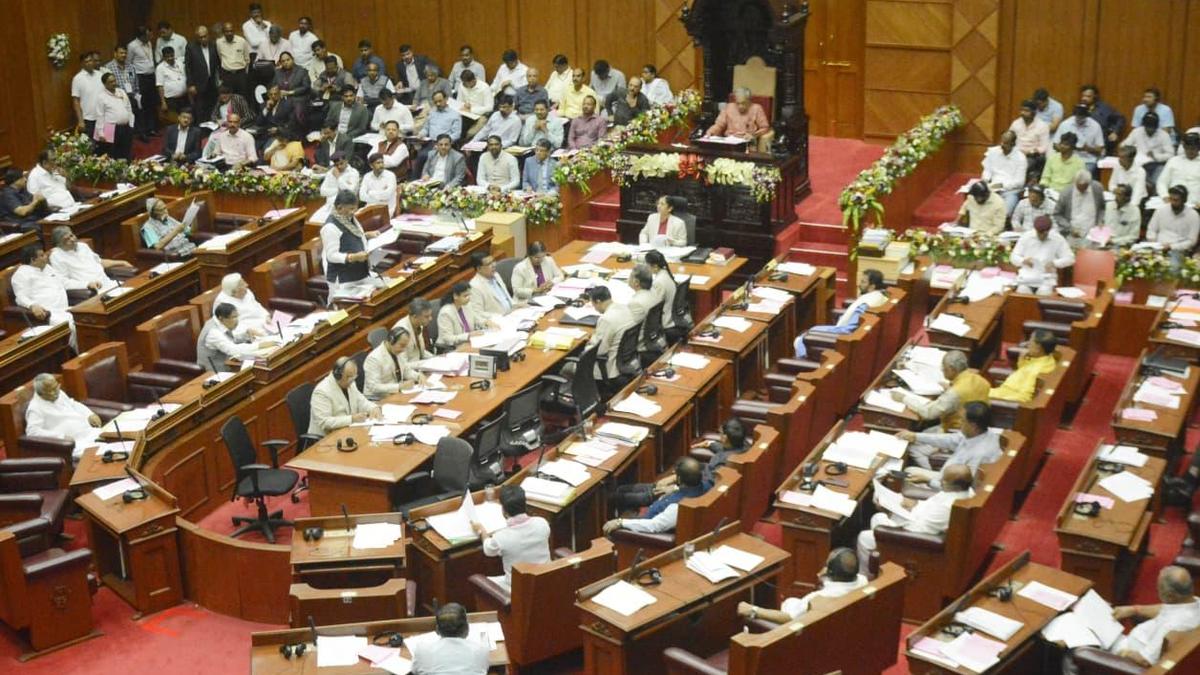
EWS Concerns, Political Fault Lines and What Lies Ahead
The debate around the Economically Weaker Sections quota added another layer of complexity to the proceedings. Opposition members argued that the Bill failed to clearly articulate how internal reservation would coexist with the EWS framework, raising concerns about overlapping eligibility and administrative confusion. They warned that beneficiaries could be caught between multiple criteria, leading to exclusion rather than inclusion.
Government representatives responded that the EWS quota operates independently of caste-based reservations and that existing rules provide sufficient clarity. They accused the opposition of conflating separate policy frameworks to create confusion and stall a reform aimed at social equity.
Political fault lines became evident as the discussion progressed. While the ruling side framed the Bill as a progressive step rooted in social justice, the opposition accused the government of rushing through sensitive legislation without adequate consultation. Some members demanded that the Bill be referred to a House committee for deeper examination, a demand the government rejected.
The passage of the Bill has now shifted attention to implementation. Officials will need to frame detailed rules, identify beneficiary sub-groups based on data and ensure transparency in allocation. Experts caution that without clear guidelines and robust monitoring, the objectives of the Bill could be undermined.
Civil society groups have called for continuous dialogue with affected communities to prevent misinformation and unrest. They argue that internal reservation, while potentially transformative, must be accompanied by outreach and education to explain its rationale and safeguards.
There is also anticipation of judicial review. Given the history of litigation around reservation policies, the Bill is expected to be examined closely by the courts. How well the government defends its empirical basis and constitutional validity will be critical in determining the law’s longevity.
For now, the passage of the Internal Reservation Bill marks a decisive yet contested moment in Karnataka’s ongoing negotiation with social justice. It reflects both the State’s willingness to revisit entrenched systems and the enduring challenges of balancing equity, unity and constitutional limits.
Whether the Bill delivers on its promise of fairer distribution or deepens existing divides will depend on the choices made in the months ahead. As Karnataka moves forward, the legislation stands as a reminder that social reform, particularly in the realm of reservation, is rarely simple and never free from contention.
Follow: Karnataka Government
Also read: Home | Channel 6 Network – Latest News, Breaking Updates: Politics, Business, Tech & More
