
The political atmosphere in Karnataka’s Ballari district has once again turned volatile after mining baron and former minister G Janardhana Reddy demanded the immediate arrest of a sitting Congress MLA in connection with the murder of a Congress activist. The demand, made publicly and with unmistakable aggression, has reignited debates around political violence, factionalism, and selective justice in the region. Ballari, long known for its turbulent political history and power struggles, now finds itself at the centre of another controversy that threatens to deepen mistrust between rival parties and unsettle an already fragile law-and-order situation.
The murder of the Congress activist has sent shockwaves across the district, with party workers staging protests and alleging political conspiracy. While the police have stated that investigations are ongoing, Janardhana Reddy’s intervention has escalated the matter into a full-blown political confrontation. His allegation that a Congress MLA is directly involved has intensified pressure on the state government and law enforcement agencies, forcing them into the spotlight over questions of neutrality and accountability.
Reddy, addressing supporters and media, framed his demand as a fight for justice rather than political vendetta. He asserted that the victim’s family deserves answers and that shielding influential leaders would only embolden criminals. His remarks, however, have been met with strong resistance from Congress leaders, who accuse him of exploiting a tragic death for political mileage. The sharp exchange of accusations has widened the fault lines between the ruling party and opposition-aligned figures, turning a criminal investigation into a larger political battle.
Ballari’s residents are no strangers to such turbulence. Over the years, the district has witnessed frequent clashes rooted in political rivalry, economic interests, and caste dynamics. The latest episode has revived old fears that justice may once again become a casualty of power politics. Civil society groups and legal observers have urged restraint, warning that public statements by political heavyweights could influence investigations and inflame tensions on the ground.
As protests continue and political rhetoric sharpens, the state government faces the challenge of maintaining order while ensuring that the investigation proceeds without bias. The police have reiterated that no one will be spared if evidence establishes culpability, but skepticism remains among the public. The demand made by Janardhana Reddy has thus become more than a call for arrest; it has transformed into a litmus test for the credibility of Karnataka’s criminal justice system.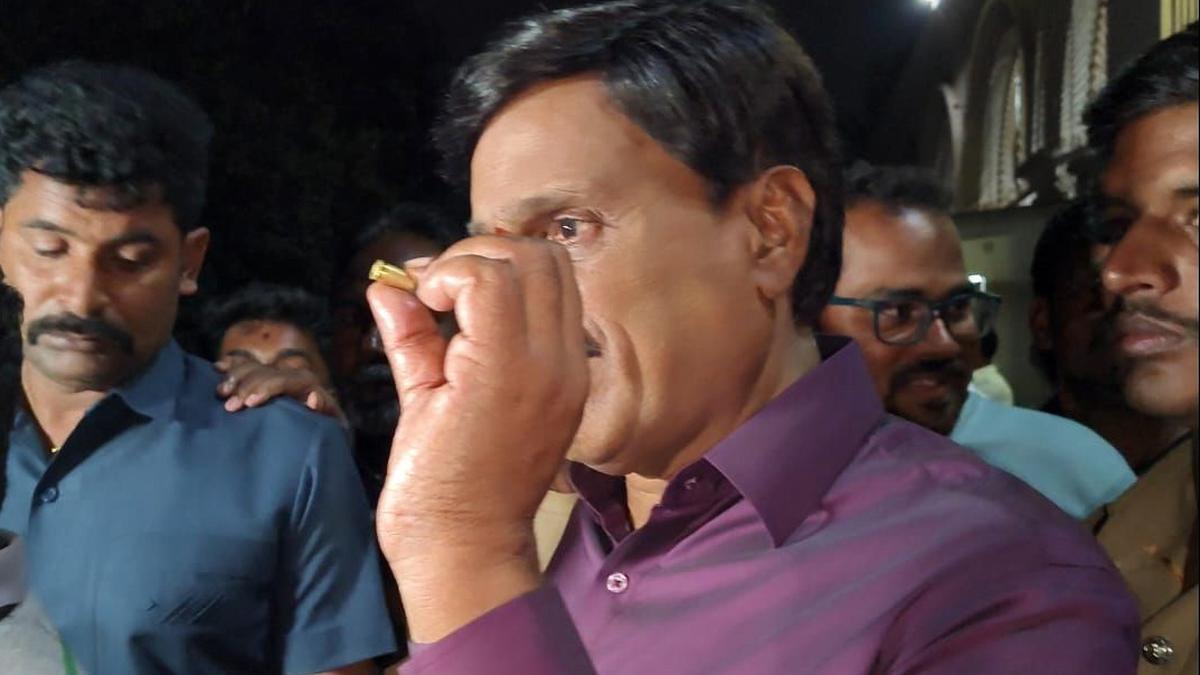
The unfolding controversy also raises deeper questions about the safety of political workers and the culture of intimidation that often surrounds grassroots activism. The slain Congress activist, described by colleagues as a dedicated party worker, has become a symbol of the risks faced by those operating at the lower rungs of political hierarchies. His death has prompted renewed calls for reforms to protect political volunteers from becoming pawns in larger power struggles.
With emotions running high and narratives hardening on both sides, Ballari stands at a critical juncture. Whether the investigation leads to arrests or not, the manner in which authorities handle the case will have lasting implications for public trust. For now, Janardhana Reddy’s explosive demand has ensured that the case will not fade quietly, keeping Ballari under intense political and public scrutiny.
POLITICAL ACCUSATIONS AND THE WEIGHT OF THE PAST
Janardhana Reddy’s demand cannot be viewed in isolation from his own complex political history. Once a dominant force in Ballari’s power structure, Reddy has been both influential and controversial, with a past marked by allegations, arrests, and dramatic comebacks. His re-entry into public discourse through this demand has revived memories of earlier conflicts that shaped the district’s political identity. Supporters see him as a leader unafraid to challenge entrenched power, while critics view his statements as calculated provocation.
The broader implications of the case extend to Karnataka’s political culture, where allegations and counter-allegations often overshadow institutional processes. Repeated episodes of violence linked to political rivalry have normalised a climate of suspicion, making it difficult for citizens to separate fact from rhetoric. In Ballari, this has resulted in a persistent erosion of trust, not only in politicians but also in the systems meant to regulate them. The current controversy has reopened these wounds, reminding residents how quickly governance issues can spiral into confrontations rooted in power rather than policy.
Media coverage has also played a crucial role in shaping public perception of the incident. Continuous debates, panel discussions, and partisan commentary have amplified emotions, sometimes at the cost of nuance. While visibility can accelerate accountability, it can also harden positions before investigations are complete. Observers caution that sensationalism may pressure authorities into premature decisions or, conversely, defensive inertia. The balance between informing the public and preserving the integrity of the legal process remains precarious.
At the grassroots level, political workers across party lines have expressed anxiety over their safety. Many see the murder as evidence of how expendable local activists can become amid larger power struggles. Calls for internal party mechanisms to protect workers and address grievances before they escalate have grown louder. Some leaders have acknowledged this concern, admitting that unless structural changes are made, similar tragedies could recur, perpetuating a cycle of violence and retaliation.
Ultimately, the unfolding developments in Ballari will serve as a reference point for how Karnataka confronts politically sensitive crimes. The outcome may influence future conduct of political actors, law enforcement responses, and public engagement with democratic institutions. For now, the district watches closely, aware that the path chosen in this case will signal whether justice can rise above rivalry or remain entangled in the relentless contest for power.
The Congress, meanwhile, has closed ranks around the accused MLA, dismissing Reddy’s claims as baseless and politically motivated. Senior party leaders have argued that the investigation must be allowed to proceed without interference, accusing Reddy of attempting to derail the process through media trials. They have also questioned his moral authority to comment on issues of legality and justice, pointing to his own past encounters with the law.
This war of words has spilled beyond Ballari, drawing reactions from state-level leaders and sparking debates within the Karnataka Legislative Assembly. Opposition members have demanded transparency, while treasury bench members have accused rivals of destabilising governance through irresponsible statements. The political temperature has risen steadily, with each camp seeking to control the narrative surrounding the murder./newsfirstprime/media/media_files/2026/01/01/janardhan-reddy-2026-01-01-23-18-19.jpg)
Analysts note that Ballari’s political landscape has long been shaped by personality-driven politics rather than ideology. Rivalries often transcend party lines, rooted instead in local dominance and historical enmities. In such an environment, criminal incidents are frequently interpreted through political lenses, complicating efforts to establish objective truth. The current case exemplifies this pattern, with competing versions of events circulating widely.
The victim’s family, caught in the crossfire, has appealed for justice without delay. Their statements reflect grief and frustration, as they navigate a system where legal processes are overshadowed by political drama. Activists have emphasised that the focus should remain on evidence and accountability, not on who gains or loses politically from the case.
Law enforcement officials face a delicate task. Any perceived hesitation could be interpreted as political pressure, while swift action against a sitting MLA could trigger backlash and unrest. Senior officers have reportedly been instructed to follow procedure strictly, documenting every step to avoid allegations of bias. Yet, in a district as politically charged as Ballari, even routine actions are scrutinised intensely.
Janardhana Reddy’s insistence on arrest has thus amplified the stakes. For his supporters, it represents a stand against impunity. For his detractors, it is an attempt to reclaim relevance by stoking controversy. Regardless of intent, the impact is undeniable, pushing the case into the national conversation and placing Karnataka’s political culture under renewed examination.
JUSTICE, LAW ENFORCEMENT, AND THE ROAD AHEAD
Beyond the immediate political fallout, the case raises fundamental questions about justice and governance in Karnataka. Political murders, whether proven or alleged, erode public confidence and create an atmosphere of fear among activists and citizens alike. The Ballari incident has revived calls for stronger institutional safeguards to ensure that investigations remain insulated from political influence.
Legal experts argue that public demands for arrest, especially from influential figures, can undermine due process. Arrests, they stress, must be based on evidence rather than pressure. At the same time, they acknowledge the public’s frustration with delayed or inconclusive investigations in politically sensitive cases. Balancing these concerns is a persistent challenge for India’s criminal justice system.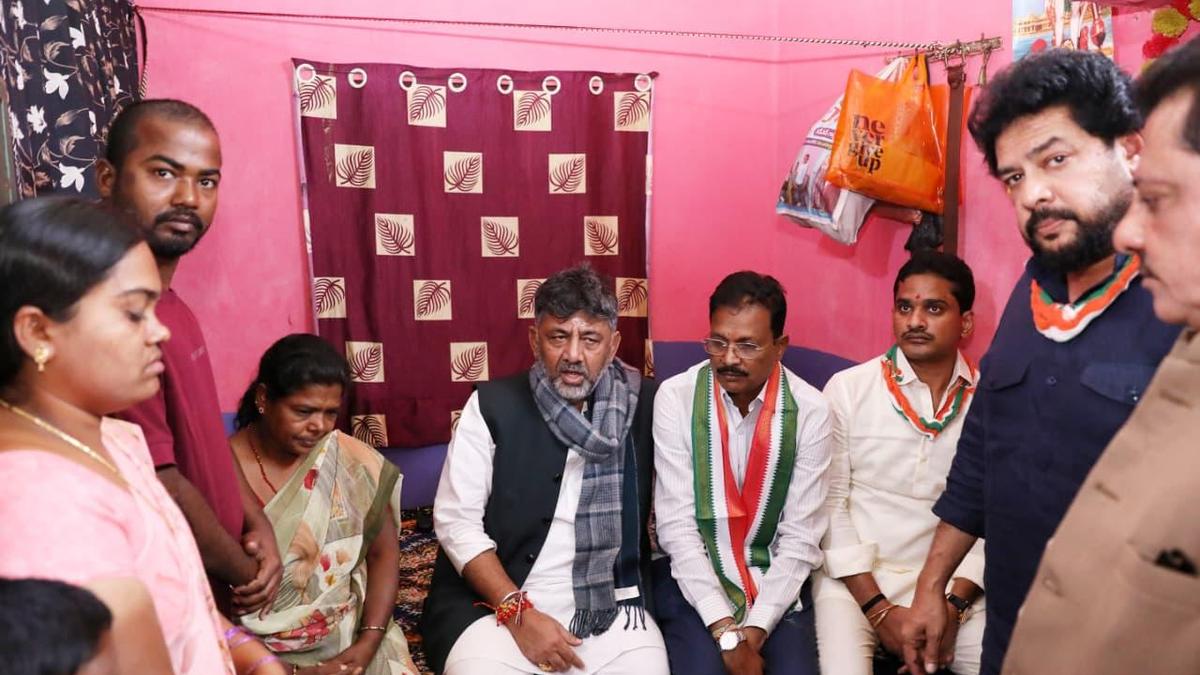
The state government’s response will be closely watched. Any delay in addressing concerns could fuel further protests, while decisive communication and transparency may help calm tensions. Some observers have suggested appointing a special investigation team to reinforce credibility, though such moves often carry their own political implications.
For Ballari, the incident is another reminder of the need to move beyond cycles of violence and retribution. Community leaders have urged political parties to exercise restraint and allow the law to take its course. They warn that continued escalation could disrupt daily life and deepen divisions within the district.
Janardhana Reddy’s demand has ensured that the murder will remain in the public eye, forcing institutions to respond under intense scrutiny. Whether this leads to genuine accountability or merely another chapter in Ballari’s turbulent political story remains uncertain. What is clear, however, is that the case has exposed the fragile intersection of politics and justice, where truth often struggles to emerge unscathed.
As investigations continue, the hope among citizens is that the victim’s death will not be reduced to a political talking point. Justice, they argue, must be delivered transparently and fairly, irrespective of party affiliations or power equations. Only then can Ballari begin to heal from yet another episode that has shaken its conscience and tested its faith in the rule of law.
Follow: Karnataka Government
Also read: Home | Channel 6 Network – Latest News, Breaking Updates: Politics, Business, Tech & More
