
In a move aimed at strengthening rural water security and public health, the Rural Development and Panchayat Raj Department of Karnataka is considering adopting advanced water quality monitoring technology developed and implemented in Singapore. The initiative reflects the State government’s growing concern over drinking water contamination in rural and peri-urban areas and its intent to deploy technology-driven solutions to ensure safe and sustainable water supply across Karnataka.
Officials in the RDPR Department said the proposal is still at a preliminary stage, but serious deliberations are underway to study the feasibility of adapting Singapore’s water quality management systems to Karnataka’s diverse geographical and climatic conditions. The focus, they said, is on real-time monitoring, early detection of contamination, and swift corrective action, especially in villages dependent on groundwater and decentralised water supply systems.
The proposed adoption of advanced water quality technology is also expected to influence how accountability is fixed within the rural water supply system. Officials said real-time data could make it easier to identify lapses at specific points, whether related to source contamination, pipeline damage, or delayed maintenance. This could reduce the tendency to pass responsibility between departments and ensure quicker corrective action on the ground.
Another dimension under discussion is the role of private technology providers and start-ups. The department is exploring whether partnerships with Indian firms, using Singapore’s framework as a reference model, could lower costs and improve localisation. Such collaborations, officials believe, could also stimulate innovation within the State while reducing dependence on imported systems.
Health experts have welcomed the move, noting that water-borne illnesses continue to place a burden on rural healthcare infrastructure. Preventive monitoring, they argue, is far more effective than treating outbreaks after they occur. Reliable water quality data could also help health departments anticipate disease patterns and deploy resources more strategically.
There is also growing recognition that climate change will intensify water quality challenges. Erratic rainfall, prolonged droughts, and sudden flooding events can rapidly alter water chemistry and contamination levels. A technology-driven monitoring system could help authorities respond dynamically to these changing conditions, rather than relying on fixed schedules and assumptions.
Within the government, the proposal is being seen as part of a broader modernisation effort in rural governance. Officials say that similar data-driven approaches are being explored in sanitation, waste management, and asset maintenance. Together, these initiatives reflect an attempt to make gram panchayats more resilient and responsive to emerging challenges.
As deliberations continue, the RDPR Department maintains that community trust will be central to the success of any new system. Clear communication about how water quality is monitored, what the data shows, and how problems are addressed will be essential. For rural Karnataka, where water is deeply tied to daily life and well-being, the promise of safer drinking water carries the potential to reshape not just infrastructure, but confidence in public service delivery itself.
Water quality has emerged as a critical governance issue in Karnataka, with several districts reporting problems related to excess fluoride, salinity, nitrates, and bacterial contamination. These issues have had long-term health implications, particularly for children and elderly populations in rural areas. Despite multiple schemes and interventions over the years, ensuring consistent quality of drinking water has remained a challenge, prompting the department to explore global best practices.
Singapore’s water management model is widely regarded as one of the most advanced in the world, combining technology, regulation, and public awareness. Its systems rely heavily on sensors, automated data collection, and predictive analytics to maintain strict water quality standards. Karnataka officials believe that elements of this model could be adapted to improve monitoring and accountability within the State’s rural water supply framework.
According to senior officials, discussions have been initiated to understand how sensor-based monitoring, data dashboards, and centralised control mechanisms used in Singapore can be integrated with Karnataka’s existing infrastructure. The emphasis is not on wholesale replication but on contextual adaptation, given the vast differences between an urban city-state and a predominantly rural Indian State.
The RDPR Department oversees drinking water supply in thousands of gram panchayats, making the scale of operations significantly larger and more complex. Officials acknowledged that technological solutions must be cost-effective, scalable, and easy to maintain at the local level. Any proposed system would need to function reliably even in areas with limited power supply and connectivity.
The move comes amid increasing public scrutiny over water safety following reports of contamination in certain villages. In some cases, water samples collected during routine inspections have shown levels exceeding permissible limits, leading to temporary supply disruptions and reliance on alternative sources. Such episodes have underscored the need for proactive monitoring rather than reactive testing.
WHY WATER QUALITY REMAINS A RURAL CHALLENGE
Ensuring safe drinking water in rural Karnataka involves navigating a complex web of environmental, infrastructural, and administrative challenges. Unlike urban areas that rely on centralised water treatment plants, most villages depend on borewells, open wells, and local surface water sources. These sources are highly vulnerable to seasonal variations, agricultural runoff, and geological factors.
Groundwater contamination is a persistent issue in several districts. Excess fluoride has been linked to skeletal and dental fluorosis, while high nitrate levels pose risks to infants and pregnant women. Bacterial contamination, often caused by inadequate sanitation and poorly maintained pipelines, leads to recurring outbreaks of water-borne diseases.
Currently, water quality monitoring in rural areas relies largely on periodic sampling and laboratory testing. While this system provides valuable data, it is time-consuming and often fails to detect contamination in real time. By the time results are available, contaminated water may already have been consumed, exposing communities to health risks.
Officials say Singapore’s model offers a potential solution by enabling continuous monitoring. Sensors installed at critical points can detect changes in parameters such as turbidity, pH, and chemical composition almost instantly. Alerts can then be sent to authorities, allowing immediate intervention before the water reaches households.
Another key feature under consideration is the integration of data across levels of governance. In Singapore, water quality data is centrally monitored, ensuring transparency and accountability. Karnataka’s RDPR Department is exploring whether a similar dashboard-based system can be developed, allowing district and State-level officials to track water quality trends in real time.
Experts caution, however, that technology alone cannot solve systemic issues. They point out that water contamination often stems from broader problems such as over-extraction of groundwater, unregulated industrial activity, and inadequate sanitation infrastructure. Any technological intervention must therefore be accompanied by strong regulatory enforcement and community engagement.
The department is also considering how local panchayats can be involved in the process. Empowering village-level institutions to understand and respond to water quality data could be key to the success of the initiative. Officials say training and capacity-building will be essential if advanced monitoring tools are to be effectively used at the grassroots level.
Financial considerations remain a significant factor. While Singapore’s systems are sophisticated, they are also resource-intensive. Adapting such technology to Karnataka’s budgetary constraints will require innovation and prioritisation. Officials indicated that pilot projects in select districts may be launched before any large-scale rollout.
PILOT PROJECTS, POLICY IMPLICATIONS, AND THE WAY FORWARD
The RDPR Department is reportedly considering launching pilot projects in districts that face acute water quality issues. These pilots would test the effectiveness of sensor-based monitoring under Indian conditions, including variations in temperature, water sources, and usage patterns. The findings would then inform decisions on scaling up the initiative.
Policy experts see this move as part of a broader shift towards data-driven governance. By relying on real-time information, authorities can move away from crisis management and towards preventive action. This, they argue, could significantly reduce health risks and improve public confidence in government-run water supply systems.
There are also implications for inter-departmental coordination. Ensuring water quality involves not just the RDPR Department but also departments dealing with health, environment, and urban development. A technology-driven monitoring system could facilitate better coordination by providing a common data platform accessible to multiple agencies.
The initiative aligns with national priorities on safe drinking water and sustainable resource management. Karnataka’s exploration of international best practices reflects an acknowledgment that local challenges can benefit from global solutions, provided they are adapted thoughtfully.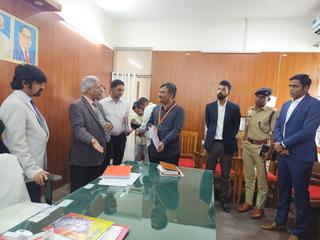
Civil society groups working on water issues have welcomed the department’s openness to innovation but have urged caution. They stress that community participation must remain central to any water governance model. Transparency in data sharing, they argue, can empower citizens to demand accountability and take informed decisions about water use.
At the same time, there is optimism that improved monitoring could lead to long-term behavioural change. When communities are made aware of water quality trends and risks, they may be more receptive to conservation measures, sanitation improvements, and source protection initiatives.
Officials emphasise that the proposal is not a silver bullet but part of a larger strategy to strengthen rural water supply systems. Infrastructure upgrades, source sustainability, and regular maintenance will continue to be priorities alongside technological interventions.
As discussions progress, the RDPR Department is expected to consult technical experts, academic institutions, and field-level officials to refine the proposal. Any final decision will likely be shaped by pilot outcomes, cost assessments, and stakeholder feedback.
For Karnataka, the consideration of Singapore technology represents both ambition and caution. It signals a willingness to look beyond conventional approaches while recognising the complexity of local realities. If implemented effectively, the initiative could mark a significant step towards ensuring that safe drinking water is not a privilege but a guaranteed right for rural communities across the State.
In a State where water has long shaped livelihoods, health, and politics, the push for better quality monitoring carries deep emotional and practical significance. The promise embedded in this initiative is simple yet powerful: that every household, regardless of location, can trust the water it consumes.
Follow: Karnataka Government
Also read: Home | Channel 6 Network – Latest News, Breaking Updates: Politics, Business, Tech & More
