
The Karnataka government has announced plans to establish 900 Karnataka Public Schools across the State, a move aimed at strengthening the public education system and reducing disparities in access to quality schooling. School Education and Literacy Minister Madhu Bangarappa said the initiative is designed to provide affordable, high-quality education to students from diverse socio-economic backgrounds, particularly in rural and semi-urban areas where educational infrastructure remains uneven.
Speaking about the plan, the Minister emphasised that the concept of Karnataka Public Schools is rooted in the idea of offering facilities and academic standards comparable to private institutions, while remaining accessible to all sections of society. The proposed schools are expected to follow a common framework in terms of infrastructure, teaching quality, and curriculum delivery, ensuring uniformity across districts.
According to officials, the project will be implemented in phases, with priority given to educationally backward regions and areas where government schools are currently fragmented across different levels. By consolidating primary, upper primary, and secondary education within a single campus, the government hopes to reduce dropout rates and create a more stable learning environment for students.
The Minister said that the initiative is also a response to growing concerns over the declining enrolment in government schools. Over the years, many parents have shifted their children to private institutions, often at great financial strain, due to perceptions about quality and accountability. Karnataka Public Schools, he said, aim to restore confidence in public education.
Under the proposed model, these schools will be equipped with modern classrooms, laboratories, libraries, sports facilities, and digital learning tools. Officials said special emphasis will be placed on science, mathematics, and language learning, along with co-curricular activities that encourage holistic development. Teacher training and capacity-building will be a key component, ensuring that educators are equipped to meet evolving academic standards.
Minister Bangarappa noted that the schools will follow the State curriculum while also integrating skill-based learning and value education. The aim, he said, is not merely to improve examination results but to prepare students for higher education, employment, and responsible citizenship. The schools are expected to function as community hubs, fostering engagement between parents, teachers, and local bodies.
The government has indicated that existing government high schools and pre-university colleges may be upgraded or merged to form Karnataka Public Schools wherever feasible. This approach is expected to optimise resources while avoiding duplication of infrastructure. In areas without adequate facilities, new campuses will be constructed, subject to land availability and administrative approvals.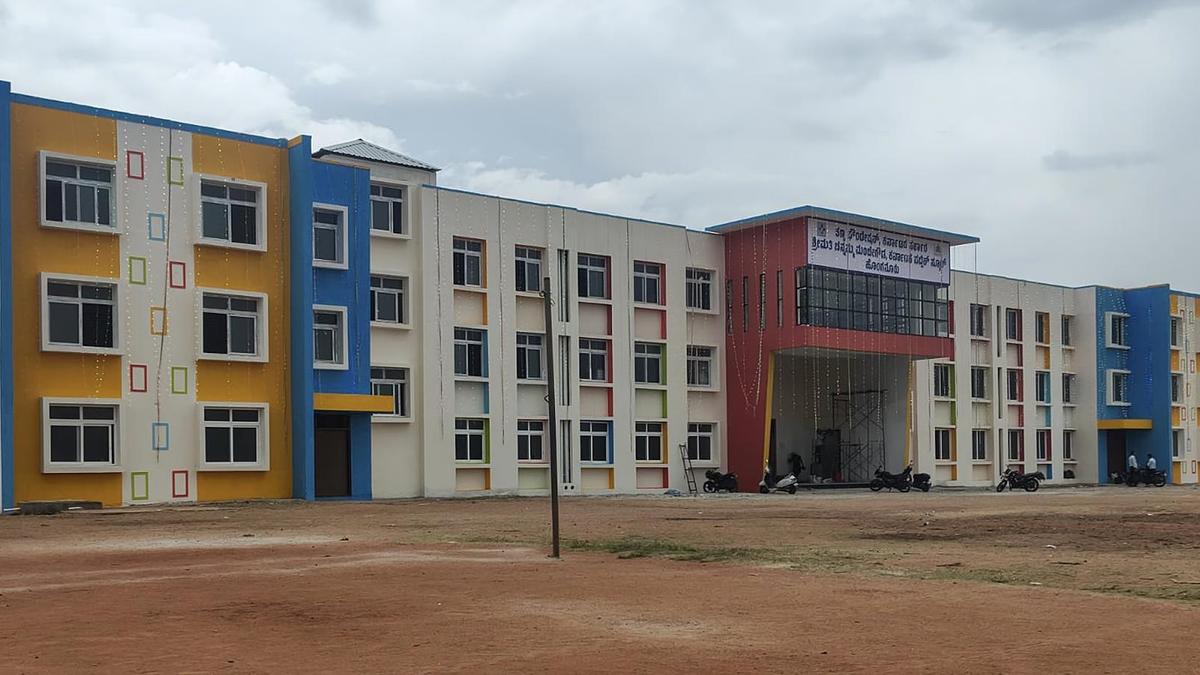
Education experts have largely welcomed the announcement, describing it as a step towards addressing long-standing inequalities in the schooling system. Many have pointed out that Karnataka has a strong legacy of public education, but uneven investment over the years has led to gaps in quality. A well-implemented network of public schools, they say, could reverse this trend.
However, experts have also cautioned that the success of the initiative will depend on sustained funding and effective governance. Past experiences with large-scale education reforms show that infrastructure alone is not sufficient. Continuous teacher support, transparent monitoring, and community participation will be crucial to ensuring that the schools deliver on their promise.
Opposition leaders have sought clarity on the financial outlay and timelines for the project. While welcoming the intent, some have questioned whether the State has allocated adequate budgetary support to sustain 900 high-quality institutions in the long term. They have urged the government to place details before the legislature to enable informed debate.
Education observers note that the programme’s long-term impact will be judged not merely by the number of schools established, but by measurable improvements in learning levels, retention rates, and student confidence. Transparent reporting of outcomes, they say, will help build credibility and public trust.
As Karnataka embarks on this ambitious expansion, the Karnataka Public Schools project stands at the intersection of policy intent and public expectation. Its success could serve as a model for other States grappling with similar challenges, reaffirming the idea that strong public education systems remain central to social equity and long-term development.
Responding to such concerns, Minister Bangarappa said the government views education as a long-term investment rather than an expenditure. He stressed that improving public schooling would have far-reaching social and economic benefits, including reduced inequality, improved workforce readiness, and stronger civic engagement. The Minister added that the education department is working closely with the finance and planning departments to ensure phased and sustainable implementation.
Parents’ groups have reacted with cautious optimism. In rural areas, many see the announcement as a potential turning point, especially for students who currently travel long distances or drop out after primary school due to lack of nearby facilities. In urban centres, parents hope that improved government schools could provide a credible alternative to expensive private institutions.
Teachers’ associations have highlighted the need for clarity on recruitment and transfers. With the creation of new schools or expanded campuses, they say, staffing requirements will increase significantly. Ensuring fair recruitment practices and manageable workloads will be essential to maintaining morale and teaching quality.
The Karnataka Public Schools initiative also aligns with broader national conversations on strengthening public education systems. At a time when education outcomes are closely linked to economic mobility, State governments face increasing pressure to deliver quality schooling that is both inclusive and future-ready.
As the government moves from announcement to execution, stakeholders across Karnataka will be watching closely. The scale of the proposal, 900 schools across a diverse State, makes it one of the most ambitious education reforms in recent years. If implemented effectively, it could redefine the role of public schools and reaffirm the State’s commitment to education as a public good.
For now, the announcement has set expectations high. Whether the promise of Karnataka Public Schools translates into tangible change on the ground will depend on careful planning, sustained political will, and the active participation of teachers, parents, and communities across the State.
IMPLEMENTATION ROADMAP AND DISTRICT-LEVEL STRATEGY
Officials in the education department said the rollout of Karnataka Public Schools will be carefully sequenced to avoid disruption to existing institutions. District-wise mapping is being undertaken to identify clusters where multiple government schools operate with limited enrolment and infrastructure. In such locations, consolidation into a single Karnataka Public School campus is being considered to optimise resources and improve academic continuity for students.
Special focus will be placed on aspirational districts and educationally backward taluks, where access to quality secondary education remains limited. The government plans to prioritise these regions in the first phase, ensuring that rural and marginalised communities are not left behind. Officials stressed that local needs and demographic realities will guide decisions rather than a uniform, one-size-fits-all approach.
The department is also coordinating with local bodies to ensure availability of land, basic utilities, and road connectivity for new campuses. In several districts, unused or underutilised government land is being identified for this purpose. Authorities said such coordination would help reduce project costs and speed up construction timelines.
Monitoring mechanisms are being designed at the district and State levels to track progress. Senior officials will conduct periodic reviews to assess infrastructure development, enrolment trends, and academic outcomes. The government believes that strong oversight will be critical to maintaining quality across a network as large as 900 schools.
CHALLENGES, EXPECTATIONS, AND THE ROAD AHEAD
Despite widespread optimism, educators acknowledge that the initiative faces significant challenges. Ensuring consistent teaching quality across hundreds of schools will require sustained investment in teacher training and mentorship. Experts warn that without continuous academic support, disparities could emerge even within the Karnataka Public Schools system.
Another concern relates to student diversity. With the aim of attracting students from different socio-economic backgrounds, schools will need robust support systems, including counselling, language support, and remedial teaching. Educationists argue that inclusivity must go beyond access and translate into meaningful learning outcomes for all students.
Fiscal sustainability is also expected to test the government’s resolve. Maintaining modern infrastructure, digital tools, and co-curricular programmes across 900 institutions will require steady budgetary commitments over several years. Analysts say political continuity and bipartisan support will be essential to prevent the project from losing momentum.
At the same time, expectations from the public remain high. Parents, particularly from lower- and middle-income groups, see Karnataka Public Schools as a chance to break the cycle of compromised education due to financial constraints. For many families, the success of this initiative could determine whether public education regains its place as a trusted pathway to opportunity.
Education observers note that the programme’s long-term impact will be judged not merely by the number of schools established, but by measurable improvements in learning levels, retention rates, and student confidence. Transparent reporting of outcomes, they say, will help build credibility and public trust.
As Karnataka embarks on this ambitious expansion, the Karnataka Public Schools project stands at the intersection of policy intent and public expectation. Its success could serve as a model for other States grappling with similar challenges, reaffirming the idea that strong public education systems remain central to social equity and long-term development.
Follow: Karnataka Government
Also read: Home | Channel 6 Network – Latest News, Breaking Updates: Politics, Business, Tech & More
