
Karnataka has set its sights on a transformative economic milestone, with Large and Medium Industries Minister M.B. Patil announcing plans to prepare a comprehensive vision document aimed at attracting 150 billion dollars in investments from the mobile and electronics components manufacturing sector. This ambitious roadmap is expected to redefine the State’s industrial identity, position Karnataka as a global hub for next-generation electronics, and deepen its foothold in one of the world’s fastest-growing manufacturing domains. The vision document, once completed, is likely to guide both policy innovation and investment mobilisation over the next decade. It also signals the government’s intent to nurture a resilient, technology-driven ecosystem that supports large enterprises, MSMEs, and startups.
At the core of this plan is a renewed focus on electronic system design and manufacturing, a sector that has been expanding rapidly in Karnataka due to its strong talent pool, R&D ecosystem, and proximity to global technology companies. According to officials, the vision document will include a detailed analysis of land availability, infrastructure requirements, and fiscal incentives. It will also identify emerging opportunities driven by demand for mobile phones, semiconductors, printed circuit boards, battery technology, and industrial electronics. The government views this initiative as a critical step toward reducing import dependency and boosting domestic value addition.
A Growing Electronics Landscape and Government Push
The move comes at a time when India is actively pushing to localise manufacturing of components that form the backbone of consumer electronics and telecommunications. Karnataka, with its established reputation as a technology powerhouse, aims to leverage this national momentum to attract multinational suppliers and domestic innovators. The vision document will outline strategies to create specialised clusters, streamline regulatory approvals, and promote supply-chain linkages essential for high-volume manufacturing.
Officials in the Industries Department emphasised that Karnataka has already witnessed a surge in proposals from global firms, particularly those looking to diversify manufacturing outside traditional Asian hubs. Bengaluru, Mysuru, Tumakuru, and Hubballi-Dharwad are being evaluated as potential zones for new electronics parks. These clusters are expected to focus on both core and ancillary production, enabling companies to scale efficiently. The government is also examining ways to expand the existing ecosystem in the Bengaluru region, where many semiconductor design and electronics R&D centres already operate.
Much of the State’s confidence stems from its existing electronic design industry, which contributes significantly to India’s export basket. By combining this with strong manufacturing incentives, Karnataka intends to create a seamless cycle of innovation, prototyping, and mass production. The vision document will also explore opportunities to position the State as a global destination for high-value components, including display modules, camera assemblies, power management systems, IoT sensors, and smart-device peripherals.
Karnataka Targets a Global Footprint in Mobile Manufacturing
A major component of the plan revolves around enhancing Karnataka’s standing in mobile phone manufacturing. Several companies operating in the sector have already expressed interest in either expanding capacity or shifting portions of their supply chain to the State. The government aims to support this trend by establishing large, plug-and-play manufacturing zones that offer both infrastructure reliability and cost efficiency. These zones may include dedicated warehousing facilities, logistics hubs, testing labs, and export-oriented services that reduce dependence on other States.
In addition to attracting manufacturers, the vision document will emphasise workforce development. Karnataka believes that a skilled labour force is essential for sustaining long-term growth in electronics manufacturing. For this reason, training institutions, polytechnics, and engineering colleges may be encouraged to create modules specifically tailored to mobile technology, assembly processes, and automation. With global markets demanding increasingly sophisticated devices, the State hopes to ensure that industries have the skilled personnel required to keep pace with technological advancements.
The government is also exploring partnerships with global industry associations to showcase Karnataka’s manufacturing potential. By hosting investment summits, participating in international expos, and conducting roadshows, the Industries Department aims to present its long-term vision to investors and decision-makers across major global markets. Officials noted that such outreach efforts have previously delivered strong results, especially in sectors like renewable energy and information technology. The same momentum is now expected in electronics manufacturing.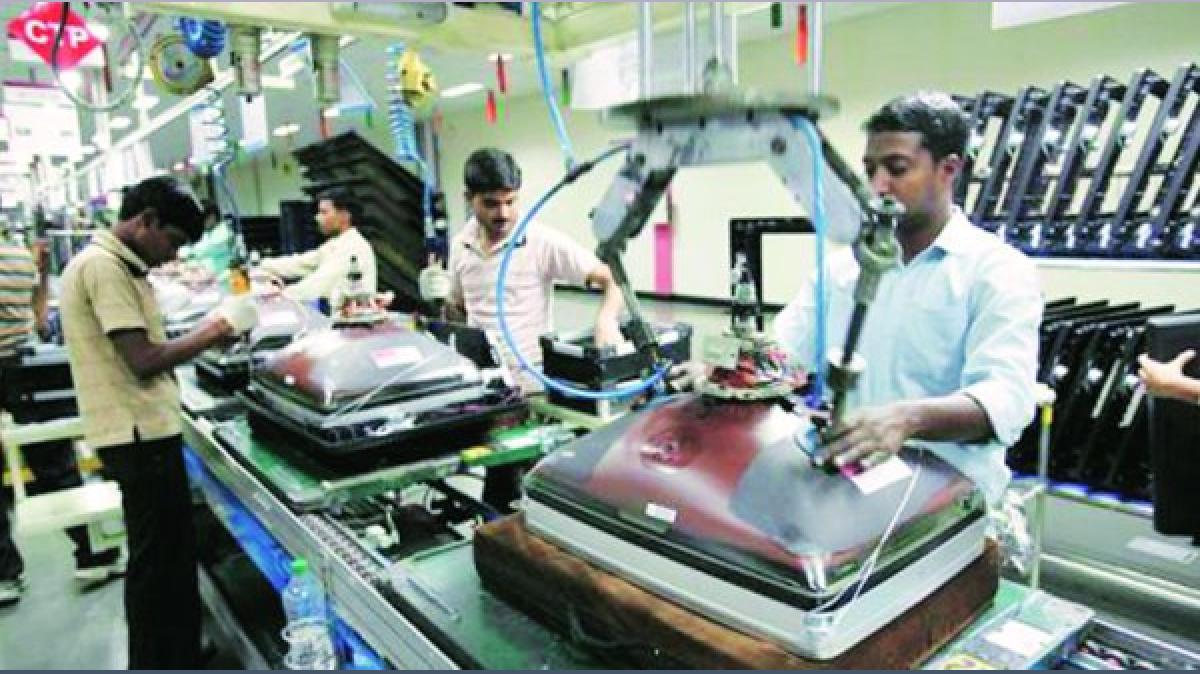
Strengthening Supply Chains and Enabling Local Value Addition
Another crucial area of focus is the supply chain ecosystem. The vision document will highlight how Karnataka can facilitate the localisation of electronic components that are currently imported. A major objective is to reduce the dominance of foreign suppliers in critical components and build a self-reliant manufacturing base. This includes everything from screens and sensors to power units, connectors, and micro-modules that form the building blocks of modern electronic devices.
Karnataka’s approach is expected to combine policy support with private-sector partnerships. The government may introduce targeted incentives for component manufacturers, offer capital subsidies, and provide tax benefits for companies investing in high-precision technologies. The idea is to create an environment where companies can innovate, scale, and export from Karnataka without being hindered by logistical or regulatory bottlenecks. Efforts will also be made to promote green manufacturing practices that align with global environmental standards.
Transport and logistics infrastructure will play a significant role in sustaining the growth of the electronics sector. The State is examining proposals to strengthen road connectivity between production clusters and airports, develop advanced cargo terminals, and establish integrated logistics parks. Efficient movement of goods is essential for meeting export commitments and reducing turnaround times for assembly lines. As a result, the vision document is expected to map out detailed strategies to enhance connectivity, optimise costs, and streamline supply chains.
The State government will also focus on fostering collaboration between industry and academia. Research institutions such as IISc, central laboratories, and private R&D centres will be encouraged to support innovation in electronic materials, energy-efficient systems, and next-gen technologies. By integrating academic research with commercial requirements, Karnataka aims to create a pipeline of breakthroughs that can directly translate into marketable products. Such collaborations are seen as vital for keeping the State competitive in a global market that evolves rapidly.
Startups, a major strength of Karnataka, will be given special attention. The vision document may outline special grants, incubation programmes, and industry partnerships to support entrepreneurs building solutions in robotics, wearables, AI-driven devices, electric mobility systems, and smart-home technologies. Officials believe that startups bring agility and creativity to the sector, complementing the scale and resources of established corporations. A dynamic ecosystem that nurtures innovation—from ideation to commercial deployment—will be central to Karnataka’s growth strategy.
The government is also likely to prioritise sustainability in its long-term vision. Electronics manufacturing often faces criticism for generating waste and consuming significant energy. To address these concerns, Karnataka may create standards for waste management, promote circular-economy practices, and encourage companies to adopt renewable energy sources. The State hopes that responsible manufacturing practices will not only protect the environment but also enhance Karnataka’s reputation among global investors who prioritise sustainability.
Electronics testing, certification, and compliance are additional areas where Karnataka aims to build strong capabilities. The government is considering the establishment of specialised testing labs that will enable companies to certify their products locally rather than rely on out-of-state facilities. This not only reduces costs but also accelerates time-to-market. The State believes that comprehensive testing infrastructure will be critical to attracting serious investments from component manufacturers.
Officials insist that Karnataka’s 150-billion-dollar vision is not merely an aspirational target but a realistic possibility rooted in the State’s proven track record. With the right policies, coordinated planning, and sustained industry engagement, the government believes that Karnataka can emerge as a manufacturing powerhouse capable of competing with global hubs in East Asia. The focus will be on long-term stability, attractive incentives, and a clear roadmap that gives investors confidence in Karnataka’s potential.
The vision document will also highlight the need for a transparent governance framework. Industries often face challenges related to land acquisition, licencing, compliance, and utility connections. The government is exploring ways to make these processes faster, simpler, and more predictable. By adopting digital platforms and single-window systems, Karnataka hopes to minimise delays and reduce friction for companies setting up manufacturing units.
Beyond manufacturing, the document will explore opportunities in service-based segments of the electronics ecosystem, including repair, refurbishing, remanufacturing, and post-sale operations. With rising consumer demand for sustainable and cost-effective product cycles, these services are becoming increasingly important. Karnataka aims to position itself as a leader in electronics lifecycle management, creating new employment opportunities and strengthening its export capabilities.
Officials noted that the vision document is also aligned with the State’s broader economic goals, including employment generation, regional development, and export expansion. By promoting electronics manufacturing in tier-2 and tier-3 cities, Karnataka aims to create balanced economic growth that benefits regions beyond Bengaluru. This decentralised approach is expected to reduce pressure on urban infrastructure while unlocking new opportunities for local economies.
As the document nears completion, industry bodies, trade organisations, and corporate representatives are being consulted extensively. The government aims to ensure that the final roadmap reflects the needs of the sector and offers a comprehensive strategy for long-term growth. Meetings with global companies, emerging manufacturers, and technology suppliers are expected to continue over the next few months.
In the months ahead, Karnataka is likely to unveil a series of policy updates, incentive packages, and infrastructure commitments aligned with the vision document. The government hopes that these measures will not only attract immediate investment but also establish the foundation for sustained technological leadership. The State believes that by setting bold targets and pursuing them with unwavering commitment, Karnataka can redefine its role in the global electronics landscape.
The State’s 150-billion-dollar ambition is being closely watched by industry leaders, economists, and policy analysts. Many believe that Karnataka’s experience in technology and innovation gives it a significant advantage. However, success will depend on the State’s ability to execute its plans efficiently, overcome structural challenges, and maintain investor confidence over the long term. The vision document, once unveiled, is expected to serve as a guideline for how Karnataka intends to meet these challenges.
For now, the State is moving ahead with optimism, backed by a strong track record and a forward-looking development agenda. Karnataka’s leadership believes that its blend of innovation, infrastructure planning, and global partnerships will help the State realise its ambitious economic goals. As the electronics industry continues to expand worldwide, Karnataka is determined to seize the moment and establish itself as a central force in global manufacturing.
Follow: Karnataka Government
Also read: Home | Channel 6 Network – Latest News, Breaking Updates: Politics, Business, Tech & More
